Among the most famous biblical prophecies is the “swords into plowshares” vision of Isaiah 2:2–4 and Micah 4:1–3. Isaiah’s words are picturesquely paraphrased in the Church of Scotland’s hymnary, and in many others:
No longer hosts encountering hosts
shall crowds of slain deplore;
They hang the trumpet in the hall
and study war no more.
But this happy state will only come at a price that many people are still unwilling to pay: the abolition of full national sovereignty. Isaiah describes a supranational tribunal that shall “judge between the nations,” and states that “all the nations” shall submit to its authority. International disputes shall thenceforth be settled in court, not on the battlefield. This is part of the coming of God’s kingdom, for which we are all called upon to work, as we read in the Catechism: the Church “prays for the growth of the Kingdom of God in the ‘today’ of our own lives.”
In 1940, the British economist Lionel Robbins wrote in The Economic Causes of War that “the existence of independent sovereign states ought be justly regarded as the fundamental cause of conflict” and warned that “we know today that unless we destroy the sovereign [i.e., fully self-determining] state, the sovereign state will destroy us.” If that statement was pertinent before Hiroshima, how much more pertinent it is today with wars raging in Europe, Africa, and the Middle East, and armed conflict on every continent.
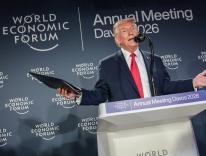
Yet many people shrink from accepting a supranational authority. Donald Trump’s second administration, for example, has ignored international law at every turn and withdrawn the United States from several international organizations and agreements. Under Trump, the United States has attacked two sovereign states (Venezuela and Iran) without international sanction and threatened to take the territory (Greenland) of another by force.
Of course, the American record of fealty to international law was far from sterling even before Trump: take, in this century alone, U.S. actions in Afghanistan, Iraq, Libya, and Gaza, and its drone strikes around the world. According to American historian Jay Winter, “In the United States it is impossible to envisage that a court could be superior to the Supreme Court.” He contrasts the United States with the European Union, where the European Court of Justice is indeed superior to the national courts.
But even in Europe, supranational authority is on the defensive ever since Britons voted to withdraw from the European Union in the summer of 2016. In 2022, former member of the UK parliament Jacob Rees-Mogg called for “total governing independence outside the European Union.” Marine Le Pen, leader of the extreme-right party Rassemblement National and member of the French parliament, called Brexit “by far the most important historic event that our continent has known since the fall of the Berlin Wall.” “It is a signal of liberty and freedom,” she said, “sent out to the entire world.”
Our obsession with national self-determination stems from the “sacralization of nationhood,” the quasi-mystical fantasies concerning the supposed sacredness of nationality and national territory that developed in the nineteenth and early twentieth centuries. Nationalist sentiment, with notions like “holy Russia” or the American “city on a hill,” has often amounted to idolatry. As a 2019 article issued by the Swiss Evangelical Network in Geneva puts it, “If nationalism encourages absolute loyalty to a fully self-determining nation, then the nation becomes an idol that destroys rather than protects humanity.” The same document observes that “the Catholic bishops of Quebec…consider a nationalist movement ethically acceptable if it calls for a more just society, respects minorities, aims to cooperate with its neighbors, and refuses to consider the nation as the supreme good.”
By contrast, many nations believe they have “sacred rights” to a particular territory, even if neighboring nations may claim equally sacred rights to the same land, and even if some groups living within that nation may believe that they, being a distinct “people,” have sacred rights to independence. The territorial disputes that arise cannot be resolved by negotiation since these rights are considered non-negotiable, and no supranational institution has the right or the power to impose arbitration. War is the only logical outcome, though quarrelling groups may sometimes coexist in an unhappy state of “frozen conflict.”
Moreover, when a national regime is grossly maltreating its own citizens or other residents and cannot be effectively resisted by the people themselves, full sovereignty means that no external authority can intervene. The Compendium of the Social Doctrine of the Church states that “the principle of national sovereignty cannot be claimed as a motive for preventing an intervention [by the international community] in defense of innocent victims.” Thus, national sovereignty must not be absolute.
Many nationalists believe absolute sovereignty is a condition of freedom, but in practice it often enables the unchecked oppression of its people. The nation’s rulers are “free” to abuse their people with impunity, just as full laissez-faire economic freedom can mean employers are “free” to exploit their workers. In a famous discourse at Notre-Dame de Paris in 1848, the Dominican friar Henri-Dominique Lacordaire argued that “between the strong and the weak, between rich and poor, between master and servant, it is freedom that is oppressive and the law that sets free.” The same principle applies to relations between nations: “freedom” from the rule of international law means that powerful nations are “free” not only to exploit their own citizens but also to exploit, or even invade and wreck, other nations. But this is not real freedom; as the Catechism reminds us, “there is no true freedom except in the service of what is good and just.”
The “oppressive freedom” Lacordaire derided resembles what Aristotle in his Politics called a “bad definition of freedom,” which “frees” everyone to do whatever they fancy, without consideration for the common good. Aristotle argued that “we should not think it slavery to live as good citizens, for that is our salvation.” Good citizenship implies respect for the law; if nations are to be “good citizens of the world,” they must respect international law. A world whose nations can flout international law with impunity can never be truly peaceful.
The Vatican has been preaching that message for well over a century. Pope Leo XIII, in a message to the 1899 Peace Conference at The Hague, called for “the establishment of mediation and arbitration” as an alternative to the disastrous “rivalry between States to develop military strength.” During World War I, Pope Benedict XV called for “instead of armies, the institution of arbitration.” In his 1944 Christmas message, Pope Pius XII called for “an organ for the maintenance of peace…invested by common consent with supreme power…to smother in its germinal state any threat of isolated or collective aggression.” In Pacem in terris (1963) Pope John XXIII wrote that “the same law of nature that governs the life and conduct of individuals must also regulate the relations of political communities with one another.” It follows that nations have no more right than individuals have to be laws unto themselves. John called for a supranational authority “equipped with world-wide power and adequate means for achieving the universal common good.” In his 1970 essay La Souveraineté Nationale, Père Martin Allègre, a French Dominican, took up John’s argument, stating that it would require “the complete suppression of national armies,” thus echoing the prophecies of Isaiah and Micah as well as the opinion of Enlightenment philosopher Immanuel Kant: “Permanent armies must in time disappear entirely.”
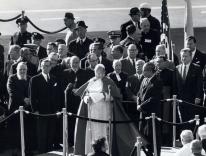
Similarly, Pope Paul VI, addressing the UN General Assembly in 1965, demanded: “Who can fail to see the need…[for] the establishment of a world authority capable of taking effective action on the juridical and political planes?” Pope John Paul II, addressing the International Court of Justice in 1985, stated that “the present Court is no more—but it is also no less—than an initial step towards…a totally effective judicial authority in a peaceful world.” In Caritas in veritate (2009), Pope Benedict XVI wrote of the “urgent need of a true world political authority” and “compliance with its decisions from all parties.” And in 2020, Pope Francis highlighted “the importance of dialogue and respect for international law in resolving the ‘frozen conflicts’ that persist” in the Balkans and the Caucasus.
Opinions differ as to what kind of supranational authority we need. Simply the “world court” of the Hebrew prophets? Multilateral “governance” by a network of international institutions, including a world court? Or a full-fledged “world state”? In his famous 1795 essay “Toward Perpetual Peace,” Kant recommended a worldwide federation of sovereign republics based on representative government; he assumed such democracies would be highly unlikely to go to war against each other. He disfavored world government, fearing that it might become a tyranny that would sooner or later break down into anarchy.
In a paper published in 2003, the eminent theorist of international relations Alexander Wendt argued that a world state is inevitable, and could arrive as soon as the next one to two hundred years. His reasoning is based on the observation that, historically, political authorities have tended to consolidate into larger units. In 1000 BC, the world contained an estimated six hundred thousand independent communities; now there are just under two hundred sovereign states. Wendt points out that “by taking war off the agenda, a world state would create capacities for collective action that its members could never realize in an anarchy.” Given the limited progress made thus far against environmental and climate degradation, we could imagine such a state arising from the prospect of—or in the aftermath of—a worldwide catastrophe that would necessitate drastic global collective action.
The idea of a world state may offend those who subscribe to Catholic teaching on the importance of subsidiarity. They may fear that too many decisions would be made at the top, far from the people affected. But world government need not mean highly centralized power. We can envisage a small, decentralized world government concerning itself with initiating and overseeing global collective projects, and with enforcing the decisions of a world court. Such a government would have no mandate to interfere with the internal policies of national governments, unless one state showed signs of preparing aggression against another, or seriously mistreated its own residents, or adopted policies that clashed with vital collective projects like climate remediation. A world government would need to refrain from trying to do too much. It would need a robust constitution with strict provisions to prevent individual members from acquiring excessive powers or from holding on to their positions for too long. They should be obliged to respect Aristotle’s sound principle: “Citizens should take it in turn to rule and to be ruled.”
The International Court of Justice (ICJ), an organ of the United Nations, offers examples of the kinds of rules that can establish and preserve legitimacy and impartiality. It was carefully designed to ensure that its judges are independent of governments and represent a wide spectrum of national cultures and backgrounds. The court is composed of fifteen judges, elected to nine-year terms of office by the UN General Assembly and by the UN Security Council. These bodies vote simultaneously, but separately, to elect a candidate, who must win an absolute majority in both elections. A candidate can be proposed by a group of four senior jurists in any of the 193 UN member states. Each state can propose up to four candidates, of whom not more than two can be nationals of the proposing state. The court must not include more than one national of the same state. Moreover, according to a UN statement, “the Court as a whole must represent the main forms of civilization and the principal legal systems of the world.” A democratic world parliament would have to be designed with similar care to ensure its membership adequately represented global human diversity.
Of course, the same diversity may lend credence to the critics’ claims that supranational jurisdiction is impracticable because of the wide differences between the cultures and values of the world’s peoples. For example, the UN’s Universal Declaration of Human Rights contains thirty articles specifying rights that are widely recognized internationally but that some Muslims argue are inconsistent with sharia law.
Still, the declaration was passed in 1948 by forty-eight states, seven of which have predominantly Muslim populations. According to Antônio Trindade, former president of the Inter-American Court of Human Rights, “the Declaration has gradually acquired an authority that its draftsmen could not have foreseen…mainly because successive generations of human beings, from distinct cultures and all over the world, recognized in it a ‘common standard of achievement’…which corresponded to their deepest and most legitimate aspirations.” This acquired authority shows how international cooperation need not only reflect a preexisting unity but can help create it.
Clearly, though, much more needs to be done to overcome narrow nationalism and sectarianism. For one thing, more widespread “global competency”—both among leaders and the citizenry at large—is required. Much has been written of late about this quality. According to Fernando Reimers, professor of international education at Harvard, the phrase indicates
a positive disposition towards cultural differences. An interest and understanding of different cultural streams and the ability to see these differences as opportunities…[as well as] understanding of world history, geography, of the global dimensions of topics such as health, climate, economics, and of the process of globalization itself.
A tall order for our already beleaguered educational systems!
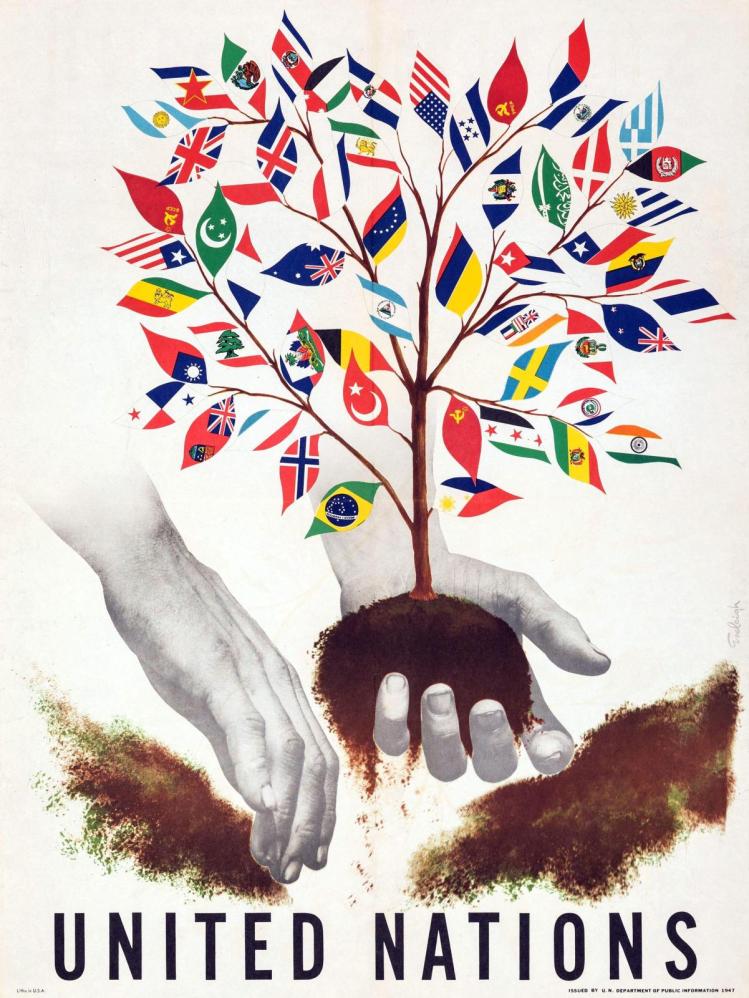
The UN is the obvious model for world government, but it has too often proved a venue for hypocrisy: statements of virtue that are not backed up by action. Various UN conventions have won the support of impressive majorities. Thus 175 UN states (out of 197) are parties to the Convention Against Torture; 186 to the Stockholm Convention on Persistent Organic Pollutants; 192 to the Convention Against Illicit Traffic in Narcotic and Psychotropic Substances; and 174 to the International Covenant on Economic, Social and Cultural Rights.
But progress seems to have stalled—or even, in some cases, reversed—in turning these ideals into realities. The International Covenant, for example, includes the right of everyone to form trade unions and enjoy decent conditions of employment, which was forcefully affirmed by Leo XIII in Rerum novarum (1891). But many American employers and politicians still strive to make it difficult for workers to associate in unions, and unionization rates have undergone a long and precipitous decline. The United States has signed but not ratified the covenant.
The attitude of states parties to UN conventions thus too often resembles that of Medea in Ovid’s Metamorphoses: “Video meliora proboque, deteriora sequor” (“I see that which is better, and I approve, yet I pursue that which is worse”). Certain principles or practical rules of good behavior are approved by most countries, but approval leads too seldom to implementation. Still, even if only rhetorical at this stage, worldwide support suggests that in time decisions based on these principles and enforceable by a world court may come to win general acceptance.
The problem is one of power. World courts for both civil and criminal proceedings exist already: the ICJ, established in 1945, and the International Criminal Court, established in 2002, both based in The Hague, in the Netherlands. But at present, these courts have little recourse for enforcing decisions when states are unwilling to comply. In practice, though, noncompliance is not as common as one might expect. According to a UN statement, “it is up to the States concerned to apply the [ICJ’s] decisions in their national jurisdictions, and, in most cases, they honor their obligations under international law and comply.”
If a state refuses to comply, the matter may be referred to the UN Security Council, which has the right to enforce compliance through economic or diplomatic sanctions, or in the last resort by collective military intervention. However, a Security Council resolution authorizing such intervention could be vetoed by any one of the five permanent members of the council (China, France, Russia, the United Kingdom, and the United States). In any case, it is hard to imagine the council raising sufficient armed forces to challenge a large noncompliant state. We are reminded of Père Allegre’s observation that full enforcement of international law would require the “suppression of all national armies,” leaving just one international army or police force, presumably under the control of the United Nations.
In the absence of such an authority, we are still relying on the ancient Roman adage that saw us through the Cold War: If you want peace, prepare for war. In the age of nuclear weapons, artificial intelligence, and hypersonic missiles, the risks involved with this philosophy are horrific. Moreover, preparations for war entail a monstrous waste of resources that could far better be used to alleviate poverty and tackle the threat of climatic disaster. It is clear now that humanity is seriously overconsuming the earth’s resources, even as many poor people consume far too little. In such an environment, the waste of military spending and the willful destruction of resources in war are even more pressing matters.
The sociologist Bertrand Badie of the university Sciences Po in Paris has observed that today “war is both more and more destructive and less and less effective.” In 2025, for example, an estimated four hundred thousand Russian soldiers were killed or wounded, and a vast amount of equipment was lost in gaining less than 0.8 percent of Ukraine’s territory. Yet despite such tragic and futile experiences, nations in disagreement are still unwilling to submit to arbitration by a higher authority. As Badie remarks, “They accept the exorbitant costs of war in the name of arguments that have nothing to do with international realities, such as our ever-growing needs concerning climate, food supplies and health.” Nationalist obsessions trump humanity’s real needs.
The outstanding merit of the European Union is that its twenty-seven member states have voluntarily renounced the principle of absolute national sovereignty and accepted their own submission to the European Parliament, Commission, and Court of Justice. This momentous step forward respects John XXIII’s stipulation in Pacem in terris that the “general authority equipped with world-wide power…cannot be imposed by force. It must be set up with the consent of all nations.” The European Union may be described as a “voluntary cooperative empire,” in contrast with the empires of old ruled by the iron fist of a dominant power. Those empires could keep the peace for a while, but sooner or later they ran aground on the rocks of discontent among the subject peoples, who objected to having supranational order thrust upon them.
The European Union has kept the peace among formerly warring states for the past eighty years. It is deeply disappointing that the British have let themselves be persuaded by nationalist zealots to turn their backs on this historic project. Brexit was approved by referendum in 2016 by a majority of 51.89 percent. Would it not have been wiser to require, say, a 60 percent majority for such a fundamental change? Yet already there are signs of repentance. In a poll conducted in June 2025, 56 percent said Brexit was the wrong decision, while just 31 percent still favored it. Other surveys have shown that British Euroscepticism is most prevalent among the aging and retired; the young and middle-aged are predominantly pro-Europe. Meanwhile, with no fewer than nine countries seeking to join it, the EU is by no means in decline. Despite its many weaknesses, it is gradually leading the way toward a peaceful international order.
Globally, too, supranational authority is popular. In 2024, Farsan Ghassim of Oxford University and Markus Pauli of Dublin City University surveyed more than forty-two thousand people in seventeen countries, which together account for 54 percent of world population. They found clear majorities in almost all these countries—including Russia, China and India—in support of the idea of a democratic world government focused on global issues. Mean overall approval, weighted by population sizes, exceeded 70 percent.
The one country showing majority (55 percent) disapproval was, I regret to say, the United States. This perhaps reflects the traditional view that America’s mission is to lead the world rather than to bow to the wider authority of international law. Permit me kindly to remind Americans of a good old English saying: “Be you never so high, the Law is above you.”
We welcome your comments about this article. Please send your response to [email protected].