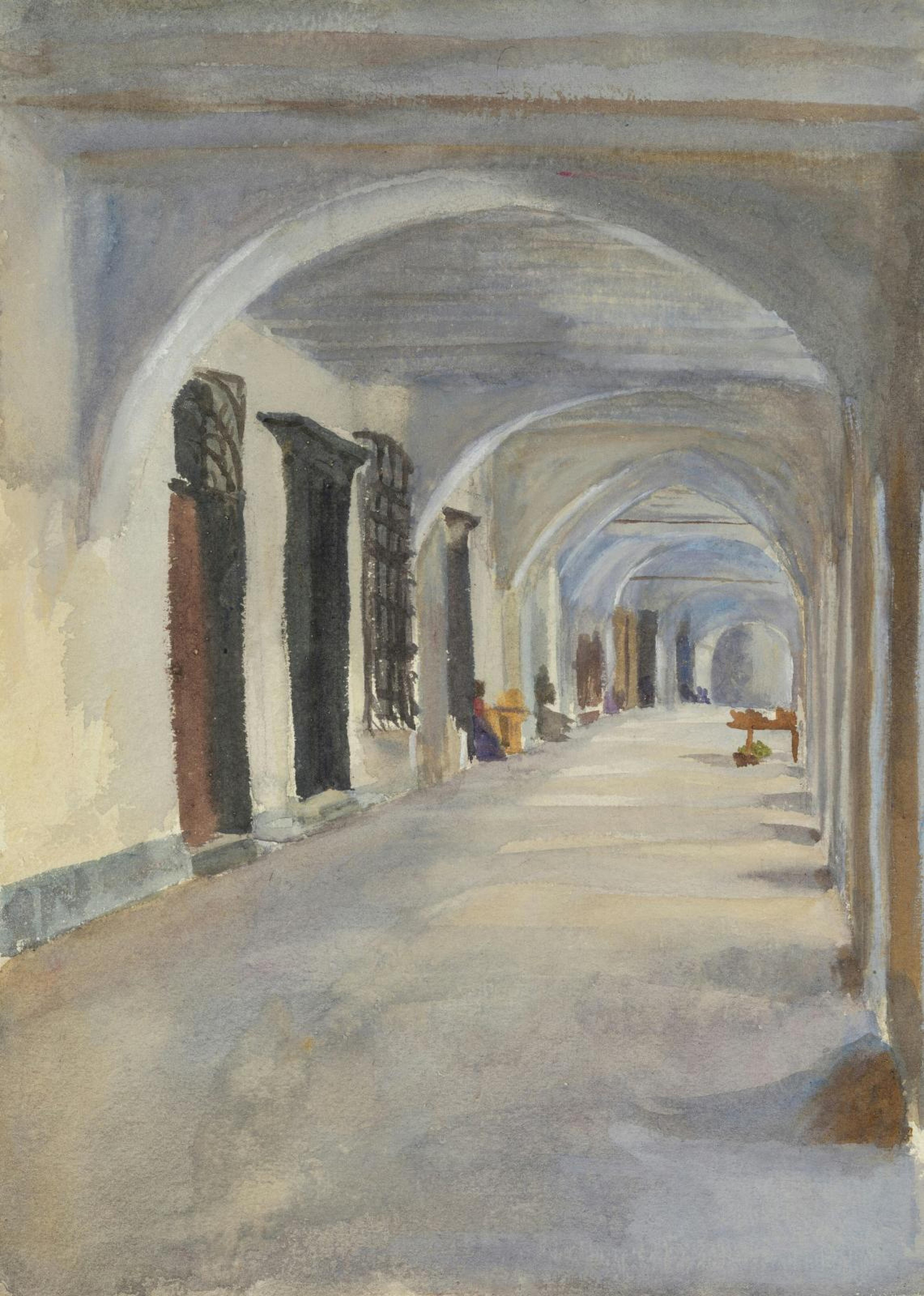
Turning, I faced a corridor of stone:
there at the end were two women, chatting
in a shaft of light that I knew was sunlight,
seated on a stone bench. The one on the left,
beautiful, middle aged and African, turned
and handed me the items I would need to enter—
directions, a lively illustrated place map, a lanyard, a pin—
and in that East African accent that is like Sade to my ear,
describing beautifully what to do. But so gently!
Was I the first arrival of the day, I wondered,
not expected but welcome, needing a merciful hand?
Because she understood crisis and pain in all its guises,
how a pain’s sequel does one better than the last
and each tops the last until all you know
is that all you have ever known is pain.
She said all this saying little,
smiling but not really smiling, her deep eyes
fixed on me, the color of infinite mercy.