Long before Benito Mussolini rose to international infamy, an Italian immigrant named Agostino de Biasi founded a New York City group called the Fascio in 1922. Immigrants from Germany, Spain, and Ireland supported American organizations with subtle and not-so-subtle ties to fascism in the years before World War II. This is not the kind of history we generally associate with Ellis Island’s poor, huddled masses.
In this way, they were more like their native-born American counterparts than they thought. In his provocative, timely, but frustrating book, Joseph Kelly argues that the roots of fascism can be found not in Europe but in the United States. “Fascism erupted out of American traditions…. [It] is a native weed,” writes Kelly, a professor of history and literature at the College of Charleston. To “understand this phenomenon, we need to push its origins back…into the nineteenth century.” Some readers will also need to adjust their definition of what, exactly, constitutes “fascism.”
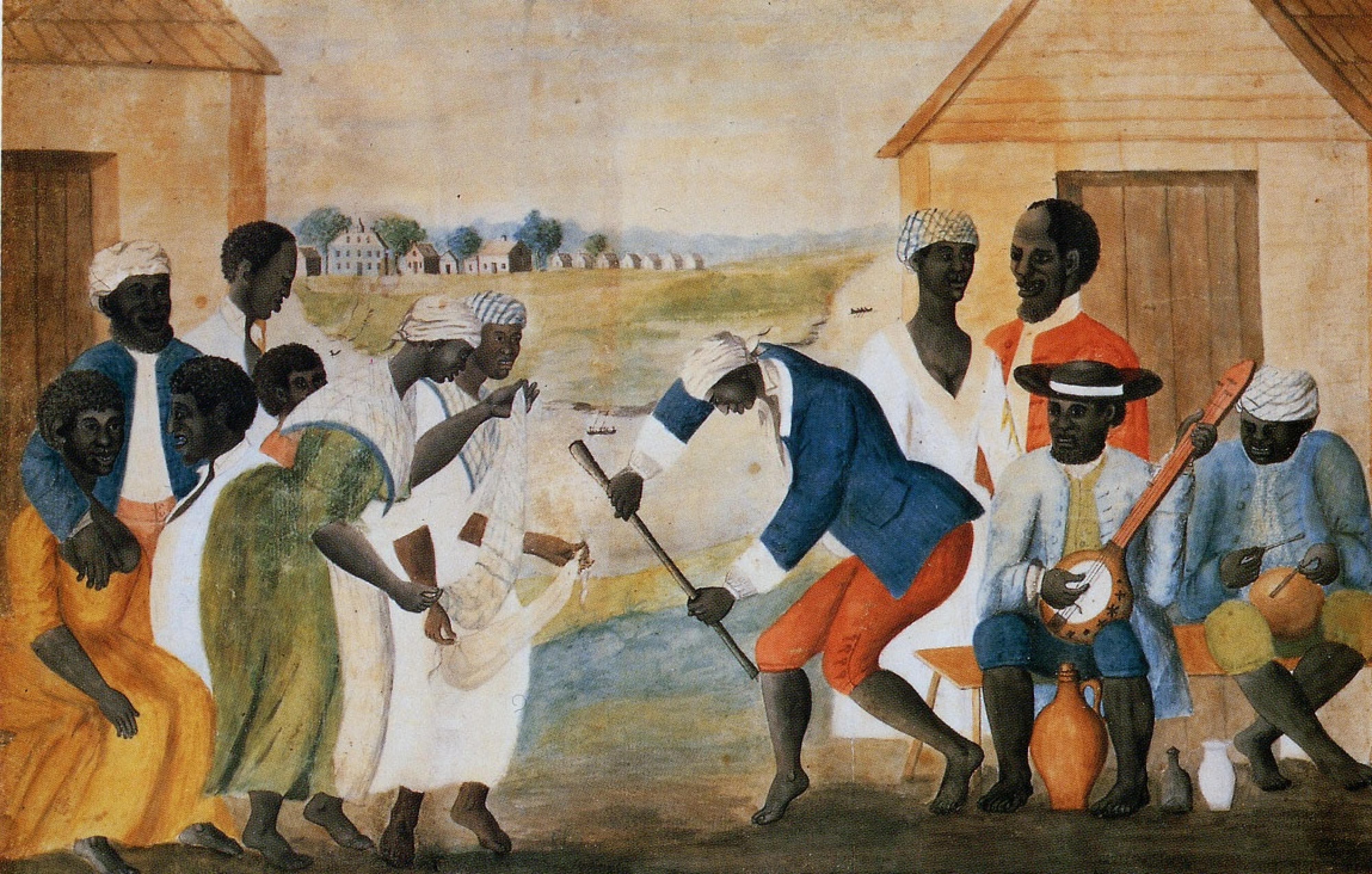
To Kelly, in the early 1800s, a “remarkably small number of people financially invested in slavery began attacking equality and promoting its opposite, human inequality,” fostering “the growth and spread” of a “white nationalism” that was wielded by Southern elites and, later, Northern industrialists against those at the bottom of America’s socioeconomic ladder. This was, to Kelly, not only protofascism but also part of “the biggest lie in American history.” Robber barons “repurpos[ed] the racial caste system engineered in the South” and “divided white people into a complicated and ridiculous taxonomy of races,” so that “some white people would be included in the democracy, while others had to be excluded,” Kelly writes.
Kelly’s is one of many recent considerations of the infamous F-word. “This book does not quite fit into the fascist-alarm genre,” he contends. “I make no claims about contemporary politics.” Readers, he adds, can “draw their own lessons about Donald Trump and today’s Republican Party.” In fact, the very ingredient twenty-first-century Americans most associate with fascism—an authoritarian leader with a cult-of-personality following—is absent from Kelly’s “prehistory.” After citing Robert O. Paxton’s nine elements that “mobilize fascists,” Kelly argues that Americans who “eventually call[ed] themselves the ‘Anglo-Saxons,’ exhibited seven,” including “an intense tribal feeling, a deep sense of victimhood, a fear of decline and replacement,” and “an impulse toward racial purity.”
Kelly judiciously draws on journalism, literature, music, and movies to illustrate how American leaders gave up on the nation’s highest ideals—found in the Declaration of Independence as well as post–Civil War Reconstruction amendments. Southerners were all too willing to restrict speech, countenance violence, and exploit grievances—“deformations of democracy” that Kelly dubs “nascent fascism”—that eventually crept northward, where a “largely immigrant proletariat tempted Northern elites with the expediency of inequality.” The laboring classes were made to feel not only replaceable but threatened by so-called lesser races further down the social ladder, rather than by manipulative plutocrats.
The Fourteenth Amendment’s equal-protection clause was fatally undermined, Kelly argues, by two Supreme Court decisions: Plessy v. Ferguson (1896), in which “the Jim Crow racial caste system” was declared constitutional, and Lochner v. New York (1905), in which legal protections for workers were struck down. And so, in the early twentieth-century war “between men with lots of property and people without any, the South could take the lead,” Kelly writes. “It understood far better than the North how to subvert democracy.”
How, exactly, did this lead to something we might today define as fascism? Waves of “Scotch-Irish”—Protestants from the Ulster region, who mainly became farmers across the rural American South—proved receptive to racial demagoguery that undermined once-cherished ideals of equality. This turned the South into “a hegemonic police state,” where anyone who “believe[d] all men are created equal [was] ostracized, intimidated, beaten up, and killed or exiled.”
This is an eye-opening perspective on life in the Confederacy and under Jim Crow. The degree to which the Southern order later influenced the likes of Hitler or Franco is a discussion worth having. But there are more fundamental questions to consider about Kelly’s account.
For starters: Was the consensus among the Revolutionary generation that “all men are created equal” as sturdy as Kelly suggests? After all, “pro-slavery Southerners” also “valued the Declaration,” historian Jill Lepore recently noted, because passages about “dissolv[ing] the political bands” can be interpreted as “a right to secession.” The colonies were only (and briefly) “united as a spontaneous response to an emergency,” Richard Kreitner argues in his fascinating 2020 survey of American divisions, Break It Up. Any “pretensions to perfection or perpetuity would forever be undermined by…[this] slapdash formation.”
In the end, many of the men who signed the radically egalitarian Declaration also accepted, a mere decade later, that a Black person is three-fifths of an American, and excluded women, Indigenous people, and others, from whatever vision of “equality” is reflected in the Constitution. A mere decade after that, the Alien & Sedition Acts proved that Jeffersonian Southerners were not the only Americans willing to restrict free speech and use state power for authoritarian ends. In fact, one could argue that the seventeenth-century witch hunts in Puritan redoubts such as Massachusetts—with their demagoguery, dehumanization, scapegoating, speech restrictions, and other items found on Paxton’s list—were even earlier “pre-fascist” episodes in American history.
By the time we arrive in the industrial North, therefore, Kelly’s delicate balancing act—Jim Crow and the Klan, labor law and immigrant slums, the Spanish American War, prefascism, and eugenics—starts to teeter under the weight of its own ambitions. Kelly argues that racial apartheid “in the old Confederate states did not just parallel the erosion of workers’ rights in the Gilded Age; they flowed together into one powerful, antidemocratic stream.” Slavery, to Kelly, was “the first battleground in the ideological struggle; immigration became the second.” An “ideology of inequality seeped out of the South,” exposing the “real divide in American society…between labor and capital.” For Kelly, “Irish Paddy was the North’s Black Sambo.” Powerful elites, Northern and Southern, caricatured and dehumanized both groups, finding it “expedient to accept the Big Lie about Black people because they wanted to tell the same lie about the Irish.”
But it’s never quite clear how ideas that flourished in the rural, agricultural Confederacy equated to “a new Jim Crow” for immigrants in the urban North. To Kelly’s credit, The Biggest Lie is a notable departure from recent influential histories, in which even the most impoverished European peasants are criticized for betraying revolutionary or proletarian identities in the United States in exchange for so-called “wages of whiteness.”
This is partly why we have a lot of passionate, learned scholarship about America’s racial history and also about its immigrant communities, but few insightful narratives about both. Immigration tends to complicate histories that are split neatly between a powerful (white) elite and disempowered, marginalized (nonwhite) populations.
Where do starving immigrants fit in? Which immigrants? From what time period? Do they—and their children and grandchildren—challenge or reinforce an unjust status quo? Some progressive historians have, in recent years, taken to suggesting that pretty much all European immigration is a kind of settler colonialism. When combined with twenty-first-century conservative nativism, we see an unlikely coalition of anti-immigrant sentiments across different time periods in American history.
It is certainly true (as Kelly notes) that after the Civil War, Northern leaders did little to combat the establishment of a violent, oppressive state below the Mason-Dixon line. Following the contested 1876 presidential election—two decades before Plessy—federal authorities refused to enforce anything like “equality” in the South, creating a power vacuum filled by the Ku Klux Klan. This desensitized all Americans to racialized violence and reinforced strict, cruel social hierarchies. When Lochner struck down protective labor regulations in 1905, Kelly writes, it “condemned working Americans, most of them immigrants, to a permanent underclass.”
But the consequences of mass American immigration have always been so vast and sprawling that it’s difficult to describe anything about them as “permanent,” or to confine them to a single interpretive frame or ideological box. In the North, Kelly writes, “Shanty Irish did a lot of boundary work…between themselves and Black Americans,” and thus “the dividing line between Anglo-Saxons and Irish was dissolving.” By 1900, the Irish were “Anglo-Saxon adjacent,” Kelly claims. But you’d really need to squint to see an elite that “regard[ed] the Irish…as partners.” From New York to Chicago, gangsters, cardinals, crooked cops, labor organizers, undocumented immigrants, and revolutionary bomb-throwers all empowered Irish political machines. These rough-and-tumble coalitions were many things, but “Anglo-Saxon” isn’t one of them.
Kelly also does not address the various ways Northern—and Midwestern—urban immigrants combated what he might characterize as early fascist leanings by punching up as well as down. Before and after court rulings such as Lochner, Northern immigrants challenged authoritarian robber barons with ballots, bullets, and bombs, from Haymarket Square to the Homestead Strikes to nationwide anarchist violence.
Urban political machines, meanwhile, developed social programs that may have been flawed and inadequate, but were also models for the New Deal. Would there have been greater economic equality if the Supreme Court approved federal labor regulations, just as a more muscular federal response in the South would have led to greater racial equality? Perhaps. But federal powers will always be—to put it mildly—a double-edged sword.
If slavery and racism are America’s original (arguably irredeemable) sins, immigration and assimilation have always been far more complicated, all the more so because they’ve taken place in a nation with such an appalling racial history. We’re still fighting about pluralism and diversity today because we remain profoundly divided about the long-term consequences of racism and nativism. If the end result was a kind of fascism, as Joseph Kelly claims, not all of its adherents were powerful elites.
One thing we do know: U.S. senator David A. Reed was quite wrong about the landmark 1924 anti-immigration bill that bore his name. “The America of our grandchildren,” he said, “will be…a more homogeneous nation…more closely knit by common purpose and ideas.”
We welcome your comments about this article. Please send your response to [email protected].