If this past spring was marked by rising tensions between the Trump administration and the Vatican—complete with unprecedented verbal attacks on Leo XIV from Donald Trump and J. D. Vance, followed by a direct response from the pope—summer brought something of a détente. We’ll see how long it holds. The highest-ranking American Catholic elected official continues to espouse a theology very different from the one that informs Vatican diplomacy, suggesting that Rome may not find it easier to deal with the United States any time soon.
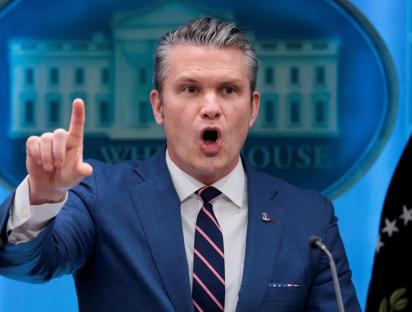
The latest example came in Vance’s August 31 interview with Bryce Crawford, a twenty-two-year-old Evangelical host with more than a million YouTube followers. Vance told Bryce that he is “doing as much of God’s work as possible” and that he is okay “if that leads to the end times,” which, he added, “are coming.” These comments on the apocalypse were slightly more nuanced than what he has circulated on social media: “While I’m fascinated by it, I think that focusing on it too much can be very bad,” he has said, adding that if his work “leads to the end times, okay, and if that leads to…us building a better world that thrives and survives for a very long time after I’m gone, that’s great, too.” Vance has also said, “I think there are things about the world that make me feel, like, not shocked if the Antichrist was walking among us.”
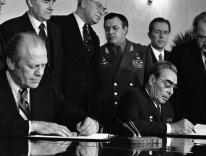
Statements like those could be brushed aside if they weren’t coming from the vice president of an administration that makes regular use of biblical language and crusader rhetoric in talking about ICE operations and the war in Iran. What kind of theology animates the worldview of the Trump administration? As Antonio Spadaro put it: “Between a world that is ending and a world that endures lies the entire distance between an ideology of the end and Christian hope.” The administration’s view is a rupture in the theological understanding of history and international relations that the United States and the Vatican have long shared. Reconciling an explicitly articulated political theology in which war is the norm and the eschaton nigh with a political theology that draws on the Gospel and works for peace could present fundamental diplomatic challenges. During the tensest moments of the Cold War, with world-destroying conflict between nuclear superpowers an ever-present threat, the U.S. administration wasn’t adding end-times theology to the mix. But now the self-described “most Christian” of nuclear superpowers is waging war within a narrative of political messianism. Never before has conflict been so closely linked with the defense of Christianity as it has been in the official statements and social-media posts from Pete Hegseth’s “Department of War.”
This creates problems for the Vatican and its view of the international order. Under Pope Leo even more than under Francis, the Holy See is one of the last—and probably the most visible—guardians of multilateralism, and it has been exploring ways to build a viable multilateral model for the past several years. In 2023’s Laudate Deum, Pope Francis spoke of “a multilateralism from below”:
In the medium-term, globalization favors spontaneous cultural interchanges, greater mutual knowledge and processes of integration of peoples, which end up provoking a multilateralism ‘from below’ and not simply one determined by the elites of power. The demands that rise up from below throughout the world, where activists from very different countries help and support one another, can end up pressuring the sources of power. It is to be hoped that this will happen with respect to the climate crisis.
Under Leo, the Vatican appears to be advocating for a more traditional, multipolar international order—a model that has helped the Vatican acquire a unique position among all religious traditions. It’s what enables its diplomats-in-chief to deliver messages to heads of state and governments around the world (as Archbishop Paul Gallagher did in a trip to Moscow at the end of August). Of course, the fact that the Vatican talks with everyone is not new. What is new is that it’s the Vatican, not Washington, that more frequently uses the language of liberty, democracy, and human dignity.
The Vatican has a theology of politics that is critical of some aspects of the liberal order. But it’s not a political theology of (counter)revolution against the liberal order (in part because of the Vatican’s natural suspicion of populism). Its diplomacy differs from that of most nation-states, and it certainly doesn’t propose a vision of the end of history based on a literalist reading of the Bible. Vatican diplomacy is a specifically Roman Catholic expression of theology of the presence of the Church in history—which holds in a paradoxical relationship the diplomatic activity of the Vicar of Christ and the prophetic message of the Bible and of Jesus Christ. It is grounded in the Gospel message and stands worlds apart from biblical fundamentalism. The Vatican rejects a geopolitical theology that unfolds under the sign of the apocalypse and upholds a vision of the Church with a universal vocation that stands in opposition to nationalism. It’s a vision deeply at odds with an apocalyptic frame, which is more about destroying a civilization than building it. As Leo XIV wrote in the encyclical Magnifica humanitas:
In the international context, the Holy See’s diplomacy adopts the Gospel’s principle of mercy as a concrete criterion for political action. This is one of the ways in which the Holy See places itself at the service of humanity, thereby appealing to consciences in the name of charity and truth, defending the dignity of every person and speaking up on behalf of the poor, migrants and victims of war. In this way, papal diplomacy expresses the catholicity of the Church and contributes to the building of a civilization of love, where even new technologies can be oriented toward the common good.
Of course, the Vatican’s efforts in diplomacy and peacemaking can’t be undertaken without U.S. involvement. But pax vaticana has always differed significantly from pax americana, and those differences have only become more extreme over time. This may in large part stem from how America has long viewed its place in history. On January 1, 1968 (curiously, the same day as the first celebration of the World Day of Peace, instituted by Paul VI), the Austria-born political scientist Stanley Hoffmann wrote an article in Foreign Affairs about the U.S. approach and how it differs from that of Europe.
“[Europeans] are skeptical about the possibility of success in applying recipes, abroad or even at home, that worked once in a particular circumstance. They are not sure enough that their history has been a success to want to extend its lessons to the universe. But Americans, whose history is a success story, tend to believe that the values that arise from their experience are of universal application, and they are reluctant to recognize that they are tied to the special conditions that made the American success possible.”
Almost sixty years on, this still holds. But something else has profoundly changed. Hoffman expressed his confidence in what he saw as the nonideological, nonapocalyptic vision of the American style of foreign policy.
“The vision they [Americans] express is reformist rather than revolutionary, and they are not so historically grounded as ideologies. While the United States hopes to revamp political life along certain lines, while it envisages global change, its purpose is improvement without apocalypse. The American vision lacks the prophecies and ‘valued revelations’ of ideologies and contents itself with embellishments and ameliorations on a basically accepted design, rather than a repudiation of this design altogether.”
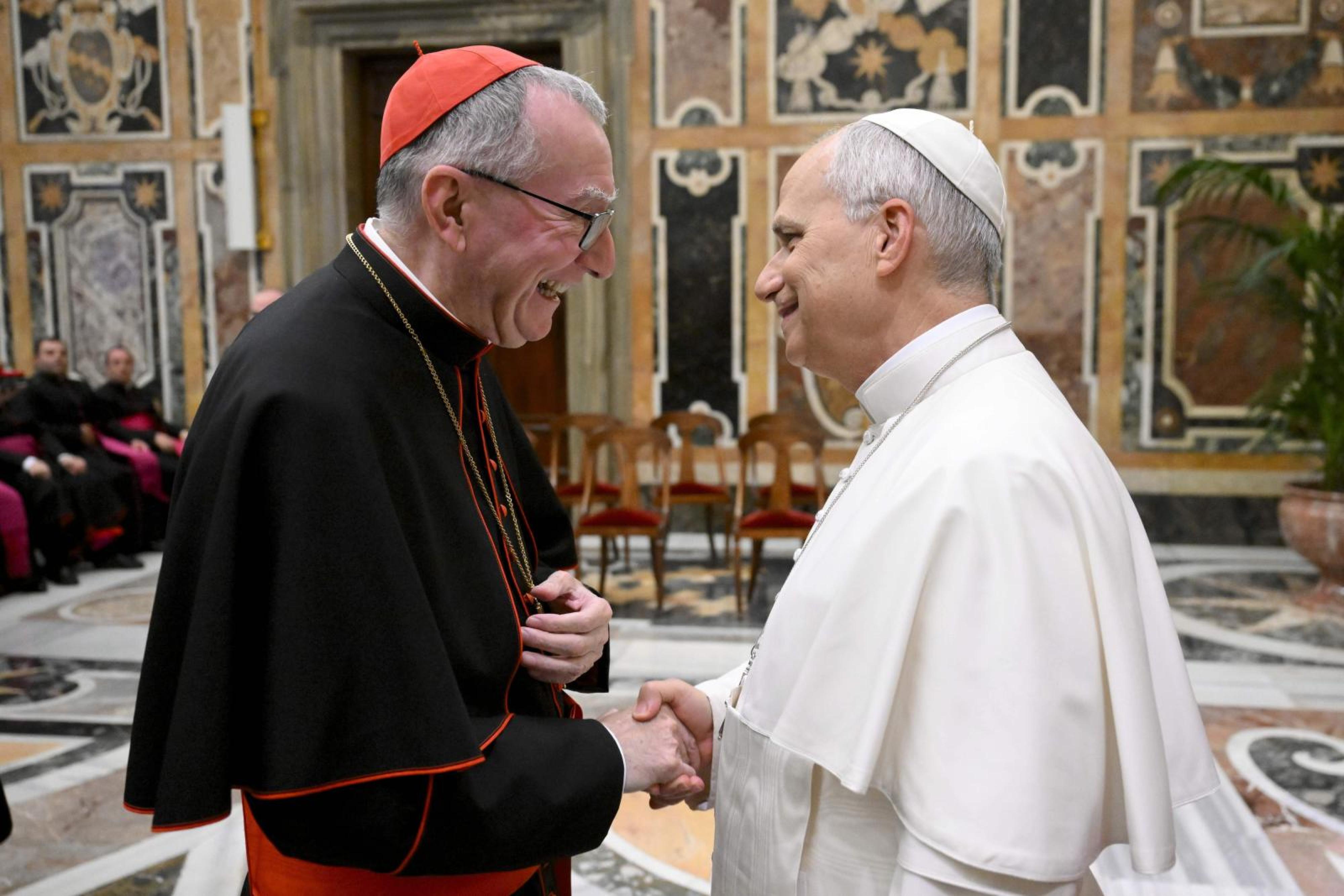
Trumpist rhetoric—from Vance, Hegseth, and others in the administration, and echoed by some high-profile U.S. Catholic prelates, public intellectuals, and media personalities—now posits American history as religiously centered, with the idea that there is a greatness to return to. No pope has had to deal with an administration that looks at the country this way. Leo’s theology of politics rejects the politicization of the sacred and the sacralization of politics. It differentiates itself from populism so as to recover the meaning of institutions and structures as instruments for the common good. As Leo wrote in his April message to the Pontifical Academy of Social Sciences: “Divine power does not dominate, but rather heals and restores. It is precisely this logic of charity that must animate history, for human activity inspired by charity helps to shape the ‘earthly city’ in unity and peace, rendering it—however imperfectly—an anticipation and a prefiguration of the ‘City of God.’” It is a different way of conceiving the relationship between the Church and the (end) times, and it was well articulated by Cardinal Pietro Parolin, the Vatican Secretary of State, in a speech delivered in Brussels last January: “The Church does not dominate history, nor does it simply merge with it; it travels as the presence that accompanies, discerns and listens to history.”
This is the diplomatic challenge for the Vatican now: untangling Catholicism not from identification with the West per se, but from the superpower that continues to lead it. This emerging conflict over theologies of politics could have implications that are more fundamental than those posed by the “culture wars.”
We welcome your comments about this article. Please send your response to [email protected].