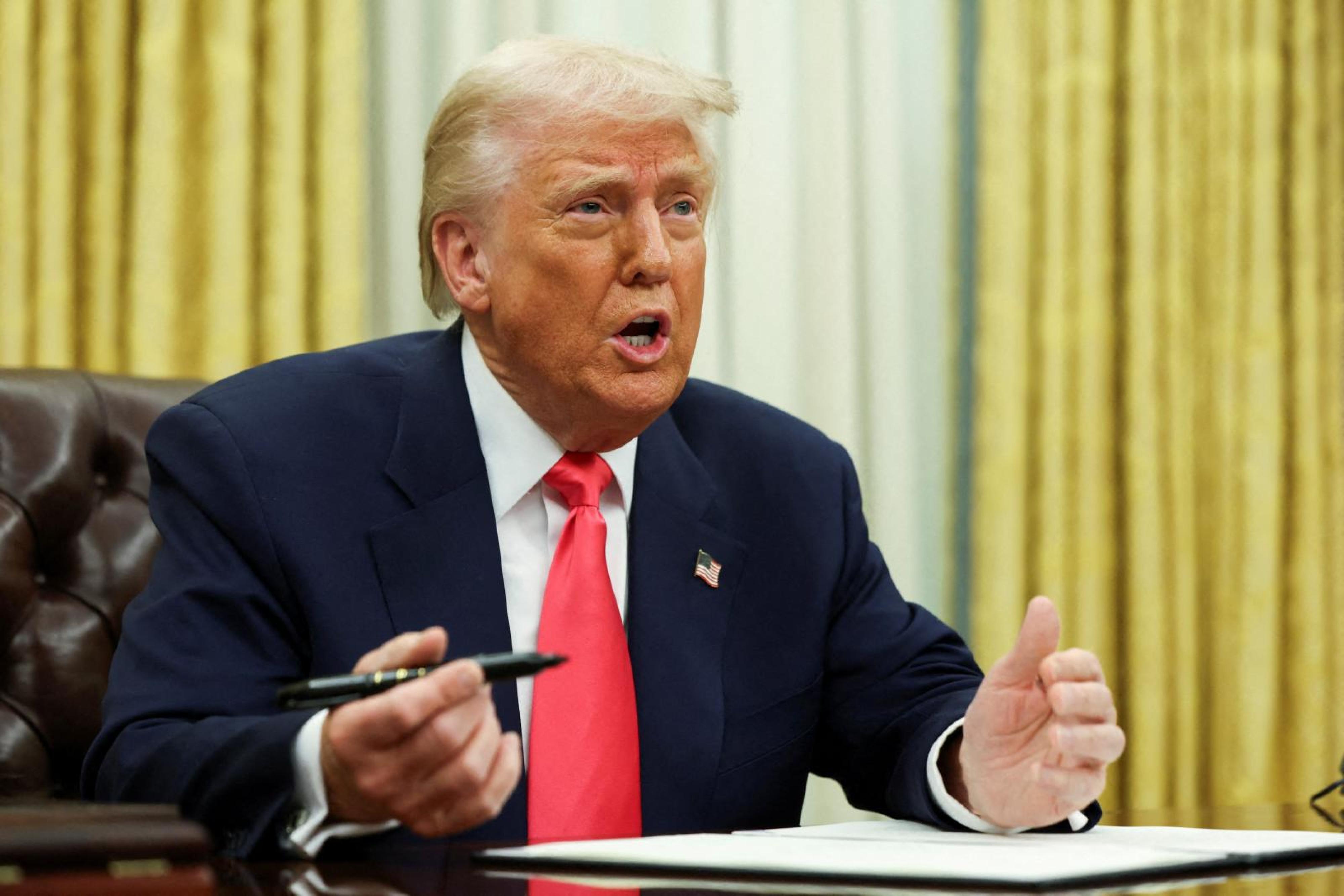
Maggie Haberman and Jonathan Swan’s Regime Change: Inside the Imperial Presidency of Donald Trump lays bare the full story of year one of the second Trump administration. Their sources are myriad. Many are insiders who, for obvious reasons, prefer to remain anonymous. The end result is a meticulously researched chronicle of pervasive corruption, egomania, winsome cruelty, and score settling that is exhaustive, exhausting and, at times, frightening.
Haberman and Swan are experienced, well-versed journalists who’ve reported on the administration since Trump’s first term. They know the terrain and the personalities. This time around, the administration came in with the knowledge and experience to avoid previous missteps. There was a clear plan, Project 2025, and a cadre of hardcore loyalists to carry it out.
The administration has pursued its goals with brute effectiveness. The would-be putschists of January 6 were freed. Prestigious law firms scurried on penitential knees to gain the president’s favor. To avoid retribution for actions he disapproved of, firms contributed millions to his presidential library. (The plans revealed so far indicate it will be more hotel than library.)
The networks were close behind. Threatened with a lawsuit, ABC coughed up $16 million for referring to the president as a rapist. (He was found liable for sexual assault.) Nearing a merger with Skydance, Paramount paid a similar amount. (Legal experts agreed the cases would have been thrown out of court.) Stephen Colbert called it a “big fat bribe.” The network insisted the decision was financial. Most observers sided with Colbert. Soon after, his show was dropped from the air.
Elite colleges and universities fell in line, scouring their curricula to eliminate any trace of DEI initiatives. The heads of several university presidents rolled. Legitimate concerns about antisemitism were turned into an all-purpose cudgel. Harvard is the last holdout. Faced with punitive federal cuts, it remains embroiled in a series of lawsuits.
Soon after his reelection, the authors write, Trump received calls “from Fortune 500 CEOs, many of whom had criticized him in the past.” He wasted no time in setting “the exact dollar figure” he wanted extracted from each of them. A bevy of Silicon Valley machers, once uncertain in their support, sat like lap dogs as the president delivered his inaugural. So much money flowed in that “Trump had to think about what else to do with all the cash.”
In Haberman and Swan’s accounting, “Trump derangement syndrome”—coined to describe the reactions of his most virulent critics—seems an apt description of the president himself. Despite the unanimous conclusions of numerous courts that the 2020 election wasn’t stolen, the opinion of his own attorney general, the findings of multiple recounts in Georgia and other states, and the debunking of “rigged voting machines,” his self-generated delusion that he was cheated of immediate reelection remains unshaken.
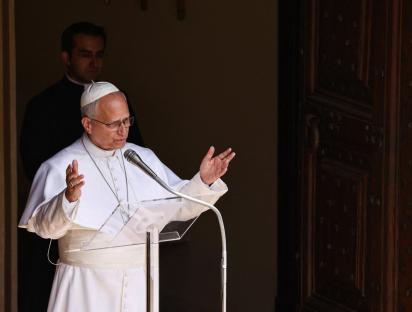
In the 2024 election, Trump helped promulgate the malicious fantasy that Haitian immigrants “are eating our pets” and repeated it in his debate with Kamala Harris. His threat to Iran that “a whole civilization will disappear tonight, never to be brought back” was so deranged it brought instant condemnation from Pope Leo. (Trump responded that the pope was “soft on crime.”)
The authors point out that Trump has done nothing to refute the perception that he suffers from an amoral fixation with power. He took obvious pleasure in being included in the “company of Mao, Hitler and Stalin, masters of state control through murder, torture, and detention…. What mattered was that they had held huge power—and that he had more.”
You might like: The Editors on Trump's smash-and-grab presidency
Defenders of Trump have put forward a “whataboutism” defense, objecting that the transgressions he’s accused of are shared by many of his predecessors. Franklin D. Roosevelt introduced “the imperial presidency”—a vast expansion of executive power—and sought to create a pliant Supreme Court that he could turn to his own purposes. John F. Kennedy and Bill Clinton were sexual libertines whose behaviors didn’t change once they got into the White House. Lyndon B. Johnson engineered some shady deals in his time in the Senate. Richard Nixon did his best to discredit the press and intimidate journalists. Ronald Reagan attacked the federal bureaucracy and promised savings that never materialized.
The title Regime Change underlines the fact that Trump’s return was no ordinary transfer of power in the tradition of our Republic. In a little-watched primetime address delivered on July 16, Trump once more displayed his single-minded refusal to bow to facts, regurgitated his canard of a stolen election, and demanded Congress pass the so-called SAVE Act, a set of changes to voting regulations that includes new impediments to mail-in voting and proof of citizenship to register to vote. (The president renewed his now familiar attacks on the networks, threatening to revoke their licenses.)
Haberman and Swan’s accounting of Trump’s behavior leaves no doubt that he is fundamentally different from his predecessors. The attempted coup of January 6 was an appalling act of sedition that should have resulted in impeachment. His attack on the free press has been shameless and relentless. He’s been found liable for sexual assault and accused of sexual misconduct by two dozen women and he paid a porn star to stay silent about their liaison. He’s been fined $22 million for creation of a bogus “university.” Jerome Powell, former Federal Reserve chairman, summarized the vitriol Trump directed at him as “a shocking experience…an incredible violation of norms.”
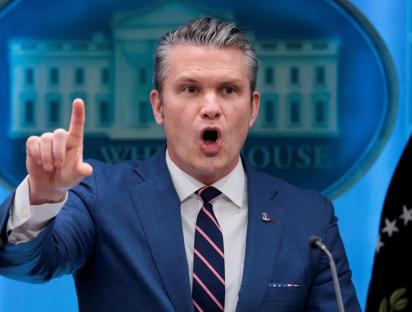
The thought that his cabinet, whose meetings often seem like reruns of Fox & Friends, might offer a moderating effect is belied by the epic levels of obsequiousness displayed by its members, some of whom seem lifted from fiction. Listening to Pete Hegseth’s obsession with lethality evokes General Jack D. Ripper in Dr. Strangelove. Robert F. Kennedy Jr. sometimes seems to channel Dr. Leo Spaceman, the resident quack on 30 Rock (“medicine’s not a science”).
With great fanfare, the president announced the Department of Government Efficiency (DOGE) to cut waste and fraud, eviscerate a bloated federal bureaucracy, and produce enough savings to slash the national debt. At its head, he installed an often erratic, sometimes unhinged billionaire—whose businesses hold billions in government contracts—to undertake a wanton, ill-considered assault on government departments that perform vital functions. In its short existence, DOGE produced little efficiency or savings but did manage to sow confusion, eliminate many hardworking civil servants, and dispense with decades of much-needed experience and expertise.
“When Trump returned to power in 2025,” the authors point out, “his campaign to crush institutional DEI programs quickly mushroomed into a larger attempt to remake American culture itself.” Adding his name to the Kennedy Center was an opening shot. “The Smithsonian, the president posted on social media, “is OUT OF CONTROL, focusing on how bad slavery was and how unaccomplished the downtrodden have been—Nothing about Success, nothing about Brightness, nothing about the Future.” He instructed his attorneys to review the museum’s displays and make “content corrections” to excise what his administration deemed “divisive or partisan narratives.” In July, signs were placed outside the Smithsonian National Museum of American History warning the exhibits inside were inaccurate and grossly misleading.
Haberman and Swan lay out in detail the administration’s self-dealing and outright corruption. Presidents Grant and Harding presided over administrations that became synonymous with corruption. Both presidents were negligent rather than active participants, guilty of trusting subordinates and taking no share of the spoils. Trump makes no attempt to deny or cover up his involvement in the shady world of crypto where he and his sons are prime actors.
Mapping the expanse of the regime’s grifting can be challenging. Trump’s brazen willingness to monetize the presidency, to use the office to enrich himself and his family, was reflected in the astronomical rise in annual income he reported for 2025. A meme coin he issued last year was a souvenir that had no intrinsic value but was touted as if it had. It resulted in a $3 billion profit for Trump and a $631 million loss for its purchasers.
Regime Change’s 464 pages offer a revealing and, at times, wearying account of the transgressive nature of the administration: the vilification of immigrants and the depredations of ICE; the threats to annex Greenland and take back the Panama Canal; the relentless campaign of political retribution; the on-and-off support for Ukraine; the stated intent to strong-arm Canada into the union as the fifty-first state; the swaggering disregard for international norms and institutions; the ill-considered war with Iran; the extrajudicial execution of putative drug dealers; the initiation of a chaotic trade war; the promotion of medical quackery. All are dismaying realities.
A year of regime change is “a time frame,” the authors offer, that “fully justified the often-used word: ‘unprecedented.’” The changes have been physical as well as political. The Oval Office has been transformed into a gilded cage. Without consulting Congress or numerous advisory boards, the president has taken a wrecking ball to the White House. The Capitol itself is undergoing changes meant to fit the Mussolinian tastes of the president. Changing the district’s name to “Trump D.C.” hasn’t been proposed (but there’s still time). In the background, Banquo-like, hangs the specter of Jeffrey Epstein. No amount of wishing on the president’s part can make it go away.
Trump’s preference is “to operate on pure gut experience.” His attention-deficit disorder leads him to one day perseverate over the Reflecting Pool, the next to rant about stolen elections, and the next to take up the subject of that morning’s Fox News. It’s one thing for a president to mix things up, another to make them all up. According to The Washington Post, in his first term, Trump made 30,572 false or misleading claims.
The authors describe Trump as an insomniac, television addict, and midnight snacker, “a waking moral hazard, rarely saddled for very long with costs or consequences of his risk taking and rule breaking.” He leaves “an array of empty potato-chip bags, Starbucks wrappers, and ice-cream cartons in the trash, or on the [bedroom] floor.” It seems an apt metaphor for his mind.
Haberman and Swan don’t offer much comfort for what the remaining years of the Trump administration will bring. If anything, the president seems free of control by a supine Congress and a brain-dead Republican Party. A trouncing in the midterm elections could change that, but the elections themselves might help reveal the extent the regime is willing to go to retain power. For all it reveals about what’s happened so far, Regime Change is hard to put down. It also suggests the worst may be yet to come.
We welcome your comments about this article. Please send your response to [email protected].