Interested in discussing this article in your classroom, parish, reading group, or Commonweal Local Community? Click here for a free discussion guide.
Omri Boehm’s Radical Universalism is a lucid and vivid tract in support of the thesis that philosophy is prior to politics. This thesis is not only of theoretical interest to Boehm, though it is certainly that. He also thinks our political principles and proposals, together with our ways of acting on them, are damaged to the extent that philosophy’s priority to them is denied or compromised. In Boehm’s view, liberal democracy’s current crises are traceable to such denials and compromises, and its reinvigoration requires both assent to philosophy’s priority and action based on that assent.
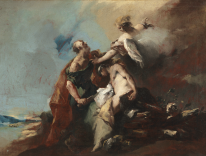
“Universalism” (he sometimes calls it “liberal universalism,” sometimes “radical universalism”) is Boehm’s preferred label for the kind of philosophy that is prior to politics. It involves “an abstract idea of humanity and a metaphysical concept of law,” and is committed to an elevation of duty over rights. It’s largely derived from Kant’s essay “What is Enlightenment?” (1784) but is buttressed by a somewhat idiosyncratic reading of the Declaration of Independence and a deeply idiosyncratic reading of the Binding of Isaac (Genesis 22:1–14).
The substance of Boehm’s universalism is a claim about humanity. Such universalism is, he writes, a kind of humanism, which suggests that to be human is to have inviolable and inalienable dignity inseparable from, or perhaps identical to, “the capacity not to be determined by concrete facts.” No social, biological, historical, or psychological states of affairs make us human. What makes us human is the ability “to use one’s own understanding without the guidance of another”—Kant’s words, quoted with full endorsement by Boehm. We’re human, then, because we can think for ourselves and arrive at conclusions by ourselves, without subjecting ourselves to the authority of others and without conforming to “others’ pre-given standards of thought,” as Boehm writes. This capacity is the defining characteristic of the human. To have it is to be a bearer of inviolable and inalienable dignity.
From this premise follows an absolute duty: to oppose political principles, proposals, or practices that contradict human dignity so construed, and to support those that accord with it. To call a duty “absolute” is strong Kantian language, and Boehm’s examples of what it means to follow such a duty show that he agrees without reservation.
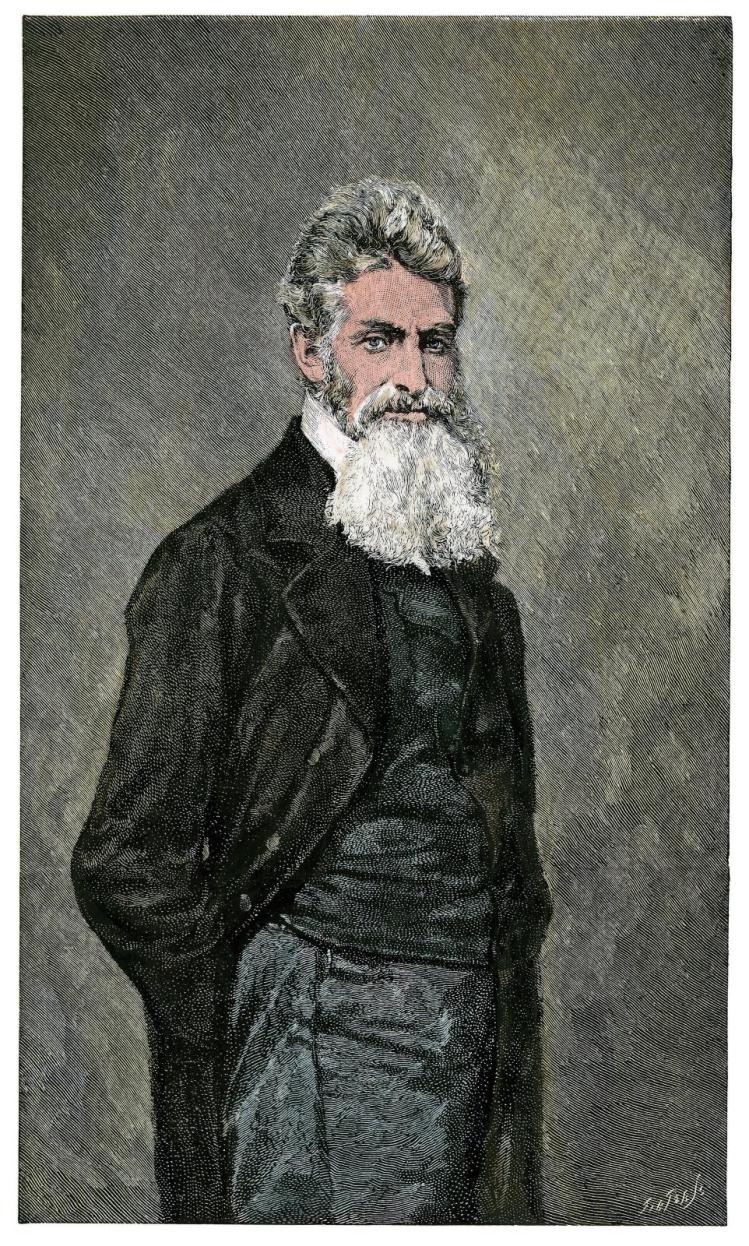
One example is chattel slavery. It contradicts human dignity directly, and so we must extirpate it in such a way as to show that it does. Not just any extirpation will suffice, for we could extirpate it in such a way as to leave the impression that it’s a defensible arrangement; scorched earth is needed. John Brown is a prophet and a hero for Boehm, while those abolitionists who worked to undo slavery by, for example, purchasing the freedom of slaves are vile and contemptible.
Another example: Boehm advocates, as the only possible solution to the Israeli-
Palestinian situation, the creation of a single binational state. It would be a “realist binational utopia” (one of the loveliest oxymorons I’ve come across lately), in which there’s a common conception of citizenship provided by radical universalism—provided, that is, by seeing every inhabitant of the land as human in the sense given by Kant and Boehm, and by enshrining that vision in law. Boehm’s book Haifa Republic (2021) develops this line of argument. He doesn’t present it as one option among many, or as the best we can do given the circumstances. No, it’s the solution we have an absolute duty to accept and advocate. And if he’s to be consistent, Boehm must say that the duty applies not only to Israelis and Palestinians, but to all of us, every human.
There’s much to admire and like in Radical Universalism, in particular its passion and clarity. But as a whole I found it repellent. Let me explain.
The first problem is that Boehm’s argument provides a righteous charter for limitless violence. This is apparent in his advocacy of John Brown’s response to chattel slavery. Brown, as Boehm clearly sees, was an apostle of lethal violence at industrial scale. He didn’t succeed in implementing his plan to distribute arms and foment rebellion following the Harper’s Ferry raid of 1859, but that’s what he intended to do. In Brown’s view, chattel slavery could not be removed by any means other than violence. It was so heinous that violence was the only appropriate response. Boehm is forceful, almost lyrical, in his approval of such people as Emerson and Thoreau, who were vocal supporters of Brown during his trial. Boehm approvingly quotes Emerson’s claim that Brown’s heroism would make his “gallows glorious like the cross” and Thoreau’s claim that Brown could reasonably be considered divinely appointed for the work he had planned. Even more striking is Victor Hugo’s claim that the execution of Brown was more terrible than Cain’s killing of Abel, a position that Boehm also endorses.
In contrast, Boehm excoriates Oliver Wendell Holmes Jr. for affirming, in the wake of the Civil War, that “certitude in normative truth promotes barbarism rather than civilization” (Boehm’s words, summarizing Holmes’s mature position). But Holmes was right, and Boehm is culpably wrong. I write “culpably” because of the plethora of examples since Brown’s time of violence at scale exercised in the service of normative certitude. Brown seems to me in that respect a blood-brother to Pol Pot. Boehm should know better.
The problem here is not about whether chattel slavery contradicts human dignity. It does. Neither is it about whether, as a historical matter, the mass slaughter of the Civil War was required to remove slavery. About that I have no opinion. Neither, even, is it about whether there was then and is now an absolute duty to oppose chattel slavery. I think there is not, but everything depends upon how “absolute” is construed. Rather, it’s about what Boehm’s Kantianism makes invisible, which is the seven hundred thousand or so corpses (according to current estimates) produced by the war that Brown wanted and Boehm celebrates. One might lament these dead, all of them, even if one judged the war to have been necessary or just. Not to do so evidences an excess of righteousness. Boehm does not lament them. They appear only when he describes and celebrates the separation of Confederate from Union corpses following Gettysburg so that the former could be excluded from honor at the new national memorial.
In Boehm’s view, to be human is to bear inalienable and inviolable dignity. It’s puzzling that he ignores the killing and throwing into pits of those who have such dignity. Boehm’s politics, like any Kantian politics, has an excess of certitude and righteousness, a deficit of lament, and a proclivity for and ease with lethal violence. It is, in all those ways, disgraceful—a word I choose carefully.
There is also a contradiction central to the book’s argument, and this is a second reason for its repellence. Boehm’s radical universalism locates human dignity in autonomy, specifically in our capacity to think and arrive at conclusions independently—relying on nothing outside ourselves. (We arrive at no conclusions in this way, but that is a topic too large for this review.) And yet, as Boehm admits, and as Kant also did, few of us do or can arrive at all our moral or metaphysical conclusions independently. Most of us are, Kant writes, immature. The mature, which category includes himself, must disseminate the truth to those incapable of arriving at it themselves. Anyone who has taught “What is Enlightenment?” to undergraduates will know what Kant means: he’s incomprehensible to most, and no matter how hard they try he’ll remain so; they come to know what they know of him, if they come to know anything at all, by way of a teacher’s testimonial authority. Boehm writes, correctly, that Enlightenment “depends on some form of prophecy after all.”
Acknowledging that dependence three-fourths of the way through his book might have led Boehm to a pause and some handwringing. But it doesn’t. It leads him instead into a long discussion of the nature of prophecy, which concludes with a depiction of Abraham as the ideal type of the prophet because, in Boehm’s reading, he appeals to a standard of justice independent of, and superior to, the god who addresses him. Abraham is, on this view, a prophet of the same kind as Kant, Brown, Martin Luther King Jr., and Abraham Joshua Heschel, each of whom is explicitly categorized by Boehm as a prophet. Perhaps Kant understood himself that way; he certainly understood himself as one among the mature thinkers who, as a member of the intellectual avant-garde, must instruct the immature. I should think that by his own understanding of prophecy, Boehm must also consider himself a prophet.
But it remains remarkable that he leaves the contradiction unaddressed. It suggests that he doesn’t see it as a problem. He should, though. If humanity necessarily involves intellectual autonomy, and if many (most?) humans are not intellectually autonomous but are in the pit with Holmes—and with those who objected to Martin Luther King’s criticisms of the Vietnam War on prudential grounds even while agreeing with him about civil rights (another of Boehm’s examples)—and if the only way they can be brought to see the truth of Boehm’s radical universalism is heteronomously, by way of prophetic authority, then, well, most of us are at best only potentially human, our full humanity deferred, perhaps eschatologically. In the interim, which may be without end, we need a clerisy to guide us in our thinking and politics.
Voltaire used to write “Écrasez l’infâme” about, mostly, the didactic authority of the Catholic hierarchy. Are we better off exchanging that infamy for a clerisy of academics who advocate the universal dignity of humanity on a ground that excludes most actual human persons and makes the slaughter of large numbers of them at once invisible and obligatory?
These are particular objections to Boehm’s project. They aren’t the only ones that could be raised. I won’t raise more now but will instead end by sketching what I think is a better way to speak about politics than Boehm’s—one likely to lead to a better way of doing politics than his will. In his book, Boehm discusses the Declaration of Independence at some length but leaves almost untouched a key phrase in that document that saves it from being, as Boehm’s work mostly is, an overtheorized charter for endless violence.
The Declaration opens with a complex sentence that begins: “We hold these truths to be self-evident, that all men are created equal, that they are endowed by their Creator with certain unalienable Rights…” The rights are then specified, as are the purposes of government with respect to them. I leave that aside. In these opening clauses we find, beginning with “that,” two claims. We’ve all been created equal, and we are endowed by our creator with rights we can’t lose—rights, we might say, that are intrinsic to us. The Declaration could have just gone on from there. In that case, it would have made some strong claims about us and could have gone on to talk about government in response to those claims. But, that’s not quite what it does. No, it elevates its initial claims, pushing them up the theory-ladder—first by calling them truths and then by saying that those truths are self-evident. The latter is an even stronger claim, and a false one. It is false whether or not the claims themselves are true. It is false because self-evidence would require that anyone faced with the claims would have to find them true, and it just isn’t the case that everyone faced with them does. That’s an empirical claim. It isn’t possible to argue with it. That all men are created equal, etc., is disagreed with by many, and that’s enough to keep it from being self-evident.
But that’s not all. To call a claim self-evident is to place it outside the scope of reason and argument. Any argument offered for its truth implies that it isn’t self-evident and therefore needs support from argument. (This contradiction is similar to the one evident in Boehm’s book.) If someone faced with a so-called self-evident claim fails to assent to it, all you can do with them is turn away with a sigh, offer therapy, have them committed or incarcerated, or kill them. Had the Declaration of Independence stopped there, it would have been a charter for violence without limit (as it too often has been), and for treating those who don’t see its truth as certainly subrational and possibly subhuman (there’s also been a good deal of that in U.S. history).
But, Deo gratias, the Declaration has something more to say about the claims it makes. It is “We hold.” That’s the saving grace. The opening sentence turns out to be not about the claims, their truth, or their self-evidence, but about the signatories. Their rhetorical performance is, in this respect, just like that of Catholics at Mass, who begin their recitation of the Creed not with “There is one God” but with “I believe,” which in just the same way makes the recitation primarily about them—I should say, about us. I read the Declaration’s “We hold” as a ratcheting down of the claim to self-evident truth. We might paraphrase: Around here, this is how we talk about politics. Come and join us if you like, if this way of talking sounds attractive. But we don’t think we have an absolute duty to treat you as subhuman or subrational, or to kill or incarcerate or dispossess you, if you don’t talk this way. It’s an offer we make, one that informs a way of being in the world politically. Come and take a look. Some might then say, Here I am.
I grant that this is not how the signatories understood the text they were composing. But Boehm’s Kantian reading is not how they understood it either, as he acknowledges. That doesn’t matter. What matters is that the signatories composed the Declaration as they did, including the “We hold,” and that this makes it reasonably possible to read the text as I have read it. Boehm would find my reading anathema (and it’s no accident that he ignores “We hold”), because it would favor a more modest, barely theorized, local politics.
The sovereignty Boehm would have us recognize is gross, engrossed by the most elevated and comprehensive kind of theory one can imagine. Better are more sylph-like sovereigns, thin princes who see the inevitability of violent failure in politics, the obscurity of our political environment, and the damage we unavoidably do by whatever we advocate and perform in the political sphere. Such princes, altogether less weighty than Boehm’s, are on the side of Oliver Wendell Holmes and Augustine, whose repeated refrain in the City of God is that we must lament our political necessities. Lament is not possible within such immodest positions as Boehm’s, with their appeal to an illegitimate and unattainable certitude.
To read all the contributions to the symposium, click here.
We welcome your comments about this article. Please send your response to [email protected].