Yves Congar opened his 1976 book on the Society of Saint Pius X by asking: “Ecône and Monsignor Lefebvre again?” Fifty years later, we’re asking the same basic question.
The SSPX story, even as it reached its latest turning point, has long been unfolding. SSPX communities—official sources claim 733 priests, 264 seminarians, 250 sisters, and close to half a million faithful, which is a tiny minority of the world’s 1.4 billion Catholics—are what Congar in 1977 called “centers of Syllabus Catholicism” (a reference to Pius IX’s 1864 Syllabus of Errors). The society views everything that came after that as a betrayal of true Catholicism. Today’s SSPX would probably have a hard time accepting even Pius XII’s 1943 encyclical that ended the Catholic Church’s longstanding opposition to historical critical exegesis of the Bible.
Its decision to break away from Rome began in the early post–Vatican II period and has featured escalating moments of confrontation. In 1976, Pope Paul VI imposed a suspensio a divinis on Archbishop Marcel Lefebvre after he defied Vatican orders by illicitly ordaining traditionalist priests without proper authorization. Then, in 1988, during the papacy of John Paul II, SSPX ordained four bishops without Rome’s permission—a schismatic act that prompted their excommunications and the papal document Ecclesia Dei. Between 2007 and 2011, Benedict XVI tried to take a more accommodationist approach, most importantly by lifting the 1988 excommunications of the four SSPX bishops. (One of them, the British national Richard Williamson, was a Holocaust denier, Benedict XVI found out shortly after.) Francis followed in a similar vein with his unilateral decision to allow SSPX priests to hear confessions and witness marriages, and by abolishing the commission established under Ecclesia Dei. But he did not negotiate on Vatican II, understanding the risk of watering down the authority of the council. Yet this left him to deal with the side effects of Benedict’s actions—namely, the legitimization and even promotion of liturgical traditionalism and its ecclesiological baggage. Thus followed Traditionis custodes in 2021 and Desiderio desideravi in 2022, which restricted use of the “traditional Latin Mass” by strongly defending the link between the liturgy and the ecclesiology of Vatican II. Five years after its publication, the reception of Francis’s Traditionis custodes—part of Rome’s dealing with traditionalism in its schismatic and nonschismatic forms—is still an open question.
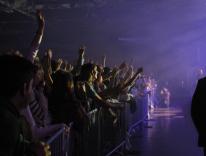
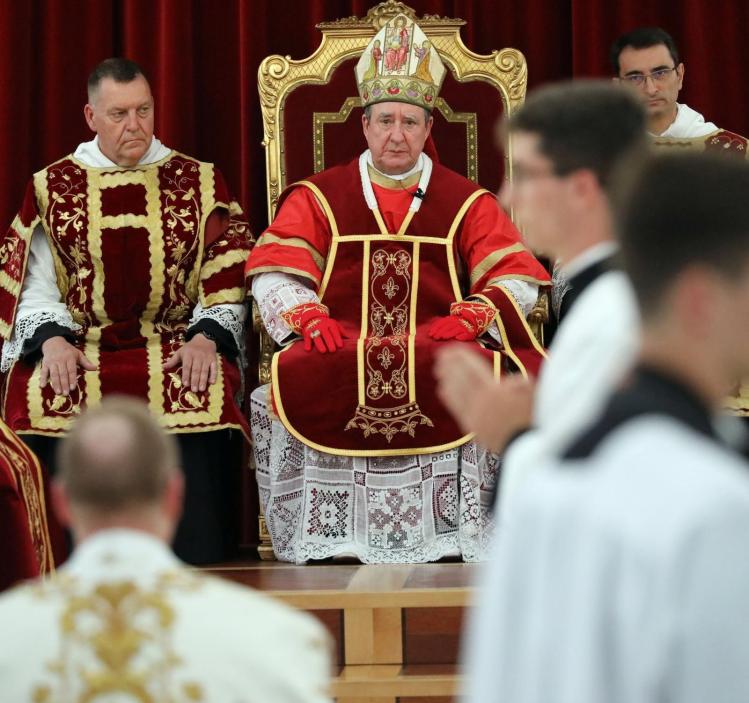
Now Leo XIV takes up the challenge. He tried to convince the SSPX via public appeals (the last on June 29) to walk back the decision to ordain four new bishops, which threatened to renew the 1988 schism and result in automatic excommunications. But on July 1, the SSPX went ahead with what it had been promising to do for months. The ordination ceremony of the four bishops was, as Italian journalist Iacopo Scaramuzzi put it, “the traditionalists’ Woodstock: part Latin Mass, part Tripadvisor.” There was never going to be much to negotiate or “dialogue” about: radical opposition to Vatican II and the post–Vatican II magisterium is the entire raison d’être of the SSPX. The twenty-eight-page “Profession of Faith” it published on June 24—much longer and more detailed than Marcel Lefebvre’s original “profession” in 1974—proves that. It is a rejection of the whole of Vatican II, from Dei verbum to Gaudium et spes through the liturgical constitution Sacrosanctum Concilium. Simply put, SSPX’s problem with Vatican II has never been merely a liturgical one; those who say otherwise are being either willfully ignorant or intentionally dishonest.
Rome’s response to the July 1 ordinations came within twenty-four hours; it was not only swift, but also strong and public: a decree of excommunication and an explicatory note with details about those excommunicated and considered in schism. The decree reflects a more expansive idea of excommunication (not just against the bishops and the clergy involved in the episcopal ordinations) than that caused by the 1988 episcopal ordinations. On July 1, 1988, Cardinal Bernardin Gantin, then Prefect of the Congregation for Bishops, issued the document defining newly ordained bishops as schismatic. The decree stated:
Monsignor Marcel Lefebvre, and Bernard Fellay, Bernard Tissier de Mallerais, Richard Williamson and Alfonso de Galarreta have incurred ipso facto excommunication latae sententiae reserved to the Apostolic See. Moreover, I declare that Monsignor Antonio de Castro Mayer, Bishop emeritus of Campos, since he took part directly in the liturgical celebration as co-consecrator and adhered publicly to the schismatical act, has incurred excommunication latae sententiae as envisaged by canon 1364, paragraph 1. The priests and faithful are warned not to support the schism of Monsignor Lefebvre, otherwise they shall incur ipso facto the very grave penalty of excommunication.
This time the document came from Cardinal Víctor Manuel Fernández, Prefect of the Dicastery for the Doctrine of the Faith. This issue of schism is now treated as a sin against the faith. The July 2, 2026, Explicatory Note of the Dicastery for the Doctrine of the Faith states instead:
The sacred ministers belonging to the Priestly Society of Saint Pius X are in schism and must therefore be considered schismatic…and are subject to the excommunication provided for by law (can. 1364 § 1 CJC). As regards the lay faithful, those who formally join the Priestly Society of Saint Pius X under the conditions established in the Explanatory Note of the Pontifical Council for Legislative Texts of 1996 (cf. ibid., 7), still in force, which this Dicastery adopts, are to be considered schismatic and excommunicated.
The same explanatory note states that “the sacred ministers of the Priestly Society of Saint Pius X are administering the sacraments unlawfully and that the sacrament of penance they administer and the marriage they assist are invalid.” Until now, the sacraments administered by the SSPX had been considered valid, even when administered by illegitimate bishops or priests who formally belonged to a schismatic group.
The new approach by Rome impacts the modus vivendi that some local Catholic bishops adopted with the SSPX in their dioceses. This explains the range of interpretive statements issued by bishops, especially in the United States (including one from archbishop Paul Coakley, ordinary of Oklahoma City and president of the USCCB), one of the countries most affected. Though one-third of SSPX priests are from France, one-fifth now come from the United States, which today has the largest SSPX seminary and the greatest number of seminarians. One of the new SSPX bishops, Michael Goldade, grew up in St. Marys, Kansas, home to the world’s largest SSPX-built church (completed in 2023). He was ordained at St. Thomas Aquinas Seminary Winona (Minnesota) in 2004. He served for seven years as the prior of St. Vincent de Paul Church in Kansas City, whose priests are SSPX members; they attended the SSPX consecrations in Switzerland on July 1.
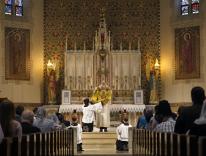
Three aspects of the SSPX matter have special relevance for the Church today. One is the reaction of Catholics (especially bishops, clergy, and theologians) who are in communion with Rome but also support the SSPX and traditionalist Catholics on the liturgical question (the so-called pre–Vatican II “Latin Mass”). There is pressure on Pope Leo and the Vatican II adherents to concede more on this front. The normalization of liturgical traditionalism within Catholicism is a posthumous victory for Benedict XVI. The traditionalist community is no longer a marginal group composed of different shades “between crypto-Lefebvrianism and orthodoxy.” For certain groups, Catholicism is becoming attractive again by being a minority. It appeals to certain reactionary political-theological ideologues, addresses the desire for spiritual questing and charismatic experiences, and offers a return to classic religious observance. At least in Europe, this remains more an ecclesial matter than a political one, at least for now—even though Vatican II denialism in the long run would be catastrophic for the political culture of Catholics.
Some of these groups now also look beyond rolling back excessive liturgical adaptations and improvisations; they express a nostalgic desire for using doctrine and theology to undo the inculturation that began with Vatican II—which for some Catholics (young, converts) seems like ancient history. Dealing with non-SSPX liturgical traditionalism will require pastoral and theological discernment, possibly imagining differentiated solutions in different parts of the world. Ritualized defenses of lèse-majesté of Vatican II will not be sufficient. On the other hand, it is clear that agnosticism toward or a reversal of liturgical reform would not leave the rest of Vatican II untouched.
The second thing to note is that this schism was not the result of failed negotiations with the Holy See. Failed negotiations were more a feature of Benedict’s papacy, and what’s happening now is also part of a developing historical and theological assessment of his pontificate. First as Cardinal Ratzinger and then as Benedict XVI, he sought to resolve the schism through a revision or correction of the reception of Vatican II. But Leo has his own approach to restoring the conciliar reception, evident in his Wednesday general audiences, where the catechetical focus is on the documents of Vatican II—a source-based course that might itself be worth reading as a completed book. This all takes place without any accusation or grievance against the postconciliar era, an era that Robert Prevost experienced far from Rome, in the United States and Latin America.
Ratzinger was one of the great theologians at Vatican II, but this moment puts to rest the delusion that the liturgical question was the problem and that the pre–Vatican II liturgy was the solution. This misguided conviction and the actions that followed created a systemic ambiguity about Vatican II that some Church leaders (both clergy and lay) exploited. Benedict XVI’s Summorum Pontificum (2007) inevitably launched an insurrection among traditionalist clergy and activists who were not just in favor of the “traditional Latin Mass” but who were also against the teaching of Vatican II, just as the SSPX clergy now dare to say out loud. The SSPX denies an entire century of doctrinal development—not just Vatican II, but what came just before and after it on matters of religious liberty, ecumenism, interreligious dialogue, and Church-state relations, and on ideas of the one human family, the concept of the human person endowed with freedom of conscience, the rejection of antisemitism, and more.
Third, Leo’s forceful response to the actions of SSPX should not come as a surprise. “Unity” is a very strong theme in Pope Leo’s teaching. It emerged right at the beginning, in the homily of his inaugural Mass: “Brothers and sisters, I would like this to be our first great desire: a united Church, a sign of unity and communion, which becomes leaven for a reconciled world.”
Prevost explained his choice for pontifical name by recalling Leo XIII, Rerum novarum, and the development of the social doctrine of the Church in response to industrial capitalism. But there is another possible and complementary explanation. Leo XIII, elected eight years after the loss of the Papal States in 1870, moved on from Pius IX’s intransigent rejection of the Enlightenment, the French Revolution, the liberal state, and rationalism. He moved on from 1864’s Syllabus of Errors. He moved on from the 1867 universal exposition in Paris, where the Papal State chose to be represented by a catacomb as an anti-Protestant, antisecular political statement. In this light, Leo XIV’s first encyclical—Magnifica humanitas, dealing with artificial intelligence—can be read as a “Counter-Syllabus.”
Leo XIII reinvented the modern papacy: a post-papal-states Curia and an international role for the head of the Catholic Church. Leo XIV is addressing the role of the Church in the modern world in different terms. His response to the SSPX is demonstrative of his intention to “move forward,” as he said in June. The Vatican now views the SSPX as an external schismatic issue. What remains to be seen is how Leo will deal with the issue of internal radical traditionalism. In past decades, the Vatican tolerated traditionalist criticism of Vatican II—and not just on the liturgy. Now, SSPX members who wish to return to communion with Rome are required to sign a “formula of adherence” acknowledging obedience to the pope and to the Catholic hierarchy, as well as acceptance of all of Vatican II. It would be interesting to see what would happen if every Catholic (from the bishops to the lay faithful) were asked to do the same.
We welcome your comments about this article. Please send your response to [email protected].