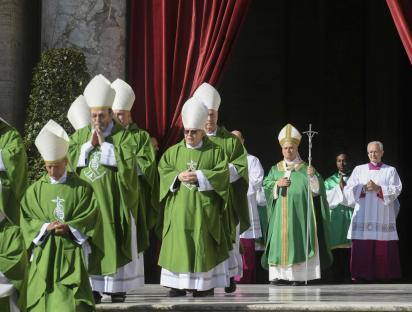
I grew up in a God-and-country Evangelical family in the very conservative panhandle of Florida. I later attended a Pentecostal Bible college and a Baptist seminary. I left the world of conservative Evangelicalism nearly two decades ago and am now a progressive, to the left of most Democrats. Whenever I talk to my old conservative friends and family members about politics, it feels like I spend most of my time correcting the distorted views they have about the left. The Democratic Party is not a party of godlessness, I tell them. Plenty of Democrats are practicing Christians. The big, famous secular universities I attended are not so much godless as pluralistic—marked by various religions and worldviews. Yes, most Democrats believe in abortion rights, but that doesn’t mean they’re murderous zealots trying to brainwash women into killing the unborn. True, many of our founding fathers were Christians, but others were in fact deists, who denied Jesus’ divinity, the virgin birth, and other basic parts of the Christian creed. Evangelicals would deem them heretics if they were alive today. I also explain to my conservative friends and family that you can be a Christian without supporting Zionism; indeed, my Christian mother was shocked to learn that there were Jews who are critical of Israel. (Of course, there were few if any Jewish people where I grew up.)
At the same time, as a former conservative who now inhabits a progressive environment, I sometimes hear things about conservatives that are way off the mark. I find that my liberal friends—and the progressive community, more generally—often have little understanding of Donald Trump’s appeal. They also have serious blind spots about the major failures of their own party.
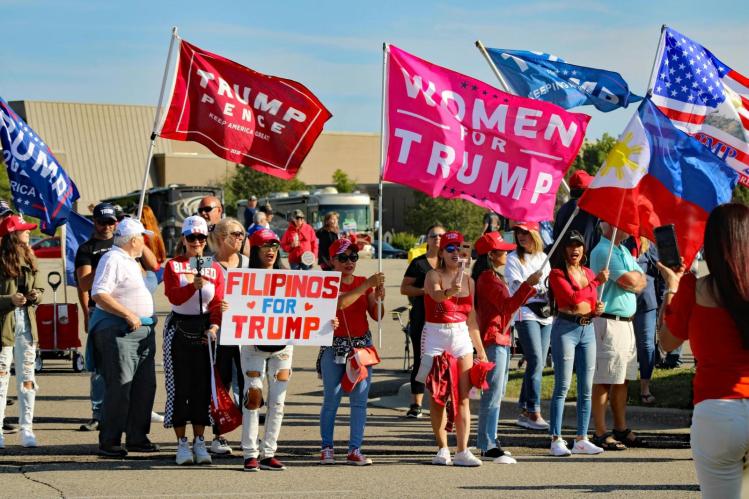
The question of race and Evangelicalism is a good example. Evangelicals voted overwhelmingly for Trump in 2016, 2020, and 2024. Did they do so because they are white nationalists? Surely many were, but not all. As someone with a Black father and white mother, I’ve always been aware of how ethnically and racially diverse conservative Evangelical churches can be. As a child, I attended such churches myself. Martin Luther King Jr. famously said that “Sunday is the most segregated day of the week,” but for me it was the most racially integrated. The churches I grew up in stressed racial reconciliation, not white supremacy.
Of course, many of those same churches had long histories of racism, and racism has not disappeared from them altogether—just as it hasn’t disappeared, according to many critics, from elite secular universities and large corporations. Still, the Evangelical world I knew as a child and adolescent, though predominantly white, was remarkably diverse, and it taught that racism was a sin. Yes, this same world had staunchly conservative views about gender and sex; it was unreservedly pro-capitalist and had no problem with this country’s forever wars. And yes, there are plenty of Evangelical churches that now espouse white nationalist thought. It was a mixed bag back then, and it still is.
I recently had occasion to think about my Evangelical past after reading a New York Times column by Ross Douthat titled “Trump’s Second Term Has Ended the Conservative Era.” Douthat argues that the conservative movement that William F. Buckley Jr. and Barry Goldwater created, which reached its culmination in the presidency of Ronald Reagan, is being demolished by Trump. Because Trump is so capricious, it’s hard to predict exactly where things will end up, but Douthat expects that whatever replaces conservatism in the Republican Party will be, among other things, nationalist and therefore less interested in internationalism. He also predicts it will be open to government interventions in the economy and therefore less interested in laissez-faire capitalism.
Who knows if he’s right about any of this, but one of his speculations in particular caught my eye. Douthat poses the question: “Is the future of right-wing nationalism multiracial, like the coalition that Trump won with in 2024, or is it more white-identitarian, like the edgelords who are gaining online market share and writing social media copy for the Department of Homeland Security?” Douthat himself hopes for the former brand of nationalism—what he describes as a multiracial, religiously informed understanding of Americanness.
Let’s stipulate that he is right about the end of conservatism as we have known it over the past four decades. Is his hope that a multiracial religious nationalism could provide the cultural basis of the GOP realistic? Most of my progressive friends would find the idea of a multiracial rightwing nationalism to be not just highly unlikely but a contradiction in terms. Perhaps most of them would write off whatever gains Trump made with minority voters in 2024 as the effect of either misogyny or misinformation aimed at “low-information voters.” The latter explanation is condescending, perhaps even racist, implying as it does that millions of minorities are not smart enough to realize that they’re being duped. It’s not hard to find other possible explanations for this electoral trend. Could it be, for instance, that, as Pentecostalism continues to spread among Hispanic communities, members of those communities are voting more according to their religion than to their presumed ethnic loyalties? Voters are motivated by all kinds of interests—economic, religious, moral—that they might prioritize over racial identity. Of course, these priorities can change according to circumstance, and there is some evidence that they have already changed as Hispanic citizens who voted for Trump have witnessed the ferocity of recent ICE raids.
At the same time, I think other progressives, who are wary of “the smug style in American liberalism” and who understand the gains Trump made with minority voters as a consequence of economic conditions, would still find it hard to believe that a multiracial nationalism could ever replace the conservatism of the past half century. And this, I think, is due to the common assumption that the Republican Party is, and always will, be inimical to the interests of minority voters for purely racial reasons.
This is where I’m reminded of my own experience. Reflecting on the multiethnic Evangelical world I grew up in, I cannot dismiss out of hand the possibility of a lasting multiracial rightwing coalition. I knew many nonwhite conservative Evangelicals as a child, and there are more voters who answer to that description now than there were then. A progressive could argue that, all other things being equal, a multiracial rightwing party is at least better than a white-nationalist party. But the more important point is that it might now be time to question the assumption that the Democratic Party will always be the more racially and ethnically diverse of the two major parties, and that its increasing diversity alone will allow it to save liberal democracy from the forces that threaten it. Here, I’m reminded of the long-held secular liberal assumption that expanding science, education, and modernization would necessarily lead to a decline of religious belief—an assumption mainly confirmed in Europe but not elsewhere. Similarly, Democrats can no longer just assume that Blacks and Hispanics will always vote for them simply because of their race—and that this will be enough to guarantee a majority. Democratic candidates will have to win their support through a politics that is responsive to the needs and concerns of this country’s multiracial working-class majority. As the last election proved, their votes are now up for grabs.