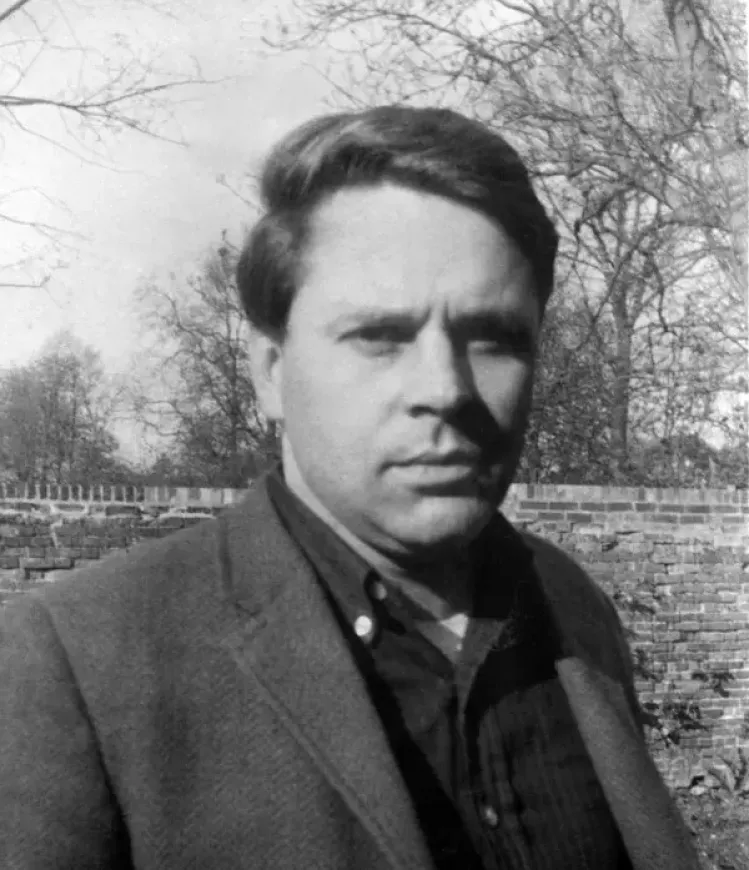
In trying to explain Donald Trump’s political appeal, conservatives have recently been celebrating the work of historian and cultural critic Christopher Lasch (1932–94). Lasch wrote approvingly of populism’s historical defense of traditional morality, marriage, family-centered economics, patriotism, and democratic self-determination. At the same time, he was scathing in his denunciation of liberal and corporate managerialism, income inequality, and what he called the “therapeutic society.” His skepticism toward feminism and opposition to abortion alienated many liberals. Lasch insisted that Americans, seduced by the false promise of sexual liberation championed by elites, marketers, and popular culture, had abandoned the wisdom of inherited culture and religion when it came to ordering their private lives and families. “American capitalism has rejected priestly and monarchical hegemony, only to replace it with the hegemony of the business corporation, the managerial and professional classes who operate the corporate system, and the corporate state,” he claimed. The result, he wrote in his bestselling The Culture of Narcissism (1979), is a citizenry whose thin sense of self and lack of firm connection to any community are easily exploited by business and politicians of both the right and left.
Lasch wrote regularly for Commonweal in the last years of his life. His cultural conservatism, passion for economic fairness and political democracy, and defense of religious faith placed him firmly within the magazine’s traditions. The urtext for the conservative case for Lasch seems to be his posthumously published The Revolt of the Elites and the Betrayal of Democracy (1995), which is, admittedly, unsparing in its condemnation of contemporary liberalism. Writing in The Atlantic (“The Rising,” November), New York Times columnist David Brooks even attributes Trump’s popularity to how he “has deepened the Laschian critique by repeatedly telling the people that their democracy has been usurped by a permanent ruling class of educated elites.” Brooks downplays the scorn Lasch unleashed on corporate capitalism and hedonistic consumerism, and instead emphasizes Lasch’s disdain for the arrogance of the liberal “elites.” This is the side of Lasch that conservatives find so appealing. “The traditional American story is built on hope and possibility,” Brooks writes. Lasch found this sort of clichéd Reaganite optimism naïve. Modern capitalism’s absurd concentration of wealth and power and its heedless pursuit of endless material progress were a snare and a delusion.
Lasch was an early Cassandra when it came to the environmental crisis. The “creative destruction” demanded by the modern economy was the real enemy of traditional values and democratic egalitarianism. Brooks notes that “Trump’s ethos doesn’t address the real problems plaguing his working-class supporters: poor health outcomes, poor educational outcomes, low levels of social capital, low levels of investment in their communities and weak economic growth.” But Brooks’s agenda for turning back the Trump onslaught and reviving American democracy lacks Lasch’s realism about the necessity of limits and his skepticism about technological progress. “Historical tides shift when there is a shift in values,” Brooks writes. “A group of thinkers conceives a new social vision, and eventually, a social and political movement coalesces around it.” Lasch, by contrast, thought that you needed to change the way you live if you were to think differently about what is economically and politically possible.
Brooks’s qualified admiration for Lasch’s populism is tempered in comparison with the hosannas of other Trump enthusiasts, especially Catholic conservatives. At The Catholic Thing (“Redeeming the Teeny-Weeny Self”), Francis X. Maier notes that Lasch “was never religious and always a man of the old, democratic left. But he saw the world clearly and wrote about it honestly. As a result, he had many Christian admirers. And much of his work aligns, if imperfectly, with Catholic concerns.” Maier has a knowledgeable understanding of Lasch’s critique of the modern economy and how it damages the family and creates citizens incapable of governing their own lives, let alone participating in a system of self-government. He quotes Lasch:
A culture organized around mass consumption encourages narcissism…not because it makes people grasping and self-assertive but because it makes them weak and dependent. It undermines their confidence in their capacity to understand and shape the world and to provide for their own needs…. Narcissism [involves] a loss of selfhood, not self-assertion. It refers to a self threatened with disintegration and by a sense of inner emptiness.
Maier argues that Catholicism offers a much-needed alternative to such an understanding of the self and the world, but he is careful not to issue any liberal-sounding admonitions about economic inequality, oligarchy, or despotism. Instead, he ends on a pious and nonpolitical note: “Giving ourselves away in service to others, and receiving that same gift in return, enlarges the orbit of joy. That’s the secret of Christianity.” Lasch, I suspect, would have welcomed the sentiment but also would have reminded us that being of service to others is not the logic driving modern capitalism. Instead, the pursuit of self-interest is understood to be a necessity and a moral imperative.
At National Review, Mary Eberstadt has recently praised Lasch for his disparagement of contemporary liberalism (“Elites’ Long War Against the ‘Deplorables’ ”). Eberstadt acknowledges that Lasch’s “interest in the redistribution of wealth” excluded him from the conservative camp. She writes that her fellow conservatives find his economic views “annoying.” But Eberstadt suggests that Lasch would have found Trump’s ascendency entirely understandable, if not justified.
The resurgence of national feeling and populist revolt shouldn’t have come as a surprise, let alone as the existential shock that so many affrighted pundits have professed. It is a natural political reaction to what [Lasch] identified early on: the vacuum of empathy and accountability at the top.
As one of those “affrighted pundits,” I hesitate to object, but I think Lasch would ask Eberstadt who exactly is “at the top”? Is it really the eggheads and do-gooders the right takes such delight in mocking, the snowflakes, the beneficiaries of affirmative action, and the “lunatic left”? Or might it be the billionaires and corporate titans and grifters now bending the knee before Trump’s gold-leafed throne? Brooks, Maier, and Eberstadt were all partisans of the Reagan revolution, champions of his supposed reversal of the liberal cultural excesses of the 1960s and ’70s. Lasch was not fooled by such rhetorical moralism. “The Reagan years can best be characterized as the age of evasion,” Lasch wrote in The New York Review of Books (“Reagan’s Victims,” July 21, 1988).
Notwithstanding his lip service to “traditional values,” his policies have continued to undermine them…. There is a fundamental contradiction between Reagan’s rhetorical defense of “family and neighborhood” and his championship of the unregulated business enterprise that replaced neighborhoods with shopping malls and superhighways. A society dominated by the free market, in which the “American dream” means making a bundle, has small place for “family values.’’
“Making a bundle” is now the definition of patriotism as far as Trump and his MAGA supporters are concerned. Lasch warned that such a vision of our common life means desperation and despair for tens of millions of Americans. Lasch’s liberal critics often charged him with pining for a dangerously idealized and sentimental version of the family and American democracy. But as Trumpism has revealed, he was not guilty of an idealized or sentimental view when it comes to the trajectory of our politics.