When my husband and I first started dating, we listened on repeat to a particular song by the country artist Jason Isbell. We didn’t relate to its details: A man overcoming addiction, finding redemption in his lover’s embrace. But the images were compelling—blooming magnolias, boots by a bedside, floodwaters—and the feeling of the music so alive. It described our falling in love precisely, our sense that what we had in each other was entirely enough.
“Cover Me Up” came out in 2013, the same year Jason Isbell married his wife, the singer-songwriter and fiddler Amanda Shires; she inspired other songs, too. Now the couple is getting divorced. Isbell’s latest release, Foxes in the Snow, is in part a breakup album. Its cover art was designed by his celebrity painter girlfriend. On one track, “Gravelweed,” he addresses how new events impact old music: “And now that I live to see my melodies betray me / I’m sorry all the love songs mean different things today.”
But must the songs mean anything different? It’s a small question related to a larger one about the relationship between art and life, oeuvre and biography. That relationship isn’t just relevant when someone has committed crimes or grave moral failings: Think Michael Jackson and R. Kelly, Kanye’s antisemitism and Alice Munro’s devastating inaction. It’s relevant whenever readers, listeners, and viewers want to experience a book, album, or show on its own merits, without considering its creator at all, without having our interpretations impacted by something so inconvenient as “real life.”
Of course, many writers demand that we take their history into account. (See all the autofiction of the last decade.) And sometimes knowing about an artist’s private preoccupations, their traumas and their triumphs, changes how you understand their work in productive ways.
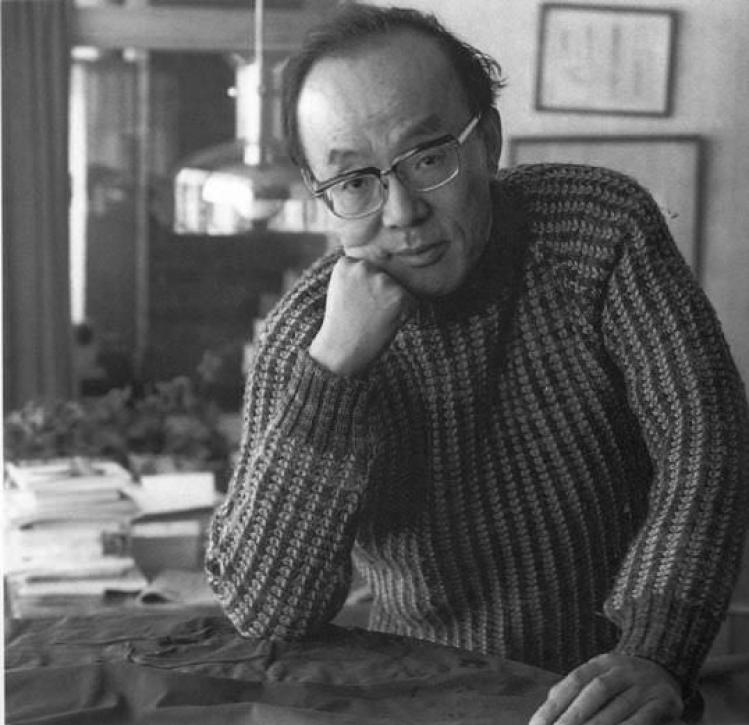
Portraits of a Mother, a new collection of translated work from acclaimed Japanese novelist Shūsaku Endō, rests on this latter assumption. Each of the five short stories and a recently discovered novella cover the same narrative ground: A parent’s divorce, a mother’s untimely death, and a son’s perpetual guilt. In these texts, Endō shuffles a set of characters and scenes—icy walks to weekday morning Mass; icons and bread sold by old men; the “wine-colored eyes” of discerning yet fallible priests; a mother’s fingers and chin bloody from tortured violin practice; a child stuffing his fingers in his ears to keep from hearing his parents’ arguments.
Plot points—the timing and location of the mother’s death, whether the son retains a relationship with his father in adulthood—shift. But in each of the works, Endō negotiates the tension between an exalted life of literature or spirituality and a quotidian life of domestic ordinariness in which “nothing happening” is the highest happiness. He reflects on the extent to which “the deeds or sins of one person could decisively change the direction of another person’s life,” like pine trees buffeted by “rain-swept wind.”
And, of course, throughout there’s the relentless pull of Catholicism. “My faith, if indeed it can be called faith, is linked to my attachment to my mother,” says the narrator. She “turned my face toward the Christ in whom I believe.” Sometimes that faith is worn like an ill-fitting coat, at odds with adolescent predilections for dirty pictures and skipping school. Other times, we find the adult narrator on a trip to Israel, reading the Gospels; or defending his inherited belief that “holy things were the most exalted and wonderful things upon the face of the earth.”
The stories in Portraits are relentlessly autobiographical, to the degree that the narrator of each short work is a novelist, like Endo, even crafting literature about apostate Christians in Japan. They’re also recursive, unapologetically fixated. If some of the repetition within stories feels unintentional, the product of early drafts rather than stylistic flourish, it also provides an usually intimate look at a writer and his obsessions, from his reluctant hatred for his father to his uneasy veneration of his mother to complicated dynamics with all-too-human priests.
These are the “major rivers that have given shape to my life,” the author-narrator Endo explains. “I’ve plucked up objects that have been deposited at the bottom of my river, washed the dirt from them, and arranged them all together.” He won’t be able to write about his mother and father, he insists, until “individuals will not be wounded by it.” Presumably, once his parents have passed away, “I shall be able to describe in my own fiction the marks that [Father] and Mother left upon me, and examine their essence.” That examination is what’s happening in Portraits, albeit with no definite conclusions. In spite of himself, the father is still scorned and the mother is still loved.
Portraits of a Mother is of interest in and of itself; Endo is a literary giant, and some of these texts, including the novella, have never been published in English before. But its value also lies in the light it casts on Endo’s other work—in particular, his most acclaimed novel, Silence.
That story, of the apostate Portuguese priest Fr. Rodrigues who reckons with the meaning of martyrdom and God’s seeming absence in the midst of suffering, takes place centuries before these ones are set. It doesn’t deal with parents at all. It certainly isn’t autofiction.
Nevertheless, there are obvious echoes. In the story “Shadows,” Endo describes an icon of Christ with eyes like “the moist, grieving eyes of dogs,” “trampled upon by men and looking up at them from beneath their feet.” (See the tragic face peering up at Fr. Rodrigues as he lowers his heel.) In the same story, a defrocked priest dining in a restaurant “quickly and inconspicuously” crosses himself after a waitress delivers his meal. (See Rodrigues again, surreptitiously administering absolution even after he’s been removed from his order.) In another story, “Mothers,” the narrator is doing research for his novel on the same islands where Silence is set.
But the real relationship between Silence and Portraits is their shared shame. In the novel, it’s epitomized by the sniveling Kichijiro, who betrays his community again and again, and by the priests: taking Japanese names and wives, haunted by the peasant martyrs who perished in the sea and pit.
In Portraits, the priests are ashamed, too, fallen in a different time, but fallen nevertheless, shaken by political whims and sexual desires. Observing these men, the writer-narrator Endo is disturbed. “You didn’t know that a mighty tree can snap without warning,” he writes to the priest in the restaurant. “Perhaps your excess of self-assurance is what unexpectedly tripped you up. And once you stumbled, the speed with which a man like you slides down the embankment is swift.”
But in the stories, the shame also belongs to writer-narrator Endo. In some, he’s ashamed at being away from his mother’s bedside when she dies; in others, he’s ashamed of pornography or cigarettes; in others, he’s ashamed of his allegiance to one or the other parent during their separation. Sensing fallibility in himself, he searches it out in others, hoping that another priest “who stares at me with sunken eyes would disclose a weakness like my own, and that if he did, it would allow me to despise him with every fiber of my being.” He draws a comparison between himself and the apostate Japanese Christians he studies: “Sometimes I catch a glimpse of myself in these kakure, people who have had to lead lives of duplicity, lying to the world and never revealing their true feelings to anyone.”
In Silence, Fr. Rodrigues wonders whether apostates would have lived their whole lives as good Christians had they been born in a peaceful time and place. In Portraits, Endo seems to ask the question of himself, and in reverse—were he put into the pit, would he keep the faith?
Faith, even battered and compromised, is the closing note of Silence. Rodrigues, in spite of his doubts, betrayal, and self-justification, loves the Lord “now in a different way from before.” “Even if he had been silent,” he proclaims, “my life until this day would have spoken of him.”
It’s a note of hope at the end of a very sad book. That hope is harder to find in Portraits. “I truly could not understand why my mother believed in such a religion,” writes author-narrator Endo. “The words of the priest, the stories in the Bible, the crucifix—they all seemed like intangible happenings from a past that had nothing to do with us.… I prayed that, if there was a God, He would grant me a believing heart. But there was no reason to think that such a plea would change how I feel.” Doubts well up in his chest “like foul bubbles.” In Israel, visiting the supposed site of the Sermon on the Mount, Endo’s wife reads the red-pencil-circled words of the Beatitudes. “Blessed are the clean of heart.” Does Endo find absolution in the words, or still more shame? He ponders the fate of Judas—a concern in Silence, too—and the cowardice of Peter, denying Christ three times before the cock crows.
Should Jason Isbell’s divorce change how we hear the old songs? Should the tortured belief that runs throughout Portraits change how we read the closing notes of Silence? Maybe. It’s impossible not to wonder whether Endo gave his apostate priest the words he wished he could say for himself with such clarity. Perhaps he was trying to describe the mystery at the heart of his own life—how one could fall so short and yet keep coming back, bereft and in love, speaking of him in spite of oneself.
Portraits of a Mother
A Novella and Stories
Shūsaku Endō
Translated by Van C. Gessel
Yale University Press
$18 | 224 pp.