Earlier this year, Pew Research Center released new data on religion in America. Unsurprisingly, “the ranks of ‘nones,’”—that is, people who describe themselves as atheists, agnostics, or “nothing in particular”—“have grown among men and women, married and unmarried people; college graduates and people with less education; all large racial and ethnic groups; all age groups; and in all regions of the country,” the report summarizes.
At the same time, even if not as devoutly religious, the U.S. remains decidedly spiritual, with high numbers of respondents expressing belief in human souls or spirits (86 percent); in God or a universal spirit (83 percent); and something spiritual “beyond the natural world” (79 percent).
Plus, some declines in religious affiliation may be slowing. “The share of Americans who identify as Christians shows signs of leveling off—at least temporarily—at slightly above six-in-ten,” the researchers note.
These findings aren’t so surprising either, in our woo-woo nation of tarot cards and star charts, alien sightings and mindfulness meditation, prayer-infused politics and ecstatic exercise. Our secularization exists alongside cohorts of intellectuals newly sympathetic to Christianity, young women in convents, and young men praising God in the megachurch pews. Ross Douthat encourages his readers to “believe” as the only rational response to our existential condition; Rod Dreher is pushing re-enchantment.
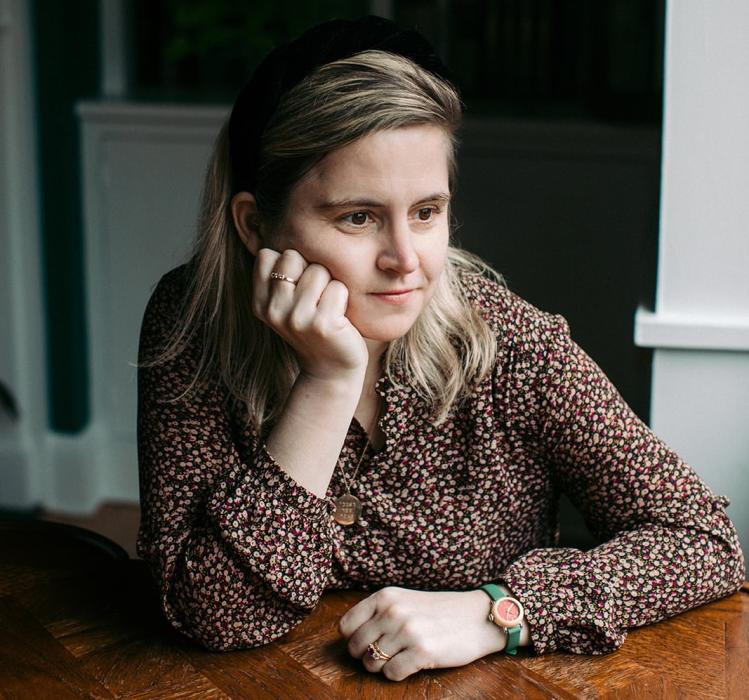
Enter Godstruck: Seven Women’s Unexpected Journeys to Religious Conversion, a title that captures this at-times-contradictory landscape. Seven case studies serve simultaneously as the rule (the seven exist, and the vibe has shifted) and as exceptions to it (these journeys are “unexpected,” after all).
Godstruck achieves its anthropological premise. The stories of its converts—Quaker and Muslim, Amish and Evangelical, a new Mormon, and yes, a new nun—are detailed with rigor and respect. One woman reads the Qur’an in less than two weeks; another writes Pennsylvania Dutch on flash cards. One has a hungover vision; another leaves the confession booth with newfound freedom. Osgood takes each story seriously. The seven conversions, including her own to Orthodox Judaism, are informed by individual traumas and temperaments. But they’re not explained away by them. Religion isn’t mere wish fulfillment or a therapeutic technique. It’s real.
It’s real. That’s not the takeaway I expected from an interreligious study like this one, which quotes from the Torah and the Book of Mormon and St. Augustine, interspersing analysis of The Varieties of Religious Experience and The Big Book of Alcoholics Anonymous. Despite her intellectual fluidity with various religious texts and histories and consummate respect for her diverse subjects, Osgood is no agnostic, no denizen of “whatever works for you.” Paradoxically, she realizes that such an approach would disrespect her subjects—all of whom seek not spiritual self-care, but capital-T Truth.
For Osgood’s part, capital-T Truth is Orthodox Judaism, to which she converted in her twenties. Her explanation of that conversion, and of her subsequent religious life, is earnest and incisive. In a bathroom stall during Yom Kippur, resting a head “throbbing from caffeine withdrawal” on the “cool metal top of the toilet paper dispenser,” she realizes that “the universe owed [her] nothing; that [she] was no better than any other person on the planet; that [her] pain was no more important than theirs; that no one was exempt from the obligation to take stock of their lives.” She “submits to incomprehensibility in an era besotted with certainty.” She insists that the universe is “not only comprised of verifiable facts but awesome secrets, not only explications but poetry.” Like Pascal, she wagers on God. “Do I hope that I’m right? Of course. Does it really matter if I’m wrong? It does not, for the ramifications of the seeking alone ripple through my life in ways that both ground me to the earth and expand me to the above.”
That grounding means “sustained, disciplined observance in a robust community,” theology aligned to lifestyle. It means higher necklines and longer skirts. It means boiling water and baking challah and ripping toilet paper squares and circumventing geography, savoring the ends of Sabbaths with “a long ornate candle, with a cup of juice and a jar of spices.” It means giving things up. Spiritual disciplines, Osgood argues, lose their meaning when transfigured into lifestyle choices—celibacy and meditation and Sabbath just one more hack. They are only meaningful out of obedience to the divine, out of their non-negotiability.
On sacrifice, Osgood is particularly unsparing, and her clarity of thought in these passages is exhilarating. “The act of submitting the self to something else is a talent we’ve forfeited, and we suffer from that,” she argues in the book’s introduction. Sacrifice, she acknowledges, will impose itself differently on women; “from the moment of conception, mothers worked harder than fathers in family units, and that was simply never going to change, unless you were okay with taking advantage of the capitalist promise that you could outsource anything unpleasant.” “Touching a bit of holiness” on Shabbat always requires additional household labor, and additional restraint: “taping down the refrigerator light to avoid it flicking on when I reach for a jar of mustard, missing one-night-only concerts and parties.” Holiness can also mean getting out of one’s own way, stopping that ever-circling introspection. “One way in which I negate my own reason,” she explains, “is by accepting and submitting to the larger demands of my belief system. Do I think there really is some ethical value in not wearing clothing made of linen and wool, as I’m prohibited from doing? Not particularly, but I do it, because there’s meaning in putting your own will aside at times.”
For Osgood, this realization was literally lifesaving. “When I became religious…I considered myself to have signed a metaphorical contract that forbade me from suicide. Even beyond that, there is much in Judaism to suggest that a person is commanded to be joyful.” Judaism has taught her to “take care of things,” to “have obligations and to meet them,” to “understand that inexplicable interplay between love and pain, between fulfillment and abstinence, between creation and death,” and Judaism has done this “in a way nothing else ever could.” No offense to the Quakers and the Mormons and the Muslims and the Amish. Clearly, they’d say the same of their own faiths. I’d say the same thing of mine.
In the midst of all the charts, graphs, and prognostications, the pitched panic about religious nationalism, the astrologers, the ever-shifting vibes, this is the book—uncompromising, yes, but also full of that italicized joy—that I needed to read. It decidedly does not, as Osgood explains at the outset, “try to justify itself with numbers.” It is not a polemic in the mode of Believe, nor an abstracted study in the form of a Pew report. Instead, it is that altogether more powerful thing, beloved by religions through the ages: testimony, particular and universal, always both the exception to the rule and the rule itself.
Godstruck
Seven Women’s Unexpected Journeys to Religious Conversion
Kelsey Osgood
Viking
$30 | 352 pp.