There’s a new dimension to global Catholicism in the twenty-first century, and it’s perhaps most evident in how the transcontinental conversation on Vatican II has changed.
In the early postconciliar years, European theological stars like Hans Küng and Edward Schillebeeckx drew huge audiences at American Catholic universities, where they’d come to speak about the urgency of reform—articulating the discontent of clergy and laypeople alike over the gap between the promises of the council and the stubborn ecclesiastical status quo. On the horizon was perhaps a Vatican III, and the work needed to get there would have to get underway soon.
Half a century later, things are much different. You never hear about a Vatican III. It’s hard to even imagine a bishops-only council in a synodal Church. European theologians are now rethinking Catholic theology’s relationship to the Church and the university and debating its relevance for contemporary Europe. Those invited to speak in the United States aren’t the type of trailblazing academics who packed lecture halls fifty or sixty years ago. Instead, they bring a different dynamic to a very different kind of setting, with a very different perspective on Vatican II.
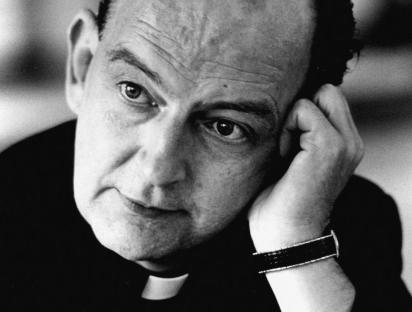
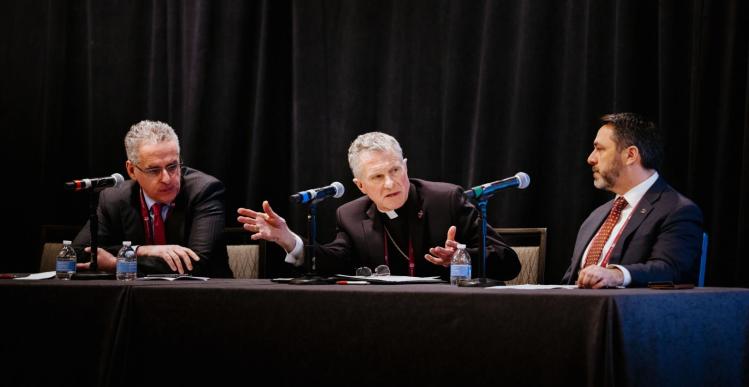
A recent example: the annual retreat of the Napa Institute at the end of July. There, Norwegian bishop and Trappist monk Erik Varden was part of a panel conversation with San Francisco archbishop Salvatore Cordileone and Oklahoma City archbishop Paul Coakley, moderated by Francis X. Maier (author and speechwriter for former Philadelphia archbishop Charles Chaput). Varden, born in a Lutheran family in Norway in 1974, has a stellar academic resume as a student and as a professor. He is one of the most interesting figures in a European Catholicism that is emancipating itself from the dominance of the French, Belgian, and German conciliar theology. I first encountered his writing years ago in an Italian translation that appeared in a volume of prestigious spiritual authors published by the ecumenical monastic community of Bose.
At the Napa retreat, Bishop Varden contributed significantly to the current conversation on Vatican II (he published his remarks on his blog the same day). On the one hand, he articulated in clear language the difficulty of expressing the passion for the teaching of the council today:
The collective remembrance of what the council and its aftermath felt like has faded. That notably reduces the emotional heat of hermeneutic exercise, enabling lucid reflection. Today’s young Catholics are not ungrateful for the council’s great gifts, but unable to proceed with their grandparents’ mindsets, uninclined to flog dead horses, unenthused by fossilised projects of aggiornamento when the sun has set on the giorno by which they were defined. What they long for is to awaken the dawn, to know the saving power of Christ, the same today, yesterday, and always, yet making all things new, often enough by exploding time-bound dichotomies.
These words should be brought to the attention of all those who teach Catholic theology today. Bishop Varden’s assessment corresponds to my experience everywhere I have had the opportunity to teach young people, in different countries and continents. The major problem isn’t outright opposition to the council. The major problem is that when Vatican II is downgraded to the memorialization of a generational event, it is no longer generative. In different ways, every pope since 1965 has articulated his fidelity to the task of interpreting and applying Vatican II. But the council today occupies a rather different place in the minds of young people compared to the 1980s or 1990s, or compared to someone like me, a second-generation Vatican II Catholic. Today’s young Catholics belong to the third and fourth generations. As Varden also said:
All of a sudden, the second generation’s search for particular identity seems like much ado about not very much. The truly pressing issues are more fundamental: ‘What are we all about? How can we find our place within a tradition that transcends us? Are we on the right track?’ The third generation is faced with the challenge of continuity. To carry on faithfully it needs more than the history—or myth—of heroic origins.
It would have been interesting to ask young people who came to the Rome gathering of youth about Vatican II; it might have been even more interesting to ask those who gathered on July 29 for the first Jubilee of Digital Missionaries and Catholic Influencers. Even the new pope represents something of a generational shift from the previous one: Robert Prevost was just seven years old when Yves Congar, Karl Rahner, and Joseph Ratzinger began work on the drafts of the council documents.
The thirty-year theological war over the hermeneutics of the council, from the 1990s until Francis’s pontificate, has entered a new phase. This was brought about in part by the fresh eyes Francis brought to the issue, thanks to his Jesuit and Latin American background. By opening the synodal process in 2021, Francis reminded the Church that the Second Vatican Council was in itself an event of synodality ante litteram (with the word itself nowhere to be found in the conciliar corpus). The synodal process he initiated was preceded and accompanied, not coincidentally, by a new era of studies on Vatican II, characterized by a global historical-theological perspective. Today, more than a celebration or commemoration of the council, we need to contribute to a new “phase,” not only in theological research but also in pastoral application, reflecting both a broader awareness of the global dimensions of Catholicism and a deeper engagement with the challenges facing local churches.
Thus Varden’s remarks at Napa on the hermeneutical question deserve some critical attention:
What the council represented to those who knew a before and an after has been documented amply and polyphonically. Afterwards came the labors of those who were, or saw themselves as, the council’s legitimate heirs. There were splendid initiatives; but we know no less what quarrels emerged, locking Catholic discourse in confrontations between so-called ‘liberal’ and ‘conservative’ positions, unedifying clashes—and almost invariably dull. Something of the climate of the second generation found symbolic expression in a teacup storm not all that long ago when it was still a subject of debate whether Vatican II might best be approached through a hermeneutic of rupture or one of continuity. I confess I found this [quarrel] perplexing. I cannot see how any Catholic might adopt anything but a hermeneutic of continuity. This perspective is inherent in our faith in a God who acts in history, who exhorts us, ‘Remember!’, whose incarnate Son is the principle by which and for which all things exist, whose Spirit sanctifies, in Christ, by ‘calling to mind.’
It’s true that “the confrontations between so-called ‘liberal’ and ‘conservative’ positions” have often erupted in “unedifying clashes.” Social media has become the stage of those largely performative battles for the meaning of Vatican II. But I would take exception to the phrase “almost invariably dull.” The tensions around Pope Francis’s pontificate in the United States (the list of invited speakers at previous gatherings of the Napa Institute says something interesting about this) was about the interpretation of Vatican II. I would not say that it was a dull time. On the contrary, it revealed something important about the deep theological divisions within the Catholic Church.
In his remarks, Bishop Varden referenced the “hermeneutic of continuity” but without context. It would have been good to remind the audience and his fellow panelists at the Napa Institute of the complete quote from that famous December 2005 speech by Benedict XVI: on the one hand “a hermeneutic of discontinuity and rupture” and on the other hand “a ‘hermeneutic of reform,’ of renewal in the continuity of the one subject-Church which the Lord has given to us.” Very often that speech has been reduced to a caricature of “continuity versus discontinuity”—where “reform” is intentionally left out. An absolute, literal continuity with the past tradition without reform is a betrayal of the council, as is a vague appeal to “the spirit of the council” that ignores the documents and their intent.
Additionally, the debate on the hermeneutics of Vatican II might look like “a teacup storm” only if one does not consider the connections between the interpretation of the council (its teachings and its reception) on issues that are far from purely academic, and that have direct effects on the Church and its role in public life. The movement to reinstate the pre–Vatican II “Latin Mass,” informally based in the United States, is a manifestation of a reception crisis of the council’s liturgical reform. Synodality can hardly be understood in a strictly “continuist” view of the relationship between the ecclesiology of Vatican II and the previous tradition. Something that has consequences beyond the confines of the Catholic Church is the interpretation of the council’s documents on religious liberty (Dignitatis humanae) and on non-Christian religions (Nostra aetate). A certain resurgence of integralist and fundamentalist tendencies reflect a rejection or ignorance of what Church teaching says in key Vatican II documents—in Dei verbum on biblical interpretation and in Gaudium et spes on the Church in the modern world. Ignoring or interpreting these documents in one way or another has direct consequences for how the Church deals with political power and governmental authority and the way it orders its relationship to Christianity in a multicultural and multireligious society.
Napa Institute gatherings are attended by members of elite American Catholicism, some not exactly known for their opposition to or distance from Trumpism. In a March 2025 National Catholic Register article, Napa Institute founder Tim Busch called Donald Trump’s administration as “the most Christian I’ve ever seen.” Bishops invited to speak at this kind of gathering should consider the ongoing changes in the relationship between the Catholic Church and the new American order that the present administration and its Catholic supporters have in mind. These changes go beyond politics to affect the ecclesial community as well—including some of its most vulnerable members—in a very direct way. The influence of the Silicon Valley prophets of futurism adds a troubling new element. Peter Thiel famously said that he always preferred the Christianity of the emperor Constantine to that of Mother Teresa. Elon Musk has defined himself as a “cultural Christian.” No matter what one might think of the politics of this interpretation of Christianity, it is theologically at odds with the core of the Jewish-Christian revelation, and with how the Catholic tradition—including papal teaching since Vatican II—has interpreted the role of the Church in the world.
The new debate over Vatican II in the United States is unfolding before our very eyes, but in ways that can be hard to see. It’s taking place less in universities and in seminaries than in all those places where different kinds of Catholics—politicians, judges, lawyers, law-enforcement officers, social workers, school administrators—make decisions about fundamental rights, foreign aid, migration policies, religious liberty, and education. Their decisions have moral and theological impact on the trajectory of American Catholicism. The Napa Institute is one of those places where the new American political-religious order is taking shape, and the voices of bishops invited to speak there carry a particular authority.