AFTER THE genuine mourning for the great Pius XII his successor came on the world-scene like a new sunburst. A whole generation had come to identify the papacy with the lean, ascetic, patrician figure of Pope Pius. His successor immediately provided a study in contrast. John XXIII, like the Pope he followed, is a seasoned, sophisticated diplomat, but he also brings to the exalted office a geniality and warmth that immediately won the world’s affection.
It was spontaneous and wholehearted. I think the impatience with extravagant formalities that he showed right away had something to do with it. His instructions to the editors of L’Osservatore that they should eliminate phrases like “according to an utterance from the august lips of the sublime Pontiff” and substitute something like “the Holy Father said,” suggested a certain common-sense approach to reality which millions found reassuring. Again, he laughingly told a group of newsmen that if they heard him using the first person singular it was because he was not yet used to calling himself “we,” for after all it took time to get used to being a universal father. That was sheer winsomeness. And the world was so utterly delighted with the peasant dignity and pride of the Roncalli family that his closeness to them through the years spoke volumes about the simplicity and genuineness of the man.
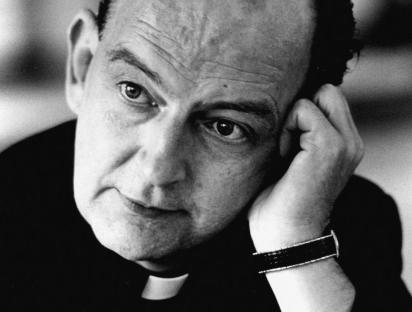
The face of Pope Pius XII was a mirror of his internal tranquillity. Quite simply, he was a beautiful man. The new Holy Father looks like his peasant brothers, but there is nothing incongruous or disappointing about his plain features and solid bulk. The recent portrait of him on Life’s cover suggests warmth, an enormous tolerance and the kind of playful sense of proportion which has shown up in almost everything he has said and done.
These very qualities, I think, are exactly the ones needed in the world today. People everywhere are seeking for some symbol of them—the love that comes spontaneously, the habitual capacity to distinguish between the sinner and the sin or the good man and the bad idea, and, finally, a sense of humor.
Catholics, dealing with the Popes, have always been able to distinguish between the man and the office. Happily, for a long time now the Church has been led by good men, not a few of whom were saints. But the faith of the Catholic is not particularly disturbed when he learns that over the long centuries a few scoundrels have occupied the Chair of Peter. It reassures him in his belief that the life of the Church is not dependent on the spiritual state of any one man. The papacy is not—nor do I think it should ever become—a mere personality cult. Yet today, in this age of mass communications, the personality of the Pope, for better or worse, is important.
He occupies the center of the world’s stage. The impression people get of him greatly colors their approach to what he says. In his person he stands before all men as the representative of the oldest Christian body, the one truly supranational figure among the leaders of the world. His words are spread across the newspapers. His photograph appears so constantly in the press that his features become as familiar as the faces of one’s own family. Millions traveling to Rome catch personal glimpses of him. Thousands upon thousands meet him personally. Willy-nilly, by all these means, the general public forms an image of the man who is Pope and associates the Church with the qualities he embodies.
By the force of his personality Pius XII created the sublime image of a man of profound spirituality, a religious leader utterly devoted to peace on earth—a man of extraordinary intellectual gifts capable of meeting the contemporary philosophical attacks on the Christian religion with authority and wisdom. Pope John XXIII, in his own way, promises to incarnate the Church’s answer to the totalitarian attack not so much on Christian philosophy as the attack on man himself. For those traits of the new Pope that so quickly won worldwide response are the qualities of Christian humanism. And they are the qualities which are lamentably absent in the Brave New World which the totalitarians are forcing into being. I speak of gentleness, compassion, geniality, the ready acceptance of life, the sense of humor, patience with man’s frailty, the awareness of man’s dignity.
As Cardinal Roncalli, the present Pope was available to all who came to him. He could not turn anyone away, he often said, because if he did so he might be turning away some poor sinner who wanted to make a confession. That simple statement was probably the most anti-totalitarian utterance of the year.
It is much too early to make any judgment about the pontificate of John XXIII. But it is not too soon to find the words to describe him. Pius XII will go down in history as the Pope of Peace. I hope that in his turn John XXIII will be known as the Pope of Humanity. Pius worked for peace in an age of war. John, by his very person and the sheer force of his personality, will defend the idea of man in an age so afflicted with the totalitarian temper that even anti-totalitarians can often forget that joie de vivre is a birthright that belongs to the children of God.