This article was written in response to Sohrab Ahmari’s “Escaping the ‘Torment Nexus.’” You can find the original article and all four responses here.
We humans need to live before we know how to live. We are therefore always—often by no fault of our own—putting into action any number of incorrect judgments about what is good. Our potential to grow in understanding of the good develops against a strong undertow pulling toward resignation to the status quo. We to whom the father sent Christ to communicate the divine friendship live under the reign of sin. It surrounds and invades us before we know it, often in the form of political ideology propped up by false anthropology. We work hard building our communities, cities, and countries, yet the world we build is, as Herbert McCabe reminds us in God Still Matters,
a world unfit for humans…a world that cannot afford too much humanity, too much love. Love is permissible on the surface down to a certain relatively shallow level. But beneath that, what keeps chaos at bay, what keeps our world fairly stable, is not love but domination and fear.
This is the world that Sohrab Ahmari describes in his essay—a world of “constitutive antagonism” and political-economic “polycrisis,” all of it radically in need of correction according to the deepest principles of Catholic social teaching. Ahmari articulates and applies those principles with compassion and insight. Removing the inherited “Econ 101 arcadia” blindfold that keeps us from seeing the coercion embedded in the spheres of production and exchange, Ahmari follows Pope Leo XIII in judging the situation of modern labor in light of perennial philosophical principles. Ahmari writes:
The employment agreement doesn’t merely enshrine abstract rights…. Economic rights are tied to mutual duties, which, in turn, implicate workers’ ability to sustain and reproduce themselves—the final cause for the sake of which they seek employment in the first place. The employment contract has to be embedded within larger considerations of justice—and within still larger considerations of the political common good.
Although these considerations of justice and the common good of the polity concern everyone, they concern the lawmaker preeminently. The prudence proper to the lawmaker must help him decide when and how law is to be used to achieve the just and the right. When we ask whether and how to use law to regulate employment in the world today, some vociferous people still answer that an invisible hand will do justice or its adequate semblance. Ahmari, though, judges rightly that “letting the market rip and then asking society to pick up the pieces” is not enough. He shows us why we should agree with Leo that the spheres of production and exchange must be measured according to the requirements of justice and legally regulated by law for the common good.
Ahmari’s intervention comes, providentially, amid an epochal debate in the United States (and elsewhere) about whether the U.S. Constitution is rightly interpreted with a view toward the common good. After more than half a century of debate between the partisans of “originalism” and those of “living constitutionalism,” in which those often seemed to be the only two options, the flag of common-good constitutionalism has been firmly planted in a way that commands attention from all sides. The critical claim of the common-good constitutionalist is that the classical legal tradition, with its understanding that it is of the essence of law to seek the common good, is our tradition. Originalists and dynamic-constitutionalists alike, each side for its own reasons, resist the claim that our Constitution is rightly interpreted for the common good, with Justice Amy Coney Barrett recently commenting in an interview in National Review that “I’m not a fan of common good constitutionalism.”
Countering this resistance in all its forms—from Hobbes and Austin to Bork and Scalia—Catholic social teaching affirms the truth known to the classical legal tradition: the common good of the polity is that for the sake of which law is to be made, interpreted, and judged. On this view, it is not only constitutions but also statutes, judicial opinions, regulations, interpretive regulations, and every other positive law that are to be interpreted and effected with an eye toward the polity’s common good. The same tradition reminds us that the common good is not merely the aggregation of individuals’ private interests but instead the true flourishing of the community, participation in which is the individual’s highest earthly good.
The common good of the polity, though, is not the only common good lawmakers need to consider. There are also common goods proper to other associations that exist within or alongside the body politic, and these are to be respected and harmonized according to a genuine causal hierarchy, the principle known in Catholic social teaching (and elsewhere) as subsidiarity. Within these associations, such as families and churches and clubs, the requirements of justice are to be worked out and determined in the terms of rights and duties, subject to the demands of the polity’s overall common good. When rightly ordered, the labor associations so dear to Leo XIII are prime examples of this kind of association, and, as it happens, it was the purpose of the 1935 National Labor Relations Act (NLRA), a.k.a. the Wagner Act, to encourage and facilitate the creation and advancement of such associations in the United States.
As Thomas Kohler observes in his forthcoming book Solidarity Forever:
The framers of the NLRA did not conceive it as an individual rights statute, and it does not function as one. It represents the only statute in American law that encourages the formation of groups to enhance the status of individuals. The association takes precedence over the individual because it serves the common good of its members.
The goods that pertain to individuals are advanced and enhanced when they are subordinated to the common good sought by, and enjoyed within, the association. It is when the rights and duties of employees and employers are hammered out with a view toward the common good that the employment contract can be expected to reflect the requirements of justice. The achievement of just determinations of rights and duties will require prudence informed by experience and a shared commitment to the common good; no mere list of abstract rights can substitute for this process.
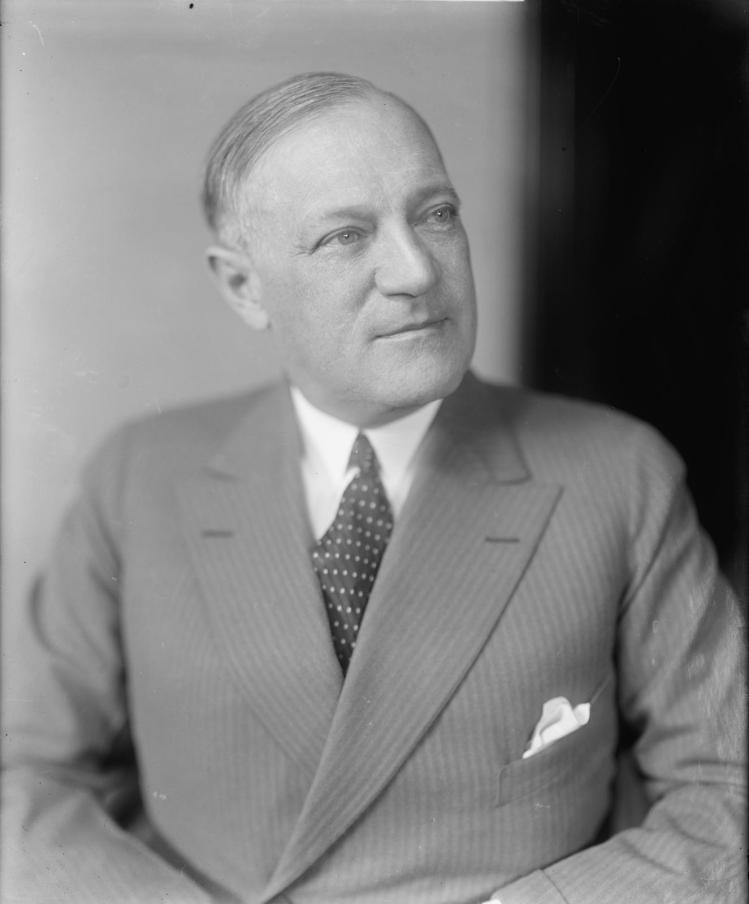
For all this to be possible, lawmakers must write and give effect to laws that serve the common good of the polity in part by facilitating and respecting the common goods proper to labor associations. If today this sometimes seems to be a hopeless task, we can recall the example of Sen. Robert F. Wagner (1877–1953), chief architect and sponsor of the Wagner Act. When asked where he got his ideas for the act, Wagner stated that he had “drawn inspiration…from the teachings of Pope Leo XIII and Pope Pius XI.” Thomas Kohler reports that in Wagner’s archived papers dealing with the passage of the NLRA, there are two heavily annotated and underlined copies of Pius XI’s Quadragesimo anno (1931). A Methodist when he was drafting the NLRA, Wagner became a Catholic in 1946.
Wagner was not responsible for the ways in which the statute he designed was later deformed. The culture and habits of thought that inspired him have waned over the period in which, as Ahmari recounts, neoliberalism has come to “[govern] society by the market.” While Ahmari’s call to lawmakers to return to governing for the common good is salutary, his plea for the “primacy of politics” needs to be interpreted according to the first principle Leo XIII taught in his encyclical Sapientiae Christianae, which came out a year before Rerum novarum: “The life, the morals, and the institutions of nations should be wholly conformed” to “the principles of Christian wisdom.” According to St. Thomas Aquinas, “politics is the servant of wisdom; it introduces it, preparing the way for it, like the door-keeper for the king” (Summa Theologiae, I-II.66.5).
Politics is to serve the wisdom that teaches us that the father sent the son to share the divine friendship with human persons still living in a world unfit for humans. While the purpose of divine law is to establish humanity in friendship with God, Aquinas tells us that “the principal intention of human law is to create friendship between man and man.” Lawmakers and other civil authorities can do justice by creating laws that bring people together—including in labor unions and employer associations—for the sake of friendship and experience of the common good. As Ahmari writes, it is “grace, not pedigree” that makes “one receptive to higher things,” including the truth that politics is, in Pope Leo XIV’s words, “a mission for the spread of truth and goodness.”