Wendell Berry turned ninety-one last summer, and though he has not yet put down his pen, his life and career are nearing their end. For nearly seventy years Berry has been writing poems, novels, and essays—longer than many people’s whole lives. His work has always spoken from and for another world, a lost world, one that for the rest of us is beyond recovery or even memory. And it now possesses a double measure of distance, because in his time Berry was a contemporary, cobelligerent, or friend of so many famed critics of the technological society: Thomas Merton, C. S. Lewis, Romano Guardini, R. S. Thomas, Lewis Mumford, Edward Abbey, Jacques Ellul, Wallace Stegner, Marshall McLuhan, Ivan Illich, Mary Midgley, Guy Davenport, Leo Marx, Ursula Franklin, Christopher Lasch, Neil Postman, Walker Percy, George Grant, Denise Levertov, John Lukacs, Albert Borgmann, and Gary Snyder. Besides Snyder, who is four years older than Berry, these great humanists are all deceased. They belong to another age, all of them born before World War II. This raises the question: Once Berry goes on to his reward, who will take up his mantle?
There are some serious candidates: Byung-Chul Han, Hartmut Rosa, Alan Jacobs, Nicholas Carr, Matthew Crawford, Andy Crouch, L. M. Sacasas, Antón Barba-Kay. Each of these writers is a formidable analyst of the digital age, has studied the older generation of thinkers listed above, and is read widely. But none of them is a poet or a novelist, unlike Berry, who is both. They write essays and nonfiction books in addition to blogs and Substacks, but they don’t produce works of the imagination.
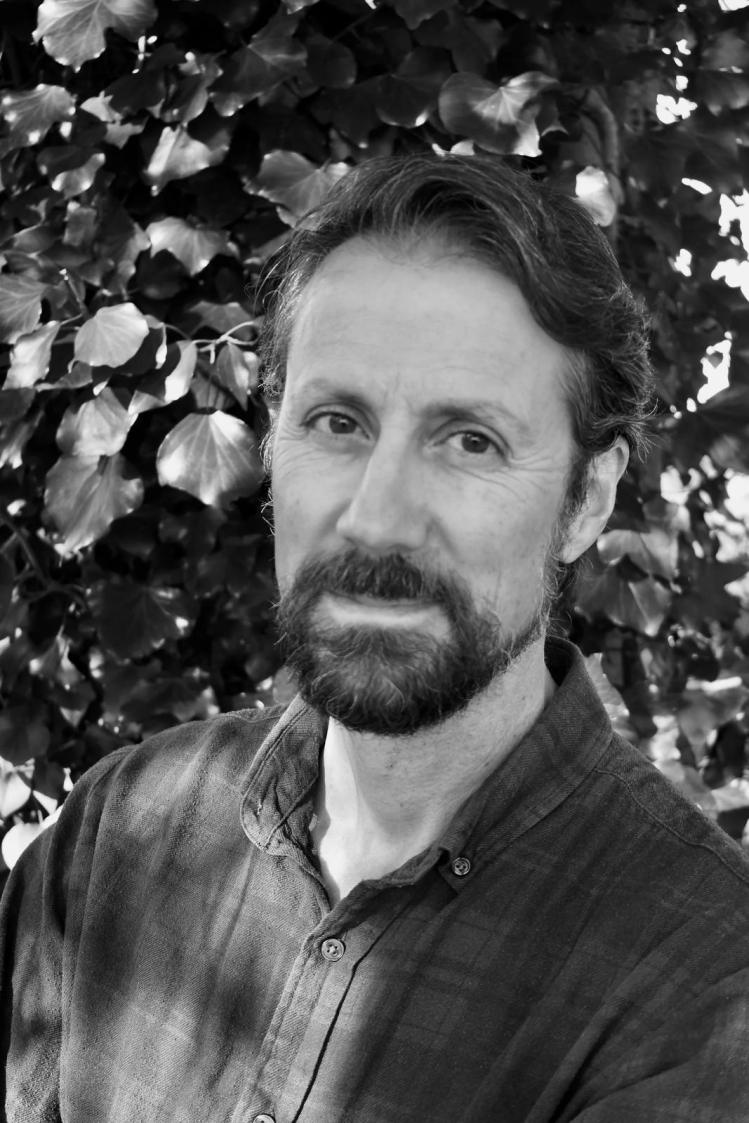
There is one contemporary critic of the technological society who has produced such work: Paul Kingsnorth. Born in England in the early 1970s, Kingsnorth was a prominent member of the radical environmentalist movement from a young age. An activist and editor in the 1990s, he began publishing a steady stream of essays, poems, and novels about twenty-five years ago. His acclaim grew with every new book.
But Kingsnorth is a restless soul. By 2007 he was fed up with the compromises and failures of climate activism, withdrawing from political journalism and formal organizing. In 2009 he cofounded the Dark Mountain Project, a melancholy collective of artists sick of modernity and dying to return to the land. In 2014, Kingsnorth and his wife did just that, moving to a farm in rural Ireland with their two children. After that, he began launching his salvos from the edge of civilization, not so much trying to make a difference as hoping to find fellow mourners willing to join their voices to his slow, resigned, literary dirge.
Then came Covid. In a 2021 essay for First Things, Kingsnorth recounted his unexpected conversion to Christianity during the pandemic. In January of that year he was baptized into the Eastern Orthodox Church. True, he’d never been an outright secularist or atheist. He’d always been something of a pagan instead, dabbling in Buddhism and Wicca, open to the spirits and nonhuman agencies of Mother Earth. As he put it: “Magic is real. It works. Who it works for is another question.”
Kingsnorth himself may have been shocked by his turn to Christ, but for many longtime readers of his work, it came as no surprise at all. My copy of his 2017 book Confessions of a Recovering Environmentalist and Other Essays is riddled with marginal notes positively impatient with this man so desperately desiring God yet unwilling to take the decisive step. Just do it already, I thought. And then he did.
Since his conversion, Kingsnorth has been writing regularly for his Substack, The Abbey of Misrule, which has more than seventy-seven thousand subscribers. After nearly five years of newsletters, he has revised and repackaged his writing there into a single magnum opus: Against the Machine: On the Unmaking of Humanity. By his own admission, this is the “big book” that draws together all the threads of his life and thought going back decades. Whereas Berry wrote his big book, The Unsettling of America: Culture and Agriculture (1977), at what turned out to be the outset of his career, Kingsnorth needed the highs and lows, the awards and anathemas, the detours and false starts of multiple careers capped by a transformative religious experience before publishing his.
So what does he say? And what should we make of it?
“The Machine” is Kingsnorth’s name for the technological society. He takes it from the Welsh poet R. S. Thomas. It’s a catchall term for everything Kingsnorth hates about our age: globalism, liberalism, capitalism, “progress,” ecological devastation, colonization, cultural homogenization, automobiles, pollution, and the full suite of digital screens that dominate our days, from televisions and laptops to smart devices and (most of all) smartphones.
Peek beneath the hood of the Machine and you find an ideology. In Kingsnorth’s telling, it began in the West and radiated from there to the rest of the globe. It sees the human condition as a problem to be solved, not a gift to be received with gratitude. It recoils from our biology, our bodies, our roots, our affections. It wants to sand off our rough edges in the service of a frictionless existence. This ideology is not limited to right or left: it is the shared framework for all Western elites, from politicians to venture capitalists to tech CEOs to NGO chiefs. Whoever is in power, “the Machine pushes on, relentless.”
The result is what Kingsnorth calls “the Great Unsettling.” The Machine has uprooted us from what he calls the “Four P’s”: past, people, place, and prayer. In their place, the Machine, “the liberal anticulture made manifest,” proposes the “Four S’s”: science, self, sex, and screens. “Perhaps,” he writes, this “is less an ideology than a theology. In the Machine age, ideology effectively functions as a replacement for and simulacrum of religion.” Salvation comes from self-creation, mediated by digital technology. The Four S’s “offer a kind of catechism for the Machine age.” Having redirected our prayers from heaven to earth, we “end up aiming them at the ultimate idol: our own image, reflected back at us in our little black screens.” Ideology eventually finds itself answering the spiritual yearnings of the human heart, albeit with counterfeit faiths. As a Christian, Kingsnorth now sees that culture is upstream from politics and religion from culture. The whole human project springs from worship. Cultural problems are finally spiritual problems. And in his view, the spiritual disease at the heart of Western culture is terminal.
For a book as confident and assertive as Against the Machine, it is full of ambivalences. One of Kingsnorth’s greatest strengths has always been his aptitude for self-criticism. His writing is recursive, turning over and over on itself and exposing its own inconsistencies. This disarms the reader, because the would-be prophet does not sound entirely sure of himself. Like Moses and Amos, Isaiah and Jeremiah, his speech is fragile, his lineage questionable, his lips unclean “in the midst of a people of unclean lips” (Isaiah 6:5).
The result is simultaneously an indictment of the West and a defense of it, a screed against the internet and a recognition that—at least for now—it’s here to stay, a rejection of Marx and an embrace of his critique of capitalism, a frank horror at transgender ideology and a refusal to be conscripted into the culture wars. Like Thomas and Berry alike, Kingsnorth is a conscientious objector in conflicts of every kind, the way only a poet can be. Thomas captures this posture well in a poem from the early 1980s called “Suddenly,” which describes the experience of hearing God speak “after long silence”:
I have no need
to despair; as at
some second Pentecost
of a Gentile, I listen to the things
round me: weeds, stones, instruments,
the machine itself, all
speaking to me in the vernacular
of the purposes of One who is.
You can find a similar vision in one of Berry’s untitled “sabbath poems” from 1999:
I dream of a quiet man
who explains nothing and defends
nothing, but only knows
where the rarest wildflowers
are blooming, and who goes,
and finds that he is smiling
not by his own will.
In the face of what Kingsnorth calls “the ongoing, accelerating revolution of the Machine,” he proposes an oasis in the wilderness. As the monks of old preserved and nurtured the hidden ways of the spirit while the barbarians stormed the cities, so “technological askesis” is required today for those few (or many?) souls who hope to resist the Machine’s encroachment.
For some, including Kingsnorth, this means the life of a “cooked ascetic,” a riff on “two different kinds of barbarian outsider” in ancient China. To be cooked is to appear to be assimilated while secretly resisting. This is the path of those who use the Machine against the Machine, as in Kingsnorth’s Substack and podcasts. He doesn’t own a smartphone, but he finds that he cannot fulfill his vocation as a writer, much less pay the bills, without the internet. By contrast, the “raw ascetic” will be absolutely unassimilated: as off the grid as possible. No smartphone, no QR codes, no health passport, no internet, no inbox. These true digital monks will serve, like the desert hermits of old, as both a standing judgment on the Machine and an invitation for the dissatisfied to contemplate. They will hold out the offer that another life is possible.
Kingsnorth describes both cooked and uncooked ascetics as “reactionary radicals.” Neither utopians nor activists, neither conservatives nor progressives, their aim is to stay put, to live when and where they are, come what may. They have no political program to speak of. Their politics is ineffectual by definition, “a ‘raindance on the astroturf’ of the modern world.”
The younger Kingsnorth might have reveled in the pagan purity of such a ritual, hoping that its symbolism might better attune him to the rhythms of earth and sky. Now he means it in deadly earnest: “Prayer works,” he writes, just as magic does. But unlike magic, prayer is pointed in the right direction. God is greater than the Machine, and only one of the two is infinite. The other has an expiration date, even if we don’t know what it is. So we wait, prayerfully, with the long-suffering patience exemplified by Christ, who prayed in Gethsemane for the cup to pass, yet “not my will, but thine, be done” (Luke 22:42).
Against the Machine is a long book, and so I have had to leave out much of interest, including Kingsnorth’s wilder speculations about the demonic character of chatbots and his darker predictions about where the world is headed. I have sought to present the vision and arguments of the book in their best light, on the terms Kingsnorth himself sets for them. For all their grand doomsaying, they couldn’t have a more sympathetic ear than mine. I was prepared to adore this book. I had hopes that it would fashion a new synthesis for tech criticism going forward, a prophetic vision alive to the threats bearing down on human life from the internet, smartphones, social media, and so-called AI. I even hoped it might provide an agenda for the coming decades.
I am sorry to report that Against the Machine is not that book. It is in fact the least compelling piece of work I have read by this otherwise remarkable author. It is neither a coherent book nor a collection of essays, but a hodgepodge of internet writing stitched together between two covers. It occurred to me while reading it that what I was holding belonged to a new genre: the Substack Book. Like the blogs of the aughts, Substack has already become its own thing: it incentivizes a certain mood, feel, and style; it has brought into being a recognizable literary form. You know it when you see it. Any one of this book’s twenty-seven chapters would be unexceptionable as a standalone newsletter in my inbox. In fact, I read early versions of some of them there. Spread across nearly three hundred and fifty pages, however, they make for tedious and mostly unpleasant reading. The prophetic voice curdles into preachiness. The pithy imperatives (“Buckle up”; “Be ready”; “Head for home”) lose their power to provoke. The grand pronouncements and historical summaries beguile, then befuddle, then bore.
The book should have been one-third its size or written from scratch. As it is, it’s a mess. It still contains plenty of insights and wonderful turns of phrase, and anyone who reads it will not only gain new perspective but be introduced to other authors and ideas worth tracking down. To new readers, one of these authors will be Kingsnorth himself. For them, his past writing, including his poems and novels, still awaits. And for all of us, his future writing awaits, too. My expectation is that, with this heavy tome behind him, he will now move on to work that is just as exciting and unpredictable as his previous output. Rare is the author who never swings and misses. The challenge is to keep swinging until the sound of a crack tells you that you’ve got another hit on your hands.
Against the Machine
On the Unmaking of Humanity
Paul Kingsnorth
Thesis
$32 | 368 pp.