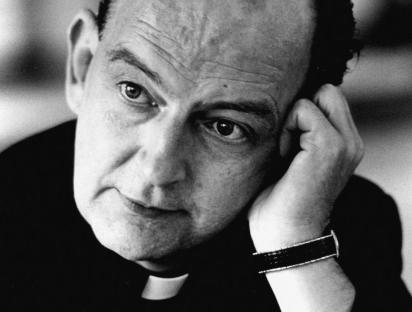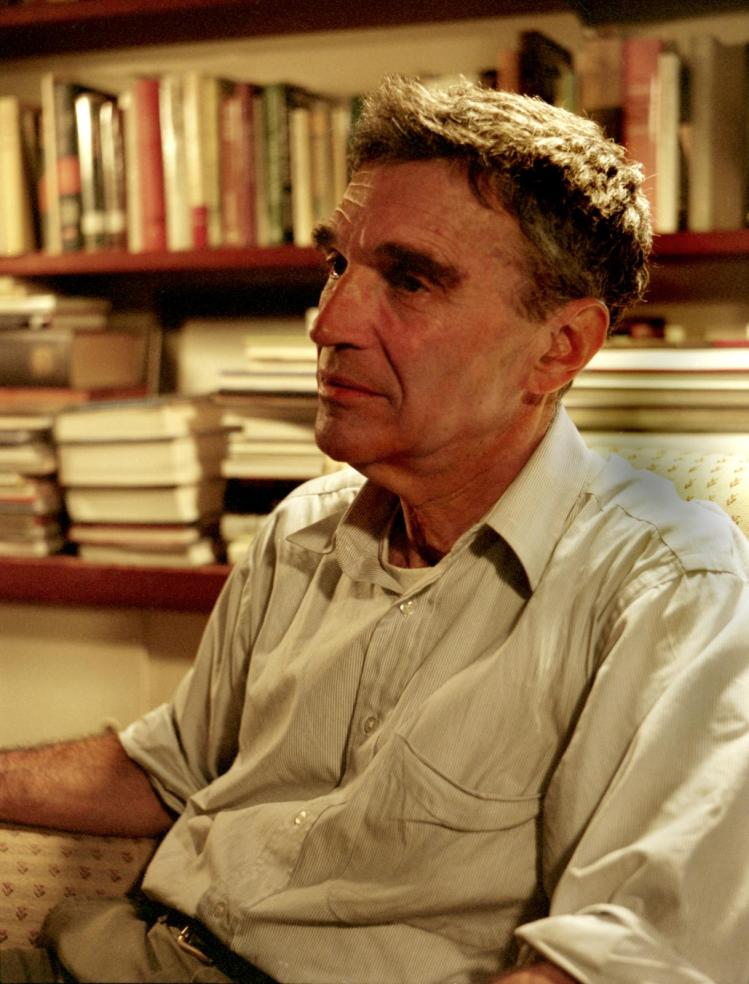
As Robert Coles and I were walking around Harvard’s campus a half century ago, searching for a suitable place to photograph him for Newsweek, he suddenly stopped and pointed to William James Hall. “You want to know what’s the matter with psychology and the social sciences?” Coles asked me rhetorically. “That’s what’s the matter with psychology and the social sciences.”
At the time, William James Hall was home to the department of Social Relations (psychology, sociology and anthropology), and was known for experimenting on students, especially Timothy Leary’s group experiments with psychedelics. But Coles’s ire was directed just as much at the kind of theorizing that, unlike his own work, sought to explain the behavior of children and youths without first observing closely how they actually do behave. For that, he figured, you had to move out of the confines of couch and clinic and into the world where people interact, where history and the individual psyche meet.
Coles, who died on June 4 at the age of ninety-seven, was many things: a doctor, a child psychiatrist and psychoanalyst, a literature professor, a documentarian, and the author of more than sixty books and nearly two thousand articles, essays, and book reviews. But his genius, central to all his work, was his hard-won ability to listen and observe. He called it simply “getting to know” this or that person. It was hard-won because it took him years of false starts before he realized that the children he worked with were his teachers; they taught him what he, the doctor, had to learn.
The first fruits of his work appeared in the five volumes of Children of Crisis, two of which won him a Pulitzer Prize in 1973. That series emerged from the decision that he and his wife Jane made to go to New Orleans in the 1960s to observe the effect of federally mandated school integration on the children, both Black and white, who were being integrated. Particularly affecting was his portrait of the frightened first grader in a snow-white dress and bright blue stockings who had to be guarded on her way to a previously all-white school where she found she was the only student in the otherwise empty classroom. This was a child making history, and Coles walked right behind her. And so began Coles’s decades-long contribution to what his psychoanalytic mentor, Erik Erikson, called “psychohistory.”
In subsequent years, Coles packed his tape recorder, notebook, and drawing materials and set out to record the inner and outer lives of children, many of them from what the socialist writer Michael Harrington famously labeled “the other America.” Besides dodging hooded Klansmen and rifle-toting Southern sheriffs, that meant picking cotton with Black workers in the Mississippi Delta, harvesting celery with Chicano migrant workers, and swapping stories with white Appalachian mountaineers and Native Americans in the Southwest. Just reading his books, each more than five hundred pages, was an exercise for Americans who wanted to know about other Americans they would likely never meet. And yet, when President Richard Nixon convened his White House Conference on Children in 1970, Coles was not invited.
I got to know Coles while writing the Ideas column for Newsweek, much of which was devoted to the social sciences. He had the gift of hilaritas, and after we became friends I often called him just for a lift of spirits. He reveled in irony and paradox, which kept his rage at bay. He liked to remind me of a book review I wrote of his work that began with a quote from Franz Kafka. Two weeks later, he had received a letter at Harvard from a confused reader that began, “Dear Mr. Kafka.”
Like Freud, Coles had the mind of a moralist. The difference was that, unlike Freud’s, his was a mind marinated in the Bible. His British father’s background was Jewish and Catholic; his mother, from Iowa, was the daughter of an Episcopal priest and was active within the Catholic Worker movement. The walls of his small office at Harvard were hung with pictures of his moral heroes: Martin Luther King Jr. and Robert F. Kennedy in politics; Anna Freud and Erikson, his mentors in child psychiatry; and some of the writers he most admired: James Agee, Walker Percy, Simone Weil, Dorothy Day, and Georges Bernanos, whose fictional French country priest, he said, haunted him. (He wrote two books on Day and one on Weil.) Also scattered about were images of the Madonna and child.
For years, Coles taught a course on morality at Harvard’s graduate schools, using novels like Dickens’s Bleak House for law students and similar fiction for those in the medical and business schools. Undergrads dubbed his course for them “Guilt 101.” He usually showed up in a sky-blue workingman’s shirt, the kind auto mechanics used to wear. His paycheck for those courses came from the Harvard president’s discretionary fund because none of the individual schools would pony up.
Coles talked a lot about religion and marveled at the way that even backwoods fundamentalist services sustained the Black sharecroppers and poor white folks he got to know. But he shied away from talking about his own religious practices, other than to say that Good Friday was the one day he felt really comfortable in a church. He also told me more than once that concepts like pride, envy, forgiveness, and redemption carried more explanatory power for him than Freud’s trio of id, ego, and superego. Indeed, one has only to read The Geography of Faith—his dialogue with Daniel Berrigan, which was recorded while the Jesuit priest was on the lam from the Feds and hiding out at Coles’s home in Concord, Massachusetts—to see how familiar he was with Catholic faith and practice.
In addition to his Pulitzer, Coles won a McArthur Fellowship, the Presidential Medal of Freedom (1998), and the National Humanities Medal (2001). Like most writers, he had his critics. Although he was an astute interviewer, his preferred method of unstructured hanging around with his subjects did not transfer easily to his magazine articles. Walker Percy’s biographer Jay Tolson tells how Coles set about profiling Percy for The New Yorker by visiting him at his home in Louisiana and knocking back bourbon on Percy’s front porch. Three days later Coles left without having conducted anything like a structured interview, leaving Percy to wonder why his friend and fellow psychiatrist had come in the first place.
Others, including myself, felt that Coles often let his subjects speak far too long in explaining themselves to him. As I approached the end of each volume of Children of Crisis, I looked forward to his summary insights, but there weren’t any. Immersion and glimpses of illumination were all. I gently let Bob know how I felt by sending him a light-verse parody of his work, which ended with these lines:
Full forty million words did he
Write for himself—and posterity.
But critics wonder to this day
Just what it was he meant to say!
Coles enjoyed few things more than laughing at himself. May he now enjoy the peace that surpasses understanding.
We welcome your comments about this article. Please send your response to [email protected].