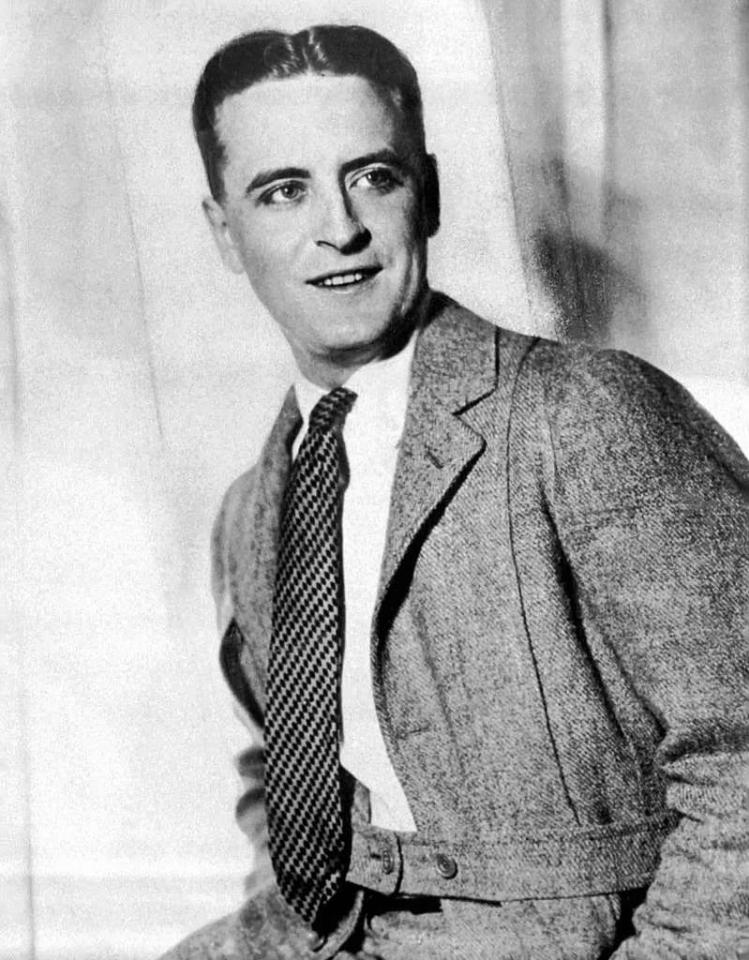
This year’s hundredth anniversary of the publication The Great Gatsby has generated an avalanche of praise for what many consider to be a singular American classic. Before writing The Great Gatsby, F. Scott Fitzgerald had published two bestselling novels, This Side of Paradise (1920) and The Beautiful and the Damned (1922), and was heralded as the voice of his generation. Although some, such as T. S. Eliot, recognized the new novel’s importance, sales were disappointing, and Gatsby faded from the cultural landscape until it was reissued as a paperback and given to G.I.s during World War II. Attracting increasing critical attention, it became a staple in high-school English classes in the 1950s and ’60s. Holden Caulfield’s affection for, and identification with, Gatsby in The Catcher in the Rye (“I was crazy about The Great Gatsby. Old Gatsby. Old sport. That killed me.”) conferred an undeniable imprimatur on Fitzgerald’s mysterious protagonist. A million high-school and college essays have been written on the meaning of the beckoning green light at the end of Daisy Buchanan’s Long Island dock. Gatsby’s tragic fate became an allegory of the paradoxes of the American Dream, the romantic longing—“the orgiastic future that year by year recedes before us”—that somehow propels our appetites and ambitions.
Fitzgerald was raised in St. Paul, Minnesota, and educated for the most part in Catholic schools. He described himself as a “Chestertonian Catholic” while at Princeton but soon abandoned the faith, though he was married in a chapel of St. Patrick’s Cathedral in New York City. Identified as a spokesman for the licentious era of jazz, speakeasies, and flappers in the 1920s, Fitzgerald was denied a Catholic burial by the Archdiocese of Baltimore when he died in 1940. Writing about Gatsby, few critics seem to discern anything specifically Catholic in the novel’s narrative design or symbolism, and most dismiss the religious references as window dressing.
In a recent New York Times article, A. O. Scott argues that the novel’s enduring popularity has told “us about how we see ourselves” over the past hundred years. First there was “Jazz Age Gatsby,” “folded into a world of Prohibition-fueled naughtiness, Wall Street-enabled materialism, and the anomie that followed the Great War and the great influenza pandemic.” In Scott’s scheme, that was followed by “Existential Gatsby,” a postwar understanding of the novel as a “commentary on the predicament of modern man…. [Gatsby’s] death, an act of senseless violence, is a textbook case of the absurd.” Eventually we arrive at “Hip-Hop Gatsby,” introduced by Baz Luhrmann’s 2013 film version with a soundtrack provided by hip-hop mogul Jay-Z. “Like the jazz of the 1920s,” Scott contends, “hip-hop is a Black American musical idiom that has become the soundtrack of the era, a complex, fast-evolving art form freighted with aesthetic possibility.” Jay-Z, like Gatsby, “is a self-made man, a one-time dealer in illegal substance who has ascended to the highest levels of wealth and power.” Scott argues, quoting the critic Alonzo Vereen, that Gatsby’s “American identity is so ambiguous that the students could layer on top of it any ethnic or racial identity they brought to the novel. When they did, the text was freshly lit.”
Curiously, one of the ways the novel tells us about how we see ourselves—namely, how Catholicism has influenced American identity and literature—is not mentioned. That seems an odd oversight since Gatsby’s character first took shape in Fitzgerald’s imagination for the short story “Absolution,” arguably his most explicitly Catholic piece of writing. The story, about a young boy’s difficult family, his failed effort to tell the truth in the confessional, and a troubled priest, was an initial exploration of Gatsby’s humble Midwestern roots. Fitzgerald cut it from early drafts of the novel, turning it into a separate, seemingly unrelated story. For the novel, he wanted Gatsby’s past to remain more obscure.
Gatsby’s Catholic dimension also goes unmentioned by Maureen Corrigan in a recent article for The Washington Post. Corrigan is the author of So We Read On: How the Great Gatsby Came to Be and Why It Endures, a well-received examination of the novel’s appeal and history. Like all great art, she writes in the Post, Gatsby “is inexhaustible, bottomless, still talking to its time and to ours.” Corrigan briefly outlines the sociological aspects of the novel’s depiction of 1920s urban America, especially the question of whether “the promise of America is truly extended to everyone.” As an Irish Catholic American from humble beginnings, Fitzgerald had a keen sense of social and economic estrangement, an attitude that animates Gatsby’s rags-to-riches story. The novel, as Fitzgerald said, is about “aspiration,” both romantic and material. “Reaching, striving, even though we know, inevitably, we’ll fall short,” is how Fitzgerald understood life, Corrigan writes. As a Catholic of modest means, Fitzgerald was an outsider at Princeton, and he remained a socially and economically insecure striver for the rest of his short life. Even when he had achieved some level of literary success, he always considered himself a “parvenue.” When Fitzgerald fell in love with a young woman from a wealthy family (the model for Gatsby’s Daisy), her father warned him that poor boys “should not think they can marry rich girls.” Zelda, his wife, initially broke off their engagement because of his lack of prospects, a wound that festered.
Exactly why a novel decked out in the furniture of the Jazz Age still talks to us in “inexhaustible” ways is unclear in Scott and Corrigan’s appreciations. “Inexhaustible” suggests a depth we often associate with religious concerns and themes, and indeed there’s more God talk in the novel than a contemporary reader might expect. In one enigmatic reference, Gatsby is even called a “Son of God” by Nick Carraway, the novel’s narrator. Fitzgerald’s novels remind us that it is easier to lapse from Catholicism than to escape the drama of salvation it so vividly enacts in iconography, story, and ritual.
Gatsby is very much a morality tale circling the mysteries of love, sex, death, and Gatsby’s doomed faith —his “extraordinary gift for hope”—that he can change the past. The morality, of course, is profoundly ambiguous because the moral hero is a corrupt bootlegger. After his immersion in Tom and Daisy Buchanan’s violent world of inherited wealth and privilege, Carraway is revulsed and longs for the “world to be in uniform and at a sort of moral attention forever.” Tom and Daisy “smashed up things and people and then retreated back into their money or their vast carelessness.” Although Fitzgerald doesn’t condemn Gatsby’s overweening American ambition—he of course shared it—the book is shaped by a familiar Catholic fatalism about the transitory nature of material and worldly treasures. As the cultural critic Paul Giles reminds us in his American Catholic Arts and Fictions (1992), deeply embedded in American culture is the Puritan notion that wealth is a sign of personal virtue and God’s favor. The Great Gatsby questions and parodies that assumption at every turn. Gatsby’s lavish parties are a miniature portrait of America’s 1920s profligacy, built on speculation and fraud.
Of the articles celebrating the novel’s centenary, Andrew Delbanco’s essay in The New York Review of Books is the most attentive to these concerns. Although his emphasis is on the story’s eroticism and Fitzgerald’s own frought understanding of romance and sex, Delbanco is alert to Fitzgerald’s abiding Catholic sensibility, acknowledging that the author “briefly aspired to the priesthood.” (Daisy’s maiden name is Fay, the surname of the Catholic priest who was Fitzgerald’s adolescent mentor.) Delbanco notes the novel’s antecedents in “Absolution,” describing Gatsby as a “work of social realism from which there emanates a shimmer of allegory.” He recognizes that Gatsby’s love for Daisy “has a dazed reverence that borders on piety.” Fitzgerald famously described the lovers’ first kiss in frankly religious terms: “He knew that when he kissed this girl, and forever wed his unutterable visions to her perishable breath, his mind would never romp again like the mind of God. So he waited, listening for a moment longer to the tuning-fork that had been struck upon a star. Then he kissed her. At his lips’ touch she blossomed for him like a flower and the incarnation was complete.”
Delbanco describes the passage as “verging on purple,” which is fair enough, but he also acknowledges that the writing owes much to William James’s understanding of “religious ecstasy,” with which Fitzgerald was no doubt familiar. “This craving to arrest the relentless process of loss and decay suffuses Fitzgerald’s prose,” Delbanco writes. He goes on to remark on Fitzgerald’s “dread of endings—the end of youth, of frolic, of love, of life itself.” These are also religious longings. To strengthen his case that Fitzgerald was prone to wistfulness, Delbanco quotes a line from the novel Tender Is the Night that has an uncanny eucharistic resonance. “The drink made past happy things contemporary with the present as if they were still going on, contemporary even with the future, as if they were about to happen again.”
Baz Luhrmann’s flamboyant film version of Gatsby might have illuminated the possibilities of various ethnic and racial American identities, as A. O. Scott contends, but according to Paul Giles, it first restored the “Irish Catholic dimensions” of the novel. Writing in Commonweal (“A Good Gatsby,” July 12, 2013), Giles argues that the “overriding theme of the book is not greed or money, but the nature of perception.” In American Catholic Arts and Fictions, Giles writes that Fitzgerald’s editor, the legendary Maxwell Perkins, “praised the novel for having ‘a sense of eternity,’ and Fitzgerald was clearly aspiring to write not just a social commentary on 1920s America but a much broader critique of American romance.” In his later Commonweal essay, Giles observes that “[a] metaphysical dimension is always an implicit presence within the narrative…. In this sense, The Great Gatsby is positioned ambiguously, invested in the American Dream and, at the same time, alienated from it.”
Discussing the passage about Gatsby and Daisy’s first kiss, which Delbanco describes as an experience of religious ecstasy, Giles perceives something more distinctively Catholic, a meditation on transubstantiation: “Can the timeless come into contact with time, can the icons be transformed into real flesh, or are they doomed to remain simply icons?” This is not to suggest that The Great Gatsby is a work of Catholic apologetics; there is no Creed directing the narrative. Yet Fitzgerald’s language is steeped in a recognizable Catholic belief in transcendence, “the continual transmutation of realism into symbolism,” as Giles puts it.
To ignore the Catholic dimensions of the novel, as so much criticism does, diminishes its uncanny power. Most novelists understand their efforts as an act of faith, a summoning into existence of things not fully or clearly seen. Writing, Franz Kafka said, is a form of prayer. John Updike had a similar view: “The Old Testament God repeatedly says he wants praise, and I translate that to mean that the world wants describing.” Not many writers have described the world and our perplexing longings as beautifully as Fitzgerald did.