1970s
The Roe v. Wade decision in 1973 marked the beginning of a controversy that still shapes the nation’s politics and the Church’s own priorities.
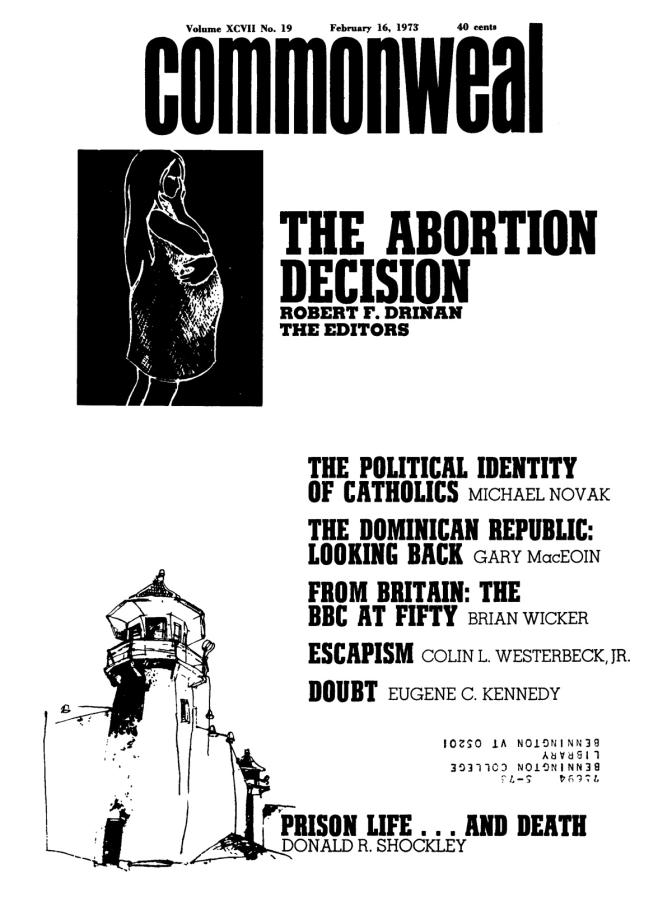
Commonweal’s editors quickly criticized the Supreme Court’s Roe v. Wade decision of January 1973, noting that before the decision, state laws represented “some consensus that life in process is life and must be protected. Now…that consensus is gone.” The editors also immediately foresaw, however, that “the anti-abortion cause will become the political tool of the right wing,” and criticized the American bishops’ response to Roe, noting that their rigid opposition to birth control gave them little credibility on other matters of morality.
In 1974, after fifty years as a weekly, Commonweal began to publish twice a month, but its ambitions remained impressive. In a New York Times interview about the magazine’s milestone anniversary, editor James O’Gara described Commonweal’s mission: “We want to see Vatican II implemented…. We’re concerned with the redistribution of wealth, a better way to choose the Pope, the limits of papal power and lay participation in all levels, including the highest. What we really want is a total reorganization of society and the church.”
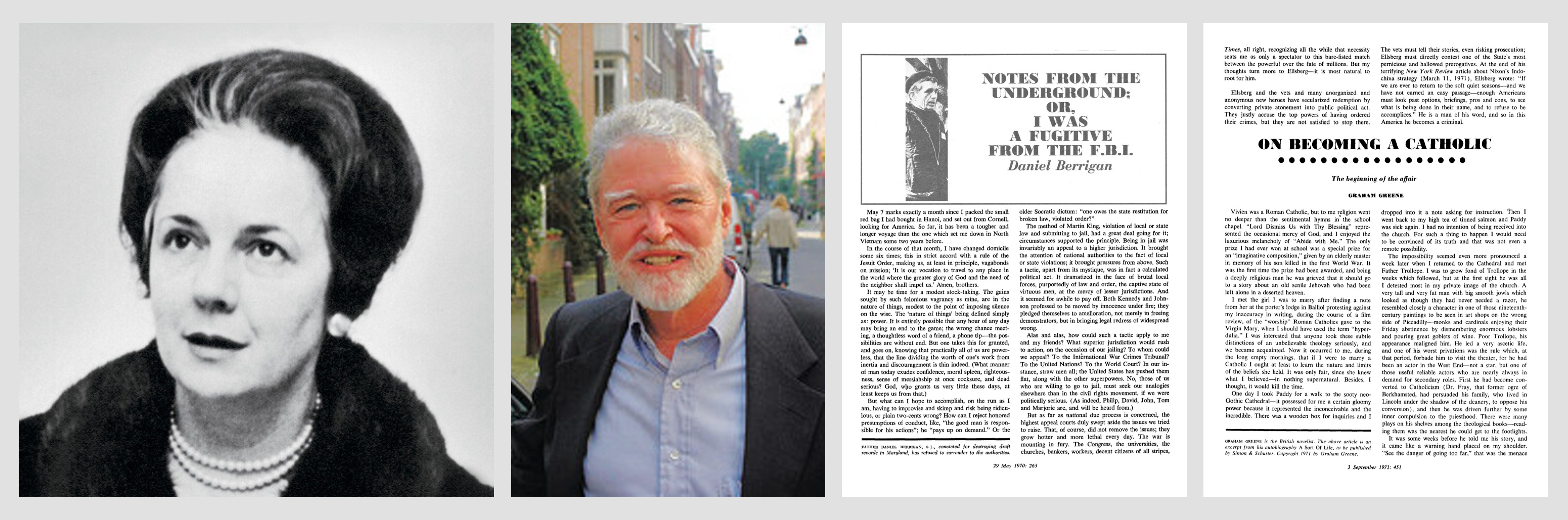
The 1970s also saw the debuts of two long-time columnists whose broad scope and graceful writing helped define the Commonweal sensibility. John Garvey began to appear in the magazine in 1973, and for more than forty years wrote with spiritual insight and common sense about a wide range of moral, political, and religious questions. Abigail McCarthy, the former wife of 1972 presidential candidate Eugene McCarthy and a distinguished author in her own right, wrote with special attention to women’s issues both inside and outside the Church, as well as on literature, politics, and many other topics.
Editorial highlights
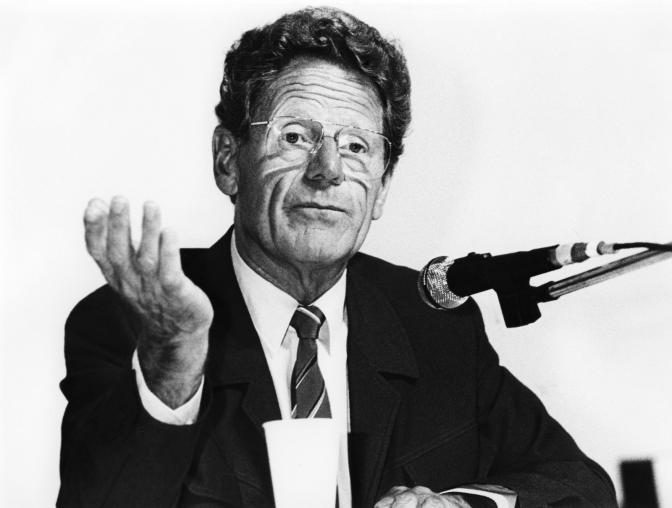
“Notes From The Ungerground; Or, I Was A Fugitive From The F.B.I.” by Daniel Berrigan (May 19, 1970)
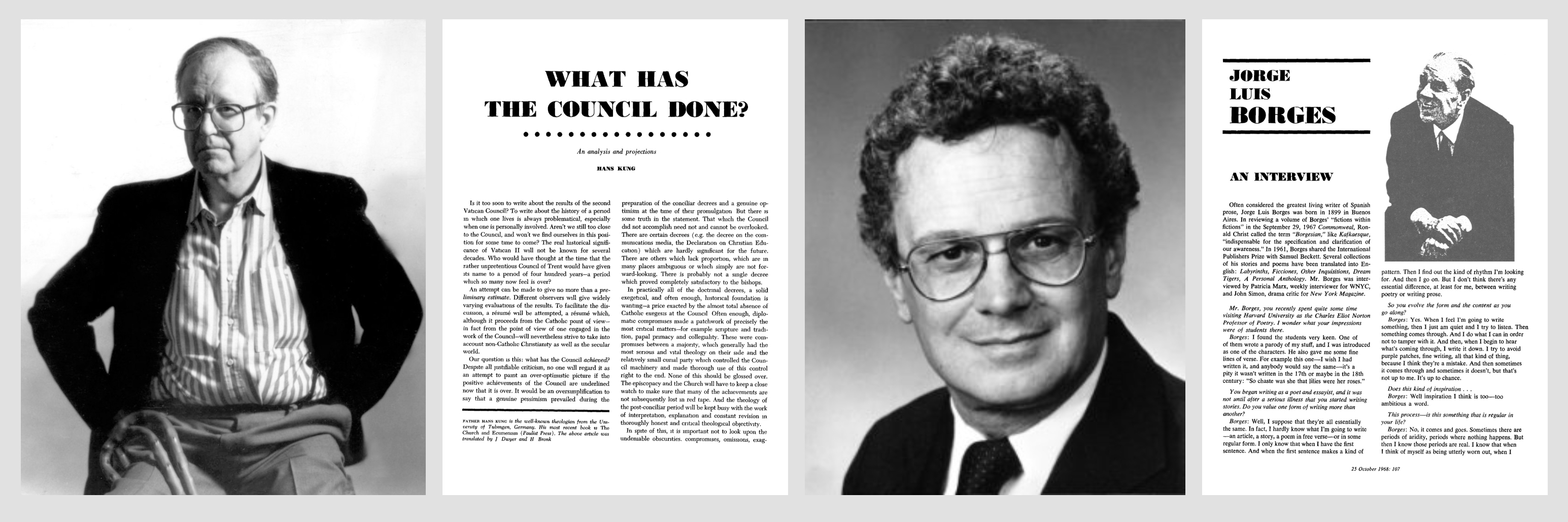
“On Becoming A Catholic” by Graham Greene (September 3, 1971)
At the end of the decade, the election of Pope John Paul II in 1978 almost immediately raised concerns in Commonweal about his style of leadership, especially his authoritarian approach to internal Church discipline and the work of theologians: “[I]nsofar as it encourages a teaching church that is not equally a learning one,” wrote the editors, “the huge promise of his papacy may go unfulfilled.”