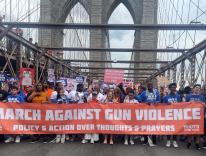
Phil Andrew is the kind of guy you want in your corner during a crisis. A former FBI hostage negotiator, he brings a calm, authoritative demeanor to difficult situations, and is grounded in values that come from, among other things, his Catholic faith. As a college student, he convinced a school shooter who had broken into his family’s home to release his parents and survived a bullet to his chest when he tried to disarm her. Since then, he has committed his life to countering violence in our country; now he hopes to bring his experience and skills in crisis management to Congress.
Andrew is running in a crowded primary to represent Illinois’s ninth district, a solidly Democratic one, to replace Jan Schakowsky after her quarter-century career. The winner will join what could be one of the largest classes of new lawmakers in history, a group that will face the political, economic, and social instability wrought by Donald Trump in his second term. Given the federal government’s failure to address issues like immigration and health care, threats to democracy, and now a dangerous war in the Middle East, the stakes couldn’t be higher, Andrew told me. “These next two years are going to define the next few decades. We have to get it right.”
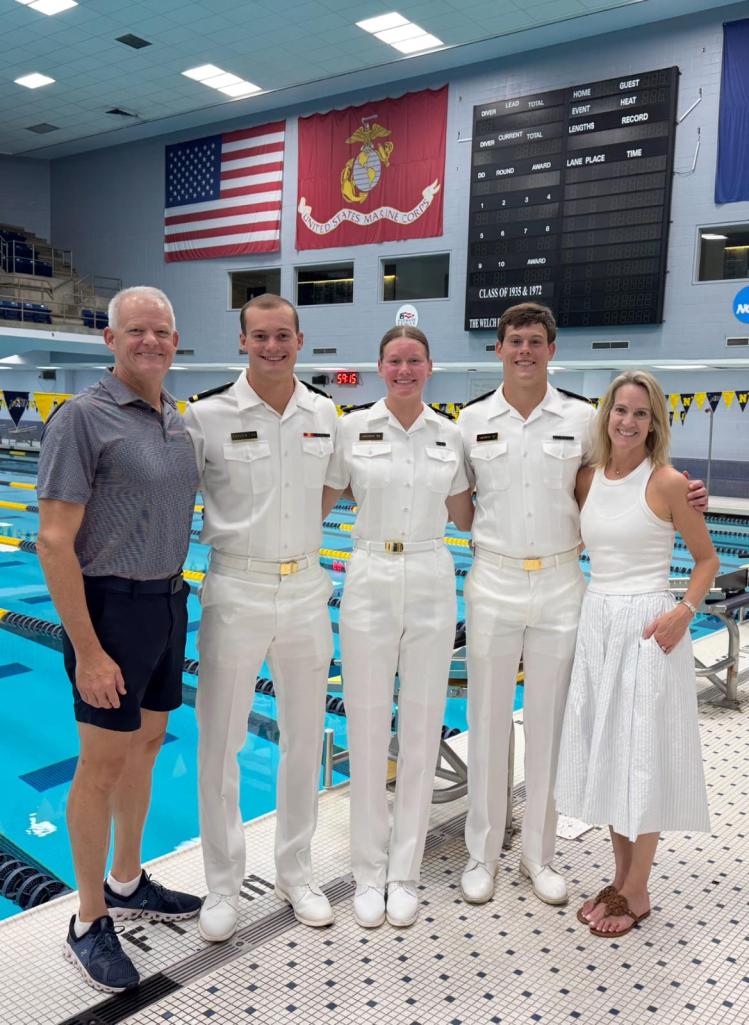
He and his wife, Michelle, are especially worried about the Trump administration putting military servicemembers in harm’s way; three of their four adult children currently serve in the U.S. Navy. When Andrew talks to his former colleagues at the FBI, they are “hopeful that the cavalry is coming, but they can’t hang on forever,” he said. “Their capability to fulfill the mission that the American people need them for is diminished—not only in [the Department of] Justice, but in every agency in the federal government.”
Today’s current political crisis, as Andrew sees it, also affects his party. He has been critical of “career politicians” and the “party machine,” and he sees himself as a reform candidate calling for ethics and accountability, especially on issues such as dark money in politics and gerrymandering. His district, which used to be known for the “lakefront liberals” of the city’s north side and northern suburbs, has been redistricted to include parts of some two dozen northwestern suburbs, which are more politically mixed. Andrew insists his party could do better at listening to the American people and making progress on issues that matter to them. “This district’s race is very much about defining who the Democratic Party is,” he said. “Are we the party that listens and is working toward something new? Or are we the party that is just opposed and against Trump? You have to be both.”
Andrew grew up as the middle child of seven in a Catholic family devoted to the Church and the Democratic Party of JFK. His parents organized buses for the 1963 March on Washington and worked for the presidential candidacy of Robert Kennedy before he was assassinated. His mom, a kindergarten teacher, helped migrant workers in California before the family relocated back to Illinois. Service to others was instilled in young Phillip not only through his family but by the Jesuit education he received at Loyola Academy High School in suburban Wilmette. He was a competitive swimmer there and at the University of Illinois.
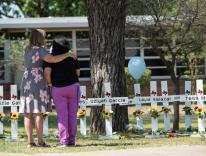
But nothing formed Andrew more than the events of May 20, 1988, when a mentally disturbed woman shot into a second-grade classroom in suburban Winnetka, killing one student and injuring five more. She fled to the Andrew home, where she held the twenty-year-old and his parents at gunpoint. Since that incident—one of the first nationally known school shootings—Andrew has worked in public safety, with the goal of providing the same compassion to victims of violence that he received on that day.
After law school and a twenty-one-year career as an FBI special agent, intelligence officer, undercover agent, and crisis and hostage negotiator, Andrew founded PAX group, a global conflict and safety consultancy firm. He also served as director of the Chicago Archdiocese’s Violence Prevention Initiatives, which he said reduced violent crime by nearly 40 percent in targeted neighborhoods. I met Andrew at the dedication of the Fr. Augustus Tolton Peace Center at a Catholic Charities facility on Chicago’s West Side in 2018, where he spoke about how reducing violence requires not only stricter gun laws and metal detectors, but also investments in mental health, domestic violence, and poverty programs. “Lives can be saved,” he said then. “This is where the Church should be.”
Making families safer so they can thrive has been Andrew’s life’s work. But today, so many in his district are fearful: immigrants fear deportation, Jewish residents fear acts of antisemitism, businesspeople fear the chaos of Trump’s on-again-off-again tariffs. “We have a generation of people who have grown up and don’t even know what school safety is,” Andrew told me. “I also hear from a lot of people in my district who are afraid to go downtown. This is really challenging our community, when anyone feels threatened or unsafe.”
When I asked him if he was afraid when the school shooter was holding his family hostage, he said remembering it is almost more frightening. At the time, he was focused on navigating the situation, drawing on his then-limited skills and on his faith. “Where there is fear, there is an opportunity to make a choice. You can choose how to respond to it,” he said. “But you do need skills, training, and practice—and trusted relationships and teamwork.”
The late Pope Francis’s image of the Church as a field hospital resonates with him as he considers the need to triage the many problems facing communities and the nation. “The ancient wisdom of our faith is aligning with what we know about high-performing teams,” said Andrew, a member of Saints Joseph and Francis Xavier Parish in Wilmette. “In an age of misinformation, trust and relationships are at a premium for authenticity, connectivity, and the ability to get things done.”
Although he’s polling in the single digits, he remains committed to offering voters a “values-driven” candidate. What he hears from voters is a deep frustration with both the Trump administration and with the Democratic Party. Voters, including Catholic ones, want leaders they can believe in. “They want someone they can trust, someone who will lead with values and evaluate decision-making through a belief system that elevates others, is service-minded, and cares about dignity,” he said.
On the divisive issue of abortion, he believes it is a “deeply personal” issue best left to mothers and families to navigate with their health-care providers. He appreciates that some in the U.S. Church seem to be bringing a broader perspective to what it means to respect the dignity of human life and praises the U.S. bishops for speaking out against violent immigration enforcement and detention. “I think people want more unity,” he said. “They are tired of those influencers who are selling them fear and hatred.”
We welcome your comments about this article. Please send your response to [email protected].