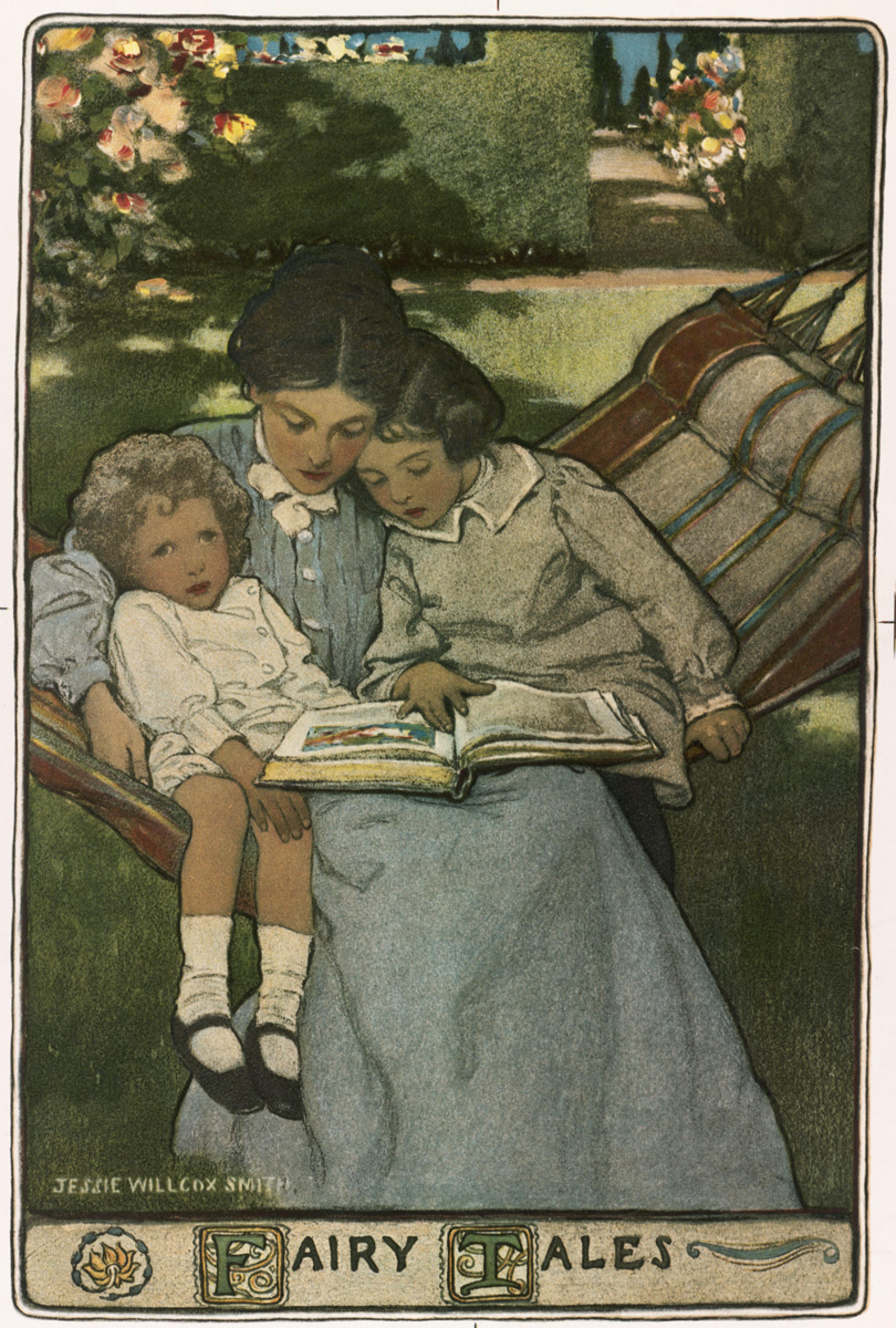
Longtime readers of Commonweal might remember the late associate editor and essayist Daria Donnelly, who wrote a biannual column on children’s literature until her death in 2004. Donnelly was continuing a feature begun in the 1940s by Claire Huchet Bishop, a Swiss librarian and accomplished children’s-book author who served for decades as Commonweal’s children’s-books editor. It’s now 2026, long past time for the magazine to take another look at such books. Lest you be tempted to buy the little ones in your life toys with lights and sounds—or God forbid, a sweater—we’re reinstating the practice just in time for Christmas.
I’ve only been a mother for a handful of years, but I’ve already read plenty of franchised slop with bad rhymes, no plot, and pandering jokes. Don’t be tempted to devour any of the hundred or so derivations, available for every occasion, of The Very Hungry Caterpillar!
I’ve also reread some beautiful books from my own childhood in these years—classics like Corduroy and Where the Wild Things Are, Aesop’s fables and folk tales. And I’ve come across finds that catch me by surprise, titles that I’ve picked up on travels or checked out at the library or unwrapped in packages from friends.
A few caveats. My kids are small, and the following list reflects that. Of course, you don’t need to be a parent to care about children’s literature—perhaps you are an aunt or godfather or other much-loved grown-up. And finally, every book here is a favorite not just of mine, but of my son or daughter, too. (We don’t always have the same taste. Tommy won’t go for Frog and Toad, no matter how many times his mom asks. He’s more of a Curious George and Little Blue Truck kind of guy.)
One: Every Monday Mabel by Jashar Awan (Simon & Schuster Books for Young Readers, $19.99, 48 pp.). Every Monday, Mabel pours herself a bowl of chocolate cereal, drags a chair out to her driveway, and waits for the garbage truck to come—the highlight of her week, to which the rest of her family is indifferent. Turns out, the other kids in her neighborhood are waiting, too, enraptured by the everyday. This book gets me every time, especially that last page, all those completely sincere children peering from their windows.
Two: Last Stop on Market Street by Matt de la Peña, illustrated by Christian Robinson (G. P. Putnam’s Sons Books for Young Readers, $18.99, 32 pp.). After church, a nana hustles her grandson onto a bus for a trip to the soup kitchen to work their regular volunteer shift. Market Street is a little firm in its messaging, but only in the moralistic way the best grandmothers often are. The message comes through loud and clear: get over yourself.
Three: Cars and Trucks and Things That Go by Richard Scarry (Golden Books, $19.99, 80 pp.). The last of my vehicular picks, and arguably one of those classics so established it doesn’t need my endorsement. But this book occupied our toddler son through the early days after our daughter was born, so credit where credit is due. Cars and Trucks reminds any adult how much children care for the tiniest details (bless them), and how seriously they take absurdity: two pickle cars, a steamroller run wild, an overturned pie truck, an insect named Goldbug who appears on every page? Sure! Let’s find that bug!
Four: Library Lion by Michelle Knudsen, illustrated by Kevin Hawkes (Candlewick Press, $8.99, 48 pp.). A gentle lion is allowed to visit the library for storytime, so long as he does not roar. One day he does, but for an excellent reason! This is another book with a clear and good moral: sometimes, even the best rules are meant to be broken. Do a fun nasally voice for Mr. McBee.
Five: Hot Dog by Doug Salati (Knopf Books for Young Readers, $19.99, 40 pp.). Another animal pick, this one less moral than mood. It’s so hot in the city. A shaggy little dog needs to escape. He heads to the Hamptons, and his relief is palpable—you can feel it through the page, that ocean breeze, a beach to run. And then there’s the homecoming back to Manhattan, where the evening has cooled, fountains spray, and there’s watermelon and a hot salty pretzel for dinner. Bliss. A portrait of an enchanted day, the kind that kids (and animals) experience more often than adults.
Six: Big Red Barn by Margaret Wise Brown, illustrated by Felicia Bond (HarperCollins, $15.99, 32 pp.). Also moody and rhythmic, Big Red Barn is on its face nothing more than an occasionally repetitive list of animals on a farm who are preparing for sleep. (With different, less-interesting illustrations than Brown’s Goodnight Moon.) And yet, this book is more than the sum of its parts. I’m always struck by one line: “But in this story, the children are away. Only the animals are here today.” Where are the children? For me, Big Red Barn strikes a note of almost ominous melancholy—the people are elsewhere, the animals have taken their care into their own talons and paws—and peace: the creatures know how to follow the rhythm of the day.
Seven: Your Forest by Jon Klassen (Candlewick Press, $8.99, 24 pp.). Also Your Farm and Your Island. These simple board books—you can get the three in a boxed set—mimic the way a child builds a scene in their mind, gradually adding landscape and characters. Klassen renders all the inanimate characters, including buildings, vehicles, and celestial bodies, with eyes. These books are like visual poems.
Eight: Pancakes, Pancakes! by Eric Carle (Little Simon, $10.99, 32 pp.). This book is weird; it’s no Brown Bear, Brown Bear, What Do You See? But my son loves it, and I’ve started to understand why: Pancakes is all about process, in this case, the nitty-gritty of a recipe. It offers the kinds of mechanical details that we sometimes think kids can’t handle, but that they actually crave. Grind the wheat. Churn the butter. Collect the eggs. Go down to the cellar for strawberry jam. Warning: This book is long. If you get tired of reading it (as I did), there’s an audiobook version for sale, narrated by Stanley Tucci.
Nine: A Good Day by Kevin Henkes (Greenwillow Books, $7.99, 28 pp.). One of the first books I bought for my daughter, who’s eight months old and just getting into reading. A bird loses his feather. A fox can’t find her mother. A squirrel drops his nut. In a few gracious turns, it all works out for the best. My English-major argument: this is a sweet little book masquerading as “Aw, that’s nice!” that’s really a deep meditation on providence. See if you agree.
Ten: Known: Psalm 139 by Sally Lloyd-Jones, illustrated by Jago (Zonderkidz, $7.14, 18 pp.). We have a number of children’s Bibles, but this psalm series (there are several of these books) provides a wonderful complement, recasting the language for children in a way that’s accessible but not hokey, warm but not cloying. Known follows a little boy and his dad, who’s a stand-in for a loving, capable God, through their regular day in the city. Dad bandages scrapes. Dad tosses his son in the air. My favorite line, on a page in which a speech bubble above the boy’s head brims with a pirate ship, a bunny, and sand toys: “He is interested in what I think, and what I have to say.” May that be true of all of us adults who read to children, and then (joy!) get to hear their thoughts.
We welcome your comments about this article. Please send your response to [email protected].