Rumor has it that the Time magazine archives include a memo instructing staffers on how to write a trend piece. The memo—let’s suppose it exists—spells out the process in a few easy steps. Define the present as distinct from the past, even the past of the previous decade, president, or editor-in-chief. Begin with your conclusion and reason from it, perhaps framing it as a question or a paradox so as to conceal your approach. Present an in-crowd who are on top of the trend. Plan for publication on a holiday or anniversary to give the piece the weight of occasion. And make sure to overstate the case. So if you’re writing a trend piece, say, pegged to Holy Week 1966, don’t make it a story about a few philosophers and theologians at universities with Christian roots who are emphasizing aspects of theology that focus on the contemporary challenges to traditional proofs of God’s existence. Don’t make it a story about fresh developments in religious iconography, anthropology, science, and institutional authority that have left the idea of a supreme deity a bit less stable than it was. Rather, ask: “Is God Dead?”
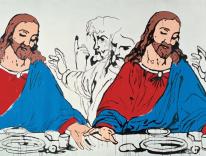
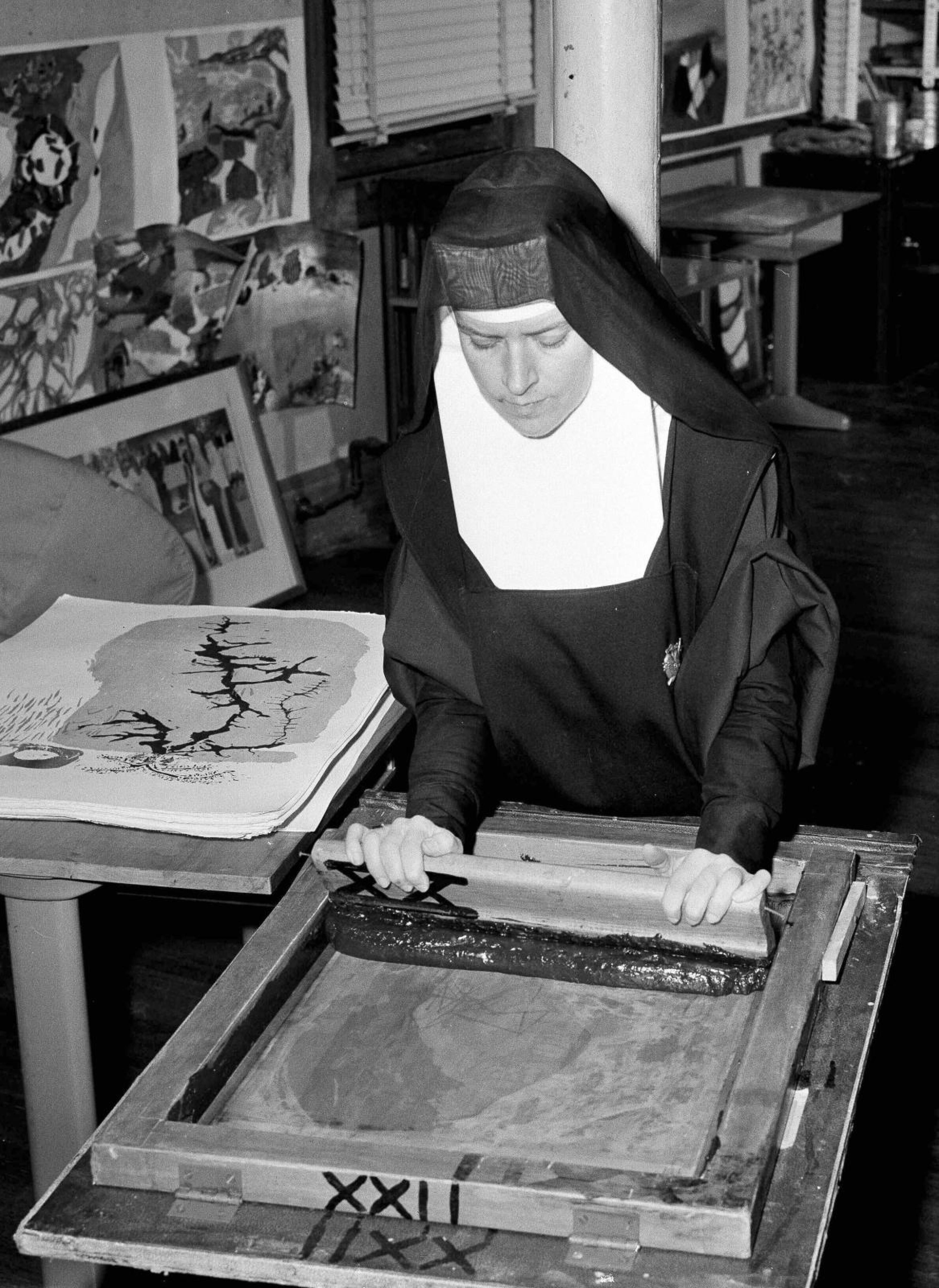
“Toward a Hidden God” is a trend piece, even if a long, thorough, and high-toned one. It has all the elements. Take the lack of contrary evidence. In early 1966, Dorothy Day—who said she sought to live so that her life would make no sense if God did not exist—was at the apogee of her influence, as the Second Vatican Council, the antiwar movement, and the counterculture converged. Thomas Merton, while breaking his Trappist vows through a sexual affair with a nurse he’d met, wrote searching essays on Albert Camus, war and peace, race relations, and the future of the contemplative life, the last one at the behest of Pope Paul VI, who had drawn huge crowds and media attention on his first visit to the United States the previous October (including a cover story in Time’s sister publication, Life). The first volume of critical writings about Flannery O’Connor (whose Everything That Rises Must Converge had been published after her death in 1964) was going to press. Leonard Cohen brought Judy Collins a set of songs thick with Catholic imagery. Sr. Corita Kent, drawing inspiration from Andy Warhol, was making large-scale graphic works drawing on the imagery of Vatican II. Paul Schrader, sprung from the strict Reformed culture of Michigan, was developing the insights he would set out in Transcendental Style in Film, a book that would influence his eventual collaborator Martin Scorsese. And all that’s just on the part of believers who figure into my own work. There are plenty of others. John Coltrane came out with Meditations, whose first track is titled “The Father and the Son and the Holy Ghost.” Joan Baez was recording a Christmas album, Noel. Abraham Joshua Heschel published “No Religion Is an Island,” the title essay of a breakthrough book. And Rev. Martin Luther King Jr. was bringing an urgent, unabashed appeal to God to American civic life with an eloquence and savoir-faire not seen before or since.
You might like: Paul Elie on the 'crypto-religious' 1980s
In the lives and work of those figures, God was not dead or hidden. God was visible and thriving. And yet the Time piece touched a nerve. That it did suggests that it was on to something, even if what it was on to was the difficulty of generalizing credibly about religious belief in such a large, complex, and dynamic society as the United States circa 1966.
Now as then, most of the heartbeat-of-America generalizations presented to us in journalism and commentary are spongy and reckless if you examine them closely. Yet it’s right and just for us to try to generalize about the moment at hand. Social and historical change is real—things do change—and to be fully alive in one’s own time and place is to seek to recognize the distinctive aspects of one’s time and place and how they set it apart from other times and places. It’s vital for Catholics in particular to do so. With Vatican II, the Church re-entered history—the bishops there characterized the Church as “the people of God on pilgrimage in time” after several centuries in which Church leaders maintained that its doctrine, philosophy, language, and institutions were perennial and not subject to change. We have an obligation to understand the “in time” of our pilgrimage and to read the signs of the times.
How, then, to generalize about the times with some precision? One way is to wait and see, to consider the present as belonging to a longer historical arc better discerned in near retrospect than “on trend.” Another way is to work through narrative rather than proposition; narrative involves complex depiction of cause-and-effect and the forces of character, influence, will, and chance. A third is to complicate the approach whereby the part represents the whole. For example, the four American Catholics I wound up depicting in The Life You Save May Be Your Own were representative of postwar American Catholicism, but they were distinct, independent figures who stood apart from typical postwar American Catholics in their upbringing (three of the four were converts), their way of life (anarchist, monk, solitary novelist, ex-physician-novelist-and-philosopher), and their convictions (Day’s and Merton’s nonviolence, O’Connor’s and Walker Percy’s view that the South had a tragic sense that corresponded with Catholic suspicion of optimism and progress). Representative, yes; but they were exceptional.
So, too, it turns out, were the Catholics who show up in the Time article. John Courtney Murray had been informally silenced by the Vatican before his work on religion and freedom became a crucial basis for Vatican II and for a fresh field of scholarly and theological inquiry. His insight in the piece about “the atheism of distraction” is as pertinent now as it was then, and its very pertinence ought to refute the prevailing sense that the current digital society, with its omnipresent electronic claims on our attention, presents challenges unlike those of ages past.
William Alfred was likewise exceptional. He taught several generations of acclaimed poets when they were Harvard students, and Seamus Heaney dedicated an early version of Beowulf to him—but I’d never heard of him when a draft of his memoirs was sent to the publisher where I worked a few years after his death, in 1999. The memoirs tell a remarkable inside story. A Brooklyn boy, raised by a barkeep and his wife who fight constantly, takes an early liking to poetry and verse drama while at St. Francis Prep and never lets go. As a student at Brooklyn College, he corresponds with Gertrude Stein; while switching trains in Los Angeles for basic training during World War II, he and another soldier pay a visit to Thomas Mann in Brentwood. Emboldened by a faculty mentor, he applies to the PhD program at Harvard, gets in on a second try, and winds up a medievalist on the Harvard faculty, writing poetry and verse drama by night (such as Hogan’s Goat, which was playing off-Broadway at the moment of the Time article) and going to Mass daily at St. Paul’s in Cambridge. He was keenly aware of what he called “the ineradicable secularism of the post-War world” and sought to represent an alternative, both at Harvard and in his friendships with Robert Lowell, Elizabeth Bishop, and other poets. And yet his comment in the Time piece is sadly conventional. “‘People who tell me there is no God,’” he says, ‘are like a six-year-old boy saying that there is no such thing as passionate love—they just haven’t experienced it.’” That’s that voice of the clannish preconciliar Church speaking: superior, even truculent, representing modernity as callow and juvenile and Catholicism as old and thus wise.
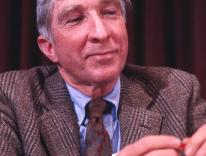
Alfred’s work is little read now, and a recent piece in Commonweal frets that John Updike is less and less read, too. But it may be that Updike’s posthumous profile is simply different than the one that brought him renown. Time is no longer a magazine. Readers of The New Yorker have moved on. The Rabbit tetralogy is now literary-historical like the U.S.A. trilogy by John Dos Passos that Updike had in mind as a model. And yet, Updike’s “Seven Stanzas at Easter,” from 1961, cited in the Time article, today has a vigorous ongoing life on the internet, mostly passed around among thoughtful evangelical Christians. More an artist than a history chronicler, Updike grasped that the change taking place in 1960s American Christianity didn’t involve simple binaries of belief and unbelief, theism or atheism, a living God or a dead one. It had to do with the way we apprehend God, namely, through the words and images with which we make sense of experience. Is your God a real presence or a metaphorical one? “Let us not mock God with metaphor, / Analogy, sidestepping, transcendence, / Making of the event a parable, a sign painted in the faded / Credulity of earlier ages,” he wrote. “Let us walk through the door.” What does it mean to make, through a poem—words, images, symbols, metaphors—a declaration that belief is more than metaphorical, involving the action we call an act of faith? That, Updike understood, was the question of his age, as it is of ours.
To read all the contributions to the symposium, click here.
We welcome your comments about this article. Please send your response to [email protected].