In the United States, we can’t help but be reminded of the European roots of the Catholic Church. But I’d like to look at a wider and more recent era in the life of the Church—the emergence of, as Karl Rahner called it, a “world Church.” This is not a Church whose center is Rome or Europe, or for that matter the West. It is a Church without a center—inculturated into the language, history, and culture of every corner of the globe; and rooted not in the centers of power or privilege, but in the world of the poor.
I want to tell this story through the history of a particular publishing house, Orbis Books, where I have worked for close to forty years. Orbis was founded on the crest of this wave of globalization, and that gives our history a particular vantage point on the story of the Church over the past half century: where it has come from, and where it may be going.
I begin this story with Vatican II, which concluded in 1965. Much of the renewal of that time was aimed at opening the Church to the positive features of the modern world: democracy, religious liberty, historical consciousness. Most of all, the Council replaced the conception of a static, ahistorical Church, largely defined in terms of opposition to modernity, with the image of a pilgrim people of God moving through history, alert to the signs of the times and the presence of the Spirit. Of course, the logic of this renewal entailed the possibility of ongoing development and evolving understandings of the Gospel in relation to new experiences and questions, especially the experience of new subjects asking those questions.
Rahner was among the first to identify a paradigm shift represented by the Council—the emergence of a world Church. That shift was immediately signaled by the participation of bishops from Africa, Asia, and particularly Latin America in the Council. But Rahner recognized that the logic and impetus of the Council was to break the old image of the Church as essentially a European institution with foreign outposts. The vernacularization of the liturgy was just one sign of an openness to local culture, traditions, and history. But there was another promise of the Council, though less recognized at the time, expressed by Pope John XXIII in his statement: “The church wishes to be the Church of everyone, but especially the church of the poor.”
The fulfilment of that promise came just three years after the Council, with the famous 1968 meeting of the Latin American Bishops’ Conference (CELAM) in Medellín, Colombia. The agenda of the meeting was to apply the lessons of the Council to their own continent. Using the see-judge-act method, the bishops began by analyzing the situation of Latin America, which they identified in terms of massive poverty, oppression, and violence. They defined it as a situation of structural sin. In response, they called for the Church to take up a prophetic option for the poor. This process pointed to a whole new understanding of evangelization, new ways of reading the Bible, and new forms of ministry and ecclesial communities.
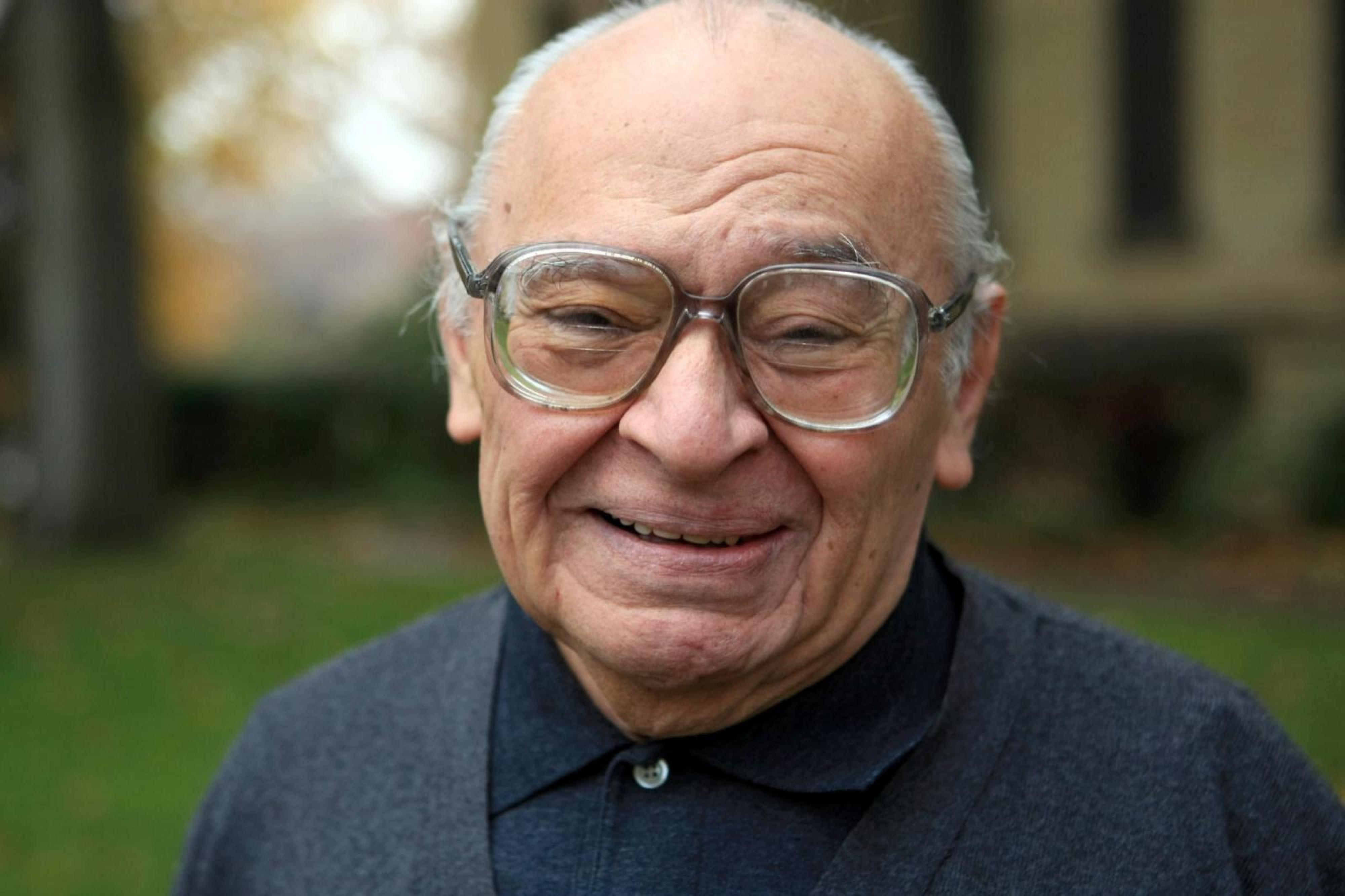
And out of that new way of reflecting on the Gospel there arose a new way of doing theology. The foundational text was by a Peruvian priest, Gustavo Gutiérrez. His book A Theology of Liberation was published in 1971. It opened the floodgates to a library of works by figures such as Leonardo Boff, Ernesto Cardenal, Jon Sobrino, Juan Luis Segundo, Ivone Gebara, and Ignacio Ellacuría.
You might like: Saint Oscar Romero on the political dimensions of Christian love
Their work uncovered the social dimensions of Christ’s ministry and message, which begins with his inaugural sermon on bringing liberty to the captives and good news to the poor, and his proclamation of the Kingdom of God. And that dimension pointed to a new way of being Church and new strategies for pastoral action, which needed to go beyond serving the poor to joining them in their hope and struggle for justice and liberation. This new theology evoked enormous hopes for the poor of Latin America and elsewhere. But it also provoked fears and challenges—both political and theological.
In many capitals of the world, Gutiérrez was seen as a dangerous radical. What was the fearsome content of his book? Like all great theologians, Fr. Gutiérrez wrestled with the problem of how to talk about God in terms of the questions posed by his historical moment. For many modern theologians, that question involved the meaning of faith in an age of reason and skepticism, the challenge of the “nonbeliever.” For Gutiérrez, the question was how to talk about God in relation to the suffering of the poor, the challenge of the “nonperson.”
This was not an academic question; it was posed by the reality outside his window in the parish of Rimac, a poor neighborhood in Lima where he served for many years as pastor. His vantage point was shared by most of the world’s population. And yet, for most theologians from Europe and North America, that reality remained on the level of an anecdote, literally beneath their radar. For Gutiérrez, the suffering of the innocent didn’t call into question the existence of God. Instead, it called into question the injustice of the world’s social structures and the shameful complaisance of the Church. All Christians were challenged to make a “preferential option for the poor.”
And just as the theologians of Vatican II (Rahner, Hans Küng, Yves Congar, and others) had their English-speaking publishers—houses like Sheed & Ward and Crossroad—so did liberation theologians. And that brings me to Orbis Books.
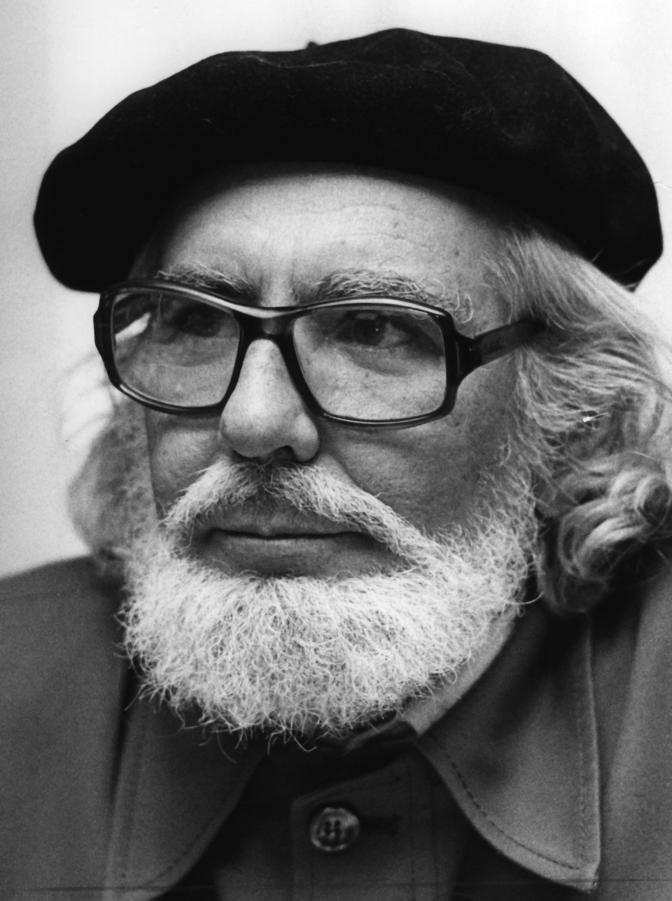
Orbis was founded in 1970 as the publishing arm of the Maryknoll Fathers and Brothers. It was the brainchild of a visionary Maryknoll priest, Nicaraguan-born Miguel d’Escoto Brockmann, who believed that the time was ripe for a publishing house that would amplify theological voices from what was then called the “Third World.” The timing was clearly auspicious. In any previous historical moment, it would have been a vain undertaking. Before then, there were certainly theologians in the Global South. But there was no such thing as Third World or Latin American theology. There was just—as we naively thought—theology, the same whether taught in Rome or Manila. There was no sense that theology is shaped by social or cultural contexts—or, as Gutiérrez would say, “what you see when you look outside your window.” Miguel saw in Orbis an opportunity to evangelize the rich of North America through the voices of the poor.
The name “Orbis” is Latin for “world.” Over time, it came to imply more than Miguel initially realized. In the early years, our understanding of the world was defined in terms of opposing global blocs, First World and Third World. Or, the world of those who take for granted their next meal, and the world of those who don’t. Yet the story of Orbis over the past fifty-five years has in part been a record of our sometimes stumbling efforts to explore and live out the wider implications of our name and our understanding of what constitutes “the world.”
The foundation stone was established in 1973 with the publication of the English edition of Gutiérrez’s seminal book. That was followed by more than a hundred other Latin American titles over the following years. For a long time, that was essentially what Orbis was known for.
It is important to remember the historical context. In those years, military dictatorships dominated Latin America: from Nicaragua and El Salvador to Chile, Brazil, Argentina, Uruguay, and elsewhere. Those regimes were distinguished by brutal repression, rising, in the case of Guatemala, to near genocide.
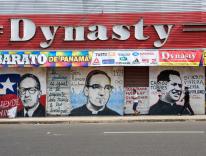
And as the Church came increasingly to identify with the poor, Christians were regarded as dangerous subversives. As Archbishop Óscar Romero said, “One who is committed to the poor must risk the same fate as the poor,” which, as he noted in El Salvador, meant “to disappear, to be tortured, to be captive, and to be found dead.” And so we saw a replay of the early Church of the martyrs. Like their predecessors, the new martyrs were killed for their obedience to the God of Life, their defiance of the idols of death. In 1980, they included Romero himself, who was assassinated while saying Mass. All of this was tangled up with U.S. foreign policy, and it generated a fervent solidarity movement among Christians in the United States. This was the context in which we were publishing.
At the same time, this new model of Church and theology in Latin America aroused serious concerns and resistance from Rome. The Congregation for the Doctrine of the Faith (CDF) issued two critical documents on liberation theology. Many saw figures like Romero as dividing the Church and playing politics. Theologians like Boff and Gutiérrez were charged with drawing on Marxism and replacing the kingdom of heaven with a vision of earthly utopia.
The criticisms also played into contemporary Cold War politics. The Reagan administration viewed Central America as an important front in the battle against Soviet influence. It saw liberation theology and its prophetic bishops and theologians as agents of communism. And it turned a blind eye to their persecution.
Many of our authors were subjected to investigation, silencing, or other restrictions. The most prominent case was that of the Brazilian Franciscan Leonardo Boff, who was twice ordered to maintain “obsequious silence.” The first time, he obeyed, saying, “I would rather walk with the Church than alone with my theology.” But when the restrictions were renewed, he made the decision to leave the priesthood. In a letter to “My Companions on the Path of Hope,” he wrote, “To be unfaithful to what gives sense to one’s life is to lose one’s dignity and to diminish one’s identity. This I will not do, nor do I think that God wants this of us.” Nevertheless, he took pains to stress that he was not leaving the Church or abandoning his vocation as a theologian: “I continue to be and will always be a theologian in the Catholic and ecumenical mold, fighting with the poor against their poverty and in favor of their liberation.” At Orbis, we continued to publish his books.
Throughout those years, Orbis also operated under a cloud of ecclesiastical suspicion, as well as attacks from conservative corners in the United States, which charged that we, too, were agents of communism. When Maryknoll superiors visited the offices of Vatican officials, they were often confronted with letters of complaint or marked-up copies of our catalogs.
This was not a parlor game. I remember when Jon Sobrino, on his way to the airport for a retreat in Thailand in 1989, mailed us the foreword to a new book about El Salvador. While he was out of the country, he was awakened by a call informing him that something terrible had happened. In the middle of the night, Salvadoran soldiers had invaded the campus of the Jesuit university and massacred his entire Jesuit community, including the rector, our author Ignacio Ellacuría, and their cook and her teenaged daughter. I remember how Sobrino, still traumatized, called to tell me he had spent the past weeks writing a book-length essay, “Companions of Jesus.” We told him we would be honored to publish it.
Sobrino lived to publish many other books: Jesus the Liberator, No Salvation Outside the Poor, Spirituality of Liberation. But among his most personal and poignant writings were those occasioned by martyrdom—not the abstract theology of martyrdom, but the concrete assassination and massacre of friends, colleagues, mentors, family, and countless numbers of the faithful. He accepted the burden of representing those whom death had silenced—to tell their stories, to tell us what they believed, what they loved, how and why they died, so that we might be challenged and graced by their witness. In one of his essays, he concluded by naming the victims of his community, writing, “May their peace give hope to us who are still alive, and may their memory not let us rest in peace.”
It seemed to me that Sobrino should be regarded not just as a great theologian, but a confessor of the faith. And so I was deeply affected in 2006 when the CDF issued a document admonishing Sobrino for supposed “erroneous or dangerous propositions that could harm the faithful.” Whatever the merits of that document, it seemed to illustrate a kind of abstract theological reflection rooted in what both Sobrino and Ellacuría characterized as “unreality.”
Latin America was not the full range of Orbis’s work. We were also one of the primary publishers for those involved in the Church struggle in South Africa. To this day, our best-selling author remains the late Dominican theologian Albert Nolan, author of Jesus Before Christianity. I remember getting up at dawn in 1990 to watch Nelson Mandela being released from prison after twenty-seven years, accompanied on either side by our authors Frank Chikane and Allan Boesak. Similarly, I remember the day that Fr. Jean-Bertrand Aristide of Haiti, a priest of the slums and an implacable foe of the dictator Baby Doc Duvalier, was elected president of Haiti—the same week as our publication of his book, In the Parish of the Poor.
If voices from Latin America had inspired a focus on the social implications of the Gospel, our program was also inspired by the theological agendas of other parts of the world. From Africa, we highlighted the theme of inculturation, the development of non-Western ways of expressing and celebrating the Gospel. For our fiftieth anniversary, the Jesuit Hekima Journal, in Nairobi, devoted an entire issue to Orbis’s contributions in stimulating and promoting African theology. Meanwhile, Orbis authors from Asia were grappling not only with issues of poverty and inculturation, but also the reality of religious pluralism. In India and South Asia, spiritual pioneers like the Sri Lankan Jesuit Aloysius Pieris, Bede Griffiths, and Raimon Panikkar asked why Greek philosophy should function as a privileged medium for understanding the Gospel. Was this not akin to the early precondition of circumcision? Why not Hindu and Buddhist philosophy and metaphysics?
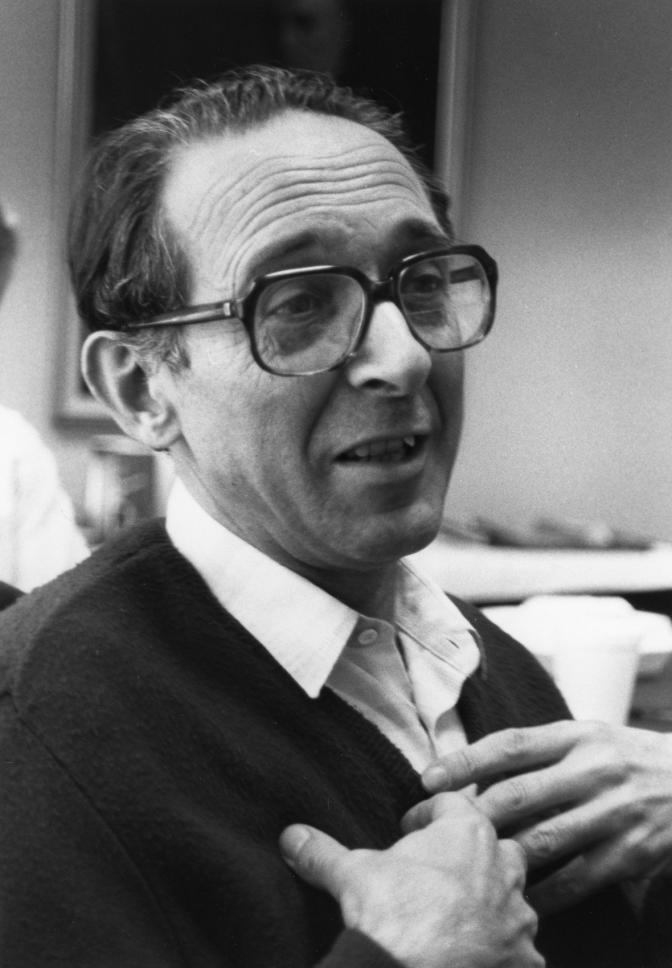
Religious pluralism was displacing liberation theology as a target of Vatican concern. A new list of Orbis authors came under scrutiny: Sri Lankan Tissa Balasuriya; Indian Jesuit Michael Amaladoss; Vietnamese-American theologian Peter Phan; Indian spiritual master Anthony de Mello. The investigations extended to Western theologians who took up the same themes, including Paul Knitter, editor of our series on interreligious dialogue, and Jesuit theologian Jacques Dupuis, who literally edited the standard manual of Church doctrine and taught at the Gregorian University. Dupuis was subjected to a Kafkaesque process over his book Toward a Christian Theology of Religious Pluralism. Ultimately, we were required to include a copy of the CDF document about his supposed ambiguities and errors in future editions of his book.
The same went for the work of the American Jesuit Roger Haight, whose Jesus Symbol of God was reproved by the CDF. He was informed that he was no longer permitted to teach or publish theology. (We went on to publish six of his subsequent books, ostensibly confined to “spirituality,” including his final work in 2024, Facing Race: The Gospel in an Ignatian Key, by which time, he said, it didn’t seem as if anyone was paying attention.)
Meanwhile, in the 1990s, we became alert to the emergence of the scholarly discipline of “world Christianity.” This reflected a new assessment of the history of Christianity as a “world Christian movement.” Instead of the traditional story that began with the early faith of the Jewish followers of Jesus, which was then supplanted by a gentile Church that followed the outlines of the Roman Empire, the new historians—especially the great Scottish scholar Andrew Walls—realized that Christianity from the very beginning had been a world movement, with unique expressions throughout North Africa, Ethiopia, Syria, Iraq, China, India, and elsewhere. The new recognition of a world Church, in which demographic and theological energy was shifting from the North to the Global South, was actually more of a return to the Church’s origins. It was also in the 1990s that we began to explore another, hitherto neglected dimension of the “world”—namely the reality of the Earth and our place as creatures on a planet increasingly threatened by the effects of human carelessness and greed.
It was Boff who first made the link between the theology of liberation and ecology in his book Cry of the Earth, Cry of the Poor. That became the cornerstone of a new Orbis series, Ecology & Justice. And in the years that followed, concern for the earth became another paradigm shift in theology. New authors included Denis Edwards, Elizabeth Johnson, Catherine Keller, and Mary Evelyn Tucker.
In a similar vein, our view of the world expanded beyond the limits of this planet. Rooted in half a dozen books by and about the Jesuit priest and scientist Pierre Teilhard de Chardin, many books we published explored the significance of quantum science, the new cosmology, and the implications of an evolving universe. This brought us the work of authors such as Ilia Delio, John Haught, Brian Swimme, Thomas Berry, and Diarmuid O’Murchu.
In the meantime, building on our commitment to marginalized voices, we turned increasing attention in the 1980s to our own North American context. This began with our publication of the work of James Cone, the father of Black liberation theology. Eventually, we published and reprinted all his work, and that opened the door to a wide program in Black and later womanist theology. I daresay this made Orbis by any stretch the primary Catholic publisher in Black theology, with classic works by Delores Williams, Kelly Brown Douglas, Vincent Harding, Bryan Massingale, and Shawn Copeland.
Similarly, we were on the ground floor in publishing the work of Hispanic theologians, beginning with the work of Virgilio Elizondo, as well as Orlando Espín, Miguel Díaz, Roberto Goizueta, and mujerista theologian Ada María Isasi-Díaz. They were joined by Native American and Asian American theologians.
While making a place for new, marginalized voices at the table, we were also broadening our program to include a major emphasis on spirituality. Many of the great contemporary spiritual writers and prophets of our time became fixtures of our program: Dorothy Day, Henri Nouwen, Thomas Merton, Daniel Berrigan, Joan Chittister, Richard Rohr, and Thích Nhất Hạnh. Increasingly, we were recognized for our unique place within the world of Catholic publishing.
But none of this prepared us for the new era that was to begin in 2013 with the papal election of Jorge Bergoglio, the first Jesuit, the first Latin American, the first pope to take the name of Francis. It became obvious from his first words and gestures that his choice of a name pointed to a larger agenda. He took the name of a saint who renewed and reformed the Church by recalling it to the image of its poor founder. Instead of an inward-looking, self-referential Church, he emphasized a mission-centric Church, an evangelizing Church that goes out to the frontiers and the peripheries.
He was not frightened by theologians who explored the frontiers. In an address to theologians, he called for a theology immersed in the world: not an armchair or purely seminary theology, but one that takes seriously people’s lived experience in relation to the troubles they face and the existential threats against our planet.
In his first trip outside of Rome, to the island of Lampedusa, Francis established the plight of migrants and refugees as a signature theme in his preaching and ministry, closely connected to the preferential option for the poor. Without that emphasis, he said, “proclamation of the Gospel risks being misunderstood or submerged by the ocean of words.” His initiatives did not require any great adjustment in our program. In a sense, we had been founded for that moment. Altogether, we published twenty-five volumes of writings by Pope Francis, including his encyclicals Laudato si’ and Fratelli tutti, his exhortations on holiness and the Amazon Synod, and his writings on mercy, war, synodality, and care for refugees.
After enduring many years in a kind of shadowland, it seemed at last that our work was welcomed and honored by the official Church. Among the signs: the canonization of St. Óscar Romero; the pope’s welcome to Gustavo Gutiérrez at the Vatican; his invitation to Leonardo Boff to serve as a consultant on his encyclical Laudato si’. Recognizing Jon Sobrino at the Vatican, Francis told him, “Keep writing”—to which Sobrino replied: “Do I have to?” And then there was his speech before the U.S. Congress in 2015, organized around four great Americans: Abraham Lincoln, Martin Luther King Jr., Thomas Merton, and Dorothy Day.
And that brings me to my own story.
My journey to Orbis began fifty years ago in 1975, when I took a leave from college to work at the Catholic Worker. I was not yet a Catholic and had never read a book of theology. I was drawn more by Dorothy Day’s heroic witness for peace and service of the poor.
During my time at the Catholic Worker, we didn’t pay much attention to liberation theology. Yet we were deeply aware of the changes occurring in the Latin American Church. Dorothy herself had pointed prophetically toward such developments as early as 1962 after making a pilgrimage to Cuba just prior to the missile crisis. She believed that if Latin America’s poor turned to Marxism, it was because of the failure of Christians to live out the radical message of the Gospel. As she wrote: “We are not going to win the masses to Christianity until we live it.”
Years later, after graduating from college in 1982, I got a fellowship to spend a year in Latin America learning more about the changing role of the Church. In 1983, I was studying Spanish at the Maryknoll language school in Cochabamba, Bolivia. There, in their library, I began to explore my first Orbis titles. I remember struggling through Gutiérrez’s Theology of Liberation with a dictionary by my side—not for the Spanish but for the English. I remember staying up all night reading Boff’s Jesus Christ Liberator, feeling at the end like the disciples on the road to Emmaus, when their “hearts burned within them.”
Meanwhile, all around me in Latin America I was seeing evidence of the role that faith could play in empowering people, enabling them to confront systems of injustice and violence, inspiring them to act on the dream of a better world. It was the first time I really understood that theology was more than an academic exercise. It could be a force, a source of life, a calling, a resource in the struggle for a better world.
Returning to the United States, I decided to study theology at Harvard Divinity School. By then, I had acquired the costly habit of buying just about anything published by Orbis. For me, Orbis was more than a brand name—it represented an ethical stance, an engagement with the most critical social and spiritual issues of our time.
So you can imagine my reaction when I got a call out of the blue in 1987 asking me if I would be interested in becoming editor-in-chief of Orbis. Sometimes, the work of providence in our lives is mysterious and hard to discern. That was not one of those moments.
Those were extraordinary times. There seemed to be a direct link between the books we were publishing and the unfolding of great historical dramas. From Seoul to Manila, from Nairobi and Capetown to San Salvador, San Antonio, and Harlem, Orbis authors were connecting the Gospel to the challenges of their time and place. I came to feel that theological publishing, too, could be a force, a calling, a source of life, a resource in the struggle to build a better world.
I saw it as a ministry, casting seeds, some of which would land on stone, but others that might find friendly soil. And now, after thirty-nine years, I have been at Orbis long enough to witness some of the fruit of those seeds.
One measure might be the story of the Catholic Theological Society of America (CTSA) over the past fifty years. I attended my first conference in 1988. At that time, the Society was overwhelmingly clerical, mostly male, mostly white. There were no Orbis authors among the membership.
It would be interesting to correlate the evolution of the CTSA over the past fifty years with the gradual influence of Orbis books, themes, and authors. Today, a typical program of the Society is suffused with themes seemingly drawn from our catalog: interreligious dialogue, contextual theology, mission, ecology, inculturation.
Twenty of the past thirty presidents of the Society have been Orbis authors. Fifteen of the past twenty winners of the John Courtney Murray Award have been our authors, most recently Roger Haight, Stephen Bevans, and Bryan Massingale. When Peter Phan won the award, he devoted much of his speech to thanking Orbis, saying, “I know I speak for many of us in the Society who found a place at this table because of Orbis.”
Four years ago, marking my thirty-fifth anniversary at Orbis, I was touched to receive a letter signed by all twenty-nine of the living past presidents of the CTSA honoring the contributions of Orbis Books. It said in part:
We the undersigned current and former presidents of the Catholic Theological Society of America testify to the significant and very important role that Orbis Books has played in the world of Catholic theological publishing. Your editorship has truly lived up to the name of Orbis—world—by bringing out books that make us all more aware of God’s world, with special attention to the poor, the marginalized, and those who are suffering.
But perhaps the most significant and meaningful affirmation of our role came in a letter from Pope Francis to mark our fiftieth anniversary in 2020.
Dear Brother,
Thank you for the letter and the books that you sent me, as well as for all the efforts you make to sow, even “against wind and tides,” a culture based on fraternity….
It is comforting and hopeful to know that among your editorial priorities you do not seek to promote only scattered, trending or interesting topics for release, but that you want to offer a true horizon of meaning toward which to move; a vital horizon in these pandemic times in which we are able to note, more clearly, some of the wrongs that have already affected us for so long. We never come out of any crisis the same: either we come out better or worse, but never the same; and that will depend, to a large extent, on our capacity to cultivate—especially in the younger generations—an imagination that would help them believe that another way of writing history is possible….
I believe that reading…can have a powerful role and become a compass that points the way, guides and allows us to cultivate a spirit capable of moving toward great goals that embrace the good that awaits us all. In this sense, I encourage you to continue your work in that difficult but important and delicate task of creating accompanying volumes that give flight to the spirit and help reach the places where new narratives and paradigms are being formed. The health of a culture is also measured by its capacity to pool its best resources and awaken the best talents to create networks of solidarity that allow us creatively to build new alternatives to what affects us today….
Fraternally, Francisco
I am grateful that circumstances allowed me, through Orbis, to be part of this publishing program at the service of a world Church—not, as Pope Francis says, promoting “only scattered, trending or interesting topics, but offering a true horizon of meaning toward which to move.”
If today the Church that Pope Francis left us, and over which Pope Leo now presides, seems to be attuned to themes that Orbis has consistently promoted over fifty years, I don’t mean to suggest that Orbis caused it. But we were a publishing house established with a specific mission: attending to the signs of the times and the work of the Spirit in history; to voices from the margins; to the role of faith in promoting a world of justice and peace and in fostering dialogue among different cultures and religions. In short: publishing for a world Church—a phenomenon that was more aspirational fifty years ago, but is now increasingly a reality.
We welcome your comments about this article. Please send your response to [email protected].