At its most fundamental level, economists tell us, ownership is “the right to exclude.” It sets up boundaries and allows the owner to decide who may cross them. My possession is truly mine—the thing and I somehow belong together—precisely to the degree that I can bar you from access to it. This is an oddly negative vision of having and belonging, of course, but at least it is clear and simple. Ownership has, however, taken on a deeper meaning in our time and place. Much more than a regime governing access to property, ownership is now the primary way that many seek to belong, to be at home in the world.
A whole cultural paradigm has grown up around the fetishization of ownership. We might call this paradigm “ownerism”—a view of the world that pictures ownership as identity-conferring, indexed to the individual, and unbounded by duty. Ownerism has permeated many aspects of American life in the twenty-first century, and has come to seem simply natural to us: of course each of us always wants more for ourselves, and of course we will each grab and keep as much as we can, however we can; this has come to seem like bare human nature. It is not. Many outside observers have commented on the strange, sometimes pathological, nature of ownerist culture. The Oglala Sioux Medicine Man Black Elk, ruminating on the encroachment of this culture on the Lakota people, reported what he found on his first trip to New York City:
I could see that the Wasichus [white men] did not care for each other the way our people did before the nation’s hoop was broken. They would take everything from each other if they could, and so there were some who had more of everything than they could use, while crowds of people had nothing at all and maybe were starving. This could not be better than the old ways of my people.
If many of us assume that a large percentage of people would indeed take everything from their neighbor if they could, we would do well to remember that a broad swath of humanity has found this an unaccountably strange way to live.
We should not, of course, go so far as to imagine that the pursuit of wealth is a modern invention. Around two thousand years ago, the apostle Paul warned that the love of money is the root of all evil. But it does seem that the widespread and unabashed worship of wealth might be something relatively new. In 1944, in his epochal work The Great Transformation: The Political and Economic Origins of Our Time, the economic historian Karl Polanyi reported that ethnologists studying premodern systems of labor and exchange have generally found a marked absence of “the motive of gain” and even of “the principle of laboring for remuneration.” These premodern systems were varied—some were characterized by a system of gift and reciprocation, some by centralized redistribution, and some by household-scale subsistence. None of them was perfect. There was still the possibility of conflict, injustice, oppression, and scarcity. But if the ethnologists are correct, the lust for money or material things was generally not a dominant, or even very significant, motivator of action. Instead, according to Polanyi,
The outstanding discovery of recent historical and anthropological research is that man’s economy, as a rule, is submerged in his social relationships. He does not act so as to safeguard his individual interest in the possession of material goods; he acts so as to safeguard his social standing, his social claims, his social assets. He values material goods only insofar as they serve this end.
These premodern societies encountered economics as a necessary part of larger human endeavors and values. Modern market economies have, Polanyi warns, removed economic activity from any larger picture of the good for human society and allowed the profit motive to run roughshod. Classical liberalism promised that the market economy could run, autonomous, on its own track, according to its own values and metrics, leaving the adjacent society basically undisturbed. Polanyi argues that, instead, the market has swallowed everything. We do not simply have a market economy; we have a market society.
Polanyi is a historian, not an ethicist. He mostly aims to show how historically unusual our current arrangements are. Aristotle—whom Polanyi quotes approvingly—goes further, arguing that commerce powered by avarice is at odds with human nature, and therefore bad for us. In the first book of the Politics, he writes:
There are two sorts of wealth-getting: one is part of a household management, the other is retail trade. The former is necessary and honorable, while that which consists in trade is justly censored; for it is unnatural, and a mode by which men gain from one another.
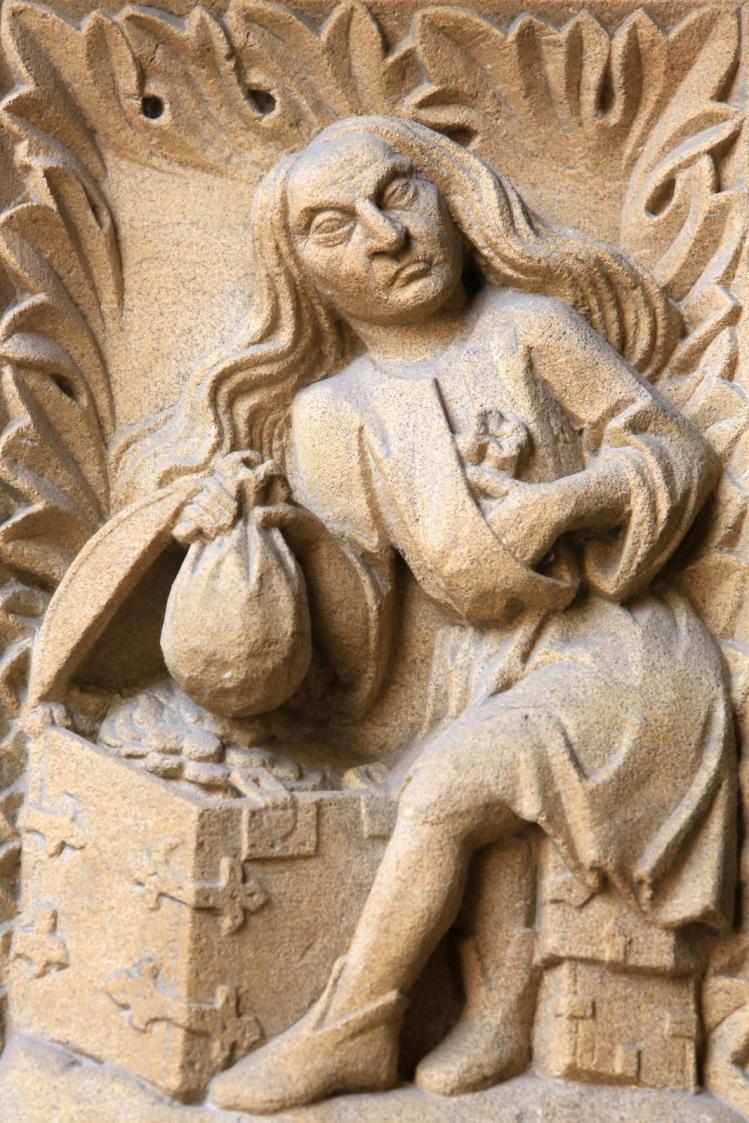
In Aristotle’s view, the unnaturalness of trade comes from its extractive, exploitative nature. Certainly, some kind of exchange is often necessary. No household is entirely self-sufficient, nor should it be. But trade in which I scheme to gain more from you than I give in return is predatory and greedy. It is a violation of the fundamental friendship that exists between human beings. This kind of greed has no upper end. It is hellbent on mere, raw, dumb, infinite accumulation, rather than the good of the household or the broader community. It is cancerous.
Ownerism takes this cancer and builds a whole culture around it. In an ownerist society, the daily experience of physical provision and social status tells us, again and again, that everything has its price—the highest that can be successfully commanded on the market—and very little that we touch cannot be traced back to private property. The land that produced your dinner is owned, and that land’s produce is, in most cases, the property of the owner. Before he owned the land, others did, and he gained it from them by means of fair market exchange. Almost nothing changes owners except via commerce. Living in this reality, one must begin to understand the world as cold and uncaring, providing for me only if I can find some way to pry its wealth away from someone else. In this world, generosity and loyalty are considered pleasant fictions.
The ownerist world picture comes with a corresponding picture of the self. This self is theorized as an autonomous individual who, before choosing to enroll in a society, was on his own and unencumbered. As a description of a life this is, of course, farcical, and no serious person has ever suspected that it literally describes how persons or societies come into being. But it persists as a guiding metaphor because we have intentionally arranged the material circumstances of our society as if it were true.
Ownerism assumes that individual ownership is a natural, if not inevitable, building block of social life. But there are many times and places in which it has not been the norm, and making it the norm has often required harshly coercive measures. For decades, many Native American groups fiercely resisted the U.S. government’s push for “allotment”—chopping tribal lands up into parcels to be owned by individual persons. They wanted, instead, to hold their lands communally, as they had done from time immemorial. This resistance continued up until 1887, when the U.S. government forced allotment via the Dawes Act, intending to end the tribal way of life and make Native Americans into yeoman farmers. But this way of life was not theirs, and in the aftermath of the act, many Native Americans struggled in their new, unchosen vocation. By 1934, Native American landholdings had plummeted by some ninety million acres.
This was neither the first nor the last time that conversion from common to individual ownership was brought about by force, resulting in cultural and economic devastation. The dislocation and social collapse that followed the “enclosure movement” of eighteenth- and nineteenth-century Europe is well known. As the rich claimed increasing tracts of land for themselves, they pushed countless peasants off the communal lands of their ancestral villages and into factory-based wage labor. This feels like a story from a remote epoch, but the movement has continued apace around the world. In the runup to the 1993 passage of the North American Free Trade Agreement, the United States pushed for amendments to the Mexican constitution that would allow communal lands (the ejido) to be sold off to private owners. The result was an explosion of rural destitution in Mexico, producing a mass of expropriated peasants desperately seeking low-wage work in factories owned by U.S. companies or harvesting food north of the border. The resulting migration, in pursuit of whatever work could be found, has often been presented by savvy U.S. politicians as an invasion—the reason why hardworking Americans feel so hard-pressed and insecure.
This disembedding of people who had depended on some kind of commons is not really a bug in the system of ownerism. In The Great Transformation, Polanyi reports that at the time of his writing, colonial governments everywhere were engaged in an active effort to “annihilate all organic forms of existence and to replace them by a different type of organization, an atomistic and individualistic one.” The rise of colonial industry depended on the availability of wage laborers. So long as traditional bonds of tribe and clan and family remained strong, however, colonial captains of industry struggled to recruit employees. They could threaten starvation as a goad, but under normal circumstances, few Indigenous people had reason to take those threats seriously.
In the service of recruitment, Polanyi reports, colonizers came to a decision: Indigenous peoples’ traditional institutions and means of sustenance had to be “destroyed, and prevented from reforming, since, as a rule, the individual in primitive society is not threatened by starvation unless the community as a whole is in a like predicament.” The inconceivability of letting an individual starve while the group has food has held sway, Polanyi says, “under almost every and any type of social organization up to about the beginning of sixteenth-century Europe.” The colonizers had to force the issue by destroying the local communities. Only then could they count on an influx of eager employees, willing to accept harsh working conditions and poverty wages in order to avoid the new possibility of starvation.
This is, without a doubt, grossly evil. Why on earth would civilized people who presumably treated their own family, friends, and pets with loving care, and who kneeled reverently in church, allow themselves to act like this? The answer, of course, is money. But the question then becomes: What is so important about money that it would drive a person, and indeed a whole society, to such cruelty?
Money is, first of all, about other people. It is the guarantor of the cooperative human behavior needed to sustain my life, and the lives of those I love. Money is how I get people to give me shoes, electricity, lodging. It is the reason I am allowed to cultivate a piece of land, be transported to the places I need to go, receive medical care when I am ill. To be sure, it is theoretically possible to lead a long life without money—and even quite common in many societies throughout history—but here and now, money is the main mediator between a vulnerable self and the material resources it needs to survive and thrive. Using money, I can get people to treat me, for the span of a transaction at least, the way that friends treat one another.
One important difference here is that when money is exchanged, there is no real need for the vulnerable, risky entanglements of affection, loyalty, or obligation. I am invulnerable to the judgments of those I transact with. As long as a price is agreed upon, the good or service in question can change hands, and neither party needs to wonder or care what the other thinks of them, their way of life, or the use to which they will put the thing. Money, in the curt formulation of economist Daniel Cohen, “allows one to free oneself from relationships with other people.” If I have paid the doctor who has healed me, I owe him nothing more—no gratitude, no friendship. A simple, tidy quid-pro-quo exchange has taken place, apart from which no service would have been offered. If I have paid, I am free, unencumbered, debtless; my interactions are clean and frictionless. With the aid of great wealth, therefore, I can imagine sliding through life on rails of my own choosing. This fantasy is a core part of the social imaginary that shapes the world picture of a contemporary American. I hope to consume goods and services—human cooperation, that is—while remaining essentially unchanged, utterly autonomous and in control.
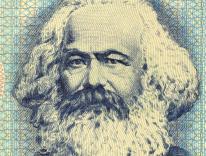
If it is true that money has pride of place in our society because it serves as a no-strings-attached replacement for friendship, it does not follow that people are no longer interested in being loved. Money may allow me to free myself from undesirable human bonds, but my freedom will, I hope, make my acquaintance a prize to be desired. If I do not expect love to provide my daily bread, I do hope that my very ability to navigate the world unencumbered, with the special, smooth power of the wealthy, will draw people to me, that it will make me admirable, attractive, lovable. As Karl Marx writes in “The Power of Money”:
I am stupid, but money is the real mind of all things and how then should its possessor be stupid? I am ugly, but I can buy for myself the most beautiful of women. Therefore I am not ugly, for the effect of ugliness—its deterrent power—is nullified by money. I, according to my individual characteristics, am lame, but money furnishes me with twenty-four feet. Therefore I am not lame. I am bad, dishonest, unscrupulous, stupid; but money is honored, and hence its possessor. Money is the supreme good, therefore its possessor is good.
One may hope that money will make one safe, strong, wise, and even admirable in some durable way. It surely seems to—other people, from whom I must take my bearings in life, treat me like something different and good, depending on how much money I have to spend.
Alas, the more one’s picture of self and world are shaped by the logic of ownerism, the more difficult the genuine exchange of friendship becomes. Unsurprisingly, some empirical scholars of materialism have recently found that highly materialistic people seem to “favor objects over people because these possessions give them mastery and control over others” (James E. Burroughs and Aric Rindfleisch, “Materialism and Well-Being: A Conflicting Values Perspective”). They are, therefore, “not only hedonistic pleasure seekers, but also power-hungry control seekers.” Materialism, these scholars find, is positively correlated with what we call individualism and negatively correlated with a concern for family, community, and religion, all of which make demands on the individual, change us, call us to change ourselves. Another study, published in 2022, found that a tendency to experience one’s relationships as characterized by insecurity and anxiety correlated strongly with status-seeking consumerism. The authors found that those insecure in their relationships report “a significantly higher propensity to purchase status-signaling goods than people with a secure attachment style, while also placing the greatest importance on materialistic values” (A. Gasiorowska, M. Folwarczny, and T. Otterbring, “Anxious and Status Signaling”). If I fear that I cannot secure durable love and cooperation on the basis of who I really am, then perhaps I can secure it on the basis of what I have.
At its most extreme, this fear propels its bearers into a self-destructive spiral of consumption, as advertisers expend a great deal of effort and intelligence turning loneliness into ever more capital. As the historian and cultural critic Christopher Lasch writes in The Culture of Narcissism:
In a simpler time, advertising merely called attention to the product and extolled its advantages. Now it manufactures a product of its own: the consumer, perpetually unsatisfied, restless, anxious, and bored. Advertising serves not so much to advertise products as to promote consumption as a way of life…. It upholds consumption as the answer to the age-old discontents of loneliness, sickness, weariness, lack of sexual satisfaction.
This is the promise of ownerism: if you are rich, you will be comfortable and at home in the world. But it isn’t true. In an ownerist society, the act of acquisition is the pinnacle experience; possession itself always disappoints. One is never so changed by the possession of a sum of money or a beautiful object as one had hoped. As the sociologist Daniel Bell puts it in The Cultural Contradictions of Capitalism, describing the hedonistic riot of consumerism since World War II, “It is a world of make-believe in which one lives for expectations, for what will come rather than what is.” Any life focused on material acquisition must be a system of unkept promises, because the kinds of things money can buy are simply not the kinds of things that hold a healthy self or world together.
Money is meant to buy cooperation, the kind of cooperation that friends and family members freely grant to one another because of affection. The rich must live in fear that their much more vulnerable connection with money will come apart, and with it the cooperation they have purchased. Their fear is warranted. Bought cooperation is extrinsic, temporary, and fragile—it is what Aristotle would call a friendship of utility. It only feels safe (insofar as it does) because the regime of private property is protected, at least from outright theft, by the might of modern weaponry, whether in public or private hands.
The culture of ownerism has resulted in a massive concentration of wealth and power, pursued at nearly any cost. Our winner-take-all society is, however, beginning to show signs of exhaustion. The lack of social solidarity, the willingness to let our neighbors suffer while we pile up as much wealth as possible, is beginning to undo the bonds of common citizenship. In such a society, the owners of a thing hold it absolutely, disposing of it however they see fit. Once we’ve paid our taxes, we are not expected to share our possessions with those who need them more than we do, even if they are dying outside our door. We may choose to do so, but no unchosen social, legal, or moral responsibility impinges on us. Karl Marx, of course, found this abhorrent, but so did Thomas Aquinas, who argued explicitly that a needy person has a just claim to the possessions of the rich and that, therefore, to take some part of another’s wealth to meet one’s basic needs is not theft at all.
As the doctrines and practices of liberal economics developed and spread throughout the nineteenth century, the idea that a life-sustaining supply of material goods rightfully belongs to each of us by dint of our humanity came to sound distinctly unenlightened. Proponents of classical liberalism drew from Darwinian notions of competition and reproductive fitness to argue that the starvation of the weak and lazy helped to improve the species. As the philosopher and Economist editor Herbert Spencer wrote in 1851 in his widely influential book Social Statics; or, The Conditions Essential to Human Happiness Specified, and the First of Them Developed, “The poverty of the incapable, the distresses that come upon the imprudent, the starvation of the idle, and those shoulderings aside of the weak by the strong, which leave so many ‘in shallows and in miseries,’ are the decrees of a large, far-seeing benevolence.”
Fortunately, the culture of ownerism has veered away from explicit arguments that the poor should starve, but it continues to tolerate, and even encourage, the exploitation of those persons who do not own very much and must therefore sell their labor in order to survive. Under the new regime of shareholder primacy, the bare pursuit of monetary gain is considered the only valid function of a business, and almost anything done in the pursuit of money is sanctioned. Owners (often shareholders in public companies) have every moral right to demand that their holdings grow, even if this means the destruction of rivers, forests, communities, persons. To imagine that such things could be as important as the growth of one’s portfolio is sentimental foolishness. To many Americans, this too has come to seem like a law of nature: just as gravity moves objects toward the earth, owners prioritize profits over everything else.
If I live in such a society, it makes sense for me to accumulate for myself as much wealth as is humanly possible. I should grind and grind away, optimizing my body and mind for the struggle, letting work overrun the parts of life that might be reserved for rest, pleasure, or worship, because enough is never enough. It is easy to mistake the manic pursuit of wealth in America as one driven by appetite. But this is only partially true, at best. Beneath the surface of greed, we should always be on the lookout for the fear and fragility of a person confronting the world fundamentally alone. Max Weber’s “Protestant work ethic” has given rise to what the Korean-German philosopher Byung-Chul Han calls a “burnout society,” one animated by a manic desperation to succeed and the fantasy that anything is possible if only one tries hard enough. One simply needs to optimize oneself for maximal productivity. According to Han, such a society produces “losers and depressives” who drop out of the race in total exhaustion. This is the predictable consequence of a life lived on an agonistic footing, with no possibility of ultimate victory or genuine rest.
We welcome your comments about this article. Please send your response to [email protected].