Are you wasting your life? Rutger Bregman thinks you probably are. The world needs the good that you can do for other people—but they’re not getting it. You’re stuck in a pointless job, you’re too busy, or you just don’t think one person can achieve very much. “Of all things wasted in our throwaway times, the greatest is wasted talent,” Bregman writes in his new book. As one Facebook employee he quotes put it, “The best minds of my generation are thinking about how to make people click ads.”
The “antidote” to this lethargy is “moral ambition,” which is also the title of Bregman’s bold and bracing work. Moral ambition is
the will to make the world a wildly better place. To devote your working life to the great challenges of our times, whether that’s climate change or corruption, gross inequality or the next pandemic. It’s a longing to make a difference—and to build a legacy that truly matters.
Moral Ambition, he writes, is not another self-help book; it’s a call to live up to a high moral standard. You’re not fine just the way you are. Indeed, “you might just have to change your life.”
What does Bregman have in mind? He compares two people—really, two kinds of lives lived—and evaluates how much good they did for others. The first is Matthieu Ricard, a Buddhist monk who spent thirty years in a monastery and was dubbed “the happiest brain on earth” when an MRI revealed that sixty thousand hours of meditation had shaped his neural pathways to latch onto good feelings and downplay negative ones. Some might see Ricard’s life of contemplation as radical and holy. Bregman thinks it was a pretty selfish way to live: “Thirty years in which he did little for others, thirty years in which he didn’t lift a finger to make the world a better place.”
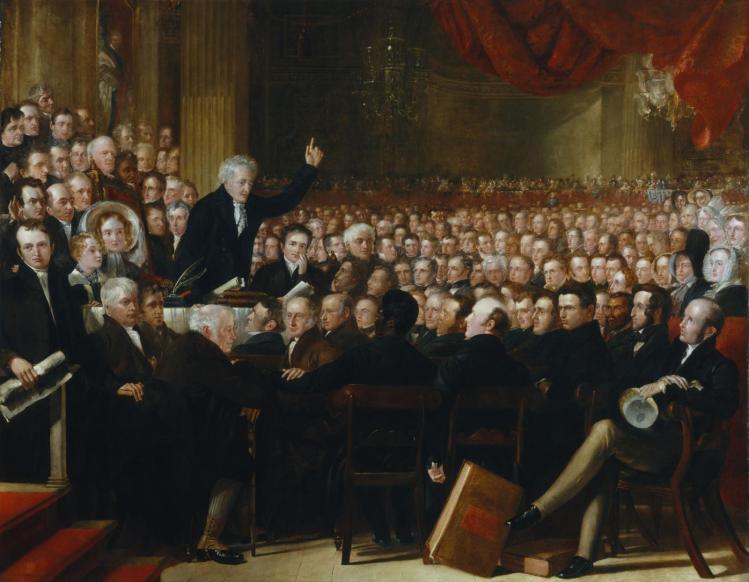
Contrast Ricard’s life with the hero of Bregman’s story: Thomas Clarkson, who helped build the movement to end the slave trade in Britain. Appalled by its horrors, he abandoned his career and became a one-man press and public-relations firm, cranking out pamphlets and lecturing widely. He cofounded the influential Committee for the Abolition of the Slave Trade, conducted extensive research to support his claims, and pursued his mission so unrelentingly that he suffered a mental breakdown at thirty-three. But the man got results: the slave trade was outlawed in Britain in 1807. Bregman ventures that, unlike Ricard, Clarkson probably had a pretty depressing brain. But he helped countless people, changed the course of global history, and “didn’t get burned out from scrolling through never-ending spreadsheets or sitting through yet another PowerPoint.”
Like Clarkson, we need to pair moral clarity with extreme ambition, and we should be willing to take risks and make major sacrifices to achieve our goals. Bregman goes so far as to encourage us to “join a cult, or start your own” in the service of a worthy goal; be ready to come off a little weird and obsessed. He offers the example of Ralph Nader and his team of “Nader’s Raiders,” who worked tirelessly to expose corruption and corner-cutting in government and corporations. Nader was famously unrelenting in the demands he made of his team, but together they achieved significant wins for consumer and public safety.
Bregman acknowledges that that degree of dedication isn’t possible for a lot of people—particularly for those without access to education or disposable time and wealth. But for those who possess such privileges, it’s their moral responsibility to combat suffering and injustice as actively and as much as possible, even if they might think it sounds impossible. “Once you have a labradoodle, a set of cheese knives, or a robot mower, there’s generally no going back,” Bregman admits. “But if that’s irritating to hear—and I imagine it might be—then by all means, prove me wrong.”
I do love my cheese knives, and it is a little irritating to hear. But I mostly agree with Bregman. I’m particularly galvanized by his insistence that the people who mean well can’t rest on their intentions or their occasional good deeds. He writes:
Most people would say if you don’t lie or steal, if you do your job and pay your taxes, if you’re a good neighbor, a loyal friend, and a good brother, sister, parent, or spouse, if you put something in the collection plate, are more generous at Christmastime, and go on then, if you also do some volunteer work. Then you’re doing all right in the good person department.
Having the goal of “being a good person,” of doing just enough, probably means you’re not the type who naturally responds generously to the needs of others.
Could we benefit from a little more anxiety and a little less peace of mind, as Bregman suggests? There’s a trend among millennials (a pretty anxious group of people—I am one of them) to encourage each other to go easy on ourselves—to accept our limitations, to be gentle in the way we talk to ourselves, to “play on easy mode” when we need to. But Bregman has no time for that. We could always be doing more to care for people who need help, and telling ourselves we’ve “done enough” means we’ve concluded we don’t need to do anything else for others.
I was also taken, at least initially, with Bregman’s concept of the “Noble Loser”—a person who means well, and perhaps has all the “right” political opinions, but doesn’t act meaningfully or effectively. Bregman isn’t the first person to critique liberals who impose ideological purity tests to join their clubs or prioritize “awareness” over political results. He insists that we need to be willing to have allies who don’t agree with us on everything, but with whom we can make common cause on a particular issue and work together to make progress. I couldn’t agree more.
But as he plays out his description of the Noble Loser, Bregman starts to lose me. He insists that, in the pursuit of a good cause, “winning” is a “moral duty.” Morally ambitious people are willing to win an argument for a political fight, even if for the wrong reasons. He returns to the example of Clarkson, who at first pleaded with the British public to recognize the tortures that slaves endured, to see how wrong it was that people were buying and selling other people. But that didn’t work. So, Bregman writes, Clarkson changed tactics: he publicly opposed the slave trade on the grounds that it was unjust to the British sailors aboard the ships. Twenty percent of a ship’s crew died aboard each voyage—a higher rate than those enslaved below deck. (The explanation, for those curious: captains had a financial incentive to keep slaves alive, even if in squalid conditions, to be sold in the Americas. But that didn’t matter so much for the crew; a captain doesn’t have to pay a dead sailor.) When Clarkson spread the word about the plight of crewmembers, the British public was enraged, and British politicians began to officially oppose the slave trade.
Does it feel uncomfortable that a great moral victory came about in this way? Bregman says it shouldn’t; a win is a win in the cause of justice. “Focus too much on intentions, and you can lose sight of something else: the right thing often happens for the wrong reasons. And clever activists can make use of that fact,” he writes. Clarkson and other abolitionists who took up this tactic undoubtedly saved countless lives and spared many more people immense suffering.
But I can’t shake the discomfort. Maybe it has something to do with the kind of person you’d have to be to get comfortable with this. Manipulating public opinion through a finely tuned narrative is something politicians do, and there’s a reason we tend not to trust them; we sense they’re not leveling with us, not forming a real, respectful relationship that’s the basis of community. I had a similar reaction to Bregman’s insistence that ambition is nothing to shy away from. We should be bold in our plans and aim to be enormous in scale, he argues, helping as many people as possible, and that may require a solid dose of arrogance. (Bregman expresses mixed feelings about the effective-altruism movement, but finds a lot to like about it and takes some inspiration from it.)
Perhaps it’s all of the morality tales we tell ourselves about the highly ambitious “problem solvers” of our time—from Sam Bankman-Fried to Elizabeth Holmes to that Kony 2012 guy—but this attitude makes it sound like you have to be a jerk, or at least kind of insufferable. Is that good for your life—is it good for your soul? No room for Thérèse of Lisieux’s “do small things with great love” here. If you’re not having a big impact, you’re not doing enough, regardless of the attitude with which you do it.
Bregman’s tone shifts abruptly in the epilogue. He recognizes that burnout is real—Clarkson’s breakdown in his thirties was not helpful for anyone—and that we need to take care of ourselves even as we work hard to make the world a better place. We also need joy in our lives, the love of friends and family, and dessert. (Bregman gives the example of one effective altruist who, as a child, felt guilty for going out for ice cream when other people in the world were suffering. “When her father expressed worry that this lifestyle wasn’t going to make her happy, she fired back in all seriousness: ‘My happiness is not the point.’”) Bregman concludes, “If you’ve declared ice cream a sin, then I think you’re missing something fundamental about the meaning of life.”
I agree, but on what basis does he say this? What exactly is Bregman’s vision of a good life? The happy-brained monk “didn’t lift a finger for others” in one particular sense. But was he a good friend and neighbor, honest in his dealings and compassionate toward those he met? What about those who don’t even join a monastery—who live quiet lives, devoted to the care of loved ones and the improvement of one’s community? Are things like patience and humility virtues or hindrances to our potential? Do we all have to revolutionize malaria prevention or develop an app that detects heart disease to have lived our lives well?
Bregman writes that the point of his book is to get you to judge yourself, not others, about whether you’re meeting your potential: “Don’t wield it as a weapon, but to whip yourself into shape.” Despite my criticisms, I’m grateful to Bregman for trying to whip me into shape. In the weeks since I read it, his book has acted like a wedge in my brain, holding the door open to greater possibilities about how I should spend my time and the things I should care about. The world is hurting, and we are the only people here to help. I might have to change my life, but I’ll still have my ice cream, too.
Moral Ambition
Stop Wasting Your Talent and Start Making a Difference
Rutger Bregman
Bloomsbury Publishing
$31.49 | 304 pp.
We welcome your comments about this article. Please send your response to [email protected].