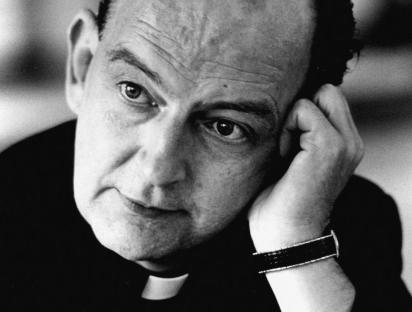
When the First World War broke out in 1914, the Danish literary critic Georg Brandes was among the rare voices of reason in a continent gripped by feverish patriotism. Like his American compatriot Randolph Bourne, Brandes was horrified by the role the press and many of Europe’s prominent intellectuals played in rousing the public to xenophobic bloodlust. “The press, in belligerent countries, has taken upon itself to excite hatred against the enemy in order to create war enthusiasm,” he wrote in The World at War (1917). “It should remember that the destroying hatred it calls into existence will live long after the war, and will inevitably give birth to new wars.”
I wonder what Brandes might have made of the great Danish drone panic, the still unsolved mystery involving what is widely assumed to be a case of Russian drones disrupting Danish air traffic. Described repeatedly by the government as an “attack,” the response from Danish media and some of the country’s leading journalists has been the most troubling thing about the incident.
On September 22, a number of large drones were spotted flying above Copenhagen Airport, forcing a temporary shutdown and prompting an ongoing police investigation. Lacking the necessary equipment to track or even neutralize the drones (itself a scandal), airport officials could not say where the drones had come from or where they were going. Still, all indications suggested a “capable actor,” according to Copenhagen’s chief of police.
In the following days, all of Denmark went into full-blown panic mode, as drones were reportedly spotted near airports in Billund, Sønderborg, Esbjerg, Aalborg, and Skrydstrup, a Royal Danish Air Force base. On its liveblog, the Danish Broadcasting Corporation went to great pains to ensure that no claim of a drone sighting, however baseless, went unreported, at one point sharing rumors of “flickering lights” above an airport on Bornholm, a Danish island in the Baltic. The airspace above Billund airport on the Danish peninsula was briefly closed after a suspected drone sighting that turned out to be a star. By the end of the week, there was scarcely a bird in the sky that wasn’t suspected of reporting to the Kremlin.
The Danish population, meanwhile, was encouraged by authorities and the media to take the increased threat levels seriously. A nationwide outdoor retailer began selling home-preparedness kits, including everything from flashlights to freeze-dried chili. Danish Red Cross set up a hotline for concerned citizens. Child psychologists counseled parents on how to talk to their children about the situation.
Anyone looking to the government for levelheadedness looked in vain. In her press conference on September 25, Prime Minister Mette Frederiksen declared the drone incident “the most serious attack so far” on Danish infrastructure, later claiming that Denmark faces “its greatest threat since the Second World War.” Ahead of the informal summit of EU leaders in Copenhagen on October 2, Minister of Justice Peter Hummelgaard chose a more contemporary analogy, comparing the situation to the post-9/11 period: “Just as the threat of terrorism became part of our reality, hybrid attacks are now, unfortunately, also part of that reality.”
In all the panic and confusion, there remains the rather awkward fact that authorities still haven’t found out who is responsible for the so-called “attacks.” What’s more, many of the reported sightings in the days after September 22 have since proved unfounded. At a press conference on Friday, October 3, Defense Minister Troels Lund Poulsen no longer referred to “drone sightings” but to “aerial observations,” a euphemism signifying considerable uncertainty on the government’s part.
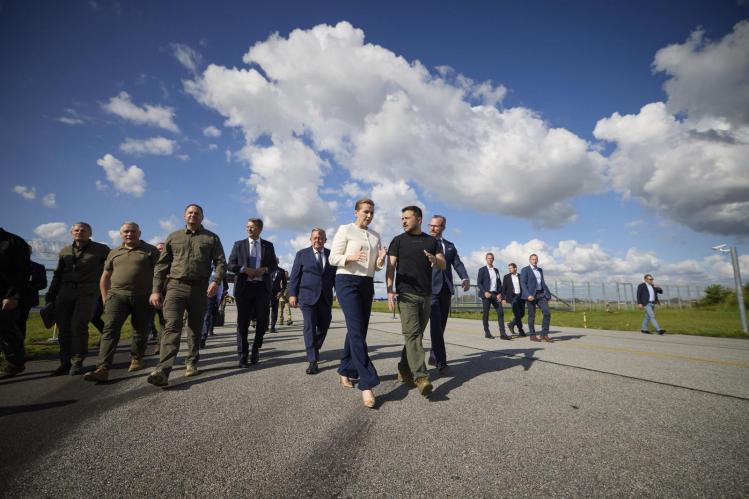
As of this writing, no one is really sure exactly what happened. But even if it does turn out to have been a Russian “attack,” the only surprising thing about the incident is that anyone would find it surprising. Since the Russian invasion of Ukraine in 2022, Denmark has shown itself to be an uncompromising Ukrainian ally, supplying military support in excess of €9 billion—more than France, Italy, and Spain combined. As the war has dragged on, the Danish government’s actions and rhetoric have grown more and more aggressive. In 2023, Frederiksen, a Social Democrat, was pictured smiling with Zelensky in an F-16 during a photo op. On September 17, five days before the drone incident, she announced a “paradigm shift” in Danish defense policy: for the first time, Denmark would acquire long-range precision weapons that could, in theory, reach targets in Russia. On October 6, the Danish and Ukrainian governments announced a deal to allow Ukrainian defense-industry companies to begin production in Denmark. If a temporary disruption of Copenhagen air traffic is as bad as it gets, Danes can count themselves lucky.
What is most unsettling about the drone incident is that it has revealed a nationalistic belligerence throughout the Danish media landscape. Ostensibly liberal journalists now sound like Bush-era neocons with talk of defending the Scandinavian “way of life”—with our lives, if necessary. The historian Uffe Østergaard, whose work focuses on the history of European identity, has suggested that Denmark’s days of pacifism ought to be definitely over, arguing, “We must once again learn to be citizens in uniform and develop a democratic warrior culture.” In Berlingske Tidende, one of Denmark’s leading newspapers, one commentator declared that “the hybrid war is here in Europe. In Kastrup. In Skrydstrup. In the mind.”
The specter of 9/11 alone should be reason enough for the Danish media to question their shameless regurgitation of government rhetoric. As responses to the threat of terror across the West showed, wars for democracy abroad usually begin by curtailing civil liberties at home. Resigning ourselves to yet another amorphous forever war will surely prove disastrous. As Brandes put it: “The longer the war lasts, the shorter the coming peace will be.”