Last month, a wave of medical concern raised a hot debate in Western Europe. It was related not to mad cow disease but to depleted uranium-tipped shells fired by NATO in Bosnia (1994-95) and Kosovo (1999). Did they cause a growing number of cancer- and leukemia-related deaths among NATO veterans? U.S. and British experts say no; other Western Europeans are not so sure. In addition, a UN inquiry in Kosovo had found that eight of eleven areas where the shells had been used were still contaminated with low-level radiation. Samples are being examined for toxicity in five European countries, and an official assessment is expected in March.
During the Gulf War (1991), more than 900,000 rounds of such ammunition were fired (compared to 31,000 rounds in Kosovo and 11,000 in Bosnia). According to a series published last fall in the Hartford Courant (October 22-25,2000), birth defects in Iraq have nearly tripled since the end of the war, raising the issue of whether the use of depleted uranium-tipped weapons bears greater scrutiny there. One Canadian expert, the Courant reported, has warned of likely lung cancers developing among Gulf War veterans.
Even more stark than the effect of radioactive contaminants on veterans and local populations, however, is another, continuing action against Iraq. On average, 5,000 Iraqi citizens have died each month since the war, according to the Courant, as the result of UN sanctions leveled against the regime of Saddam Hussein. While the Courant series in no way exonerated Hussein for his failure to meet UN requirements, and blistered him for refusing to release humanitarian aid to the Iraqi people, nonetheless it reported that during the period sanctions have been in place, per-capita annual income in Iraq has dropped from $3,500 to $750; per-capita daily protein intake has fallen from 81.6 grams to 53.3 grams, landing the country on the list of nations endangered by malnutrition; and mortality rates for children under five have quadrupled (UNICEF estimates some 500,000 premature deaths in that subgroup). Furthermore, since widespread water contamination persists, a result of bombed-out infrastructure and the curtailment of chemical production and importation, dysentery and gastroenteritis are rampant, affecting both the old and the young. Polio, meningitis, and typhoid—all nearly eradicated before the war—are also on the rise, and cases of cholera quadrupled between 1997 and 1999, from 486 to 2,398.
Writing in the May/June 1999 issue of Foreign Affairs, John and Karl Mueller describe comprehensive state sanctions as an “impressive method” of mass destruction. At the same time, they argue that the UN’s sanctions have neither undermined Hussein’s will to survive nor significantly weakened his hold on power. In March 2000, UN Secretary General Kofi Annan openly expressed concern about sanctions on Iraq. He described them as a blunt instrument which “hurt large numbers of people who are not their primary targets.” According to Dennis Halliday, the UN’s former coordinator of aid to Iraq, the UN embargo has “pushed the Iraqi people back toward Saddam,” undermining the sanctions’ stated goal. Halliday warns that although the sanctions have failed to dislodge Hussein, they have turned a whole generation of younger Iraqis against the West, creating a veritable breeding ground for future extremists.
Such facts are slowly beginning to dawn on the American public. A year ago, seventy members of Congress sent President Bill Clinton a bipartisan letter stating that the UN sanctions offered the Iraqi government little incentive to comply. Drawn up by Tom Campbell (R-Calif.) and John Conyers (D-Mich.), the letter argued that “morally, it is wrong to hold the Iraqi people responsible for the actions of a brutal and reckless government.” But that was last January. Since then there have been an additional sixty thousand sanction-related deaths—more than the number of U.S. casualties in Vietnam—and there has been a change in U.S. administrations. The new one is likely to take a harder line toward Iraq. As a candidate, George W. Bush called for a strengthening of sanctions, and Hussein will no doubt be a primary focus of Bush’s foreign policy—in terms of energy security and family honor.
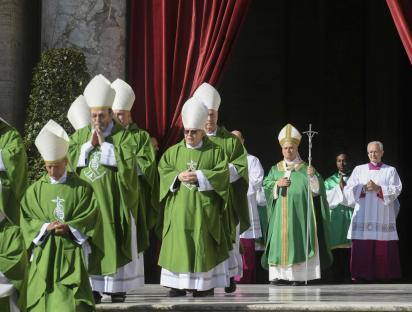
More than three years ago, Bishop Anthony Pilla, then president of the U.S. Catholic bishops’ conference, wrote to Patriarch Raphael Bidawid of Baghdad, his Iraqi counterpart, saying that while the international community held the Iraqi government accountable for threatening the peace, world leaders must not “hold the Iraqi people hostage or harm innocent people.” Pilla noted that the UN sanctions should be “reviewed, reshaped, and narrowed to achieve their legitimate objectives of ending threats to peace,” and promised that the American bishops would hold the Iraqis’ sufferings “in our hearts and prayers.” Three years (and many prayers) later, the sanctions remain in force, scarcely reshaped or narrowed. One is forced to ponder: If the purpose of sanctions is to oust Saddam Hussein, are they working? If not yet, when might they? And morally, if not politically and militarily, when do sanctions become objectionable? If not in ten years, in fifteen? Twenty?…And who is doing the counting?