The news that reaches the West from war-torn Sudan is scant but horrifying. The ten-year-long civil war between the Islamic “fundamentalist” government in the north—bent on imposing Islamic law on the country—and the Christians and animists in the south, where they constitute a majority, has become more complicated and more deadly. In the last year, a three-way split among the rebels has turned them on one another with a vengeance, while the Khartoum government has pursued its relentless drive in the south, restricting press reports from the area in an attempt to cover up its misdeeds. But the UN has documented some of those brutal misdeeds, and the General Assembly not only condenmed them but in March the UN established a special human rights commission to monitor the country.
What occasional reports do slip out of Sudan are numbing. A Catholic missionary in the south writes us that conditions have deteriorated seriously m the last five months: hunger is rampant, rebel infighting is fierce, and the government regularly detains, tortures, and disappears black Sudanese and Christians. She mentions caring for an old man whose face was “lopsided with one sightless eye deeply sunken into an irregularly shaped orbit” as a result of beatings while in government detention, and tells of other victims, their skin scarred with chemical bums, their right hands severed as the result of what she calls one of the government’s “ ‘better known punishments.’” Kevin Carter’s haunting photograph (Time, April 5) of a small girl collapsed on hen” way to a feeding station, a vulture crouched and waiting, was a graphic reminder of ethnic cleansing, Sudanese style.
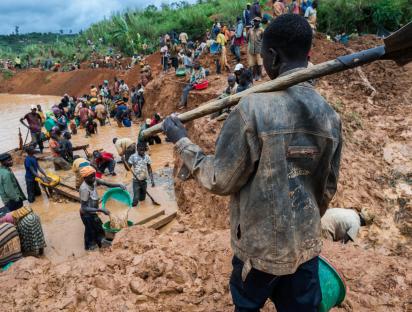
An estimated 4 million people are at risk of starvation in Sudan, and according to Senator Paul Simon (D-Ill.), an as-yet-un-publicized U.S. Centers for Disease Control report says that as many as 80 percent of the children in some areas of Southern Sudan are severely malnourished. Food distribution to the region was dealt a further blow last month when fighting between the government and rebel groups forced the UN to suspend food deliveries to one of the most desperate areas. A relief worker on the scene told the New York Times (April 18) that it “ ‘was the biggest misery you could ever imagine,” and that more than 4,000 children at one center alone were likely to die.
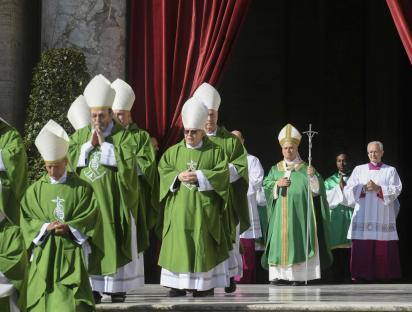
So far. the voices raised in behalf of Sudan in the West have been too few and too faint. In February, thirteen African cardinals made an impassioned appeal for human rights in Sudan and Pope John Paul II, at his courageous best, spoke bluntly to Sudan’s leader. General Omar AI Bashir, during a brief stopover in Khartoum. “ ‘Minorities within a country,” the pope told the general. “have the right to exist, with their own language, culture, and traditions, and the state is morally obliged to leave room for their identity and self-expression.’” In the United States, however, the churches have proven to be entirely too soft-spoken. Lee Millet has sent moving dispatches from the scene for the Lutheran, as have Maryknoll missionaries to the Catholic press; and Bread for the World has proven itself again a plain-spoken and reliable watchman. But, as Congressman Frank Wolf (R-Va.) told Mary McGrory of the Washington Post last month, while church people flooded his office on Latin America and other issues, on Sudan “ ‘l hear silence.” That must change.
For his part, Wolf has gone on a fast to alert his colleagues and constituents about Sudan. In the Senate, Senators Simon, Kassenbaum. Jeffords, and Feingold have sponsored Senate Resolution 94. it calls on President Bill Clinton to appoint a special negotiator to work with the UN, the Organization of African Unity, and the Sudanese to establish a cease fire and to set up an internationally monitored demilitarized zone. The president should condemn Khartoum’s human rights abuses and push the UN to increase assistance to humanitarian agencies in southern Sudan.
“Where is the hope?” writes our missionary friend. “l found it in the small things…in the roar of thunder when the clouds opened up during Mass…and our sackcloth and ashes turned to excitement and joy….For here, rain means not only the possibility of planting a small crop, but also the end to the dry season offensive.’”
There ought to be more sounds of hope for Sudan than the patter of rain. From abroad there ought to come a mighty roar of voices.