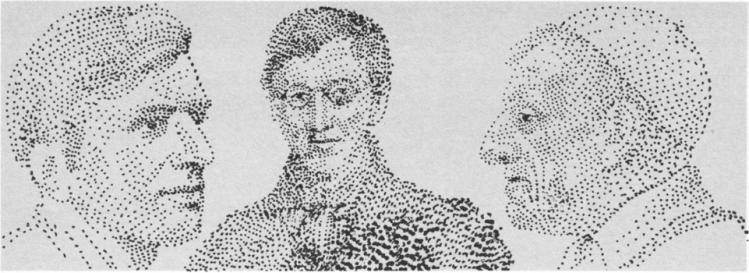
One hundred years after his death, how does one sum up the life and work of John Henry Newman? His ninety-year life, neatly divided at 1845 by his conversion to Catholicism, spanned the decades of the nineteenth century. His initial and ever-basic conversion at the age of fifteen was a moment in the evangelical revival still flourishing at the beginning of the century. Oxford taught him how to think and write (matchlessly). There he also gradually came to the appreciation of the critical importance of tradition and authority that led to his central role in the Oxford movement. His participation in the religious debates of his time was so great that his conversion to Catholicism in 1845 caused public shock. During the Catholic half of his life, he pioneered theologically with his essays on the development of doctrine, the place of the laity in the church, the role and limits of authority, and the relation of faith and reason. After two decades of living under a cloud, he found his life-work justified and honored when Leo XIII made him one of his first cardinals in 1879, and by the time he died, on August 11, 1890, he was one of the most respected of all Englishmen.
In the course of so long a life and so rich and diverse a work, Newman said and wrote many things; and it is not rare to find him quoted, still today, on various sides in religious disputes. The author of the famous comment, “Here below to live is to change and to be perfect is to have changed often,” was not one to believe that intellectual integrity means never learning anything new nor ever changing one’s mind.
On one occasion Newman himself identified the connecting thread of his life’s work. In the “Biglietto speech” he gave in Rome as he received the red hat, he spoke of his consistent opposition to “one great mischief,” “the spirit of liberalism in religion.” He defined this notoriously elusive term as “the Anti-Dogmatic principle,” that is “the doctrine that there is no positive truth in religion, but that one creed is as good as another.” In an appendix to the Apologia, he spelled this out in a series of eighteen propositions which illustrate liberalism as reducing the Creed to what can be proved, understood, or experienced, subjecting it to the latest state of scientific research or public consensus, removing it from public significance. He summed it all up nicely: Liberalism “is inconsistent with any recognition of any religion, as true. It teaches that all are to be tolerated, for all are matters of opinion. Revealed religion is not a truth, but a sentiment and a taste; not an objective fact, not miraculous; and it is the right of each individual to make it say just what strikes his fancy…. Since, then, religion is so personal a peculiarity and so private a possession, we must of necessity ignore it in the intercourse of man with man. If a man puts on a new religion every morning, what is that to you? It is as impertinent to think about a man’s religion as about his sources of income or his management of his family. Religion is in no sense the bond of society.”
This analysis has an uncanny contemporary relevance to issues of Catholic faith and life and their public significance; and much of what sociologists today describe in terms of the individualizing, privatizing, and marginalizing of religion is already identified, much more elegantly, in Newman’s analysis. When he began his work, evangelical Christianity was powerful enough to have inspired the abolition of the slave trade; by the time he died he feared the church would soon be living in “a world simply irreligious,” “a time when the world does not acknowledge our first principles.”
Newman did not deny that there was much that was good in liberalism: its broad ethical principles, its methods of scientific research, the efforts at social improvement. His Idea of a University vindicates the necessity of pursuing excellence in the use of new empirical methods. But just as that book argued forcefully that the absence of theology from a university’s programs not only neglects a province of reality but invites other disciplines to usurp that province, Newman faulted liberalism for wishing to substitute its principles for religion. Thus, he said, liberals believe that “Political economy may reverse our Lord’s declarations about poverty and riches,” as, in Dickens’s Hard Times, where Mr. M’Choakumchild sadly reports to Mr. Gradgrind about poor Sissy Jupe that “after eight weeks of induction into the elements of political economy, she had only yesterday been set right by a prattler three feet high for returning to the question, ‘What is the first principle of this science?’ the absurd answer, ‘To do unto others as I would that they should do unto me.’”
It was in good part because he concluded that the Anglican church was incapable of resisting the inroads of liberalism in its various forms that Newman became a Catholic. He saw in the church’s hierarchical authority and powerful traditions an embodiment and instrument of the objectivity and internal consistency of divine revelation, a solid “given,” standing over and against us with its own lights and claims. The defining “idea” of Christianity was the principle of Incarnation, and there had to be, somewhere in the world, a community and institution which continued the “personation” of the divine accomplished in Christ.
But if Newman bowed to few in the nineteenth century in his insistence on the principle of authority within the church, he insisted from the beginning of his Catholic life on a view of that principle which set him apart from many in his new community of faith. The Essay on Development was suspect for a century because it took history seriously and argued for evolutions at a time when doctrinal integrity was still being identified with immutability. His first close contact with Roman theologians left him appalled by their philosophical eclecticism and historical ignorance. He deplored the sectarianism and apocalyptic catastrophism characteristic of the reign of Pius IX. “We are sinking into a sort of Novatianism….Instead of aiming at being a worldwide power, we are shrinking into ourselves, narrowing the lines of communion, trembling at freedom of thought, and using the language of dismay and despair at the prospect before us, instead of, with the high spirit of the warrior, going out conquering and to conquer.”
An exclusive exaltation of authority was leading to a neglect of natural gifts, not least of them, the “cultivation of mind.” There was, he said, “no exercise of the intellect. No, the system goes on by the tradition of the intellect of former times.” He postponed for years the publication of the Grammar of Assent, because he expected it to be misunderstood. “Our theological philosophers are like the old nurses who wrap the unhappy infant in swaddling bands or boards—put a lot of blankets over him—as if he were not healthy enough to bear wind and water in due measures. They move in a groove, and will not tolerate anyone who does not move in the same.”
During Vatican Council I, his conviction that “you must prepare men’s minds for the doctrine” provoked his anger at the “aggressive and insolent faction” which first sought to force on an unwilling church the widest and least defensible definition of papal infallibility and then dismissed as simple disobedience the genuine difficulties of a Dollinger. “Every consideration, the fullest time should be given to those who have to make up their minds to hold an article of faith which is new to them. To take up at once such an article may be the act of a vigorous faith; but it may also be the act of a man who will believe anything because he believes nothing, and is ready to profess whatever his ecclesiastical, that is, his political party requires of him. There are too many high ecclesiastics in Italy and England, who think that to believe is as easy as to obey—that is, they talk as if they did not know what an act of faith is. A German who hesitates may have more of the real spirit of faith than an Italian who swallows.”
Newman once offered the following rueful account of the origin of much of his work: “There are those among us…who for years have conducted themselves as if no responsibility attached to wild words and overbearing deeds; who have stated truths in the most paradoxical form, and stretched principles till they were close upon snapping; and who at length, having done their best to set the house on fire, leave to others the task of putting out the flame.”
If Newman shared with many Catholics a repudiation of liberalism in religion and society and also an insistence on the principle of authority as a needed counterbalance, he disagreed with many of them on the interpretation of that principle and on its adequacy to meet the challenges of the day. What, then, did he offer as a personal response to the wider crisis and as an effort to make the church better able to meet it?
The first element of his response was the ideal of a liberal education he set out in The Idea of a University. The “cultivation of the intellect” which he considered to be the necessary and sufficient end of education was also the critical ability needed if Catholics and others were to be able to withstand the spread of opinions and values Newman believed to be greatly inadequate to the human condition.
Secondly, he offered as a specifically theological response the construction of a “true philosophy of religion.” The Grammar of Assent offered one of the first attempts at what is today called “the turn to the subject,” an analysis of the concrete processes of reasoning and believing to justify the option of Christian faith.
Thirdly, he struggled to make his own church a society in which such “real assent” could be more likely. Exclusive appeals to authority were fatal: “You cannot make men believe by force and repression. Were the Holy See as powerful in temporals, as it was three centuries back, then you would have a secret infidelity instead of an avowed one—(which seems the worse evil) unless you train the reason to defend the truth.” Churchmen must recognize the vital and communal presuppositions of their own authority: “A Catholic is kept from scepticism, not by any external prohibition, but by admiration, trust, and love. While he admires, trusts, and loves our Lord and his church, those feelings prohibit him from doubt; they guard and protect his faith; the real prohibition is from within. But suppose those feelings go; suppose he ceases to have admiration, trust, and love, of our Lord and his church; in that case, the external prohibition will not suffice to keep him from doubting, if he be of an argumentative turn.”
In the preface to the third edition of the Via Media, Newman described the concrete life of the church as a dialectical interplay between the theological or doctrinal, the sacerdotal or devotional, and the political or hierarchical elements. All three were essential, he argued, but they were also in tension with one another, reflecting “conflicting interests,” and it was crucial that no one of them be isolated out of the living whole and erected into the all-determining principle.
In his own time, he believed, “the devotional sentiment, and the political embarrass the philosophical instinct.” The knowledge of church history which made this analysis possible also gave him lessons in patience. “Pius is not the last of the popes,” he reminded a correspondent distressed by Vatican I; “Let us be patient, let us have faith, and a new pope, and a reassembled council may trim the boat.” That patience at once permitted and was confirmed by a wonderful intellectual courage, a great confidence that in the end truth would prevail, which enabled Newman to be such a champion of intellect and defender of its freedom.
The great statement of principle in The Idea of a University is often quoted, that the believer “is sure, and nothing shall make him doubt, that if anything seems to be proved by astronomer, or geologist, or chronologist, or antiquarian, or ethnologist, in contradiction to the dogmas of faith, that point will eventually turn out, first not to be proved, or, secondly, not contradictory, or thirdly not contradictory to any thing really revealed, but to something which has been confused with revelation.” Perhaps less often noted are the principles that will guide the representative of the “imperial intellect” in his investigations: “If he has one cardinal maxim in his philosophy, it is, that truth cannot be contrary to truth; if he has a second, it is that truth often seems contrary to truth; and, if a third, it is the practical conclusion, that we must be patient with such appearances, and not be hasty to pronounce them to be really of a more formidable character.”
Brilliant paragraphs follow in this essay on “Christianity and Scientific Investigation” on the concrete, dialectical, and collaborative processes by which the human mind reaches the truth. His argument displays an analysis, rare in its nuance and discrimination, both of the elements of intellectual inquiry and of the responsibilities of religious authority when such inquiry touches upon matters of faith. And the more experience Newman had in the course of his life of the absence of such nuance and discrimination in the face of unparalleled intellectual challenge, the more determined he became to resist the efforts to restrict the “elbow-room” of Catholic scholars.
He pressed the issue in almost all the great works from the Apologia to the end of his life. The last chapter of the Apologia responded to the enthusiastic and indiscriminate authoritarianism of men like William George Ward and Cardinal Manning. The chapter includes a powerful defense of the doctrine of infallibility, but so far from granting the Protestant claim that this power paralyzes the intellect, Newman argued that it represents one of the principles necessary for the dialectical acquisition of religious truth. Authority and private judgment he presented as “alternately advancing and retreating as the ebb and flow of the tide.” Catholic Christendom is “a vast assemblage of human beings with willful intellects and wild passions, brought together into one by the beauty and the majesty of a superhuman power, into what may be called a large reformatory or training-school, not as if into a hospital or into a prison, not in order to be sent to bed, not to be buried alive, but (if I may change my metaphor) brought together as if into some moral factory, for the melting, refining, and molding by an incessant, noisy process, of the raw material of human nature, so excellent, so dangerous, so capable of divine purposes.”
If infallibility itself did not destroy the work of human intellect, Newman went on, it was not to be expected that lesser exercises of church authority would. He insisted that the theological element in the church needed the counterweight of the “devotional” and the “political” elements, and he never had much patience with the dogmaticians of freedom for whom Fiat justitia et ruat coelum (Though the heavens fall, let justice be done!). But he reserved his severest words for those who refused to sympathize with people troubled by the problem of reconciling revelation and science. The liberalism of his youth, Newman said, was no longer simply one party among many; “it is the educated lay world,” and people were “in danger of being led away into a bottomless liberalism of thought.” How could one not sympathize with “religious and sincere minds, who are simply perplexed-frightened or rendered desperate, as the case may be-by that utter confusion into which late discoveries or speculations have thrown their most elementary ideas of religion. Who does not feel for such men? Who can have one unkind thought of them? I take up in their behalf St. Augustine’s beautiful words, ‘Illi in vos saeviant,’ etc. Let them be fierce with you who have no experience with the difficulty with which error is discriminated from truth, and the way of life is found amid the illusions of the world.” Newman’s correspondence abounds with efforts to address those who came to him with such perplexities.
At the heart of Newman’s response to the demands his world placed on his church were a remarkable intellectual integrity and honesty and a no less rare faith and trust. Under the present pontificate the cause for Newman’s canonization has made more progress in a decade than in the ninety years previous. A year ago the Reverend Vincent Blehl presented the Vatican with a huge dossier making the case for Newman’s sanctity; and there are some rumors that good news can be expected this summer.
I do not know how Blehl made the case, but one of the reasons why a good number of people would welcome Newman’s being raised to the altar is a “heroic virtue” which is not only rare but, at least in recent centuries, seldom canonized: what might be called “intellectual courage.” One has the impression with Newman, as with Aquinas, that he did not fear a page he ever read nor ever feared to read a page.
To this courage were joined an evangelical patience and modesty. Newman knew that he was only cooperating in what was, after all, God’s work, not his. “I may have opened a vein of metal,” he wrote, “which others may work out after I am gone.” “What I aim at may be real and good, but it may be God’s will that it should be done a hundred years later.”
Such reflections remind us of the lines from “The Pillar of the Cloud”: “I do not ask to see / The distant scene; one step enough for me.” He entitled one of his early sermons “Waiting for God,” and that was a guiding-principle of Newman’s life, reflecting the spiritual depths from which his intellectual honesty and freedom drew and confirming his conviction that Christian faith frees the mind and heart towards hopes and realms of light which we otherwise could not even imagine.