A Lasting Legacy
I was sorry to learn of the death of Rosemary Deen, Commonweal’s longtime poetry editor. In addition to the incredible contribution she made at Commonweal, she made a profound impact on at least a few college composition programs.
Years ago, a fellow writing professor grabbed me by the shoulders and told me that I must read Beat Not the Poor Desk, Deen and Marie Ponsot’s 1982 guide to teaching introductory college writing classes. A one-of-a-kind treatise, the book showed me an entirely different (and much more effective) way to think about writing, teaching, students, and literature.
I suspect my colleague and I are not the only ones who continue to draw on its wisdom. Although I never met Deen, she sits on my shoulder every week, talking me through the day’s lesson.
Kelly Jean Kelly
American University
Washington D.C.
Knowing the Path
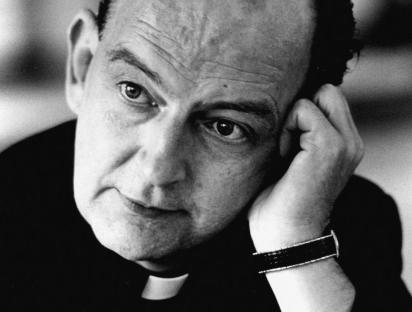
Commonweal has lost a brilliant editor in Patrick Jordan. May his memory be a blessing. Only last week I reread his review of Richard Gaillardetz’s last book (“Fitting Us to His Measure,” September 2024). Pat knew well the path of illness and suffering, and this review from the archives tolls the bell of intimate recognition. Beautifully written and so very poignant. Pat has entered eternal life and now knows all the answers.
Mary Anne Ford
Montclair, N.J.
Nature’s Hymn
Martin Woessner’s article (“All Things Shining,” July/August) described his viewing of Terrence Malick’s 2016 film Voyage of Time. Traveling to Atlantic City, New Jersey, to see the film on an IMAX screen in the Tropicana Resort and Casino, he was overwhelmed by the scenes of the natural world captured in the film.
After viewing, he made his way out to the beach, where, due to the influence of the film, he saw the beauty of the seashore in a new light—he felt a part of his surroundings in a profound way.
His experience reminds me of Bob Dylan’s little-known, never-released, almost mystical song “Lay Down Your Weary Tune.” Written in September 1963 in Carmel-by-the-Sea, California, it’s about spending time at the shore. Dylan compares the elements there—sun, breeze, dawn, ocean waves, seaweed, rocks, sand, sky, clouds, rain, tree branches—to musical instruments, realizing that “no voice can hope to hum” this hymn that nature has composed.
The song resembles St. Francis’s “Canticle of the Creatures.” It’s surely worth a listen.
Ruth Lux
Lidderdale, Iowa