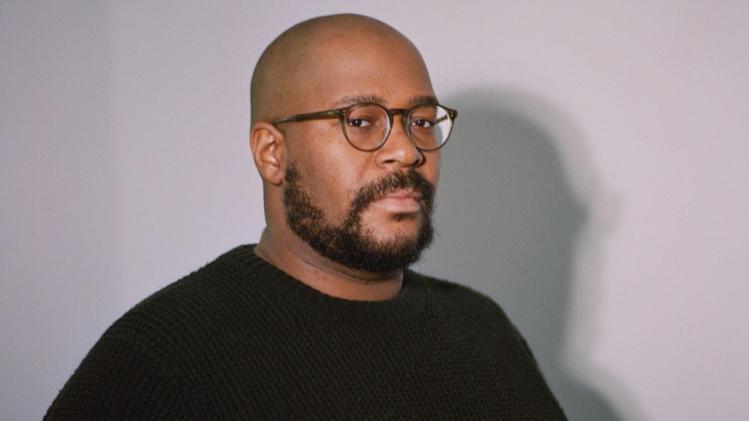
Minor Black Figures is Brandon Taylor’s third and, to my mind, best novel. Its main character, Wyeth, is a painter who enters into a romantic relationship with a former seminarian named Keating. The novel follows the two men—one Black and one white, one who has left religious belief behind and the other who fears religious belief has abandoned him—as they move toward and away from and back toward each other. John Singer Sargent is a favorite of Wyeth’s. He particularly admires how Sargent’s portraits offer “a glimpse of a life that conjured a world because it spoke of all that world contained.” Taylor’s novel does the same thing, conjuring Wyeth’s world and all its concerns: Blackness and representation, art and ideology, money and work, sex and intimacy.
Anthony Domestico: You’ve said before that you “love getting into Catholic business.” You were raised Baptist and are now an atheist. What is it about Catholicism that you find compelling? And what was it about Keating’s background—not just a former seminarian but a Jesuit in training—that attracted you?
Brandon Taylor: I grew up in Alabama, and there simply were not many Catholics around. They always seemed rather mysterious to me. Everyone else was a flavor of Protestant, and I knew virtually no Black Catholics until I got to college. The interest in Catholicism might have been a very minor, passing fancy if I hadn’t developed a somewhat idiosyncratic interest in European history when I was in college. I read about European history, particularly the Middle Ages and the early modern period, as a hobby, and at every turn, there’s Catholicism, once more at the scene of the crime. You get a kind of history of Catholicism as you read about European history, and I found myself really enjoying the characters who pop up and cause chaos and mischief.
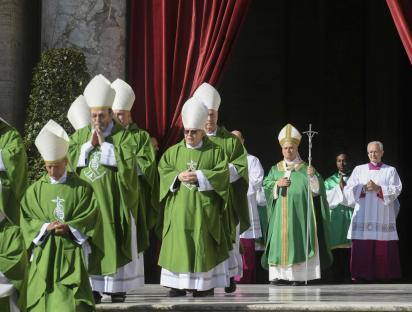
I’ve always found the Jesuits incredibly fascinating because they go out into the world and mingle among people and communities. They are in schools, churches, seminar rooms, community gardens. They run high school baseball teams and preside over spiritual instruction for young people at incredibly fraught and changeful moments in their lives. Yet, for all of that immersion in the world, they are men of faith and are therefore outside the world, too. It’s an interesting tension, one that, by the way, runs all the way back to the founding of the order. Jesuits were often targets of political ploys because they were representatives of a foreign power moving among the citizens of a state or principality, offering education and other services, totally not beholden to the local powers.
Anyway, I knew that I wanted to have a priest in the book. And it seemed to me that Keating should be a Jesuit because of the learnedness, but also the common human touch—in this way, Pope Francis was such a model for the kind of faith Keating walks.
AD: In his essay “The Art of Fiction,” Henry James thinks about the form of the novel by thinking about painting and how the two “compete with life” in similar and dissimilar ways. What, as a novelist, interested you about painting and painters? Was the attraction primarily aesthetic (the issues of representation and figuration that painting involves), social (the kinds of conversations painters have at exhibitions and over drinks; the money sloshing around the art world), or some combination of the two?
BT: After I wrote The Late Americans, I wrote two other books of fiction—a short story collection and a novel in stories—that may never see the light of day. But all three of those books were so severe in their outlook, attitude, and aesthetic that by the time I finished them, I wanted to be able to describe things again. I wanted to be able to pour a great deal of time and focus into describing light or trees or settings. I wanted to have a reason to let my language run loose a little more. It’s not a coincidence that I felt this yearning to describe around that time because I was reading Émile Zola’s Les Rougon-Macquart, his twenty-novel cycle about Second Empire France, and it’s just full of descriptive virtuosity.
I thought writing a painter would give me an excuse to describe things. It would also let me write about why I think so much contemporary painting is so ugly. That’s a small, petty reason to write a painter, yes, but a lot of my books begin with wanting to be a little mean and petty toward something I find annoying.
Finally, I wanted to metabolize some of the thoughts I had about discourses surrounding Black art and Black subjectivity, especially after 2020. All this made it rather expedient to choose a painter as my subject.
AD: Minor Black Figures is, among other things, a critic’s novel. By this I mean both that there are instances of criticism within it (passages considering what counts as a “Black painting,” for instance) and that the criticism you’ve written in recent years clearly informs the novel. How do you think about the relationship between your critical and novelistic selves? How does being a novelist make you a better critic (if it does)? How does being a critic make you a stronger novelist?
BT: I would not have written this novel if I had not spent two years reading all of György Lukács’s literary criticism. I wouldn’t have written this novel if I had not read Fredric Jameson. So much of this novel’s form, but also its content, has to do with a kind of clarity about my aesthetic project that came from gate-crashing literary theory and criticism. I felt really restless after my last novel, The Late Americans, but it was a restlessness without a name or form. I felt dissatisfied with my own work and also the work of so many of my contemporaries and peers. It just felt like there was this other thing out there we weren’t seeing or engaging with.
Then I read Jameson, Lukács, and it lit up the sky for me. I suddenly felt a renewed passion for the novel as a form or genre or style or whatever it is. It seemed to me that the kind of novel I wanted to write was possible, but in order to achieve it, I had to reinscribe what a novel was for myself—which meant throwing out a lot of my old, comforting ideas about fiction and articulating, in sometimes harsh terms, precisely what I wanted from a novel. But this required learning how to read and see, and there are very few things more instructive in seeing and reading than very good literary criticism. Even when you don’t agree with the conclusions. Maybe especially when you don’t agree with the conclusions.
I don’t know that reading criticism makes someone a better novelist. But I do know that I became a better novelist—at least I think so—by reading criticism and writing criticism and engaging deeply with ideas and wanting to answer questions that have bothered me. In my craft seminar, one of my students asked me if I ever felt that theory and criticism would get in the way of writing. And I said, basically, “Yes, it should.”
That’s how I feel. Maybe some people should have their fiction complicated by theory. There would be fewer empty, unnecessary stories in the world that way. Flannery O’Connor said something similar about writing instruction.
AD: Throughout the novel, Wyeth is “in search of the real,” primarily as an artist but also as a friend, lover, and citizen. Your first novel was called Real Life. Your second novel, The Late Americans, opens with a workshop scene in which characters praise and criticize a poem on the grounds of its relationship to reality. Has your understanding of what constitutes the real changed over your three novels? Are there different aspects of the real that you find yourself increasingly drawn to? Different forms of realism that you find more or less convincing?
BT: In that first novel, Real Life, I had a very naïve sense of the real. What the characters yearn for in that book is the kind of life they imagine people outside of grad school to be living. They imagine that the real begins when one enters the workforce and essentially becomes a bourgeois drone. But I didn’t have those terms for it then. Neither while I was writing the book nor while I was experiencing some of the things that inspired the book.
I come closer to a deeper understanding of the real in The Late Americans, one informed by some of the arguments from Lionel Trilling essays. He basically says that Americans associate the “real” with whatever is “hard” and “brutal” and “honest.” He’s talking about the American tendency to prefer novels of rural privation as “real” as opposed to novels that traffic in “manners,” essentially. For the American, it’s always Steinbeck over James, is his point, I believe. And The Late Americans is very anxious about that tension. The book is about some graduate students and some people outside of grad school, and it seeks to find the real by moving in and around their common pain, anxiety, and stress at living in America at the instant the economy is starting to go soft again. But, of course, I didn’t have the technique or the desire at the time to really bring in history, which you need to pull something like that off. But again, I didn’t know that then. I didn’t have the language to express the real conflict of that novel fully, completely, in social terms.
In Minor Black Figures, I felt like I had finally gotten to a place where I could express the anxiety around the real in more complete terms. It is at once an anxiety about whether or not your art should or can contain an ideological component. It is also an anxiety about how we can fully express our time if we do not admit social terms and social relations into the art. It is also an anxiety about a quest for meaning in an incredibly secularized world that seems hostile to the very notion of “meaning” or “purpose” outside of what can be commodified.
The book expresses these things (I hope, anyway) on a variety of planes and levels, working it out in art, in the social, in the spiritual, in the emotional, and also the historical. So that when the book thinks of the “real,” that word refers to many different things simultaneously—it is both all of those things and nothing at once. I feel somehow that this is the clearest expression of this theme in my work. The most complete expression of the anxiety I feel as a member of my generation about what is real.
AD: There’s a scene midway through the novel in which Wyeth sees a child repeatedly and joyfully jumping off a rock in Central Park into his father’s arms. The moment reminded me of a similar scene of parental care and childish boundary-testing in Garth Greenwell’s What Belongs to You, but it also and more clearly echoes a scene from Jane Austen’s Persuasion. I know that Persuasion is one of your favorite novels and that Austen is one of your favorite novelists. How has she helped you think about romance? About plot? About the possibility of self-transformation?
BT: My friend Adam Dalva has a unified theory of my fiction that boils down to, “This is just Persuasion.” It’s almost become a game: I send him a story or a novel draft, and he points out the parts that are clearly inspired by Persuasion. The funny thing is that often I’m totally unaware of it until he points it out. That isn’t to say that he’s wrong. It’s just to say that Austen—and in particular, Persuasion—has such a totalizing influence on me that I don’t even notice anymore.
The scene you reference is indeed an intentional citation of the moment when Louisa Musgrove leaps from the steps in order to be caught by Wentworth, and suffers a bad concussion that alters the course of her life. She goes from being this vivacious, reckless young woman to being someone who is wooed with poetry and quiet murmurings as Captain Benwick, the widower, tends to her during her convalescence. Persuasion is so much a novel about the unforeseen consequences of the choices we make, and how our actions can give rise to fates we never imagined. It is a novel about vulnerability and finding the humility and courage to change one’s mind in order to make a life you truly want.
It is also such an optimistic novel. I know people think of it as the sad Austen novel, but to me, it is the one that believes most profoundly in free will and the capacity to change and grow. Not necessarily to become a different person, but to become so much more yourself that you are able to finally, at last, make the choice you most desire to make. I think that’s incredible. More than that, Austen dramatizes all this and never loses sight of the people whose lives illustrate these ideas, so that the book’s revelations about human nature and the human heart feel at once totally specific to the circumstances—Anne and Wentworth, in particular—and also totally universal.
That is the thing I am always after in my work: perfect unity of drama and theme. I want theme and idea to work their way out naturally through the course of my characters’ lives, and for the superobjective of the novel to arise out of the natural motion of the plot or the characters. This is true in Austen. It’s also true in Wharton, another of my favorite novelists. And it is true, of course, in the work of Henry James, though his goals are slightly different than those of the other two.
Austen has taught me many things, and one of those things is that questions of love, happiness, and freedom are infinitely compelling, and that as a novelist, your job is to find the proper terms and dramatic conditions to explore those questions. That is the secret to Sally Rooney’s work. She understands this better than almost anyone else working today.
AD: Wyeth bristles at the notion that his painting might be shaped by ideology: “Better to start with a gesture,” he says. “Better to stay away from ideology.” You’re teaching a course this fall on ideology and fiction. What interests you about the topic? Why do you think the suggestion that art is ideological freaks out writers and readers alike? Might it have something to do with, as you put it in Minor Black Figures, “what we are supposed to do in God’s absence”?
BT: The question of ideology in fiction really does freak people out, as you say. The thing I find more surprising is that when you raise the idea that a work of art might express an ideology, even indirectly, people often reply, “I prefer art for art’s sake” without a trace of irony or acknowledgement that l’art pour l’art is itself an ideology. I have many thoughts about this topic—hence, the course I’m teaching—but I suppose I could summarize it by saying this: artists want to believe that they are making art totally at the whim of their subconscious and totally in pursuit of their aesthetic ambitions. Artists have railed against ideological readings of their work for centuries, and some of that has to do with wanting to preserve their freedom. Wanting to provide an alibi to potentially sanctionable ideas and motives. Wanting solely to create without being shackled to larger political projects. Some of this makes sense. Artists have also long been targets of oppressive regimes, state violence, and censorship. There was a time when getting labeled as belonging to this or that camp meant exclusion or even imprisonment. Even today, artists are labeled this or that, woke or MAGA or antiwoke, in order to delegitimize their art or their work. It’s the first cudgel we reach for in social discourse around art these days.
Artists always want to be taken on their own terms. They want to be individuals. Liberalism is very potent among Western artists. This is the inheritance of the Enlightenment. And I don’t begrudge anyone that. I also would like to be an individual.
However, the fact of the matter is that art is made by people (at least for now)—more precisely, it is made by subjects, to borrow a term from Louis Althusser. And people have lives that are lived under particular material and spiritual conditions. They are interpolated, to further borrow from Althusser. If you are a human being with an experience of living in the world—if you have grown up in a place and a time and have read books, watched television, or looked at paintings—then you have an ideology. And that ideology shapes the aesthetic choices you make. Even if you purport to make art for art’s sake, that is a specific inheritance of a specific intellectual and artistic tradition made possible by a specific set of economic and social factors. Saying you make art for art’s sake during a time of tremendous social unrest in your nation or within the world order in which you currently reside is, in fact, a profoundly political statement. It’s a political statement formed and informed by everything you’ve taken in. There is no art that has not been touched by ideology.
When you read Zola or Gustave Flaubert, you are engaging with a particular outlook and worldview. When you read Sally Rooney or Andrew Martin, you are encountering an ideology.
I suppose what makes people anxious is the idea that if you can perceive a writer’s outlook from their work, that means you’ve failed as a good liberal, because aren’t we all supposed to be such an admixture of good and bad that there is no way to discern what matters to us? But I think that’s bad, and it’s a reason why so many contemporary novels are dull and dead. Writers are not thinking very deeply about what organizes the world as they see it, and they’re afraid to put any of it on the page for fear of writing a so-called one-dimensional character.
My goal in teaching the class is to make students less afraid of ideology and to reveal that, in fact, it is present in all the work they already love and admire. I want to make them more comfortable with exploring the ideological content of their own work, expressing it in a way that is actually complex rather than fake complex.
AD: At one point, Wyeth asks Keating, “What is grace supposed to feel like?” (He has a beautiful answer: “It means that God is on your side and hopes that you will come to see what you need to see in order to make things right.”) How would you answer that question? And what does grace have to do with your life as a writer and as a reader?
BT: When I was little, my dad taught me how to ride a bike. He had just healed from ankle surgery, and he had a bit of a limp. But he was out there on the sandy patch, teaching me to pedal. I was very afraid of balancing. They had just taken the training wheels off. And he told me he wasn’t going to let go. This required him to hobble alongside me, holding the back of my seat while I pedaled. At one point, I rolled over his foot. But he didn’t yelp. Or jerk. Or anything. He kept his hand on the back of the seat and I kind of stood up like I’d seen my brother doing. Then he gave me this push, and I was upright and going by myself. And I didn’t realize that I had run over his foot until I came to a stop a little ways away and looked back, and my uncle was helping him hobble to a chair.
When I think about grace now, that is what I think of. The hand on the back of the seat because it was promised, until suddenly we take flight on our own.
I am indeed an atheist now, but I do believe that grace is a thing we show others and ourselves. It is more than love. It’s something so total. The capacity and willingness to bear complete witness to someone else in all that they are, and to not take your hand off the back of the seat. Even, especially, when they roll over your broken foot.
When it comes to my writing, I try to offer the characters these moments of grace, when they are complete and sufficient in and of themselves. Totally so. Not even beautiful. But in their completeness, we can feel what is perfect and glorious and whole in them, and that is beautiful. If you write a story or a novel that takes place in a world where grace is not possible, then that is a bleak and also dishonest work. For me, I need to believe in the possibility of grace.
Brandon Taylor’s novel Minor Black Figures, published October 2025, is available from Riverhead Books.