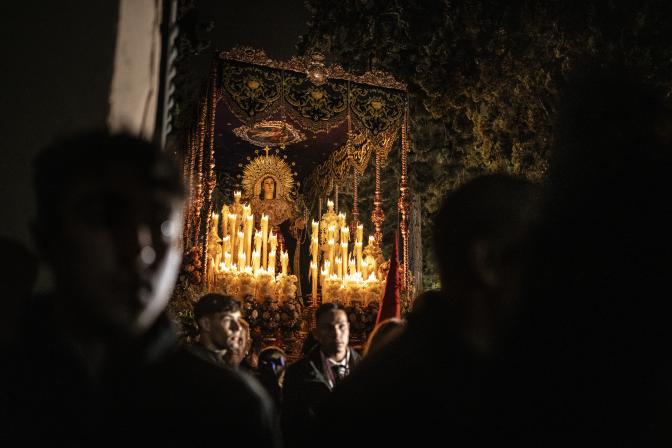
Every Holy Wednesday, Granada transforms. The hillsides of Sacromonte glow with bonfires, the echoes of saetas—flamenco-style laments—float through the night, and torchlight illuminates two sacred images slowly making their way through the ancient streets. This is not just any procession. It is one of the longest, most heartfelt, and authentic expressions of Andalusian Holy Week: the procession of El Santísimo Cristo del Consuelo and María Santísima del Sacromonte, traditionally and affectionately known as “Los Gitanos” (“The Gypsies”). Their journey begins and ends at the Sacromonte Abbey. For most of the year, worshippers and visitors give thanks, seek solace, or simply pray in front of the statues in the abbey’s collegiate church. But on Holy Wednesday, over the course of twelve hours, the Hermandad de los Gitanos (Brotherhood of the Gypsies) carries the two sculptures through the city streets, fusing religious tradition with flamenco spirit, incense with cante jondo.
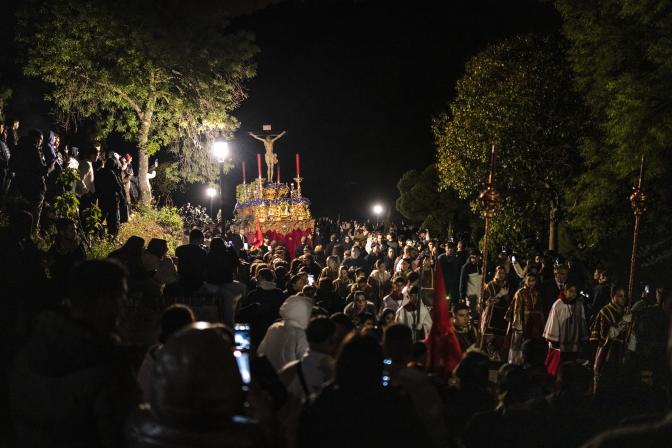
As the procession winds through the neighborhood of the Albaicín and climbs the hillside toward Sacromonte, locals—many of gitano heritage—light bonfires along the route. The flames cast dancing shadows across the cobbled paths and whitewashed walls, while impassioned saetas rise spontaneously from balconies and alleys. It’s a moment of collective fervor in which gitano song and popular devotion merge. Seeing Cristo de los Gitanos return home under torchlight, surrounded by mournful flamenco, is the culmination of a raw, radiant manifestation of Andalusian spirituality.
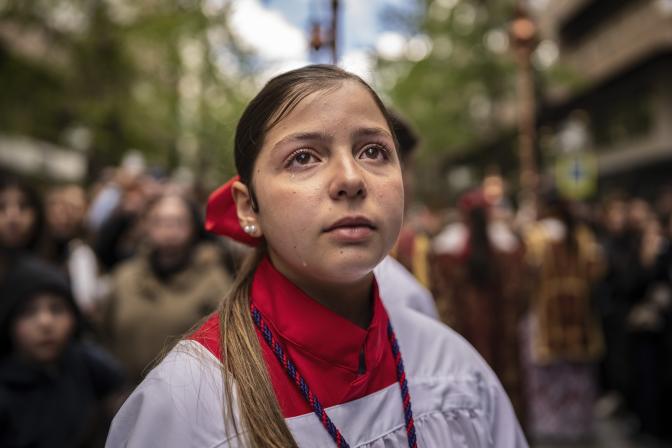
Left: A young member of the brotherhood grows emotional as the procession begins on Granada’s Gran Vía.
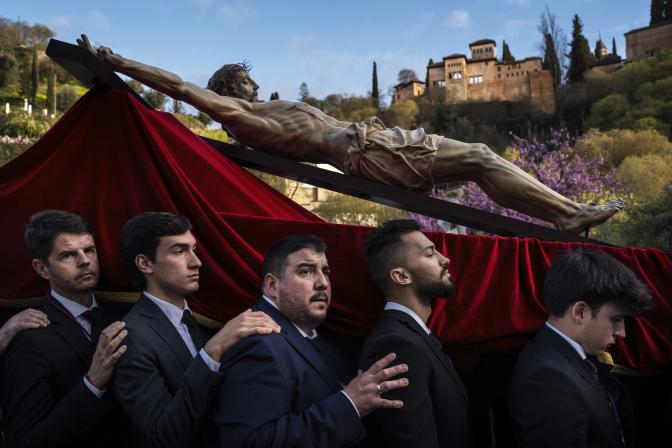
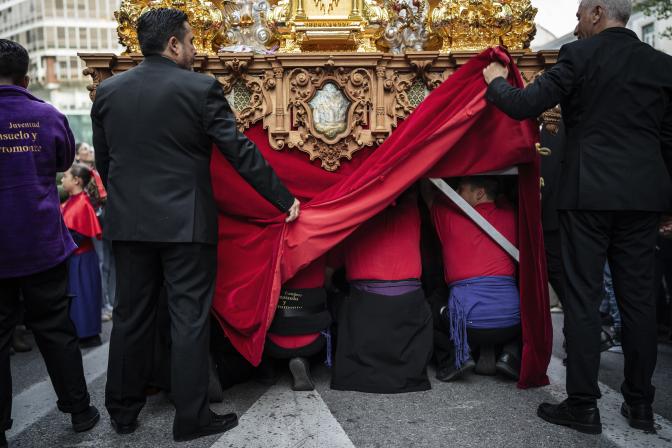
Right: Costaleros of the brotherhood carry the sacred image through the streets of Granada. Due to the intense physical effort required, two crews—one of men and one of women, each with nearly thirty people—take turns throughout the long procession.
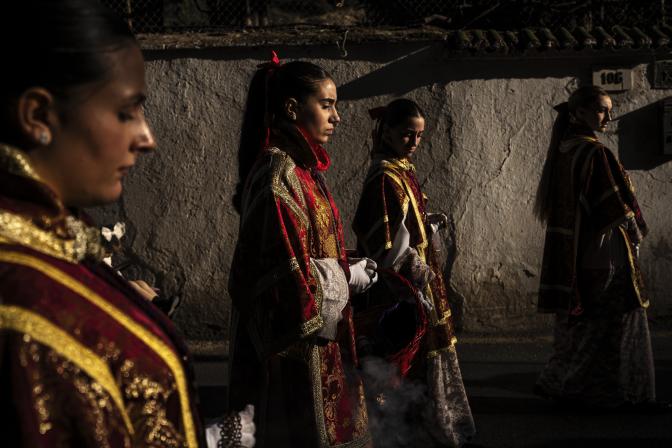
Below: Acolytes of the brotherhood, like these three girls, walk ahead of the statues in ceremonial garb.
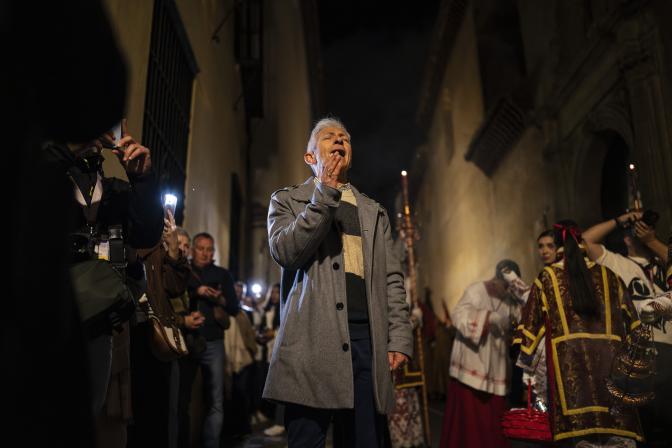
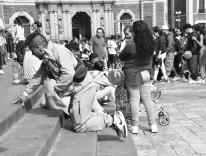
Left: Locals, visitors, and devotees join the procession; some, like this man, sing saetas.
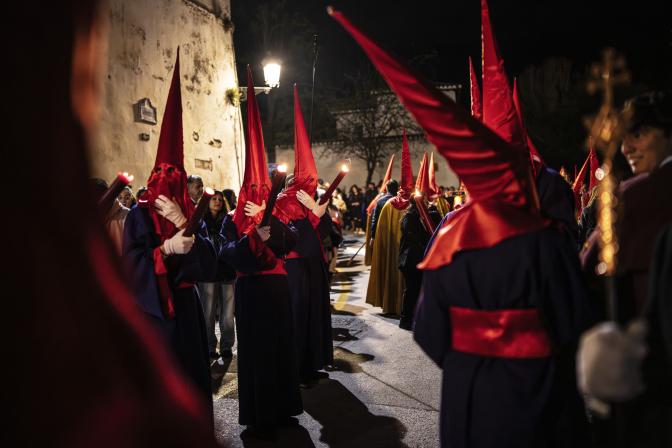
Right: Nazarenos—members of the brotherhood, who can be both men and women—are the first to enter the city’s official procession route that day, and some of the last to return.
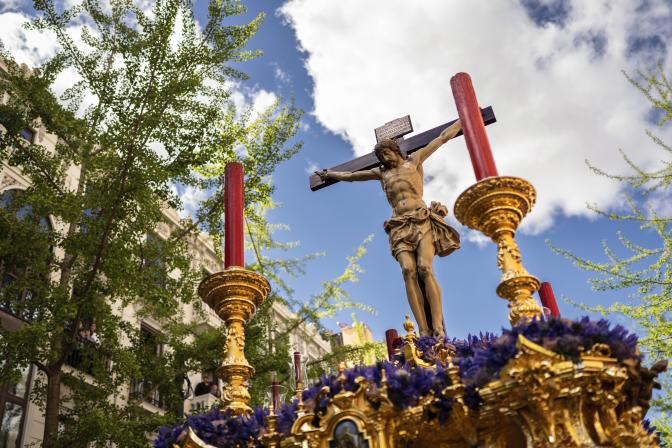
Below: The original Cristo de los Gitanos was carved in 1695 by renowned sculptor José Risueño, but the version carried through the streets is a replica crafted between 1987 and 1989 by local sculptor Miguel Zúñiga Navarro. (The original remains in the abbey’s collegiate church.)
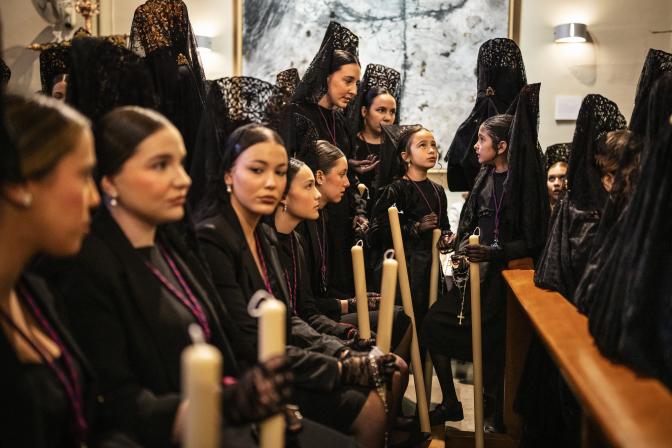
Above: Hundreds of women of all ages walk solemnly alongside the procession, dressed in the traditional black mantilla. Their dignified presence adds a visual symbol of mourning and devotion. The lace veils and long black dresses evoke a timeless reverence, linking past and present in a living expression of faith deeply rooted in Andalusian tradition.
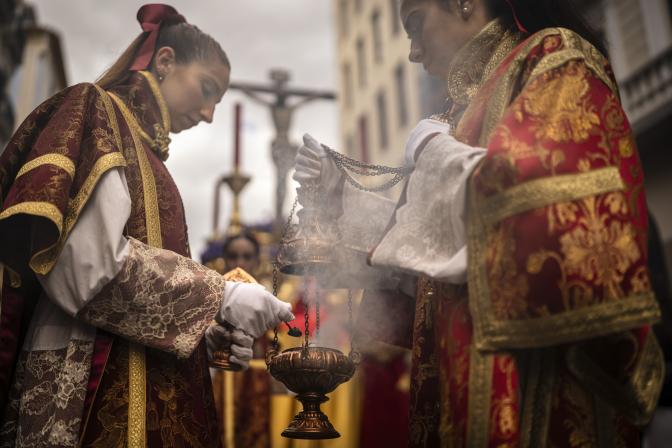
Left: Acolytes burn incense along the streets of Granada during the procession.
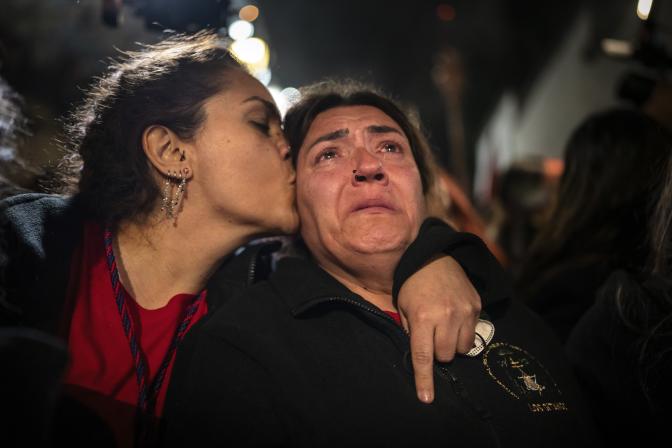
Right: With tears in their eyes, the female costaleras of Cristo de los Gitanos watch as the image is lifted onto the shoulders of the costaleros to ascend the steep slopes of Sacromonte.
Below: The image of Santa María del Sacromonte, carved in the eighteenth century, closes the procession. Two teams of costaleros carry the Virgin’s throne on their shoulders.