Over the past few years, a surprising new genre has emerged: the critic’s daughter’s memoir. In 2022, there was Ada Calhoun’s Also a Poet: Frank O’Hara, My Father, and Me. The alluded-to-father there was the art critic Peter Schjeldahl, who died four months after Calhoun’s account of him as a good poet, a great critic, and a “reckless, mercurial, occasionally mean father” was published. In 2023, there was Priscilla Gilman’s The Critic’s Daughter, a more straightforwardly affectionate, though still not entirely unambivalent, memoir about Richard Gilman: the superb drama critic for, among other places, The Nation and Commonweal. Now we have Hester Kaplan’s Twice Born: Finding My Father in the Margins of Biography (Catapult, $27, 256 pp.), the most formally and emotionally complicated of the bunch. The father she hopes to find is the late Justin Kaplan, whose 1966 Mr. Clemens and Mark Twain won both the National Book Award and the Pulitzer Prize and is, in narrative verve and critical intelligence, one of the best literary biographies of the twentieth century. (A later biography, Walt Whitman: A Life [1980], also won the National Book Award.)
These three fathers had different critical styles. Schjeldahl could be harsh—he wrote that J.M.H. Turner “was the Damien Hirst of his day,” not meaning it as a compliment—though he was better as an enthusiast and best as an unselfconscious describer, losing himself in the dance of form and, in doing so, enabling us to see his favorites, Velázquez in particular, as if for the first time. Gilman was, in the words of Dylan Thomas, “one of the least self-effacing critics one could imagine,” possessed of strong opinions strongly articulated. Kaplan had a gift for pacing—read the first few pages of Mr. Clemens and Mark Twain and try to stop—coupled with an insatiable curiosity about the texture of existences other than his own. “What was it like to have lived their lives,” he wondered about the subjects of Matthew Brady’s Civil War photographs, “to have seen the great pulsating nineteenth century through their eyes?”
These critics’ three daughters have different memoiristic sensibilities, too. Calhoun can read like the prosecutor: Schjeldahl drank too much and seemed to find painting more interesting than parenthood. Gilman can read like the defense: yes, her father could be a mess; and yes, his sexual desires, which he wrote about in Faith, Sex, Mystery, could be embarrassing; but he loved his daughter without reservation. Kaplan, by contrast, often sounds as if she’s not presenting a case but conducting a séance, trying to get a father who was loathe to speak personally in life to speak personally from death. She imagines what he might have been thinking while writing the first pages of his Twain biography, creating fictional scenes and allowing her father to talk back to her in the text. (Even posthumously, she imagines him most comfortable speaking about matters of craft, not familial history: “We? I? Did you notice how you’re switching points of view here?”) Despite these differences, all three memoirs circle around a set of common questions. How does the life of the critic, which demands both vulnerability and authority, the desire to be moved and the willingness to correct, translate into the life of the father? Do good critics make good fathers? Does spending time attending to the beauty of a painting or novel make you more or less likely to attend to the beauty—and the ugliness—of domestic life?
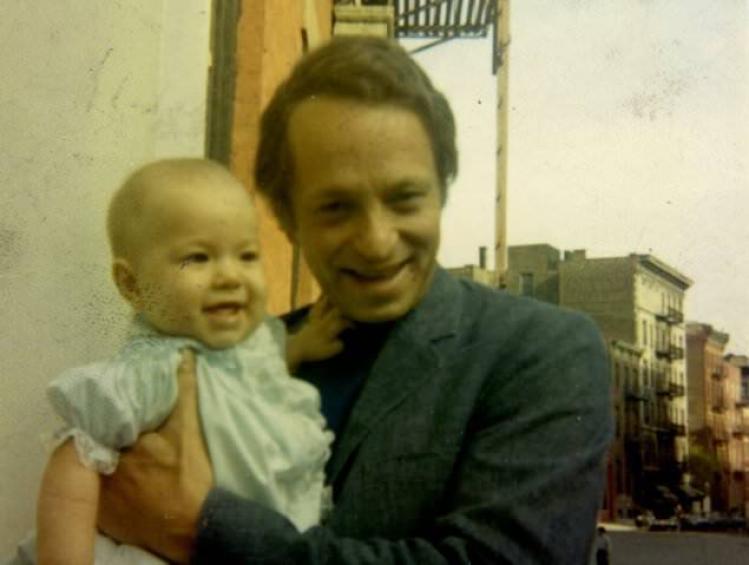
Justin Kaplan, a marvelously sympathetic biographer, could be a prickly, or at least an intensely reserved, man. His children, who knew not to disturb him in his study, called him Joe: never Dad or Daddy or Father, just Joe. Orphaned at an early age, he was largely raised by an older brother. “By his own admission,” Hester writes, “he avoided ever thinking about his dead parents.” Living with his three daughters and novelist wife, Anne Bernays, in Cambridge, Massachusetts, Kaplan hosted parties for his literary friends: Annie Dillard, John Updike, Kurt Vonnegut, and many others. He wrote his books and didn’t talk much about his childhood years or his current feelings. Janet Malcolm famously described the biographer as “like the professional burglar, breaking into a house, rifling through certain drawers that he has good reason to think contain the jewelry and money, and triumphantly bearing his loot away.” In an irony not lost upon his daughter and likely not lost upon himself, Justin Kaplan, the great biographer, kept his own personal history under lock and key.
“My father rarely asked anyone for anything,” Hester writes, “not for comfort, a glass of water, or even to pull the shade down so the sun wouldn’t hit him in the eye, and he never asked me to read his books.” He didn’t ask his daughter to read his books, and so she didn’t—partly out of pique, perhaps, but mainly out of caution. After all, to read his books, and even more to speak to him about his books, would be to invite the judgment of an exacting man. “What if I did read them but didn’t get them? What if I read them wrong, or if I didn’t know enough of anything to make sense of what they were really about? What if I wasn’t smart enough, and would never be like those friends around the table?” And so, in Twice Born, Hester Kaplan decides to finally make her way through her father’s books. By reading Mr. Clemens and Mr. Twain, she hopes to read her father. “My father wrote about the extent to which Twain’s ‘life and literary goals were to be victimized by malign and domestic harassments,’” she notes. “His use of the word victimized suggests his feeling that what robbed Twain—or any writer—of the quiet and detachment he needed to work was a crime. But who was the criminal? Was I? Were we?” This isn’t to suggest that Hester sees her father as simply using Twain’s life to work out his own damage; he’s too serious a biographer and Hester’s too serious a memoirist for that. But it is to suggest that biographers always interpret their subjects, and interpretation always involves, in one way or another, the interpreter’s damage and desires. “The question for a good biographer is not why but how,” Justin Kaplan wrote, “how it felt for the subject of the biography to live his life.” And so Hester becomes a biographer of her biographer father, hoping to feel how it felt for him to live his life by reading what he wrote of other, more famous lives.
Hester Kaplan’s reference to “those friends around the table,” those literary stars whose intelligence she found so intimidating, hints at a pleasure to be found in Also a Poet, The Critic’s Daughter, and Twice Born: critics—at least critics of a certain stature (high) and from a certain generation (midcentury to a bit after)—had very interesting friends. To Priscilla Gilman, “Aunt Toni” was Toni Morrison and “Uncle Bern” was Bernard Malamud. (In addition to having a critic for a father, Gilman has a big-deal literary agent, Lynn Nesbit, for a mother.) Malamud was also a frequent visitor to the Kaplans, where he would regale Hester’s sister with “fantastical stories”: “After one of these visits, she’d begged my father, please, she didn’t want to hear any more stories about Jewish bears in sneakers.” When Hester struggled with her math homework, John Updike tried to help, “the charmed writer’s hand rest[ing] on the child’s muddled head, and his other hand reach[ing] for the eraser to remedy her mistakes.” Her parents “remembered dinner with V. S. Pritchett, lunch with Peter Taylor, an evening with Lillian Hellman, another with Pauline Kael, one with Robert Frost, who recited poetry.” Hester recalls an early lesson in observation that she received at one of her parents’ soirees:
An acclaimed and popular writer often came to the many cocktail and dinner parties my parents hosted. On one of these evenings when I was about thirteen, I watched him put his hand on the small of his wife’s back and guide her toward the drinks. She must have felt a tiny chill when the cold green silk of her blouse pressed against her skin, while he must have felt her warmth through it, even as I could see how tensely she held herself. I was sure of this because I had just finished reading his latest novel, already reviewed on the front page of The New York Times Book Review, and it had opened my eyes to the millions of telling clues you might detect in even the smallest gestures and glances if you chose to pay attention.
To live in the Kaplan or Gilman or Schjeldahl household was to know that such things—reviews in The New York Times, the small details of physical and social existence, the ability to notice the small details of physical and social existence—mattered. It was, in other words, to be schooled in criticism, whether or not you went on to become a critic yourself.
Perhaps it was inevitable that, a generation after American criticism reached its peak of prestige and accomplishment, the children of American critics would reflect on that past moment and how it shaped their upbringing. Back then, to be a critic was to be of cultural importance. “My parents talked about books endlessly—their own included—as though they were the most important things in the world,” Hester Kaplan writes. Feeling that your work is the most important thing in the world doesn’t always result in good parenting. Criticism feels less significant now. Staff critic positions have vanished and freelance pay is terrible. On most days, it seems like people would rather watch YouTube recaps than read serious criticism. If critics can’t help to shape culture the way they once did, at least maybe they can be better parents.