Contentedly chewing on my blueberry muffin the other morning, I bit down on something hard. It turned out to be a twenty-year-old gold crown that had come unglued from what was left of a right lower molar. Intimations of mortality—or at least of decrepitude—flooded in. I was not in any pain, but repairs were obviously in order. Three days later, I went off in the car to see our dentist, whose practice is an hour and a half away down I-95 in Connecticut. We moved to Southeastern Connecticut after retiring, but kept our dentist in the New York suburb where we had lived for the previous twenty-two years. A good dentist is hard to find.
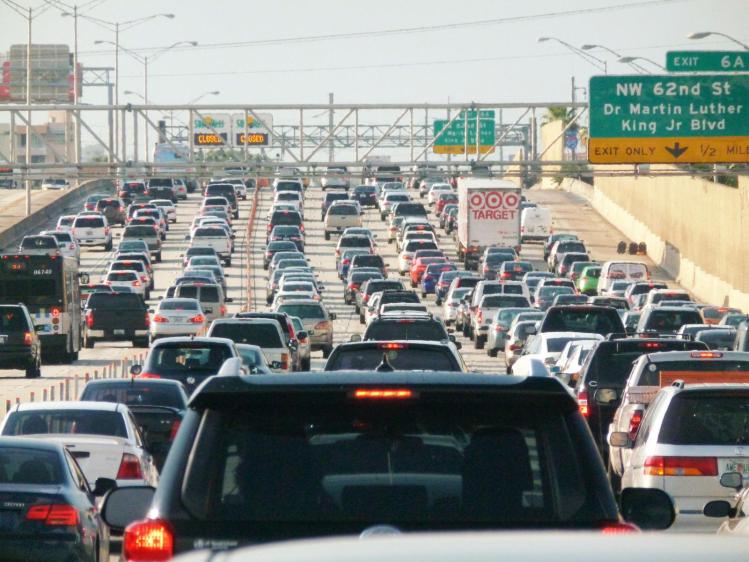
The drive ended up taking four hours. I had gone about thirty-five miles when traffic came to a complete stop; it was backed up for several miles. This was the consequence of two fatal accidents, one that had occurred two hours earlier and blocked traffic on both the north- and south-bound lanes of the notoriously congested highway. The day’s second accident, I soon learned, occurred just forty or fifty yards ahead of where I was stopped for the next hour. Countless police cars and several fire trucks raced past me to the scene.
In the earlier accident, which took place one exit beyond where I was stuck, a tractor-trailer had lost its cargo of plywood, spilling debris across the entire highway and crashing into four other vehicles. A male driver of one of the cars, a Jeep, was killed. Incomprehensibly, the other drivers were spared serious injury. The accident just in front of me involved a smaller truck, which rear-ended another tractor-trailer that had, presumably, come to a sudden stop because of the earlier crash. The driver of the smaller truck, a woman, died at the scene. She was just twenty-two years old. I would later learn that even as I was sitting impatiently in my car, worried that I would miss my dental appointment, rescue workers were trying to extract her from the vehicle.
I had never been this close to a fatal accident, and, naturally, I was a bit shaken up. How to make sense of the seeming randomness of such a tragedy, of such a young life taken violently from this world? In his poem Musée des Beaux Arts, a meditation on Pieter Bruegel the Elder’s painting Landscape with the Fall of Icarus (c. 1560), W. H. Auden wrote:
About suffering they were never wrong,
The Old Masters: how well they understood
Its human position; how it takes place
While someone else is eating or opening a window or just walking dully along.
Or going to the dentist. Auden goes on to notice how, in the painting, “everything turns away / Quite leisurely from the disaster” and observes that “the expensive delicate ship that must have seen / Something amazing, a boy falling out of the sky, / Had somewhere to get to and sailed calmly on.”
I had not seen someone fall from the sky—I did not witness the crash—but I did have somewhere to get to, and I did “sail on,” although not very calmly. It was only later, after I learned the details of the accident, that I was reminded of how right Auden was about how we are always surrounded by suffering, and even death, as we go about our mundane errands. The Old Masters put death in the middle of things, while we do our best to keep it off stage, and when it does enter the scene we hurry past it. “I don’t want any bother,” people now often say about how their own death should be observed. “There are no calling hours,” I often read in the local newspaper’s obituaries. “A private gravesite service will be held.”
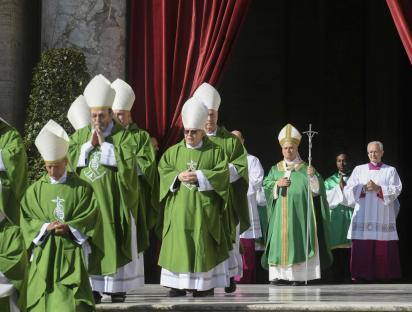
In church that very Sunday the readings were, like Auden’s poem, a reminder that our fate is not in our own hands. “Who can know God’s counsel, / or who can conceive what the LORD intends?” according to the Book of Wisdom. And the Responsorial Psalm also had an eerie resonance: “For the corruptible body burdens the soul / and the earthen shelter weighs down the mind that has many concerns…. Teach us to number our days aright, / that we may gain wisdom of the heart.”
The Gospel reading struck an even sterner note. “Anyone of you who does not renounce all his possessions cannot be my disciple,” Jesus tells his followers in the Gospel of Luke. Of course, our most prized possession is our life, and this call to discipleship is also a promise of eternal life. Still, the Bible is never telling us just one thing. While we remain in this world, we understandably have many transient concerns, “for the corruptible body burdens the soul.” And I felt those burdens, those anxieties, with particular intensity that day on I-95, when the earthly lives of two strangers came to an abrupt end just ahead of me as I made my way fitfully to the dentist’s chair.