The Church’s sexual-abuse scandal is two scandals in one. There is the scandal of priests, religious, and other powerful figures abusing children and vulnerable people. And there is the scandal of bishops looking the other way, covering up what they knew, ignoring or silencing people who reported abuse, transferring abusive priests from one parish to the next, and acting like they didn’t give a damn and didn’t have to.
At a press conference in 2004 about two newly released reports detailing abuses, Bishop Wilton Gregory, then president of the U.S. Conference of Catholic Bishops, proclaimed the first scandal over: “The terrible history recorded here today is history.” Known offenders had been removed from ministry and safeguards had been put in place. After 2004, new cases would come to light and explosive revelations of past abuses would follow, but Bishop Gregory was largely right: at least in the United States, the Church would no longer be hospitable to sexual abuse. Its history of facilitating abuse was coming to an end (even though the trauma for survivors goes on). Kevin Lewis O’Neill’s gripping, disturbing new book, Unforgivable: An Abusive Priest and the Church That Sent Him Abroad, is testimony that the second scandal—the bishops’ scandal—is far from over.
In everyday speech, a scandal calls to mind an eruption of public outrage provoked by the disclosure of shameful words or deeds. People were scandalized in this sense by the disclosure of both what priests had done and how bishops had responded. But in the Church’s technical language, a scandal is a behavior or attitude that leads others to stumble into sin or away from religion. In brief, it’s an obstacle to faith.
Though many of the offending bishops have died or retired, Church leaders’ behavior and attitudes toward victims and perpetrators alike understandably scandalized people in this latter sense. Many simply left and took their children with them, but even many who stayed have been alienated in some deep way, disgusted by the Church’s clericalist, sexist, and hierarchical ways. Much has changed since the dark ages of abuse, but a lot hasn’t changed at all. Many bishops still speak from on high with little regard for the perspectives of the lay faithful; many priests still expect deference on the grounds that Father knows best; and the question of whether women can even be deacons is once more being studied to death. In this context, keeping the faith is hard. It shouldn’t be a surprise when people, especially young people, stumble away scandalized.
Unforgivable is a work of exacting scholarship, but it’s also stridently personal. An anthropologist of religion at the University of Toronto, O’Neill was raised Catholic and went to Fordham University, where he studied theology and philosophy. On the last page of the book’s acknowledgments, O’Neill writes of his son, “It would have been nice to have had the Church contribute to [his] formation…but I now know too much about how unforgivable this institution can be.”
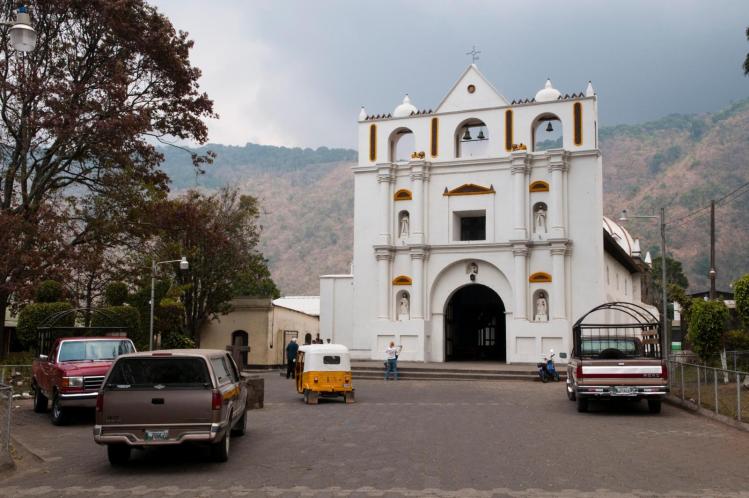
O’Neill also figures as a “character” (his term) in the book’s fifth and final part, which is narrated in first person, in contrast to the more academic style of parts one through four. Those earlier parts tell the sad and ugly story of Fr. David Roney, who was born in Minnesota in 1921, ordained there in 1945, and died in the Guatemalan highlands in 2003 after retiring to a mission there in 1994. Part five is about O’Neill’s determination not to let the story end with Roney’s death. Instead, beginning in 2017, O’Neill intervenes, seeking justice for an abandoned girl, Justina, whom Roney raised as his own from around the age of three until his death eight years later. “I visited Guatemala, often,” O’Neill writes. The impression, frankly, is that O’Neill was out for blood. His next book, his University of Toronto website states, will be an extension of this one.
Roney was a city boy assigned to rural parishes in the Diocese of New Ulm, one after another after another. On O’Neill’s account, these assignments made Roney feel painfully isolated and lonesome. He took to wearing a Roman-style biretta and cape, which he would use to draw children close to his crotch, even as parents and other parishioners watched obliviously. (One can imagine the exclamations: “Isn’t Father fun!”) Most of his dozens of victims were girls between the ages of seven and fourteen. Over several decades, he developed a long record of exposing himself to children, groping them, and coercing them into touching him. The cape was one instrument; he also cut holes in his pants pockets “to take advantage of a small hand rooting around for candy or a quarter.” There were more flagrant transgressions, too. Housekeepers twice caught him in bed with girls, yet “[o]n both occasions…did not say a word” until many years later.
Some of the children whom Roney abused tried to speak out but lacked the language to understand their experiences or were ignored or silenced. Adults got the sense that he was up to no good, but they did little. Roney’s abuse became what O’Neill calls a “public secret: something that almost everyone knew but no one admitted or completely articulated.” In the early 1970s, the director of priest personnel for the diocese made inquiries about an allegation, but Roney simply didn’t respond, and the priest neither pressed him nor relayed the allegation to the bishop. “It didn’t seem to be the thing to do in those days,” the director stated in a 2007 deposition. “I confronted the priest and I figured I did what I had to do.”
All too familiar up to this point, the story takes a less familiar turn in the 1990s. In 1987, New Ulm’s bishop, Raymond Lucker, sent Roney to a treatment facility in New Mexico for a week-long evaluation. There, O’Neill writes, Roney was “converted…from one kind of person into another: from someone with a moral problem into a sexual deviant”—a new, medicalized identity. Roney declined, however, to participate in the ten-month treatment program the facility recommended, leaving Lucker “at a loss for what to do with him.” Against the backdrop of the Gilbert Gauthe case in Louisiana and the Thomas Adamson case in Minnesota, assigning Roney to yet another rural parish was clearly inadvisable. But Roney had visited the diocese’s mission in Guatemala at least annually since 1973, and he loved going there. And so when, in 1993, he proposed retiring there, Bishop Lucker went along with it.
Lucker subsequently learned that Roney planned to adopt a little girl, Justina. He wrote himself a note: “This news report of Roney ‘raising’ this little girl is of concern for me.” But, O’Neill observes, “The Diocese of New Ulm never made a public statement in Guatemala about David Roney, never established its own office for the protection of children and young people in Guatemala, and never adopted any element of the [Dallas] Charter [for the Protection of Children and Young People] in the United States for children in Guatemala.”
O’Neill makes three major claims from his study of Roney’s case. The first is that the case reveals a dimension of the Church’s sexual-abuse scandal that had been concealed: that bishops not only transferred abusing priests from one parish to the next, but also “routinely move sexual predators across the world to live, preach, and perpetrate crimes, often with total impunity.” According to O’Neill, this is “a much bigger story” than the practice of interparish transfer, and “there are already so many” other cases like Roney’s and Justina’s; as a start, he lists twenty-five. O’Neill doesn’t establish, however, that this practice is ongoing, as his use of the present tense suggests. So far as I could tell, bishops sent priests overseas after 2002, when the Dallas Charter was enacted, in at most three of the cases in his list and none after 2006.
That objection obviously doesn’t exonerate Lucker or any bishops who acted as he did. O’Neill claims that “bishops transferred U.S. priests to Latin America to avoid scandals at home, with Guatemala becoming something of a dumping ground for U.S. priests suspected of sexual abuse.” On his account, “Lucker stashed Roney there because he knew that the highlands of Guatemala lacked the administrative and conceptual tools necessary to recognize, and thus prosecute, clerical sexual abuse as a crime.” In the details of the story, however, Lucker doesn’t come across as nearly so conniving. He seems flummoxed by Roney, a problem that the bishop can’t see how to solve. It’s telling that Lucker didn’t propose Roney retire to Guatemala but acquiesced to Roney’s plan.
O’Neill’s second major claim aims to explain why Roney’s abuse was such an intractable problem for Lucker. According to O’Neill, the answer is simple: it’s “the permanence of ordination as a transfigurative rite,” such that once a man is ordained a priest, he is a priest forever, even if the Church forbids him from celebrating the sacraments. In a poorly considered sentence, O’Neill writes that “[t]he rot began centuries ago when Augustine shouted down the Donatists,” who held that a priest loses sacramental power, and thus ceases to be a priest, when he betrays the faith. If the Donatists had prevailed against Augustine, would Lucker have terminated Roney’s employment and denounced him to the secular authorities? O’Neill’s explanation for why Lucker did no such thing seems much too simple. To be sure, the doctrine that a man undergoes a “change in being” when ordained does seem like one important factor in the bishops’ failure to address priests’ abuses. But it’s surprising that an anthropologist would rely so heavily on that single factor instead of offering a thicker, more complex set of reasons.
O’Neill’s third major claim is that bishops chose places like Guatemala as destinations for priests like Roney because priests’ “sexual deviancy did not exist” there. (Chapter three is titled “A Town without Pedophilia.”) Of course, he doesn’t mean that the sexual molestation of children doesn’t happen in the highlands of Guatemala, but that the concept of child sexual abuse, which originated in the United States in the 1960s and ’70s, wasn’t yet known there. The kind of person we call a sexual deviant or pedophile wasn’t yet recognized. In support of this claim, O’Neill draws from the philosophers Michel Foucault and Ian Hacking; he might also have drawn from Miranda Fricker, whose work on epistemic injustice is relevant to this discussion (see my October 2022 article on the topic in this magazine). According to O’Neill, due to the narrowness of the concept of sexual abuse in Guatemala, Roney’s “actions in town were beyond suspicion, illegible as anything but ordinary care and devotion.” He was thus free to have Justina take money out of his pants pockets, to tickle her, wrestle with her, kiss her on the lips, hold her on his lap, and even bathe her with his hands without a washcloth. Not only was his sexual deviancy not recognized; Justina also wasn’t recognized as a victim of sexual abuse. What O’Neill calls “the social identity of a victim” wasn’t available to her.
Hacking remarks in an essay on the concept of child abuse that “[o]ne of [its] most striking epiphenomena…is its missionary element, its desire to carry the bad tidings to other nations.” This remark has troubled my reflections on part five of O’Neill’s book, where he travels to Guatemala, very much in missionary mode, to find Justina and seek justice for her. What he discovers is that she adored Roney, didn’t recognize his behavior toward her as sexual abuse, and didn’t understand herself as a victim of abuse. Yet, “[o]ver the course of a few years, through therapy, open-ended interviews, and legal action” against the dioceses of Minneapolis–Saint Paul and New Ulm, she does come “to understand herself as a victim and a survivor of this abuse.” With O’Neill’s help, Justina reframed her memories of Roney, and “a once uncoordinated constellation of behaviors” came to appear to her as “a legible series of transgressions.” In terms drawn from Hacking, Justina’s consciousness was not so much raised as it was changed. Events in her life came to be seen as events of a new kind and re-experienced under a very different description.
What’s troubling about part five of O’Neill’s book is that he doesn’t reflect on whether this was good for Justina. He writes at the very end of part four, just before he enters the narrative as a character, that he sometimes wishes Justina “had said no” to participating in his research, but he doesn’t explain why he wishes that. What’s more, readers hear very little from Justina herself, who sometimes painfully figures as a kind of Eliza Doolittle to O’Neill’s Henry Higgins. Here is one Hacking-inspired exchange between them: “‘No one here could have known him for what he was,’ I responded. ‘Because in Guatemala he never was [a sexual abuser] and could never have been.’ ‘I see that,’ she sighed.”
To be clear, there’s no question that it was deplorable for Lucker to have let Roney retire to Guatemala: Lucker thereby knowingly put children in harm’s way. We know from survivors of sexual abuse that it can destroy the capacity to trust others, sabotage loving relationships, and distort affective responses for years to come. But what’s the right response to people who apparently aren’t shattered by sexual abuse and who also don’t seem to be repressing terrible memories? In particular, should they be led to see themselves as victims and survivors? In failing to grapple with these questions, O’Neill’s profound, complex book needed to be both more profound and more complex. The sequel has its work cut out for it.
Unforgivable
An Abusive Priest and the Church That Sent Him Abroad
Kevin Lewis O’Neill
University of California Press
$29.95 | 280 pp.