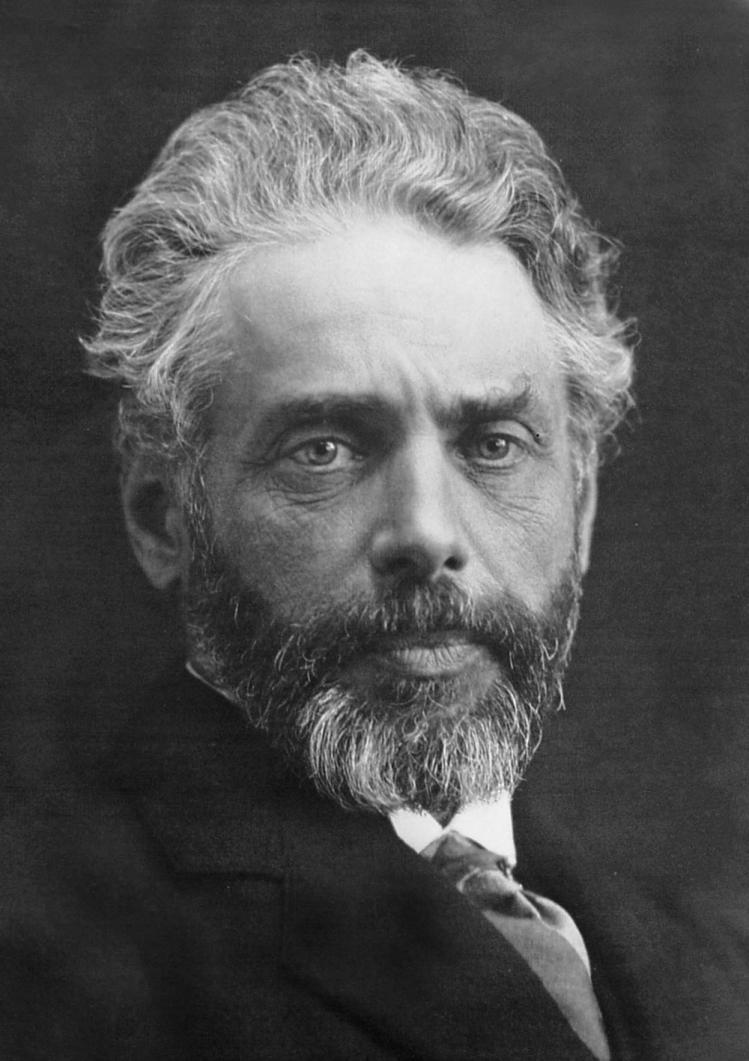
Henrik Pontoppidan won the Nobel Prize in 1917, but his name may not be familiar to many Anglophone readers. That’s because the Danish author’s work remained unavailable in English for more than a hundred years, an omission that denied him a seat at the table of international letters. Though he garnered the support of famous writers like Thomas Mann, as well as that of critics like Ernst Bloch and György Lukács, the latter of whom included him in his seminal study, The Theory of the Novel, such distinctions still failed to grant him a wider audience. A writer whose characters often criticized society and even turned against it, Pontoppidan may have smiled at the cold shoulder he received from the Anglosphere.
A correction to this oversight finally arrived in 2010. Over a century after its initial publication, Naomi Lebowitz’s English translation of Pontoppidan’s magnum opus Lucky Per (Lykke-Per) appeared. The overlooked nineteenth-century masterpiece, which rivals the achievement of giants like Tolstoy and Mann, has now been republished by the New York Review Books’s classics series in a new translation by Paul Larkin—and with a new title, A Fortunate Man. Alongside it, NYRB is also releasing Larkin’s translation of The White Bear, which consists of two novellas from the author’s vast oeuvre of stories, plays, novels, journalism, and memoir.
Pontoppidan’s strange surname, for which he suffered school-age bullying, carried with it a long lineage of notable Lutheran clergymen. One of a domineering minister’s sixteen children, Henrik sought refuge in the outdoors from his father’s strict religious household, longing for escape. His youthful rebellion finds elegant expression in A Fortunate Man. Its protagonist, Peter Andreas Sidenius, or Per, rejects the faith of his forefathers and moves from rural Jutland to Copenhagen, where he studies the sciences (instead of theology) and embraces the boisterous life that the city has to offer.
Spanning a range of fifty years, it is at once a chronicle of turn-of-the-century Denmark as the agrarian society industrialized, as well as a keen psychological portrait of an individual during times of great cultural and technological upheaval. The bildungsroman archetype is familiar—ambitious young man from the provinces seeks to make a name for himself in the big city—but A Fortunate Man strays from the script in remarkable ways, most obviously in its disquieting denouement. On the verge of achieving great things, life suddenly comes to a halt for Per. He suffers a spiritual and intellectual breakdown and can’t seem to get out of his own way.
The opening sections of the novel, which was originally published in eight volumes, include delightful scenes of the rebellious Per during his otherwise joyless childhood, from his nighttime sledding escapades with friends to stealing apples from a neighbor’s orchard. In true biblical fashion, this theft leads to banishment from his not-quite-Edenic home. He leaves the cold, austere Sidenius household behind and vows never to look back:
He had fought with might and main to transform his inner being, to expunge every bitter and humiliating memory residing in his soul, so that he could be left with an untarnished tablet of marble upon which he himself would inscribe his life’s victories and coming good fortune.
At the Polytechnical Institute in Copenhagen, he excels in engineering and begins to make progress in secret on a utopian waterworks project that becomes central to the novel. Per’s ingenious plan is to capitalize on Denmark’s greatest natural resource by connecting all the fjords, rivers, and streams in even the most rural areas, including his hometown, into a single big harbor to rival Europe’s greatest ports. It’s a preoccupation he’s dreamed about since his boyhood in the shadow of a humiliating defeat to Prussia, when talk of Denmark’s declining shipping trade became ubiquitous. His project takes “the form of a kind of religious conviction.” Impossibly complex and ambitious, the project, filled out with detailed blueprints and vivid descriptions, begins to occupy the reader almost as much as it does Per, even as it appears doomed to failure from the beginning.
As the title suggests, there’s something about Per. Numerous allusions to fairy tales show that Lady Luck smiles on the “young Aladdin.” He is depicted as hunting down luck as if it were a mythical creature to shoot and trap. Even the tone early on suggests a kind of fable: “Without anyone in his house first suspecting, he grew up as a little wild boy.” When faced with obstacles to overcome, Per frequently repeats “I will!” to himself throughout the story, like a personal mantra. The first half of the novel chronicles his strong-willed triumphs: he accumulates money (inherited by way of a bizarre suicide), influence (over the café-going intelligentsia), love (first a fling, then more substantially, engagement to the daughter of a wealthy Jewish family), and fame (his reputation as a young engineer with vision precedes him). But all these accomplishments tell only half the story. The other half deals with that most difficult and elusive conflict—Per’s struggle with self. He eventually turns his back on his ambitious pursuits, forgoes earthly pleasures and material desires, and spends his days alone in resignation, trying to develop a “life philosophy” that will sustain him.
Luck, a neglected subject in modern literature, receives worthy treatment here. As the late Marxist critic Fredric Jameson points out in his appreciation of the novel, luck is an unseemly topic—no one really wants to admit how large a role it plays in our lives. Pontoppidan draws inspiration from the Brothers Grimm fairytale, Hans in Luck. In that three-page tale, Hans, after laboring for several years and receiving as payment a lump of gold the size of his head, makes his way back home to his mother. Along the way, he finds the lump too heavy to bear and unloads it for a horse. But the horse soon throws him off in a wild gallop, so he exchanges it for a cow, but the cow is old and can’t produce milk, so he trades it for a pig, the pig for a goose, and so on, until, finally, in the end, he returns home—happily—with nothing.
Readers of the epic panoramic social novels of nineteenth-century European literature like Balzac’s Lost Illusions, Stendhal’s The Red and the Black, and Flaubert’s A Sentimental Education might expect something similar in A Fortunate Man, only with Paris swapped out for Copenhagen. And indeed, Per and the company he keeps—artists, poets, journalists, philosophers, aspiring politicians—compare with the large casts of characters found in European novels of the time. To name just a few of the many extraordinary characters Per meets along the way, there’s the melancholy former lawyer Neergaard, who claims he has a dying “friend” looking to bequeath a small fortune to someone deserving, then commits suicide and does just that, naming Per has as his sole benefactor. There’s Dr. Nathan, whose polemical speeches and writings, quoted throughout the novel, are based on the real philosopher Georg Brandes, who played a central role in the development of naturalism in Danish literature through the “Modern Breakthrough” movement. And there’s the eccentric, Kierkegaardian pastor Fjaltring, who tells Per he needs to “sin some more” if he hopes to become a proper Christian.
Also like other European authors of the time, Pontoppidan leaves no section of human society—government, church, rural life, city living, commerce, romance—untouched by his critical eye. The corruption of the publishing and journalism world reminded me of the Grub Street ruthlessness found in the works of George Gissing. When a poet publishes a book of poems “that not even his closest friends or admirers were able to praise…. He disappeared overnight from Copenhagen, and for a long time nothing was heard of him.”
Still, from the second half on, there’s something unmistakably “troll-like” about A Fortunate Man, to use Pontoppidan’s own word for the shadowy people of rural Jutland, “mountain trolls who could not face the sun without sneezing.” Though Per may initially seem a cousin of characters like Balzac’s Lucien Chardon and Stendahl’s Julien Sorel, he ends up more like Ibsen’s Peer Gynt, the braggadocious peasant who leaves his home to conquer the world and gains a fortune, only to lose it and eventually redeem himself by returning home and marrying the love of his youth.
Per’s adventures may at times be quixotic—his waterworks project is a sort of “holy grail”—but that doesn’t render his love story with Jakobe Salomon a mere courtly affair. She’s no Dolores or Guinevere, but rather a fully realized character who leaps off the page and could easily be a protagonist in her own right. The fiercely independent daughter of wealthy Jews, Jakobe’s bright, cheerful, intellectually engaging bourgeois household provides a stark contrast to Per’s own unhappy, cloistered, joyless family. Pontoppidan’s portrayal of their tumultuous engagement, complicated by their religious backgrounds, is as convincing and realistic as anything from Pontoppidan’s European peers. Her political consciousness, partly forged by the antisemitism rampant throughout Europe, and partly by the loss of a stillborn child, further distinguishes her from Per, who monomaniacally pursues his grand, though narrow, project of a “philosophy of life.” At a Berlin train station, Jakobe witnesses a horrific scene that’s never far from her mind. She stumbles upon a room holding Jewish refugees from a Russian pogrom in transit. They have a “deathly demeanor” and look “exhausted and filthy.” But it’s the sheer indifference of the policemen and their apparent similarities to the man she now loves and hopes to marry that severely rattles her. “[T]he sight of such a thick-set blue-eyed bull of a Viking such as Per quickly aroused her memories of those two broad-shouldered, power-mad officers.” Later, in letters to Per, she scathingly critiques the hypocrisy of Per’s religion, wondering how Christian Europe can tolerate the persecution of the Jews. “All in Christ’s name!”
Much like the Brothers Grimm, whose tales included many variants, Pontoppidan rewrote, almost without exception, nearly everything he ever published, including his four-book autobiography, which he later revised into a single, abridged volume. In that spirit, it seems only appropriate that Lykke-Per receives a second translation into English. Paul Larkin based the text of A Fortunate Man on the 1905 version of the novel, as did a 2018 film adaption of the same name. (Lebowitz’s 2010 Lucky Per opted for the 1918 text.) Pontoppidan’s rewritten work also invites rereading, and many Danes, as the book’s afterword attests, do just that. Edmund Wilson observed that a young person reading A Sentimental Education might be repelled by its lack of romance, and only rereading the novel later in life, understand its deeper meaning. So, too, is it likely that reencountering A Fortunate Man at different stages in life will alter the reader’s attitude towards Per’s spiritual breakdown—at first courageous and inspiring, it may become, on a later rereading, self-defeating and narcissistic.
For those hesitant to plunge into the tome that is A Fortunate Man, the novellas of The White Bear still have much to offer. And though it may pale in comparison to Pontoppidan’s masterpiece (what doesn’t?), the volume is a worthy introduction to Pontoppidan’s underread work. In humorous and engaging prose, the first, eponymous novella tells the tragicomic tale of a burly, apparently slow-witted priest, Thorkild Muller. Not knowing what else to do with him, his family ships him off to Greenland on behalf of a Lutheran program that sent “impoverished theological students” who were, “let the truth be said, mostly pathetic souls whose lives had already hit the rocks” to the colonial territory to preach the Gospel to Inuit tribes for an “unspecified but lengthy period”—which could last the rest of the priests’ lives.
Pontoppidan introduces us to Muller unflatteringly: he is living slothfully in a dirty, rat-filled abode: “Imagine, dear reader, a large flame-red face, from which hangs a thick and matted snow-white beard. A mass of beard, indeed, where old soup and bread remnants also often reside, not to mention more bits of brown tobacco plug and snuff than is ever appetizing.” But he soon rounds out his big bear with a series of flashbacks that reveal Muller in a completely new light. Due to his immense size and wanting intellect, the would-be priest must endure an unfortunate childhood.
Like A Fortunate Man, “The White Bear” contains wonderful landscape descriptions that show why the Danish government once commissioned Pontoppidan to write tourist guidebooks. Here he slows down the action to vividly capture the motion of a fox on the move:
Down the mountainside comes the blue-gray fox with its first drowsy steps. On a rock ledge it stops and yawns a red mouth…then shudders its fur and moves on…now it is trotting along the shoreline, where tiny gravel stones glisten in the multicolored reflections from the shallow edge of the lake.
“The White Bear” is a subversive story, especially for its time. Muller doesn’t convert the Indigenous people; they convert him. He eventually gains acceptance with the tribe and hunts, fishes, marries, and fathers children with an Inuit woman. As an older man longing for home, though, he eventually returns to Denmark. There, his instant rapport with the church community threatens the higher-ups in the Lutheran clergy and they begin to turn on him. Having returned from the land of the “heathens,” Muller must reckon with the incivility of the so-called civilized society of his countrymen.
Worries that Pontoppidan’s work was too Danish for a significant global reach strike one as nearsighted, considering the setting of these two stories: Greenland and the eternal city of Rome, where “The Rearguard” is set. “The Rearguard” is a tragic story of a mismatched marriage between Jørgen Gallager—a fiery, socialist painter who overcomes a poverty-stricken childhood and adheres to strict realist aesthetics—and his wife, Ursula Branth, who belongs to the upper echelons of society. Both are determined to convert each other to their respective ways. Jørgen wants his wife to renounce her wealthy family and social status, while Ursala hopes her husband will chill out now that they’ve settled in their new home, surrounded by ancient statuary and the charms of the city. Jørgen’s uncompromising nature has fatal consequences, and his character’s utter flatness is a critique of his zero-tolerance politics.
Thorkild Drehling, a family friend and painter who serves as a mentor to Jørgen, provides a foil to his insistence that everything comes down to class struggle. Drehling manages to produce an art beyond politics. He realizes that “one can suffer sorrow and disappointments in life that gnaw and torture your soul in far more excruciating ways—far far more—than both hunger and cold possibly could.” As to what that would entail:
Do you really need to ask?… Walk down a street, any street, and look at the faces you meet there. For everyone marked by hunger or oppression, you will find ten, even twenty, in which you can read like an open book that age-old tale of inner sorrows that have ravaged people since time began, regardless of social rank and class…love worries, worries about parents, feelings of loneliness, sadness, unable to embrace life, unable to face death…oh, a million things.
With his empathic portrayals of peasants and the down-and-out, his philosophical investigations into the soul, and his demands for reform among the clergy and greedy capitalists, Pontoppidan undeniably raised Danish social and political consciousness. But he could just as easily—and sometimes in the same book—play the other side. This comfort with ambiguity, the product of a searching and restless mind, was epitomized by the two pseudonyms he used in his journalism: “Rusticus” when writing from a rural perspective and “Urbanus” when channeling the voice of city life. At other moments, he could opt out altogether for a more religious approach, seeing all as vanity. This elusiveness frustrated the Danish Marxist and social revolutionary Martin Andersen Nexø to such a degree that he ended up retracting his initially effusive praise of Lykke-Per. What Pontoppidan would make of such zealousness is clear from his characterization of Jørgen in “The Rearguard.” It’s also worth pointing out that the kind of literature Marx and Engles themselves valued most, Shakespeare and Honoré de Balzac—monarchists both—could hardly count as revolutionary. Their writing still illustrated, as Pontoppidan’s does, that there are many ways to advocate for the human spirit.
A Fortunate Man
Henrik Pontoppidan
Translated by Paul Larkin
New York Review Books
$22.46 | 880 pp.
The White Bear
Henrik Pontoppidan
Translated by Paul Larkin
New York Review Books
$16.95 | 168 pp.