From the outside, it must have seemed like Circle of Hope, a cluster of four Anabaptist churches in greater Philadelphia, was well prepared for the unrest that followed George Floyd’s death in 2020. “Circle” (as its members called it) consisted mostly of young professionals who saw social justice as a core part of their commitment to Christianity. Many were social workers, public-school teachers, and nurses, and in their ministry work, they not only fed the poor, but also lobbied the city government for affordable housing and raised money for a bail fund. Most of them were white—but they were precisely the kind of white people who marched in Black Lives Matter protests and read books like The New Jim Crow. From that perspective, it seems the so-called racial reckoning of the pandemic year could have led to an uptick in their numbers and their local influence.
Instead, the opposite happened: Circle was torn apart. By the fall of 2023, three of the four ministers had quit, most of their congregations had evaporated, and their money had run out. As of last year, the church no longer exists. This is the tragic story chronicled in Eliza Griswold’s Circle of Hope: A Reckoning with Love, Power, and Justice in an American Church.
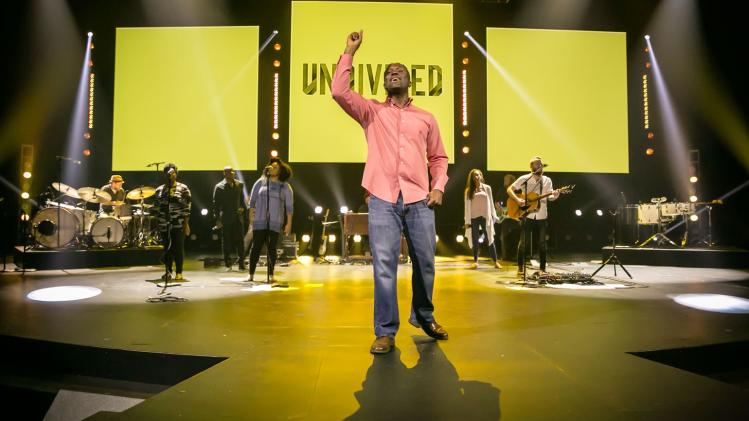
Meanwhile, over the past decade another experiment in racial reconciliation has been underway at a much different kind of church: Crossroads, a thirty-five-thousand-member congregation in the suburbs of Cincinnati. “Undivided,” a six-week program, invites members of all races to join in a dialogue about injustice and get involved in modest forms of activism. In contrast to Circle’s experience, Undivided has thrived since 2020, expanding into more than thirty separate congregations in at least twenty-two American cities. The political scientist Hahrie Han describes its trajectory in her 2024 book Undivided: The Quest for Racial Solidarity in an American Church.
There’s a natural impulse to ask what these stories reveal about larger trends. What, for instance, does the future hold for the religious right? Does Circle of Hope suggest that Evangelicals will forever be beholden to the GOP, and does Undivided show there’s a countervailing movement? But readers who are seeking that kind of commentary will have to look elsewhere. For better and worse, Griswold and Han each limit their scope to the communities in question. In fact, their books might be better read as meditations on more perennial questions: in particular, what meaningful antiracist activism should look like, and what kind of political engagement is demanded of Christians—and especially Christian institutions—in a deeply unjust world.
Griswold, a journalist and poet who won a Pulitzer Prize for her 2018 book Amity and Prosperity: One Family and the Fracturing of America—and is herself the daughter of a liberal Episcopal minister—has established herself as an authority on progressive Evangelicals in the Trump era. During the president’s first term, she wrote a series of stories for The New Yorker about Evangelical leaders who were at odds with more prominent, pro-Trump figures like Jerry Falwell Jr. and Franklin Graham. Among her subjects were the literature professor Karen Swallow Prior, the Lutheran pastor Nadia Bolz-Weber, and the author Rachel Held Evans. Circle of Hope grew out of that series.
As of 2019, when Griswold started to embed herself with Circle, the community had roughly seven hundred members across its four congregations. It also operated two successful thrift stores and a nonprofit that funded socially conscious local startups. Although the church attracted all sorts of attendees—“Quakers, Jews, atheists, the occasional Satan worshipper,” she writes—“mostly it grew into an off-ramp for evangelical Christians fleeing their childhood churches.”
Its relationship with politics was ambivalent. Rod and Gwen White, the couple who founded Circle in 1996, had always discouraged church-sponsored activism. Rod White likened politics in church life to an “infection.” But not everyone felt the same. Circle’s compromise, before the pandemic, was a series of “compassion teams,” including one called Circle Mobilizing Because Black Lives Matter.
In 2015, Rod White stepped down from his role as head pastor, handing control over to four younger ministers: Julie Hoke, a daughter of missionaries; Rachel Sensenig, a former therapist and social worker; Jonny Rashid, a Millennial from Central Pennsylvania; and Ben White, Rod and Gwen’s youngest son. These new pastors embraced a democratic leadership model, making decisions collectively with input from volunteer teams.
In 2020, in the first weeks after George Floyd’s death, Circle seemed to remain unified at first. Some members showed up at racial-justice protests, carrying a banner with the church’s name. But as the pastors started their annual “mapping” process that year, where they “discussed the direction in which the Holy Spirit was leading them,” they asked the congregants, “What are we going to do to keep the antiracist movement going in deeper and wider ways?” This was where disagreements began. It’s difficult to summarize what went wrong, because there were so many small developments that led to the collapse—and Griswold narrates them in a riveting way. But a few anecdotes will help give a general sense.
First, in the fall of 2020, a twenty-seven-year-old man was killed by Philadelphia police, and some Circle congregants wanted to issue a statement calling for the disbanding of the local police union, which routinely protected bad cops. Gwen White argued that the group should pause to discuss the matter first, saying this “quasi-legislative approach” had “never been our way.” But several members of color—a doctor, a corporate lawyer, and a legal assistant—were furious. To them, Gwen’s approach was an example of white hypocrisy and a call to do nothing.
Second, in the spring of 2021, the two dozen members of Circle’s leadership team started meeting with a diversity consultant over Zoom. A decision was made to split them into two “racial affinity” groups, Black and white. In the first session, as they went around and identified themselves, Ben White and some others described themselves as “so-called white.” After a few more “exploratory” sessions, the consultant quit, frustrated that there was “no emotional investment” on the leaders’ part, as he later told Griswold.
Third, throughout 2021 Ben White clashed with the other leaders, and he resigned that November. In one meeting, his fellow pastor Rachel Sensenig said she was concerned that members of White’s congregation hadn’t been given a chance to talk openly or ask questions about why he was leaving. She also mentioned harsh comments she’d seen on Circle’s Slack about Audrey Robinson, a working-class Black woman in White’s congregation who let her face mask slip down at a time when Covid was still prevalent. “Where is the Spirit in this work?” Sensenig asked.
There are elements in these stories that characterize the entire book. First, Circle of Hope doesn’t have many heroes or villains. Griswold is a generous narrator, and in her telling the characters on each side of an argument often seem equally reasonable and sympathetic—or equally misguided. (It’s hard to blame anyone, for instance, for not wanting to sit through corporate-style seminars on Zoom; but when those same characters insist on describing themselves as “so-called white,” it’s painful to read.) Second, the culture of Circle thoroughly reflects the sensibilities of the professional-managerial class; and this is the reason most of its conflicts over racial issues center on statements and consulting sessions. The militants in Circle’s ranks often seem more concerned about getting white members to “own their whiteness” than about effecting political change or serving Philadelphia’s underclass. As Griswold puts it, “Instead of focusing outward on healing the world, as Jesus called his followers to do, the pastors, and the church, turned in on themselves.”
Alongside these racial matters, Circle also found itself in tension with the Brethren in Christ (BIC), the denomination it had belonged to since its founding, because of its position on homosexuality. For years, Circle had tried to quietly welcome LGBTQ Christians without running afoul of the conservative BIC’s official teaching against homosexuality. Circle’s pastors finally agreed this was untenable and started to broadcast their acceptance of gay and lesbian parishioners. Ultimately, they were forced to disaffiliate and give the BIC some of Circle’s property. This was perhaps the biggest material factor in the church’s demise. But it’s hard to see how it could have been avoided, or how Circle’s leadership could have handled it much differently.
The most disheartening part of Griswold’s narrative, however, is the way disagreements and even racial differences sometimes created impossible barriers. As Circle members debated the church’s future, they could have done with less hostility and more Christian love. Ben White, in particular, was given to “bellicose and destructive” rants at the weekly pastoral meetings. His behavior got so bad that eventually other church personnel started joining the meetings to monitor him.
At the same time, White did make an earnest effort to reconcile with his fellow ministers and atone for his mistakes. “I believe in antiracism,” he said at one meeting. “I believe I am a racist, white person. I’m a rare ally in this world, at least in that I actually want to do this work.” This remark was met with bitterness from Jonny Rashid, White’s main antagonist. As the son of successful Egyptian immigrants—his father a doctor, his mother the owner of a catering business—Rashid embodied the strident style of professional-managerial antiracism that dominated the pandemic era. “Ben,” he replied, “I don’t experience you as a rare ally. I experience you as a white man.” (Shortly after White’s resignation, Rashid left for a better job at the West Philadelphia Mennonite Fellowship.)
Circle’s experience is hardly the first time that causes of social justice have functioned as platforms for self-righteousness and personal advancement, or as excuses for people to hold on to grudges. But some communities and organizations manage to survive this all-too-common pitfall. Circle of Hope did not.
As Evangelical communities go, Crossroads, the Cincinnati church that provides the backdrop for Han’s Undivided, could hardly be more different. In some ways it seems like the prototypical suburban megachurch. It was launched in 1995, when a group of eleven coworkers from Procter & Gamble (the conglomerate that has owned Pringles, Folgers, Duracell, Old Spice, Febreze, and too many other American brands to name) “came together because they were seeking a church that was neither boring nor frightening,” as Han explains. They pooled their money to buy a wanted ad for a pastor in a Christian magazine. From the early days, “They thought of themselves as ‘disruptors,’” Han writes, “and often used the language of ‘products’ and ‘marketing’ to describe the theological lessons and sense of community they wanted to bring to the public.”
Crossroads eventually grew to nine campuses, but the flagship is in a former big-box store, across the street from a shopping plaza with an Olive Garden and a Kroger. Crossroads’s leaders “liked the fact that it didn’t feel like a traditional church.” As of 2022, it was the fourth-largest congregation in the United States, with an annual budget of $68 million and weekly attendance of more than thirty-five thousand.
In April 2015, the month when Freddie Gray was killed by Baltimore police officers, Chuck Mingo, the church’s most senior Black pastor, argued in a sermon that Christians had an obligation to fight against racial injustice. The following week, Brian Tome, the head pastor, told the congregation he’d received many complaints about Mingo’s remarks. But he was not swayed. “When Chuck speaks, he speaks for me,” Tome announced. If parishioners didn’t want to talk about “the way things really are,” he said, maybe Crossroads wasn’t the church for them.
In the months that followed, four Black Crossroads members and three white ones met regularly, plotting out a six-week racial-reconciliation program. They wanted it to foster personal development, interracial dialogue, and practical efforts to combat racism at the society-wide level. When it launched in February 2016, some 1,200 people showed up for the first session.
Han follows several participants, both Black and white, as they go through the training. Though they all have their personal challenges, it’s safe to say these are all success stories. Perhaps the most touching one centers on Grant, an Ohio native in his late twenties with a lifelong attachment to the GOP. Early in the book, he takes a position on the communications staff of the state prison system; but as he goes through the Undivided program, he realizes how naïve he’s been about racism in America, and he feels compelled to quit his job. He joins the church’s marketing-and-production team instead, and from that position, nudges Crossroads to become bolder about its approach to racial justice.
However, Grant’s development is only possible because of the friendships he forms with other participants in Undivided, particularly two Black women named Michelle and Sandra. Their blunt honesty and unsparing advice seem to be exactly what he needs. Meanwhile, Sandra also finds in Undivided a much-needed support network as she leaves her abusive husband and makes a career transition.
The activities of Undivided have not been limited to seminars and cell meetings. In 2016, the program created five “on-ramps” to activism, which included canvassing for a ballot initiative to establish universal pre-K and volunteering with a social-services agency.
Over time, the leaders of Undivided found themselves in greater and greater tension with the Crossroads administration. At one point, a prominent Crossroads member posted an apology for Trump on the church’s public blog, infuriating many Undivided participants (though the church quickly took it down). On another occasion, Undivided members were asked to stop using church space to collect signatures for a ballot initiative aimed at reducing mass incarceration. Mingo, the head of Undivided, started to question whether he wanted to stay in “a church that preached the politics of obedience to a state that actively subjugated Black people.” Eventually, Crossroads agreed to release Mingo from most of his responsibilities while still paying his salary, so he could prepare to spin Undivided off into a separate organization. Crossroads also gave the program seed money as it expanded to other megachurches.
It’s not hard to understand why the Undivided program succeeded and Circle of Hope fell apart. Crossroads is a massive church, and Undivided was only one of many programs under its umbrella. The program never came to dominate or define the church’s culture. Moreover, one could argue that by turning Undivided into a separate organization, Crossroads was simply taking the path of least resistance—perhaps even caving in to the reactionaries in its midst.
However, it’s also notable that the Crossroads leaders made unity a priority from the start. They knew the racial-justice curriculum could give rise to hurt feelings and difficult conversations, but they saw this as part of a reconciliation process, not a way of weeding out unredeemable members. By contrast, it’s hard to imagine Circle’s most hardline members embracing any kind of program called “Undivided.”
But for all the differences in these two stories, they both center on the same question: How should churches deal with politics? It’s clearly wrong, or at best simplistic, to call political activism in church life an “infection.” Black churches in America have a rich tradition of political engagement, one that dates back to the antebellum era and runs through the civil-rights movement. White and mixed-race churches, too, have played key roles in political projects ranging from abolition to the sanctuary movement of the Reagan years.
And yet, there’s no question that bringing political activism into a church community can be dangerous, even when the causes are laudable (say, protesting cruel immigration policies). It often drives people away—and since churches are supposed to be hospitals for sinners, this may undercut at least one part of their mission.
On the other hand, megachurch pastors routinely endorse right-wing policies—from tax cuts to abortion restrictions to immigrant crackdowns—from their pulpits, and this has only become more common in the past decade. Even so, we rarely hear about these churches being torn apart by politics. Maybe one takeaway is that ministers need to read the room. By that token, starting a reparations campaign for Black members within Circle itself—irrespective of its members’ incomes and material needs—may not have been the best idea in hindsight.
The most important lesson, though, is that even the worthiest political crusades must not negate the primary commandment of Christ: “Love one another as I have loved you.” There’s no doubt that political engagement itself can be an act of love. But for many of us, especially in the years since Trump’s 2016 election, the hard test has been how we’ve treated our neighbors on the other side of our political divides. If Christian communities cannot sit out the fierce conflicts of our time, neither can they suspend the basic Christian call to humility and mercy.
Circle of Hope
A Reckoning with Love, Power, and Justice in an American Church
Eliza Griswold
Farrar, Straus and Giroux
$30 | 352 pp.
Undivided
The Quest for Racial Solidarity in an American Church
Hahrie Han
Knopf
$29 | 304 pp.