What do we worry about when we worry about the “end of work”? Recent advances in so-called artificial intelligence have led to a new round of predictions about the impending disappearance of jobs. But such abstract and apocalyptic formulations encompass a range of distinct anxieties. Most attention-grabbing are concerns about widespread unemployment: fears that technological developments will soon deprive vast swaths of the workforce of their jobs, potentially permanently.
While it would be unwise to dismiss these concerns too hastily, there is ample reason to treat them with skepticism. Predictions of mass joblessness driven by technological change have cropped up since the early years of industrial capitalism and have almost always been frustrated. There is little evidence that generative AI will defy this trend. “Rather than inducing mass unemployment,” the sociologist Aaron Benanav wrote last year, “the more immediate effects of generative AI are likely to mirror broader trends of job transformation already unfolding today, namely de-skilling and surveillance.”
But de-skilling—the dismemberment of a job into simpler tasks that can be executed without special knowledge—can often feel like the destruction of work in a qualitative sense. It eliminates the aspects of an occupation that made it feel worthwhile. Anxieties about AI making work obsolete are often less about the risk of unemployment and more about people losing the ability to make a living performing activities they value. They like what they do and the way they do it—whether they’re teaching, writing, editing, designing, composing, illustrating, or performing—and they fear that AI will make it harder for them to earn a living doing meaningful work. What they feel to be under threat is their work as they know it concretely, as a strand woven into the fabric of their lives.
It is much harder to say that those concerns are misplaced. Since the rise of industrial capitalism, technological change has undermined the commercial viability of many past modes of work. The question looming over many debates about generative AI—what would happen if machines acquired the ability to cheaply perform the work many people do today––is no hypothetical.
But as long as industrial capitalism has threatened traditional modes of labor—which is to say, for the entirety of its history—people have sought to defend and preserve older ways of working and living. People who resist the adoption of new technologies are often depicted as Luddites, motivated by an irrational fear of novelty. Of course, some people are psychologically indisposed to change. But the deliberate embrace of obsolete technology can be rationally defensible—even when fears of mass joblessness prove misguided. This embrace has taken different forms: sometimes that of an organized political movement, as in the case of Dorothy Day and the Catholic Workers; sometimes a lonely stand to reinvigorate dilapidated local communities, as with the recently deceased farmer-poet Wendell Berry; or sometimes a scene of artists trying to make a living on the commercial market, as in the lo-fi music movement of the late twentieth century.
These currents, despite their myriad differences, all share a strikingly similar and persuasive account of the way technological change can jeopardize collective forms of life that are oriented around the acquisition and performance of certain characteristic virtues. We may well need these forms of life and these virtues in order to reason morally at all.
The idea that technological progress is inherently worth celebrating is deeply entrenched in our culture. To understand why the resistance that has taken shape in living history is well-founded, we must first grasp the argument for technological obsolescence in abstract terms. Developments in technology routinely inhibit the life of the virtues by eroding the kinds of work that can be described as genuine practices. For the late philosopher Alasdair MacIntyre, practices are shared activities that possess their own standards of excellence, the pursuit of which allows the attainment of goods “internal” to the practice. Take, for example, the game of chess: it is possible to derive a good like pleasure without playing chess (or so I’ve been told), but to execute a brilliant checkmate attack you must become excellent at the practice of chess. This practice, notably, requires eschewing certain forms of technological assistance such as the use of computer programs: the checkmate loses its brilliance when it’s performed at the instruction of a computer.
If we are to lead coherent moral lives, however, we must avoid mistaking any of the specific goods internal to a given practice for the good as such (one grandmaster recently became so preoccupied with the possibility of his rivals cheating that he leveled an incessant stream of baseless allegations that may have contributed to a fellow grandmaster’s death). For MacIntyre, genuine virtue should sustain us in a kind of “quest” for the good, giving our lives a sense of narrative unity, in which practices contribute to our growing understanding of the good.
Practices and coherent moral lives only ever exist within a social context that MacIntyre calls a tradition. A quest for the good requires a starting point, one that is always given to us by our social circumstances, even if the first move of our quest is criticism or rejection. The practice of atonal composition, for example, is incomprehensible apart from a tradition of argument (not, of course, consensus) about the nature of musical excellence. A musician is only able to integrate their work into a unified life narrative to the extent that their tradition helps them make sense of the place of art in the good life.
For any practice, there are a range of technologies that can facilitate its pursuit. A chess player may opt for a wooden or digital chessboard, and a writer of literary fiction is free to use a pen or a laptop. But this range is always finite. As we have seen, to compete in chess with computer assistance is to engage in an activity that can no longer be properly called a practice.
There are some forms of work that are practices and others that are not, and as MacIntyre observes, “the kind of work done by the vast majority of the inhabitants of the modern world cannot be understood in terms of the nature of a practice with goods internal to itself.” Consider the manufacture of furniture. Until the late nineteenth century this activity was unquestionably a practice, oriented toward the internal goods of craftsmanship. The achievement of craftsmanship in furniture manufacturing required a characteristic set of virtues: diligence, care, an appreciation of beauty, and so on. Today, most furniture is mass-produced in highly automated factories. This activity can hardly be called a practice, and for that reason does not require the virtues of craft production.
So what? One activity losing its status as a practice does not eliminate all practices. Why not take up a different line of work or pick up a hobby? But technological change rarely comes to erode the practice-character of a particular form of work in isolation. Instead, it threatens to de-skill a range of professions and deprive individuals of access to any work that could plausibly count as a practice. This marginalization of practices corrodes the ability of individuals to understand their lives as narrative units and the ability of communities to form living traditions organized around the pursuit of the good. If there are few goods available for discovery—if people have little choice but to orient their lives around the pursuit of instrumental goods such as sensory enjoyment or physical survival—there is little point in entering into the kinds of communal relationships that enable collective inquiry into the meaning of human flourishing. The repetitive attainment of the same basic goods will displace a progressively developing, dialogically unfolding quest for the good. In such a life, there is little need for the virtues and little opportunity to reason morally.
Two conclusions follow from all of this. First, it is indeed reasonable to resist technological changes that tend to undermine the practice-character of work, since the ability to participate in practices is a precondition for reasoning about the good life. Second, for such resistance to succeed, it must take a social form. Not only are practices themselves inherently social, but they can only sustain virtues in the context of a tradition. What is imperiled by technological changes to meaningful work can only be defended in community.
And this is what we find in the historical record: when technological obsolescence is practiced intentionally, it is always practiced collectively. But this is easier said than done. It’s very difficult, after all, to live and work below the standard of technology established in capitalist markets, to create a real community in which the practices we wish to sustain can flourish.
Sustaining communities centered around obsolescence has typically required the pursuit of at least one of three strategies. The first strategy involves the kind of mass political struggle Dorothy Day spent much of her life engaged in. If dependence on capitalist markets makes it difficult to sustain communities embracing obsolete technologies, the ultimate solution is a new form of social life beyond capitalism, where people can work the way they want without worrying about life’s basic necessities. Talk about things easier said than done: this strategy has obviously not yet achieved its final goal (which is not to say that it has been a waste of time or borne no fruit).
A second strategy, attractive to those who are, like Wendell Berry, discouraged by mass politics, is separatism: the creation of self-sufficient communities that break in a radical way with the rest of society. This strategy is, of course, not without its disadvantages. Joining such a community typically requires participants to make significant sacrifices. Doing what one loves with traditional methods may not be worth the lack of modern plumbing. What’s more, separatist communities tend to reestablish traditional social hierarchies along with traditional labor processes.
The final strategy—especially appealing to those, like the young punks who created the lo-fi music movement, with no desire to break entirely with modern society—is marketing: creating a dedicated consumer base for work produced with obsolete technologies. Consumers attracted to the perceived authenticity or quality enabled by traditional low-tech methods may pay a premium for their products. This is risky, however: the demands of running a competitive business may jeopardize the very virtues cultivated by rejecting cutting-edge technologies in the first place.

F
or the first three-quarters of the twentieth century, there was hardly an important political movement in the United States from whose frontlines Dorothy Day was absent—from women’s suffrage to war resistance. Day modeled a religious conviction that refused to retreat from the world but instead sought to transform it, arm in arm with comrades with a vast range of spiritual commitments. And yet between all her stints on picket lines and in jail, Day helped to build a network of communities centered around the performance of meaningful work: feeding, clothing, and educating themselves and others, all with preindustrial technologies. Day viewed her engagement with mass politics as a necessary effort to oppose the mighty forces of state and capital that threatened to extinguish the way of living she and her fellow Catholic Workers nurtured in the interstices of modern American society.
Like Alasdair MacIntyre, Day was a socialist sympathetic to Marxism who later became a Catholic. Born in 1897 to a peripatetic sportswriter and his wife, Day moved to Manhattan after two years at the University of Illinois and quickly established herself as a writer and personality in the East Village’s left-wing bohemian scene. Like many in that milieu, Day was attracted to anarchism as well as radical anticapitalism and associated closely with organizers of the anarcho-syndicalist Industrial Workers of the World (IWW). Day’s lifelong interest in Christianity became more pronounced in the 1920s, a period when the left fell into abeyance amid the repression of the first Red Scare. Moving to a then-rural part of Staten Island, she decided that she wanted to have a child, and that she wanted the child to be baptized in the Catholic Church. In December 1927, the winter after the birth of her daughter Tamar, Day herself officially converted.
The Great Depression reignited the American labor movement and Day’s own interest in radical politics. Visiting Washington D.C. to support the 1932 Hunger March, she prayed for guidance on how to better serve the cause of labor justice. When she returned to New York, the story goes, she found Peter Maurin on her doorstep. Maurin and Day discovered that they shared a conviction that Catholic teaching demanded a radical challenge to all modern political-economic structures. Day gave Maurin, the child of a French peasant family and an undocumented immigrant to the United States, access to the broader radical community in the United States, as well as a genius for relationship-building and a pragmatic sensibility he sorely lacked. Maurin, in turn, gave Day a programmatic vision: an account of what exactly was wrong with modern life and what to do about it.
Maurin’s diagnosis began with work, which was for him a kind of sacrament, a way of enacting God’s creative love. This view resonated with Day, whose time as a nurse during the 1918 influenza pandemic convinced her that work could be, under the right circumstances, “an act of worship.” But the circumstances were rarely right. The chief culprit was what the Catholic Workers commonly referred to as the “mechanization of industry.” In mechanized industry, work lost its quality as a way to cultivate and share God’s gifts. The danger was, the movement’s newspaper proclaimed, “not so much the loss of the hand or the arm, but the loss of one’s soul,” for “when one ceases to think and becomes a machine himself, the devil enters in.” The mechanized worker, in other words, could not live a fully virtuous life.
Maurin’s was a program to create “a society in which it is easier for people to be good”— to “build a new society within the shell of the old,” a phrase adopted from the IWW constitution. The plan had three pillars, which he dubbed “cult, culture, and cultivation.” Cultivation would come first: the reestablishment of a sacramental approach to work, where people could devote themselves to providing “homes, food, and clothing,” not as commodities but as spiritually laden gifts. A life built around such self-giving would enable individuals to grow in culture, in the nineteenth-century sense of the word, developing an appreciation for higher goods. Finally, such individuals would, Maurin believed, “find God,” revitalizing the religious institutions that had become peripheral in modern life. In other words, Maurin envisioned people ascending through participation in practices to a life-unifying quest for the good, a journey in which the virtues would reacquire their logic.
Maurin’s plan for realizing this vision was more concrete but still tripartite (Day insisted, at least, that it was his plan and she was merely implementing it). A wholesale rejection of mechanized industry entailed a return to farming communes or what he preferred to call “agronomic universities.” The fact that few would initially heed the call to return to the land also entailed the need for “Houses of Hospitality,” sites for the performance of the Works of Mercy. (“Everyone should be able to place his job in the category of the Works of Mercy,” Day once declared: feeding the hungry, clothing the naked, sheltering the homeless, caring for the sick, visiting those in prison.) Finally, the Catholic Worker would host lively “Roundtable Discussions,” where participants would inquire together into the nature of the good. This whole scheme would be publicized through a newspaper, published as cheaply as possible.
It’s easy to sympathize with Day’s conviction that divine providence was necessary to explain how the Catholic Worker managed to implement something very much like this program. If so, Day herself was surely the divine’s chief vessel. Her appealing writerly presence—charismatic and penetrating but never self-righteous and always palpably uncynical—made it difficult to read The Catholic Worker without coming away rooting for the movement’s de facto (never official) leader. And her extraordinary patience and faith in constructive dialogue helped keep the movement’s early experiments in communal living from fracturing.
While Day shared Maurin’s belief in building a new society in the shell of the old, her experience on the left during the first Red Scare taught her that the old shell routinely constricts to crush any new society being incubated. For this reason, she insisted the Catholic Worker movement engage with political movements against the forces threatening to make their work impossible. Catholic Workers welcomed striking workers into their Houses of Hospitality, where they were not only fed and sheltered but also, Day wrote with pride, where “they read, they talked, and they had time to think.” During World War II, the movement collaborated with Quakers and Mennonites to create camps where conscientious objectors could perform civilian service. The Catholic Worker newspaper spoke out against racial segregation from its founding, and Catholic Workers contributed actively to the racial-justice movements of the 1960s as well as the struggle against the Vietnam War. The last of Day’s many arrests came in 1973, at the age of seventy-five.
By the early 1970s, the American left was on the precipice of a retreat. The achievements of the mass movements of the preceding decades were not inconsiderable: the end of Jim Crow, public disillusionment with the Vietnam War, unprecedented experiences of empowerment for women and gay people. But those victories had not fundamentally redressed the problems of industrial society that had galvanized earlier radicals. And in the eyes of traditionalist conservative critics of modernity, at least some social-movement achievements did more harm than good.
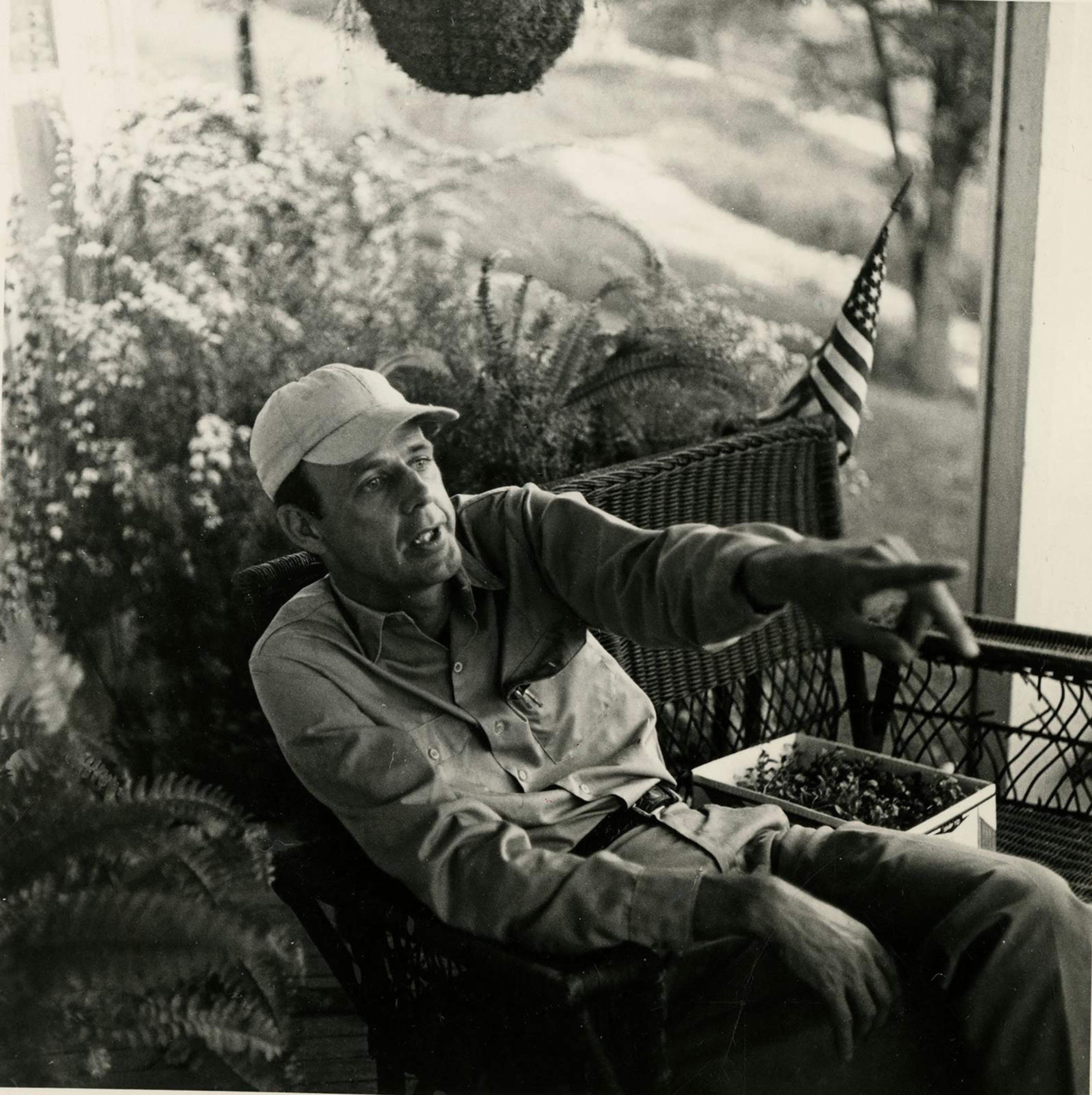
Wendell Berry—who died at ninety-two in August 2026—always rejected the “conservative” label, but he was unquestionably a traditionalist. His rise to prominence coincided with his deepening skepticism about the possibilities of mass politics. While Berry shared the outrage that motivated the civil-rights and peace movements, he felt their mass-political form doomed them to futility. He worried that environmentalism would follow the same path. “In five years,” he predicted in 1972, “the energy of our present concern will have petered out in a series of public gestures—and no doubt in a series of empty laws.”
Berry’s advice for those who were concerned about the fate of the environment was not to show up to protests or to petition their representatives but rather to start a garden. And he could never be accused of failing to practice what he preached. Raised in a fifth-generation Kentucky farming family, Berry discerned a vocation as a writer and left home to pursue a literary career. In 1964, however, Berry accepted a job at the University of Kentucky and purchased a small farm. Berry and his wife initially envisioned using the farm as a summer home, but they eventually threw themselves into farming, even as Berry managed to produce a steady stream of novels, short stories, poems, and essays. By the late 1970s, they were able to obtain their food primarily from their land, and Berry left his teaching job. “Before, I had lived according to expectation rooted in ambition,” he later wrote. “Now I began to live according to a kind of destiny rooted in my origins and in my life.”
The Berry farm was scrupulously low-tech: no chemical fertilizers, a composting privy, and most remarkably, a “team of horses” rather than a tractor. Berry’s most comprehensive defense of obsolete technology, in his 1977 book The Unsettling of America, followed what should by now be a familiar structure: technological change had created an agriculture in which virtue was no longer required. Beneath the “ecological crisis,” Berry argued, lay a “crisis of character.” In preindustrial agrarian societies, “lives, skills, and tools were culturally indivisible,” a unity in which character was nurtured. “Skill, in the best sense,” Berry wrote, “is the practical understanding of value.” The machines employed in industrial agriculture were meant, in his words, to “replace skill” and thus “come between us and life.”
What was needed, Berry thought, was the reformation of communities and traditions in which farming had once shaped virtuous individuals. Like Maurin, Berry was delighted by the etymological relationship between the words “cult,” “culture,” and “cultivation,” which to him revealed the integral relationship between the practice of farming, the orderly arrangement of goods in a single life, and traditions of reverence for sacred mystery. To be a good farmer, Berry maintained, was a capacity grounded in place: a good farmer knows how to cultivate this piece of land because they were raised in a community that had been farming this piece of land for generations. Berry explained that he farmed with a team of horses because he had learned, growing up on that land, that tractors could destroy the arability of hilly terrain. Recognizing when technologies shouldn’t be used was the kind of skill that could only be learned in the context of a living tradition.
But Berry recognized that, like Humpty Dumpty, once they were broken apart, agrarian communities were difficult to put back together again. Berry’s favorite example of the kind of community he had in mind was the Amish. The Amish, Berry wrote, “hold themselves aloof from the ambitions of a machine-based society,” and as a result “have maintained the integrity of their families, their community, their religion, and their way of life.” This radical separatism is the logical conclusion of Berry’s skepticism of mass politics and his emphasis on place. He was never under any illusion that his return to his ancestral fields managed to produce a form of life adequate to his own standard. This awareness set much of his work within a tragic frame. “My walks in the hills and hollows around my home have inevitably produced in my mind the awareness that I live in a diminished country,” Berry wrote in an elegiac 1988 essay. “I still believe that a change for the better is possible, but I confess that my belief is partly hope and partly faith.”
It does indeed require a considerable degree of hope and faith to become a low-tech farmer. The disadvantages are many: social isolation, economic challenges, and, of course, everything that the phrase “composting privy” entails. What’s more, the kinds of communities Berry idolized are often characterized by traditional relations of gender and sexuality. A 1987 essay in Harper’s explaining why he would never buy a computer elicited a storm of feminist critique over Berry’s casual allusion to the fact that his wife typed all his work.
Is it possible to resist the technological degradation of practices, find a genuine community, and cultivate the virtues without abandoning the city’s modern pleasures and freedoms? That was the aspiration of the musicians who, beginning in the 1980s and 1990s, deliberately recorded music with technology that achieved lower fidelity than the commercial standard. It may seem incongruous to group lo-fi music with Berry and Day, but it was more than an aesthetic fad. It was, I want to suggest, a movement, however much some of its members insisted they were guided by their personal creative vision rather than some program.
Lo-fi musicians rightly sensed that they inhabited a living tradition, the defense of which eventually required a movement against the “industrialization” of popular music. This was the tradition of what I call “rock primitivism.” Originally emerging from the 1960s lower-Manhattan art scene, primitivists criticized the commercialization of rock and roll, which they saw as eroding virtues of artistic integrity and “realness.” Folk-revival purists maintained that these virtues required a strict adherence to traditional musical forms and instruments. Other artists, like The Velvet Underground (whose precursor group was named The Primitives), sought to use ideas from experimental art composition to create a sonically “raw” form of rock music.
The “realness” of artists from the ’60s New York scene influenced the development of punk rock in the 1970s. Punk rockers could participate in the tradition of rock primitivism in a variety of ways: transgressive lyrics, unpolished musicianship, energetic songs with simple chord progressions. But by the early 1980s, the music industry had been working for years to commercialize punk, ultimately producing the controversial genre known as New Wave, in which former punks played a more danceable, slickly produced take on the music. Rock primitivists responded to New Wave by developing what became known as hardcore punk. Even more so than the punk of the 1970s, hardcore was a lifestyle as well as a genre. “Our band could be your life,” the California hardcore band Minutemen sang. In hardcore, music was neither a job nor a commodity but a practice, a thread woven into the seamless fabric of a life. This required a commitment to the ethos of “do it yourself,” or DIY. The hardcore hope was that by devoting oneself to a community that established—and enforced, at the risk of obnoxiousness—a set of shared values like DIY, musicians could become themselves in a way they couldn’t in the wasteland of Reagan-era suburbia.
On January 11, 1992, Billboard announced that the fastest-selling record in America was the second album by a band from Aberdeen, Washington, that blended hardcore punk with heavy metal. Nirvana’s first album had come out on the independent label Sub Pop. This new one, Nevermind, was pressed by the major label imprint DGC. Hardcore bands had signed with major labels before—“sold out,” in community parlance—but Nirvana’s success established a new standard of commercial dominance. Punks loyal to the DIY ethos had to reckon with the fact that the mere sound of their music—intensely distorted, loud, fast, lyrically tormented—was no insurance against cooption by what Calvin Johnson, the founder of the militantly indie label K Records, called the “corporate ogre.”
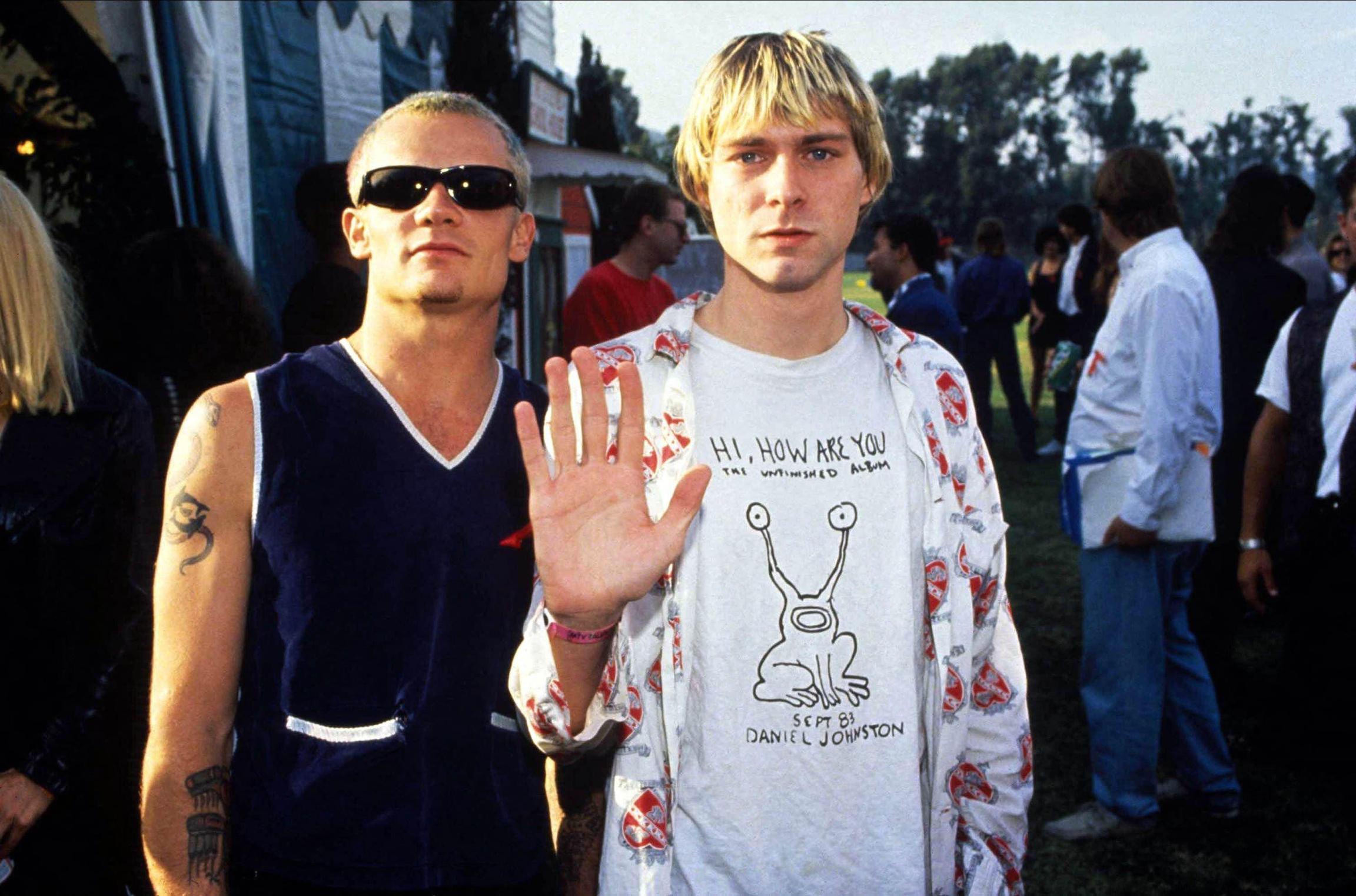
Cobain himself was sympathetic to Johnson’s perspective. At the 1992 Video Music Awards, Cobain wore a T-shirt featuring the hand-drawn cover of a record by Texas musician Daniel Johnston called Hi, How Are You. Johnston recorded the album on a monaural boombox he purchased for $59, distributing cassettes outside the McDonald’s where he worked. Johnston’s music was decidedly not hardcore punk: instead, it featured amateurish acoustic guitar and disarmingly simple, childlike lyrics. It was arguably not even rock music. But as Cobain recognized, with equal parts respect and self-reproach, it was punker than punk, a more significant contribution to the tradition of rock primitivism than anything Nirvana released—not because of its sound but because of its technology.
A range of artists arrived at the same conclusion in the early ’90s. Lo-fi music was an attempt to extend a “tradition” that was “rooted in rock and roll history,” a 1993 New York Times article explained, through the use of cheap home tape recorders and other obsolete devices: “In a world of sterile, digitally recorded Top 40, lo-fi elucidates the raw seams of the artistic process.” Rawness had always been a value in rock primitivism, but earlier approaches to embodying that value—playing sloppily, screaming instead of singing, extreme lyrical content—no longer sufficed in an era where Nirvana topped the charts doing all that stuff. Obsolete technology was indispensable to the survival of the tradition.
Lo-fi musicians had to eat too, though. Calvin Johnson hoped that indie labels like K Records could provide artists with enough commercial distribution to enable them to focus on their music; he also envisioned the label as the nucleus of a genuine artistic community in Olympia, Washington. “As the corporate ogre expands its creeping influence on the minds of industrialized youth, the time has come for the International Rockers of the World to convene in celebration of our grand independence,” Johnson wrote, referencing the early-twentieth-century anarcho-syndicalist union that inspired Dorothy Day and Peter Maurin’s call to build a new society within the shell of the old. “We are the misfits and we will have our day.”
But some lo-fi misfits had their day more than Johnson ever anticipated. Beck became a megastar shortly after completing an album with K Records; he ended up signing to DGC, Nirvana’s label. Liz Phair, who began her career by self-releasing audio cassettes with her music, signed to Capitol Records and embraced an overtly pop-rock sound.
Some lo-fi purists reacted to this commercial success from within their milieu by doubling down on local community, sometimes eschewing recording entirely. Other musicians took a political turn: the turn of the millennium saw the proliferation of bands explicitly identified with feminism, queer liberation, and anarchism. For Laura Jane Grace, frontwoman of the lo-fi anarcho-punk band Against Me!, a low-technology approach went hand-in-hand with the desire to serve a wider activist cause. “Against Me! was very much a band that was born from the radical activist scene, and we came up playing at Food Not Bombs gatherings or May Day gatherings,” she recalled. “Part of the original approach of being an acoustic punk band was so that we wouldn’t have to rely on electricity and we could play shows like that in a forest or by a campfire.”
Grace’s story is a reminder that the three strategies of technological obsolescence that I’ve outlined here are ideal types: each of my exemplars embodied aspects of all three strategies, even as they usefully illustrate in turn what the relative prioritization of mass politics, separatism, and marketing can look like in practice. We need not choose one to the exclusion of the others, but at some point we—all of us who read and write long essays in magazines like Commonweal—will have to make some kind of choice. De te fabula narratur, as Marx was fond of quoting from Horace: “About you the story is told.”
Like working people elsewhere in our society, those for whom intellectual activity is a cherished part of our form of life are confronting the prospect of rapid technological change in the form of generative AI. I believe that generative AI is an existential threat to the status of critical reading, writing, and teaching as practices; to the communities in which I have learned how to narrate my own life as a search for the good; and to the tradition of serious intellectual inquiry within which all our arguments with each other are conducted. No less than Dorothy Day’s Catholic workers, Wendell Berry’s farmers, and the lo-fi movement’s musicians, we have good reason to resist this technological change.
I believe that successful resistance will require a canny combination of all three strategies I’ve outlined here. It will require capturing whatever money can be allocated to institutions devoted to the practices we value, but it will also require some difficult thinking about how to create communities that can sustain themselves when commercial support is absent. We may need to move to places where it’s cheap to live, to swap food and household goods and care labor with each other, to pursue our thinking, writing, teaching, and creation ephemerally in living rooms, backyards, and public parks. Wherever we find ourselves, we will find it necessary to commit as well to mass political struggle, in solidarity with all the other workers in our society who have a stake in confronting the small class of economic tyrants bent on shoving this technology down our throats.
I share with MacIntyre and Day a theology that holds that the desire for the good is universal, indeed, a transcendental condition of human consciousness. That means that the project of building a society in which it is easier for people to be good—by eschewing technologies that jeopardize their ability to lead virtuous lives—is potentially universal as well.
We welcome your comments about this article. Please send your response to [email protected].