In February 1968, The New York Times published a warning: “Religions are in unstoppable decline worldwide.” In the twenty-first century, religious believers would “likely be found only in small sects that band together to resist a global secular culture.” This was written by Peter Berger, one of the most influential sociologists of the twentieth century. Thirty years later, however, Berger publicly admitted that he had been completely wrong in his prediction. He declared in 1999 that the world was “post-secular,” and many echoed his view.
Yet even the reassuring talk of postsecularity and the reference to statistics documenting a steady global growth in religious affiliation are one-sided and misleading. Since 2000, we have witnessed a significant increase in the number of people in the United States who are no longer affiliated with Christianity or the Church. In Europe as well—particularly in Belgium, Germany, England, France, Scandinavia, Spain, and the Czech Republic—there is a dramatic decline in religious and church affiliations. And we see similar developments in other parts of the world.
Two years before Peter Berger’s alarmist call, Time magazine published an issue titled “Is God Dead?” This issue triggered a cultural shockwave. It was the best-selling single issue in a twenty-year period and prompted 3,500 readers to write letters to the editors.
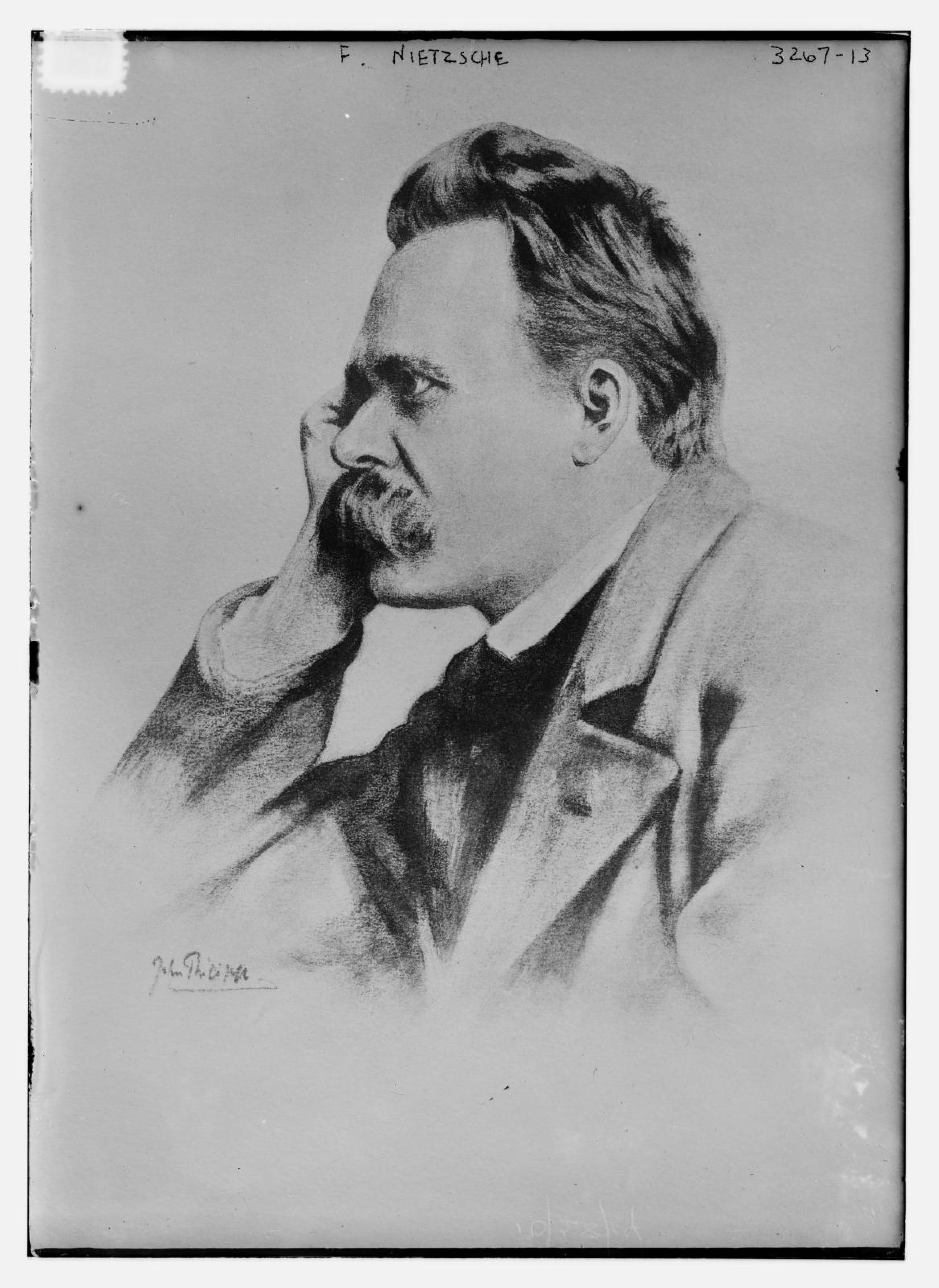
A lengthy article in the issue by John T. Elson, the editor in charge of religion, was titled “Toward a Hidden God.” Elson made it clear that talk of the “death of God” traces back to Friedrich Nietzsche’s radical philosophical critique of religion. That critique was revived by the American “God-is-dead theology” of the 1960s. In the name of intellectual and theological honesty, it opposes a questionable belief in a transcendent religious God.
In the nineteenth century, Germany’s most influential philosophers published works on the critique of religion. In my writings and lectures, I have distinguished between transformative and denunciatory forms of religious criticism. The transformative forms are found in Kant, Hegel, and Feuerbach. They advocate a “sublation of religion”—in Kant’s case, the replacement of religion by morality and ethics; in Feuerbach’s, by anthropology; and in Hegel’s, by a comprehensive philosophical theory of culture. The denunciatory forms sharply attack religion and attract significant public attention. Karl Marx (“Religion is the opium of the people”) and Nietzsche are their most prominent representatives.
It is also in Nietzsche’s work that we find the statement “God is dead.” Nietzsche’s collection of aphorisms, The Gay Science, published in 1882, features in “Aphorism 125” the “madman” who cries out: “God is dead! God remains dead! And we have killed him!” Regarding the churches, Nietzsche says: “What are these churches now, if not the tombs and mausoleums of God?”
Nietzsche’s critique of religion possesses a unique force, for it attacks more than religiosity and church-organized piety. It is also directed against philosophies as well as scientific and popular modes of thought that advocate ultimate, supreme, and irrefutable ideas and values: against the belief in truth, the belief in the knowability of truth through reason, the belief in the unity of reality and the unity of the world, the belief in facts. It is also directed against the areas in which Kant, Feuerbach, and Hegel saw the legacies of religion preserved.
Nietzsche is a radical relativist. In his view, we have only fragmentary and perspective-based perceptions of the world and reality. There are only views that are more or less fruitful and life-affirming. The “priestly deception,” which focuses people’s attention on a God in the afterlife, is merely a particularly blatant form of distraction from real life. Yet the fraudulent attempt to uphold absolute values and truths is not the only outrage that the Christian religion provokes. Christianity also reinforces the reprehensible survival instincts of the so-called “little people” by invoking God to propagate a morality of equality and the protection of the weak.
Nietzsche’s criticism is directed with sheer rage and indignation against all forms of morality, with their connections to religion, philosophy, and so-called common sense. European Christianity, with its moral principle of “equality before God,” has “hitherto ruled over the fate of Europe until, finally, a diminished, almost ridiculous type—a herd animal, something well-meaning, sickly, and mediocre—has been bred: the European of today.” (Nietzsche’s 1889 work The Twilight of the Idols, or How to Philosophize with a Hammer offers a sweeping attack on all morality, particularly any morality associated with Christian religiosity and all ethics of compassion.)
Nietzsche assumes that the coarser, less sensitive, and more ordinary people quickly band together and form cliques. They succeed in subjugating the people who are actually stronger, more sensitive, and more highly developed. The dictatorship of the average imposes its language and value systems on those above average. Religion and morality aid in that process, and so the death of God and the end of all religion and morality are welcome.
Nietzsche advocates, as a major counterforce, the appreciation of what he considers the “higher and finer people,” and he invents the propaganda of the “superman.” Warmongering hegemonic politicians, plutocrats, and violent leaders of totalitarian regimes have liked to see themselves as these “supermen.”
The German posthistory of “God-is-dead theology” seeks to grasp the theological substance of the discourse on the death of God without reducing it to a mere secularizing decline of religious culture. Paul and Luther had warned Christian theology and the Christian faith against placing their trust in a metaphysical, otherworldly God. They had called for a focus on God’s revelation in Jesus Christ, who became human, and on his work on this earth, including his suffering and death on the cross.
The fact that God, in his revelation, enters into death himself and shares in human suffering and dying became a key factor for a credible faith and sustainable hope. The death of God in Jesus Christ was not a disaster, but an event of God’s judging, saving, and comforting creative power. God reveals the lost nature of this world through the worldly powers that bring Jesus to the cross: the powers of Rome, Roman and Mosaic law, the ruling religion, and public morality and opinion. And he reveals the unassuming powers of the Resurrection, in which people trust in life and in death.
To read all the contributions to the symposium, click here.
We welcome your comments about this article. Please send your response to [email protected].