In the early 1920s, Jerusalem was a city charged with possibility and conflict in equal measure. The British Mandate had replaced four centuries of Ottoman rule. Jewish immigrants were arriving from Eastern Europe in increasing numbers, driven by persecution and by a dream: to rebuild a Jewish national home in the ancient land of Israel. Zionism was not merely a political program; it was an act of civilizational imagination—the attempt to create, from the fragments of a dispersed people, something new and whole. Institutions were being founded, a university built, a language revived. The land itself was being reimagined.
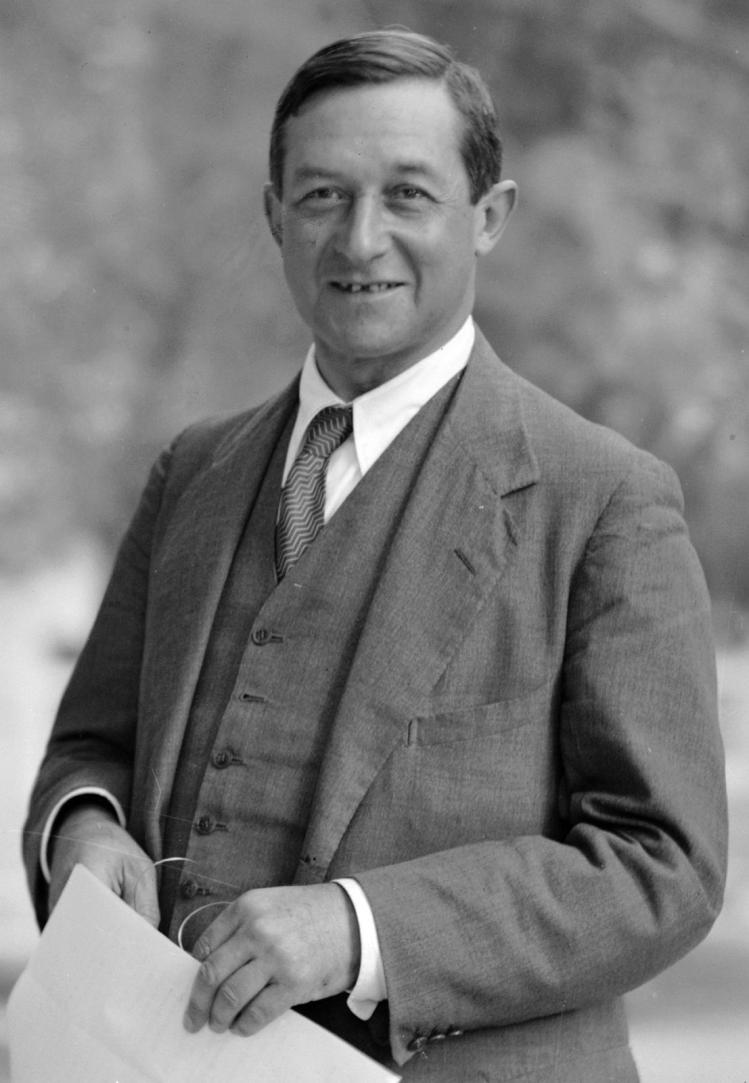
Into this charged moment came Judah Leon Magnes, one of the most prominent Jewish leaders of his generation. Before emigrating to Palestine in 1922, Magnes had been a towering figure in American Jewish life—rabbi of Temple Emanu-El in New York City, the most prestigious pulpit in American Judaism, and a founder of the New York Kehillah, an ambitious attempt to unify Jewish communal life in the city. He was brilliant, charismatic, and famously principled, willing to sacrifice institutional standing for what he believed.
In Palestine, he would go on to become the first chancellor of the Hebrew University of Jerusalem. Alongside him was Henrietta Szold, the founder of Hadassah, the women’s Zionist organization, and one of the great organizational minds in the history of American Jewry. Both Magnes and Szold were leaders of the early Zionists advocating for a binational state of Jews and Arabs. These were not minor figures dabbling in religious experimentation. They were at the center of the Jewish world. And in the middle of all their educational and political labors, they were also quietly trying to found a synagogue.
What they envisioned was, in Jerusalem 1923, entirely without precedent: the first modern synagogue in a city that had known only Orthodox worship for centuries. The eight principles they drew up for their congregation—which they called a Chevra, a fellowship—were, taken together, a revolution. Services would be conducted entirely by members of the congregation, not professional readers or preachers. The whole congregation would sing and pray together, actively, not as spectators. Members would read their own Torah portions, study together, take ownership of their Jewish inheritance. Hebrew would be the exclusive language of everything—“better a poor Hebrew than none.” The teachings of social justice and human brotherhood from the Torah and the prophets would be brought to bear on the present day. In a truly radical departure from Orthodox practice, women would participate in all parts of the service on the same conditions as men, though men and women would sit on opposite sides of the room—a concession to tradition that reflected the tensions the project was trying to hold together. The service would be rooted in deep respect for Jewish tradition, while the congregation would feel free to give its own emphasis to this or that part of the liturgy.
These seven principles were bold; the eighth was something else entirely. In order to emphasize the brotherhood of Israel with all of humankind, the service would include Hebrew translations of selections—deemed to be in harmony with the Jewish spirit—from the religious literatures of other peoples and religions. Not a guest speaker. Not an interfaith panel. Not a comparative sermon. A text from another religious tradition—Muslim, Christian, Hindu, Buddhist—spoken aloud in Jewish worship, woven into the Hebrew liturgy, offered to a congregation gathered in prayer.
I have sat with this idea for years, and it still astonishes me. Not because it seems wrong, but because it is so precisely, almost recklessly, right about something that most of us only approach indirectly: the question of what it means for a particular tradition to remain genuinely open to the other without dissolving into it or barricading itself against it. How can a tradition remain itself while remaining genuinely open? This is, of course, not only a Jewish question. It lives at the heart of every religious tradition that takes seriously both its particular covenant and its universal horizon. It is, in a profound sense, the question that religious modernity has never been able to answer to anyone’s satisfaction.
I want to suggest that the conversation among three unlikely dialogue partners—a Jerusalem rabbi of a century ago, the ancient rabbis of the Talmud, and a German Jewish philosopher writing in Berlin in 1923—illuminates it in ways that still have not been fully reckoned with.
Magnes wrote a journal entry in March 1924 in which he diagnosed, with unusual clarity, the type of failure he was trying to avoid. He was writing about the liberal universalism of Reform Jews of his era. In his view, they had embraced the prophetic vision of human brotherhood but abandoned the Jewish particularity that gives that vision its grounding and force. “Universalism as a mere excuse to become something your comfort or your social standing demands,” he wrote, “is a spurious universalism.”
He was not at all dismissing universalism, which he believed in passionately. What he was dismissing was the use of universalism as a noble principle providing an escape from the harder work of being a particular self. In a distinction that cuts as sharply now as it did then, he identifies two types of Jews who can become genuine universalists. The first is the Jew who has so little Jewish self that universalism costs nothing—he is, in effect, already no one in particular. The second is the Jew who has so thoroughly grounded himself in his Judaism that universalism becomes, in Magnes’s phrase, “the development and crown of his Judaism.”
The first kind of universalism is weightless. It asks nothing. It gives nothing. It is, at bottom, an abdication dressed up in prophetic clothing. The second kind is the real thing. It emerges not from the erasure of the self but from its deepening. It is what Magnes was trying to enact liturgically when he proposed reciting the prayers of other traditions in Hebrew: not the dissolution of Jewish particularity into a universal soup, but the confident hospitality of a self secure enough to welcome the stranger without fearing contamination.
I recognize this type of failure in myself and in my religious community and others. Liberal religion—Jewish, Christian, and otherwise—has become very good at accommodation and very poor at rootedness. We have learned to hold our particular commitments loosely, which is sometimes wisdom and sometimes evasion. Magnes is asking us to hold them deeply, and to let that depth become the source of our openness, not its obstacle.
The Jewish tradition had, in fact, already been thinking about this problem for centuries—not in philosophical terms, but through the concrete and practical question of translation. A striking passage in the midrashic collection Devarim Rabbah interprets a verse from Genesis: “May God extend Japheth, and may he dwell in the tents of Shem.” In the rabbinic reading, Japheth represents Greek civilization—its beauty, its philosophy, its language. Shem represents the Jewish people, the bearers of Torah. Bar Kappara, the sage cited in the midrash, applied the verse to the question of whether the Torah could be written in Greek: “That the words of Shem may be spoken in the language of Japheth—therefore it is permitted that they be written in Greek.”
In other words, Greek may enter the sacred space of Torah—but only as a vessel for Jewish content. The words remain the words of Shem; what changes is the linguistic form in which they travel. This is the rabbinic model of encounter with the other: generous in form, firm in content. Judaism opens itself to the beauty and reach of Greek, but it does not open itself to being reshaped by Greek. Japheth dwells in the tents of Shem, but Shem remains the host.
This judgment is not timid. In the ancient world, permitting the Torah to be written in Greek was a significant act of openness. The rabbis knew that Greek was the language of empire, of philosophy, of the dominant culture pressing in on Jewish life from every direction. Taking up a defensive crouch would have been understandable. By contrast, allowing Jewish words to be spoken in Greek was to enter into genuine encounter—not to retreat from it.
But there is a limit to the rabbinic model. What it imagines is a one-directional hospitality: Jewish content moving outward into the forms of the wider world. What it does not imagine—and perhaps could not have imagined—is the reverse: non-Jewish words moving inward, taking up residence inside Jewish forms, being spoken in Hebrew, the language of prayer and covenant.
That is what Magnes proposed, and the inversion is theologically dizzying. Where the rabbinic model protects Jewish meaning by regulating its outward expression, the Magnes model tests Jewish integrity by welcoming something inward. It is a wager that Hebrew—the language of Sinai, of the liturgy, of the whole accumulated weight of Jewish religious consciousness—is capacious enough to hold the prayers of others without ceasing to be itself. That Jewish worship is strong enough to be hospitable without being dissolved. That particularity, when it is deep enough, can afford to be genuinely open.
At nearly the same historical moment that Magnes was formulating his synagogue principles, Walter Benjamin was writing an essay in Berlin that approached the same questions from a completely different angle. “The Task of the Translator,” published in 1923, is one of the most demanding essays in the modern philosophical tradition, and it is not, on its surface, about religion at all. It is about what happens when a text crosses from one language into another.
Benjamin’s argument is that translation is not the transfer of a meaning from one container to another. It is something stranger and more costly. Languages, he argues, are not parallel systems that map onto each other neatly. They each name the world differently, illuminate different aspects of reality, carry different weights in their silences and emphases. What connects them is not equivalence but kinship—a shared orientation toward something Benjamin calls “pure language,” the unreachable truth that all human speech is trying, imperfectly, to articulate.
Translation, then, is not about fidelity to the original’s meaning so much as responsiveness to the original’s life—the attempt to let what is living in one language breathe in another. And this requires something demanding of the translator: not that she domesticate the foreign into the comfortable idioms of her own tongue, but that she allow her own language to be altered by the encounter.
Benjamin quotes the writer Rudolf Pannwitz to make this point with unusual sharpness: “Our translations, even the best ones, proceed from a mistaken premise. They want to turn Hindi, Greek, English into German instead of turning German into Hindi, Greek, English.” The bad translator protects her own language from being changed. She makes the foreign familiar, the strange comfortable, the challenging manageable. What she produces may be readable, but it is not really a translation. It is a domestication. The good translator does the opposite. She allows the foreign tongue to press its weight against her own, to reshape it, to make it say things it could not say before. The result is a text that bears the marks of genuine encounter—that has been altered by what it received.
I find in Benjamin’s ideal for translation a precise account of what Magnes was proposing liturgically, and also a precise account of what spurious universalism fails to do. The liberal Jew who uses universalism to escape Jewish particularity is like Pannwitz’s bad translator: she makes the foreign comfortable by making it German. She domesticates the encounter. Nothing changes, because nothing is really being encountered. Neither the particularity of the home language nor the foreign one are really allowed to speak; instead, both are abandoned for an unearned, anodyne universalism. The Judaism that Magnes envisioned—rooted, confident, and genuinely hospitable—is like the good translator’s work: it is altered by what it receives without ceasing to be itself.
This is, I think, what genuine interreligious encounter looks like. Not the comfortable sharing of common values—though that is not nothing—but the more demanding experience of allowing the other’s particularity to press against your own, to challenge it, to enrich it, to make your tradition say things it could not have said before the encounter. It is the difference between interfaith dialogue as polite comparison and interfaith dialogue as genuine risk.
There is one more move in the Jewish tradition that seems to me essential here, and it is the most radical of all. The rabbis, in their commentary on the Torah, articulated a principle that sounds modest but is theologically explosive: “The Torah speaks in the language of human beings.”
The immediate context of this principle is grammatical (the rabbis use it to explain why the Torah sometimes uses apparently redundant phrases) or theological (to explain why the Torah uses anthropomorphic language to describe God). But its implications reach much further. The rabbis are asserting that divine revelation is not delivered in a celestial language untouched by human particularity. It enters the world through the specific, limited, historically situated vessel of human speech. It is, in the deepest sense, already a translation.
If revelation itself accommodates itself to human language—if the divine word enters the world not as pure, unmediated truth but as truth shaped to the capacity of those who receive it—then the relationship between the universal and the particular is not what we might have assumed. The universal does not hover above the particular, pure and untouched. It descends into particularity. It takes up residence there. It speaks, necessarily, in someone’s language, in someone’s words, through someone’s history.
This does not mean that all particular expressions of the universal are equally valid or equally deep. But it does mean that the path to the universal runs through the particular, not around it. Magnes understood this. His universalism was not a flight from Jewish particularity; it was an expression of Jewish particularity taken to its fullest depth. The non-Jewish prayer recited in Hebrew was not a concession to the universal at the expense of the particular. It was the particular—the Hebrew, the liturgy, the covenant—becoming the vessel through which the universal could be encountered.
The synagogue that Magnes and Szold envisioned, as far as I can tell, never fully materialized. The practical challenges of building a community in Mandatory Palestine were enormous, and the theological radicalism of their vision made it difficult to find a constituency. The congregation did hold some services, but the grand project remained largely unrealized.
And yet the question they were asking has not gone away. If anything, it has become more urgent. We live in a moment when religious particularity is either retreating into defensive isolation or dissolving into a vague spiritual cosmopolitanism that asks nothing of anyone. The first option is a failure of courage, the second a failure of honesty. What Magnes and Szold were reaching toward—a particularity confident enough to be hospitable, a universalism grounded enough to be real—is harder to achieve than either and more necessary.
I am drawn to this question not as a historical curiosity but as a faithful and practicing Jew who finds himself, regularly, in rooms where people of different faiths are trying to figure out how to live together without pretending they are the same. What I have learned, slowly and imperfectly, is that the moments of genuine encounter—the ones that change something, that leave a mark—are not the ones where differences are minimized. They are the ones where two people, each rooted in their own tradition, manage to let the other’s particularity press against their own. Where something foreign enters the tent, and the tent, rather than collapsing or repelling its visitor, is enlarged by the encounter.
Benjamin was right that this requires a kind of vulnerability. You have to be willing to be changed. But Magnes was right that this vulnerability is only possible from a position of strength. A tradition capable of genuine openness does not make peace with its own dissolution. It goes deep into itself and finds at its core not walls but a window.
The rabbis imagined Greece dwelling in the tents of Zion—foreign beauty carried in Jewish vessels. Magnes imagined something more demanding: Jewish vessels carrying foreign prayers. Between these two visions lies a question that no tradition has fully answered, and that every tradition serious about both its particularity and its universality must keep asking. Not Greece instead of Zion. Not Zion instead of Greece. But the ongoing, costly, irreplaceable work of learning to dwell in the same tent—each remaining what it is, each made more fully itself by the presence of the other.
We welcome your comments about this article. Please send your response to [email protected].