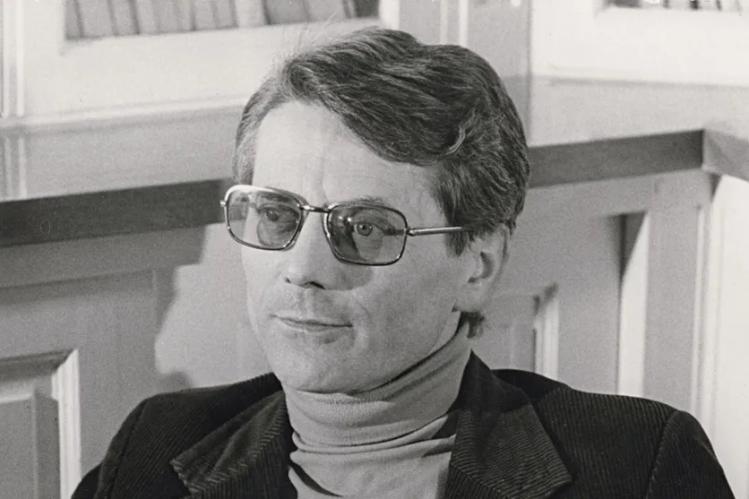
Michel de Certeau’s biographer, François Dosse, tells a revealing story from his subject’s childhood. Born in 1925 to a Savoyard family of the lesser French nobility, Certeau was raised in a highly conservative Catholic milieu under the severe discipline of his father. In true Savoyard style, Michel responded by becoming a transgressor and a provocative wit. One day, he told his parents that he wanted to become a Muslim. Islam was still exotic in the Auvergne town of Chambéry in the early 1930s, and his parents were likely scandalized. Certeau wasn’t serious: in the event, he became a Jesuit at age twenty-five and remained a member of the order despite moments of doubt and long talks with his spiritual director about leaving the Society.
Still, the gesture is typical of the provocative behavior Certeau went in for and repeated for his Jesuit confrères. It’s also indicative of his life and work, and it helps account for the significant neglect of that work by other Catholic theologians. He just didn’t do theology the way they did. He was too willing to seek inspiration outside of circumscribed institutional, disciplinary, and even religious bounds.
This was despite an eminent intellectual biography that would seem destined to place Certeau in the mainstream. Henri de Lubac, one of the most significant theologians of the twentieth century and a central influence on Vatican II, was one of his early tutors. Certeau studied under the well-known theologian Jean Daniélou in Paris, and his early work focused on the writings of the seventeenth-century Jesuit poet and mystic Jean-Joseph Surin. In 1982, Certeau published the first volume of The Mystic Fable, a profound examination of the development of mysticism in the sixteenth and seventeenth centuries. He was preparing the second volume for publication when he succumbed to pancreatic cancer in 1986.
By the time of his death, Certeau had become something of an intellectual celebrity in France. He had worked on the Catholic literary and theological journals Esprit and Concilium (a journal established to promote theology in the light of Vatican II) and on the editorial boards of Jesuit reviews such as Christus, Études, and Revue d’histoire de la spiritualité. Immediately following his death, conferences on his work were held at the Centre Pompidou in Paris and the Institut Catholique, and the proceedings published. He was known to and engaged with leading intellectual figures like Jacques Lacan, Pierre Bourdieu, and Michel Foucault. Along with Roland Barthes, he became recognized as one of the founders of cultural studies.
But because of his idiosyncratic, provocative approach to spiritual matters, theologians and ecclesiastical historians have only recently started giving his writings the serious attention they deserve. It was only in 2024, in Pope Francis’s last encyclical, Dilexit nos: On the Human and Divine Love of the Heart of Jesus Christ, that Certeau’s contribution to the Catholic faith received any official recognition. It is worth citing for the insight Pope Francis, a fellow Jesuit, has into the motivational core of Certeau’s work. Francis writes of Certeau’s commentary on St. Ignatius’s spiritual exercises and the movements of the soul that take place during them:
Michel de Certeau shows how the “movements” of which Ignatius speaks are the “inbreaking” of God’s desire and the desire of our own heart amid the orderly progression of the meditations. Something unexpected and hitherto unknown starts to speak in our heart, breaking through our superficial knowledge and calling it into question.
Certeau’s work is concerned foremost with spiritual formation in the context of everyday secular life. He grapples with how people’s spiritual questing, their desire for something more, comes to be expressed in modern culture. This concern is, of course, as significant now as it was in the 1970s and ’80s—and as provocative. Whereas, then as now, the dominant approach in the Church was to battle secularism, Certeau proceeded first by accepting it as an unavoidable fact, and then by asking how the secular could express the divine.
An early collection of essays, The Capture of Speech (1968), opens with reflections on the political unrest in France in May 1968, and in his book Culture in the Plural (1974), Certeau attempts to read “the signs of the times.” But his task was not to write a theology in step with the times, like Edward Schillebeeckx, and still less to develop a conservative theology to counter secular trends. Rather, with a distinctly Jesuit intuition, his work attempted to discern, on the basis of the Christian spiritual tradition, what lay beyond and beneath the glamor of postwar materialism. He wanted to understand the “movements,” which are the “‘inbreaking’ of God’s desire.” For Certeau, these movements didn’t only take place during Ignatian retreat; they could also be found in everyday life if you looked for them.
To find them he needed the tools of intellectual disciplines most theologians regarded, at best, as irrelevant to the Christian faith and, at worst, as direct challenges to it. He needed to understand and examine the forces involved—political, sociological, linguistic, historical, ideological, and psychological—galvanizing those “movements” in different ways. The signs of the times constituted a social text of sorts. The question was how, methodologically, could this text be read, especially in terms of a spiritual desire for meaning? This attempted reading, which is really an act of discernment, raised a fundamental question at the very heart of religious faith: What makes a belief believable?
French philosophy in Certeau’s time was dominated by theories of the nature of signs, what and how they signified, and how signifier and signified related to one another. This was the zeitgeist of structuralism and poststructuralism. By the 1960s, it was displacing Jean-Paul Sartre’s existentialism, which had dominated the immediate postwar period in France, while maintaining the existentialists’ calls for political and social justice. Theorists were analyzing not just language and its ideological baggage, but also how linguistic signs were lived out socially and culturally, producing a certain kind of citizenship. Reflecting on their own social world, these theorists examined everything from billboard advertisements to city planning, cooking to wrestling matches. Certeau immersed himself in the new philosophies, taking on disciplines such as literature (Julia Kristeva), anthropology (Claude Lévi-Strauss), and psychoanalysis (Jacques Lacan). His goal was to use these analytical tools to read the signs of modern spirituality being expressed through secular practices.
Luce Giard, Certeau’s lifelong friend and colleague, can help us better understand his project. She accompanied him when he was appointed to a professorship at the University of California in San Diego in 1978. At that point, Certeau’s work had not been translated into English, but after his death, Giard worked exhaustively to establish Certeau’s international reputation and oversee the translation of his work into several languages. In an essay, “History of a Research Project,” she cites a proposal Certeau wrote in 1975 for funding from the French government. The grant would eventually allow Certeau to complete his groundbreaking monograph, The Practice of Everyday Life (1980), the book for which Certeau is best known today. Certeau writes in the proposal that he will develop “a theory of everyday practices in order to bring out of their murmuring the ‘ways of operating’ that, as a majority in social life, often only figure ‘resistances’ as apathies in relation to the development of sociocultural production.”
Beneath the intellectual argot, that statement sheds light on the meaning of “movements” in Certeau’s work. Certeau proposes to listen to those ordinary practices, then translate their murmurings into an academic analysis of the “ruses of consumers.” In other words, amid the spectacle of materialism, secularism, and its “sociocultural production,” there is something waiting to be articulated about, in Francis’s words, the “desire of our own heart.” Certeau is attempting, through his analyses, to get at the spiritual lives of ordinary people. To what desires for truth and freedom do their ordinary practices attest? What evasions, deployments, transgressions, and resistances are at play in and through those desires?
In The Practice of Everyday Life, Certeau refers to these everyday practices as tactics and contrasts them to strategy. Strategy is the omnipresent planning, structuring, and scheduling by the powers that be. Strategy, for example, structures a worker’s day on the factory floor or attempts to guide the consumer through an airport or mall. It is related to what Foucault called discipline—the rise of a world structured ever more completely by institutions desiring ever more effective powers of surveillance and control. Tactics are the transgressive actions we take to opportunistically and momentarily seize strategic spaces and use them for our own ends: the worker using cigarette and toilet breaks to exercise her freedoms, the jaywalker traversing the grid his own way.
In the book’s most famous essay, “Walking in the City,” Certeau surveys New York from the 107th floor of the World Trade Center:
For a moment, the eye arrests the turbulence of this sea-swell of verticals; the vast mass freezes under our gaze. It is transformed into a texturology in which the extremes of defiance and poverty, the contrasts between races and styles, between yesterday’s buildings already relegated to the past…and the new outcroppings that erect barriers to block space—all are conjoined…. Inscribed upon it are the architectural figures of the coincidatio oppositorum sketched long ago in mystical miniatures and textures. On this concrete, steel and glass stage…the tallest letter in the world creates this gigantesque rhetoric of excess in expenditure and production…. To what erotics of knowledge can the ecstasy of reading such a cosmos be connected?
The writing style is literary and baroque, which of course has not helped in disseminating Certeau’s work. But we have to understand the difficult style as itself a “tactic” for evading an easy reading of the world and penetrating the surfaces it presents us with.
The view from the 107th floor is, for Certeau, fundamentally false. The turbo-charged “expenditure and production” of consumerism values the transparency that comes from such heights. The elevated gaze suits surveillance and control. These are all part of strategic planning. For Certeau, such a gaze also turns ordinary citizens into tourists, taking up the strategic point of view just as much as the managers do. But to understand the way life is really lived you have to get down into the streets and watch the different tactics in the way citizens walk the city. Those tactics reveal how civic life is practiced, how “ways of operation” manifest acts of resistance to the panoptic powers of surveillance—cultural, political, and spiritual.
The presence of the spiritual may seem doubtful here, overshadowed by the complex landscape being surveyed. But the coincidentia oppositorum takes us directly to the writings of the mystic Nicholas of Cusa, who understood God as the coincidence of opposites. Here, the strategic, capitalist urban planning and the message of excess it sends is opposed by the way the city and the message are actually lived through citizens’ desires—desires that escape the organizing force of strategy. Certeau insisted that those opposites needed to all be read together, and that such a reading could reveal a spiritual meaning.
The “erotics of knowledge” had a particularly contemporary ring. Foucault was at work on his multivolume History of Sexuality at that time, with the first volume published in 1976. Luce Irigaray was developing her feminist philosophy on the basis of woman’s jouissance, in Speculum of the Other Woman, published in 1974. And Lacan’s École freudienne (of which Certeau was a founding member) was analyzing the psychological relation between desire and language.
But even more significant for Certeau was the tradition of mystical theology and spirituality from at least the time of the Cappadocian Fathers and Augustine. They had already thoroughly explored the same terrain, and those links to the past had to be uncovered. Desire was and remains at the heart of spirituality and the work of discernment. Certeau’s decision to use a style resonant with contemporary interests is, again, a “tactic” intended to guide his readers toward a hidden history of desire. As such, Certeau’s writing leaves traces that he would later, in the second volume of The Mystic Fable, describe as “inventions born of unknown memories.”
Certeau also draws on Augustine, who recognized memory as a profound, vast storehouse revealing unknown movements of the spirit and depths of human being that no one could fully plumb. Memory and desire worked together such that they bore traces of the inner dynamics of the triune Godhead. Aquinas took this up, developing the relationship between memory and imagination that opened a person to the inspiration of the Holy Spirit. Certeau finds in Foucault’s, Irigaray’s, and Lacan’s writing—and their attempts to resist a regime of surveillance and rigid psychosexual categories—both a memory of this spiritual tradition and an unconscious spiritual longing.
Before The Practice of Everyday Life, Certeau had attempted to uncover links to the past in a study of the seventeenth-century Jesuit exorcist Jean-Joseph Surin and his work with the Ursuline nuns of provincial Loudun in France. In 1634, nuns accused Fr. Urbain Grandier, their convent’s spiritual director, of bewitching them. Dramatic, often theatrical accounts of the nuns’ possession enthralled French society. Grandier was eventually convicted and burned alive at the stake. Meanwhile, numerous attempts were made to exorcise the nuns, especially the mother superior. Eventually Surin was called upon to assist, and he successfully exorcised the mother superior’s demons, but only by taking them into himself. She was healed; he suffered complete psychological breakdown and attempted suicide. But, at the same time, Surin’s expressive powers as a poet and mystic flourished.
In his book-length treatment, The Possession at Loudun (1970), Certeau situates the nuns’ possessions within the cultural and political context that gave rise to them. The world was changing. Descartes published his Discourse on Method in 1637, and science was beginning to compete with religion as a form of knowledge production worthy of assent. Certeau understood this crisis of belief as a crisis of knowledge: the previously settled paradigm for what we could believe and know for certain had become contested.
Knowledge is never simply of what is already “out there” waiting to be uncovered. It is a sociocultural production that is, in some sense, made to appear, like the manifestations of the demons in the rites of exorcism. Certeau’s attention to that production focused on the cries of the possessed, who he thought were cognizant, on some level, of a battle to find meaningful frameworks for their experience in a time of great change. These potential frameworks—both those available at the time, like ecclesial doctrine, medicine, and state politics, and those only available later, like psychoanalysis and historiography—each impose their own ideological viewpoint. But, for Certeau, the desire in and behind the cries of the possessed betrayed something more profound. It was a murmuring that could not be captured or contained within the available vocabularies. The possessed were, much like mystics, attempting to articulate a desire and knowledge that escaped both ecclesial control and the newly emerging sciences.
It was this murmuring of what is beyond the explanations of the various discourses of knowledge that led Certeau, via Surin’s work, to the mystical writings of Meister Eckhart, St. Teresa of Ávila, St. John of the Cross, Madame Guyon, and Jean de Labadie. In each case, he traced the systems of oppression and persecution, by Church or state, that gave rise to what he called “mystic speech.” In a way, this barely articulate speech was a tactic. Not a conscious tactic like the worker’s unofficial break in the middle of a shift, but rather an unconscious tactic issuing from desire and a profound memory. Mystic speech was the movement of the spirit struggling to express another type of meaning otherwise unavailable.
From these investigations, he would later compose the first volume of The Mystic Fable and begin the second. He was aware of the shelves of commentary on each of those mystical figures, but what separated his own approach was attention to the “voice”—not just what the texts said. Voice, spoken and heard, has always played an important role in theology, especially in the mystical tradition. In both Hebrew and Christian Scripture, God spoke to Abraham, Isaac, Jacob, and the prophets. The Torah’s original Hebrew included no vowels in order to reflect the written text’s missing voice; they were only added later to facilitate and democratize the reading.
God speaks as well in the New Testament, to bear witness to Jesus at his baptism by John, for example. St. Paul tells the Christian communities in Rome that faith comes by hearing. And there is an ambiguous line in Christian theology between prophecy and preaching that early Protestantism emphasized, where the preacher’s voice was associated with the work of the Holy Spirit. Although the technology of printing enhanced the power of writing and unleashed new potential for communication, God’s “speaking” still played (and continues to play) an important ecclesial role, not only in preaching but in reading Scripture. The voice is more subtle than the word; it adds breath, tone, and rhythm to what is written. Finding one’s voice is critical to the work of a poet, and like a poet, Certeau is trying to listen to the deeper music and rhythms beneath the written texts of the mystics. What are they trying to voice? It is not just a matter of what they are saying but how they are saying it.
Certeau brought this mystical understanding of voice to contemporary French intellectual life, and its preoccupation with textual signs (semiotics) and their relation to meaning (semantics). He describes what he is listening for as the “sonorous wave spread[ing] across the syntactic landscape; it permeates it [the semiotic] with leeways, charms and meanderings of something unknown.” This is what he understands as the voice of a text. Careful reading of serious literature is always partly an oral exercise; the work of decoding not just what the signs mean, but the way they are voiced in your head. The “meanderings” that emerge from such reading Certeau calls “resistances”: they constitute, in all their idiosyncrasy, a deflection of perfectly clear meaning and the expression of a desire that escapes strict control. In those voicings, there is an engagement with what is other, uncontainable in language, “something unknown.”
Those articulations evade capture by the institutions involved in “sociocultural production.” Such institutions, like New York City’s Department of City Planning, structure buildings and streets and enforce a certain way of moving through a landscape. But the ways we walk the city, cook, take an unofficial break at work, or respond to the felt presence of God (even when God may seem totally unavailable or invisible) trace something different. Those sounds, rhythms of practice, murmurs, cries—tactics—are, for Certeau, a way of responsive living that evades colonization, exceeds the signs we have been taught to read, and gives voice to ungraspable depths of meaning. They are a movement of the spirit, a cri de coeur unconcerned with the boundaries between the human and the divine, participating in something grander.
Take as an example Frances McDormand’s character, Fern, in Chloé Zhao’s Oscar-winning 2020 film Nomadland. After her husband dies and she is laid off, Fern leaves her small bungalow, buys a van, and hits the road, where she makes a living doing odd jobs and seasonal work at Amazon warehouses. Though her new life is difficult, it opens up a different world for her and demands she question things anew. Off the grid, she is forced to adopt new tactics to survive a harshly organized strategic world. The film gives no final answers, but Fern gradually lowers her defenses and gains a keener appreciation of the beauty of the transient communities and people she meets and the landscapes she travels through. Though there is nothing explicitly theological about Nomadland, Certeau, an avid filmgoer and sometime film reviewer, would have found something ineluctably spiritual in Fern’s wanderings. For him, wandering is at the core of spirituality in a secular age. More than simply institutional practice, spirituality is profoundly involved in our relationship to the structures laid down for us, and our decision to either accept them or try to transcend them and let our desire wander.
Those wanderings are like the writings of the mystics, explorations and creations of new ways of speaking. They have to be heard as well as read, for their murmurings compose a living, experiencing voice. Understood this way, they articulate an undercurrent of activity, a movement, “something unexpected and hitherto unknown.”
Of course, moments of resistance need not be described as a voice or a murmur of something beyond; they can be examined in purely secular terms. We can view Nomadland, for example, as an expression of a New Age politics celebrating alternative lifestyles, or as a moral commentary on the homelessness crisis in the United States. Such responses may get at something real, but they don’t do justice to the subtle tones and rhythm of the film.
Certeau accepted the “death of God” as both a sociocultural product of modernity and of the rational order governing secular society. Secularism was just another product of knowledge like the “steel and glass stage” of downtown New York and its “gigantesque rhetoric of excess in expenditure.” But, for Certeau, it can’t drown out the movement of the “spirit” that he listened for. That murmuring desire is too subtle to take on a name like “God”—a name that has lost its place in the accepted linguistic register of secular society. What’s more, this murmuring is not necessarily pious itself. Still, it attests to the continuing presence of human motivations that are not easily curtailed or ignored. Desire’s operations are mainly unconscious and their nature fluid—“as plural as the voice whose inflections and accents say, to an amorous attention,” Certeau writes. Certeau also understood that God’s apparent absence only intensifies the spiritual desire within. The desire to be happy is the core of spiritual longing, as Augustine understood.
That undercurrent gets translated into everyday practices, whether in the history of colonial conquest, secular consumerism, the exorcism of the demonic, or the pursuit of mystical ecstasies. In his postscript to The Mystic Fable, “Overture to a Poetics of the Body,” Certeau attunes himself to the “music hoped for and heard, echoes in the body like an inner voice that one cannot specify by name but transforms one’s use of words…. The body is ‘informed’ (gets form) from what befalls it in this way.” Certeau’s task was to hear the “inner voice” as the voice of the other within—something also continually at the heart of Augustine’s own journey. This encounter with the other, as Francis puts it, breaks “through our superficial knowledge and call[s] it into question.”
The Czech poet and painter Josef Čapek, who was killed in Bergen-Belsen in 1945, described himself as a limping pilgrim “hobbling through the Gateway to Eternity.” Certeau—and Fern in Nomadland—could be described the same way. In his biography of Certeau, François Dosse calls him “le marcheur blessé,” “the wounded walker.”
Part of Certeau’s attraction to the Society of Jesus was that he wanted to be a missionary. He did travel widely, but his real wayfaring ended up being internal—an inner movement that could not be stilled or staunched. For Certeau, the transience of desire, including his own, cannot be pinned down but only attested to. We can only trace it in and through its various inscriptions and behaviors. The city may be mapped and its entrances and exits prescribed, but it can be walked in a million different ways. In his numerous and multifaceted investigations, Certeau traces the murmuring of a desire that no secularism can conceal or abrogate. This is the spiritual vision in his work that roamed and transgressed across anthropology, theology, history, sociology, psychoanalysis, ethnography, and what is now known as cultural studies.
One can understand why Catholic theologians have paid him little attention. Though he wrote about the Church, the Eucharist, and even Christ, he had little interest in dogmatics, philosophical theology, moral theology, or ecclesiology. And his writing style can be forbidding, as we have seen. But beyond its eclecticism and difficulty, Certeau’s work may have been avoided by theologians because of a critical question it raises: To what extent are their theologies themselves “sociocultural productions” reacting to, rather than excavating, secularism? Certeau wants to ask of theology not whether its critique of secularism is right or wrong, but what fears and desires it is expressing.
Certeau invented interdisciplinary study before it was fashionable or even had a name. He recognized that the truly big questions—like what makes a belief believable or why one would believe anything—cannot be answered by any one intellectual discipline, including theology, with its siloed modes of inquiry and strictly policed faculty boundaries. And yet such questions tap into the very roots of any religious faith. Certeau was likely not surprised at theologians’ neglect of his work. He would have known from his reading of the mystics that the Church is always wary of lived experience and religious enthusiasm uncontainable by its boundaries.
We welcome your comments about this article. Please send your response to [email protected].