Here’s an idea for a game show. It’s called “Materialists on Mushrooms.” A bunch of hardheaded scientists gather in a room to discuss the fundamental nature of consciousness. Each contestant is then given a progressively larger quantity of psilocybin to consume. To stay in the game, the scientists must continue to deny that their increasingly vivid and bizarre experiences are anything more than the product of purely physical reactions in the brain. The final materialist still to hold out wins, rewarded with the collected works of Proust and a stomach pump.
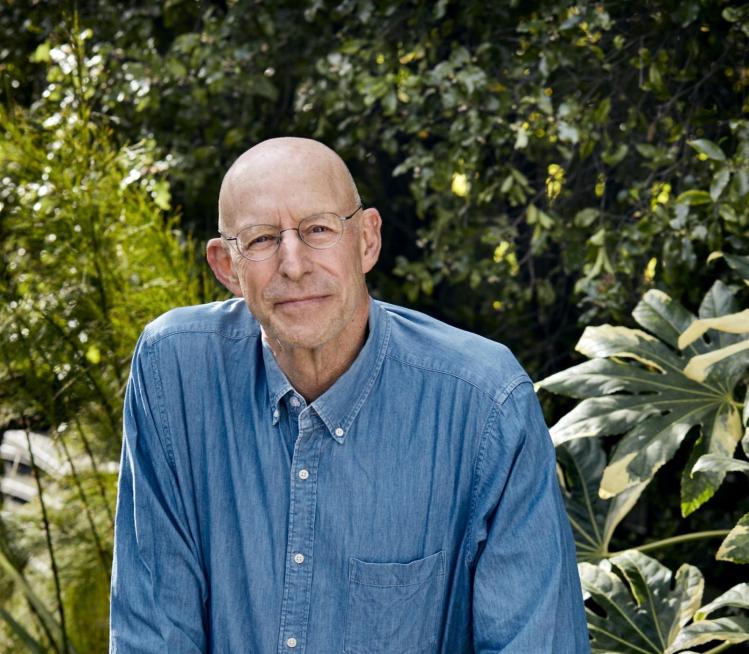
Obviously, I’m being facetious. But if Michael Pollan’s illuminating new book, A World Appears, is anything to go by, something analogous is already playing out in the world of consciousness research. The book follows the ongoing race among scientists and philosophers to uncover the true nature of consciousness—in particular, to solve the so-called “hard problem”: how physical occurrences in the brain and body somehow yield rich, qualitative, first-person experiences. Playing a likeable faux-naïve investigator, Pollan whizzes around the field, chatting with various experts and trying to piece together a plausible picture of what on earth consciousness really is.
But as the book progresses, things take an unexpected turn. Pollan, who has previously written two bestsellers about the science of mind-altering drugs, discovers that an increasing number of scientists are dabbling with psychedelics as an alternative way of investigating the human mind. According to one prominent researcher, this is something of an open secret: experimental drug use, he even claims, has become “almost obligatory at this point.” What isn’t a secret is that several of the biggest names in the field have, as a consequence, given up their former reductionist convictions.
Things start off more soberly. Pollan begins by looking for consciousness in its most rudimentary form: the basic “sentience” of plants—if sentience is indeed what it is. Find primitive traces of consciousness here, the thinking goes, and we might be able to work our way up to an understanding of the far more complex version that evolved in human beings.
Pollan meets Paco Calvo, a “plant neurobiologist” at the University of Murcia’s Minimal Intelligence Lab, who summarizes several interesting studies on plant sentience. The Mimosa pudica, a tropical plant that folds its leaves when touched, can be taught to ignore certain stressors, and can “remember” these instructions for up to twenty-eight days. Given a choice, pea plants will choose a soil in which nutrient levels are increasing over one where more nutrients are available upfront but aren’t on the rise. They seem to be somehow “predicting” future conditions. And whereas unrelated plants in the same pot generally compete for soil, those of the same kind often appear to “cooperate” and share the space, suggesting they recognize their own kin.
It’s just about plausible to treat this as a very rudimentary form of “intelligence.” But can we really ask “what it’s like to be” a plant—philosopher Thomas Nagel’s famous question about non-human consciousness? Calvo, for one, believes that we can. “I cannot help but to think of plants,” he has said, “as, in a sense, these locked-in syndrome patients that somehow cannot flag that they are mentally alive.”
Pollan asks the obvious question: How is that possible, given that plants possess neither neurons nor a nervous system? Calvo directs him to developmental biologist Michael Levin, who believes that some incredibly rudimentary form of “intentionality”—used in a strictly materialist sense—goes all the way down in nature, possibly even to elementary particles. As Levin has it, the very basis for all cognition is “goal-directedness,” which can be found in its simplest form in homeostasis, the basic “desire” any entity has to maintain certain internal conditions, such as a stable temperature. From here, Levin claims, “you can ratchet all the way up to complex cognition.” That would have to be some ratchet.
Next up is Karl Friston, one of the world’s most cited neuroscientists, who has elaborated his own master theory of consciousness. All life, he thinks, is grounded in the basic desire to minimize surprise. Being able to “model” the world and make “inferences” about it helps organisms do precisely that, and, over time, life forms have evolved increasingly complex ways of predicting the future. All this leads, eventually, to self-conscious beings who can direct their attention with greater precision. “Consciousness,” Friston concludes, “is nothing grander than inference about my future.” This, again, is not so much an explanation as a reduction.
Scientists keep giving Pollan essentially the same story: human consciousness can be boiled down to “one simple trick!” We meet Mark Solms, a neuropsychologist, who thinks feelings might hold the key to consciousness—an initially promising idea, until it turns out that he just means “felt uncertainty.” Consciousness is still nothing but a feedback system designed to prevent unpleasant surprises—a theory that Solms proudly claims “reduces almost all mental and neurological processes to a single mechanism and renders them computable.” Pollan writes: “Solms believes that the mind’s ultimate goal is to render consciousness superfluous by reducing uncertainty to zero.” As with many of Pollan’s scientists, one wonders if Solms is talking about all minds, or just his own.
Comically, Solms is at work on a “feeling machine”: a bit of software programmed to have digital homeostatic needs—hunger, thirst, and rest—which it must satisfy to survive. Apparently, this will teach it to “give a damn,” and thus become conscious. All of this leads to a rather farcical discussion of AI ethics. Solms worries he might inadvertently be ushering in a new form of slavery and thus intends to switch off his machine as soon as he can “prove” it is actually feeling. Another researcher argues that producing empathetic AI is a moral imperative, since it’s the only way we’ll ensure superintelligent computers in the future spare us. Another, when pressed on whether “feeling machines” might suffer, shrugs: “There’s no reason we couldn’t just turn up the dial on joy.”
I found large chunks of these early sections trying—not because of Pollan’s writing, which is taut and lively throughout, but because of the unreflective reductionism of his interlocutors. Early on, one consciousness researcher warns Pollan to “be wary of the desire for magic.” But as I see it, the desire to explain away “magic”—that is, to dismiss upfront anything that cannot be made to fit some very limited, preconceived notion of the way reality must just be—is equally foolish. The idea that our mind-bogglingly rich and elaborate first-person experiences of reality—experiences, incidentally, that are our only contact with the world and the only grounds on which we can think about consciousness in the first place—can be reduced to something like homeostasis is laughable. It requires a willful lack of introspection.
Even if a convincing evolutionary or neuroscientific explanation for consciousness was found, it would still only get us halfway. Some further property of the universe would be needed to bridge the gap between the physical account and the phenomenological reality. Reductionists tend to wave this problem away by saying phenomenological consciousness is “emergent”: physical entities suddenly unlock an entirely new, nonphysical layer of reality. But this, to paraphrase Nietzsche, amounts to a description of what needs to be explained, not an explanation.
Though Pollan gamely nods along to these explanations, it becomes obvious that he doesn’t buy them. Around halfway through, he spends ten pages dismantling the “Butlin report,” a summary of reductionist theses published by nineteen computer scientists and philosophers in 2023. “After reviewing the half-dozen or so theories of consciousness covered by the report,” he writes, “it seemed clear that all of them stacked the deck by taking for granted that consciousness could be reduced to some kind of algorithm.”
After 120 pages of this, we mercifully move on to more interesting terrain. Pollan decides to approach consciousness “phenomenologically”—that is, to analyze how we experience it from within. What follows is probably the strongest section of the book—humane, philosophically rich, and, considering it’s a trade book, surprisingly novel. Pollan weaves together modern psychology with careful reflections on Husserl, Bergson, Joyce, Proust, and Woolf, among others, and writes with admirable clarity about a notoriously difficult subject—the shapeshifting inner world of the mind.
He begins by meeting Russell T. Hurlburt, a gruff American psychologist who takes “samples” of experience. Hurlburt gives Pollan an earpiece that beeps at random points throughout the day, after each of which Pollan is supposed to note down exactly what he’s thinking or feeling. What’s interesting is just how difficult this proves to be. Over lengthy Zoom calls, Hurlburt grills Pollan on what exactly Pollan experienced. Were his thoughts linguistic or pictorial, or something more symbolic? How near to the surface of his mind? How fully formed? What else was playing in the background?
Hurlburt claims that, in fifty years of experience sampling, his most important finding is simply how little we’re actually aware of the details of our inner experiences. Pollan supplements this with an elegant passage on William James’s magnificent lecture “The Stream of Thought,” in which James attempts to draw attention to the strange, swirling, constantly half-forming and half-dissolving nature of our conscious experiences: the both-there-and-not sensation of trying to remember a forgotten name; the protolinguistic feeling of intending to say something before you do; the “auras,” “halos,” “accentuations,” “associations,” “suffusions,” “feelings of tendency,” “premonitions,” and “psychic overtones” that accompany all our more code-like, sentence-friendly, and determinate thoughts. Pollan writes:
To read James’s heroic attempt to limn the stream of consciousness in all its nuance, strangeness, and paradox is to realize how much violence is done to the experience in the name of consciousness science…. How could we ever accept the idea that consciousness is reducible to information, to computable bits or pixels? How could the concept of information ever capture or convey something like the aura or halo of a thought, or its familiarity, or the “fringe of unarticulated affinities” linking two thoughts, or the afterglow of a thought and its coloring of a thought to come?
Indeed. All of this is reinforced by Kalina Christoff Hadjiilieva, a Bulgarian-born psychologist who specializes in “spontaneous thought”: mind-wandering, daydreaming, creative thinking, and the mysterious thoughts that seem to come to us from nowhere. As she points out, almost all consciousness science is focused only on our most explicitly conscious thoughts. But these are rare, discrete moments extracted from a vast, nebulous background—like tiny raindrops condensing inside a huge amorphous cloud of vapor. This background, Christoff Hadjiilieva estimates, accounts for something like half of what the mind is doing at any one moment. This highlights the absurdity of trying to produce thinking machines by focusing only on surface material like language and perception.
Everything then culminates in a kind of psychedelic punchline. Pollan meets Christof Koch, an American cognitive scientist and one of the true giants in the world of consciousness research, most famous for espousing integrated information theory—which posits, rather abstrusely, that consciousness arises in any physical system sufficiently interconnected and recursive. Back in 1998, Koch famously bet the philosopher David Chalmers that scientists would find neural correlates of consciousness within twenty-five years. In 2023, Koch graciously conceded, and gave Chalmers, the man who coined the phrase “the hard problem of consciousness,” his promised case of Madeira.
In the years since, Koch has become increasingly suspicious of purely physical accounts of consciousness, his skepticism reinforced by recent experiments with psychedelics. Pollan quotes from a conversation with Koch after his return from an ayahuasca retreat in Brazil: “It was extraordinary…. I accessed this universal mind…. It was what Aldous Huxley described in The Doors of Perception. There was no self. There was Mind at Large.”
Koch is not the only scientist Pollan talks with who admits to a drug-induced revelation. A little earlier, the neuroscientist Kingson Man describes his experiences with a psychedelic called 5-MeO-DMT:
I disappeared, fell out of time, and then came back with the realization that everything in the world is love. I know, ridiculous! As a scientist, there’s no reasoning about it. But I understood for the first time that everything is connected by the same substance, and that substance is love…. And I realized there’s more going on in consciousness than I can hope to build with my dinky little machine. A robot can act like it’s in love, but it’s still a puppet being pulled by strings.
Of course, there’s something funny about these drug-induced breakthroughs, and it should all be taken with a hefty pinch of salt. Nonetheless, I found it striking that what these trips offer scientists—setting aside the wilder flights of fancy—are often simple reminders of something that was always there. In an email to Pollan, Koch likens his experience to a famous philosophical thought experiment in which someone who is colorblind is able to see color for the first time. A reductionist explanation involving photons and receptors wouldn’t be enough. “Wouldn’t you go around for the rest of your life with the certainty that you had experienced something utterly real that demanded an explanation? So it is with me and my mystical experience.”
Even Kingson Man’s more stereotypically hippie-style revelation could be seen as a reminder of something we forget only because it’s ever-present: love really is real, and irreducible to any physical mechanism. This is particularly easy to forget when you’re professionally trained to filter out the familiar—but remarkable and mysterious—experiences we have every second of our waking lives, and to think only in terms of the theoretical grids we place on top of them.
Koch’s experiences have led him to recognize “the abject inability of physicalism to explain or even deal with consciousness.” These days, he subscribes to a form of idealism, the belief that consciousness, not matter, lies at the bedrock of reality. “Without a mind to observe it,” Koch says during a Zoom call, “the tree doesn’t exist—as a thing with a certain form differentiated from the ground and the sky. Without that observer, it’s just ontological dust… Only consciousness exists for itself.”
Pollan, sensibly, is more cautious, echoing David Chalmers’s wry observation that the only seemingly plausible theories of consciousness are those you haven’t given any proper thought to.
A World Appears ends with Pollan embarking on a silent Buddhist retreat in New Mexico, under the guidance of a Zen abbot, Joan Halifax. Pollan is led to a small cave dug into a hillside outside Santa Fe, where he spends the days by himself, chopping wood, digging improvised toilets, and meditating. Halifax, as you’d expect, is reluctant to ascribe any “purpose” to Pollan’s stay. But Pollan himself suspects the point is simply to practice consciousness—to strip away all the theorizing and discover anew the undeniable immediacy and irreducibility of first-person experience. This, it seems, is the closest Pollan—or any of us—can get to knowing what consciousness is. But that’s the funny thing: we already do know it. The challenge, it seems, is not to lose sight of it.
A World Appears
A Journey into Consciousness
Michael Pollan
Penguin Press
$32 | 320 pp.
We welcome your comments about this article. Please send your response to [email protected].