What does it mean to mourn? We mourn for someone or something that we have lost, someone or something we have treasured that is gone forever. But strangely enough, that for which we mourn is present to us in our mourning, present in its absence as that person or thing we have lost. Knowing that it is gone forever, we move on to an uncertain future—open, challenging, but perhaps exciting, too.
Mac Loftin’s book proposes that Christians should take up this mourning process as we experience the irreversible decline of “the Christian West.” Unfortunately, Loftin believes, most of us aren’t ready for this. Conservative Christians, especially Christian nationalists, are in denial not only of the ebbing fortunes of the Church, but also of dramatic changes in political culture. There is a great deal of discussion these days of the negative impact of conservative Christian money—especially Catholic money—on the political process in the United States, and Loftin has a lot to say about that. His primary argument, though, is that a healthy kind of mourning can keep Christians from living in the past.
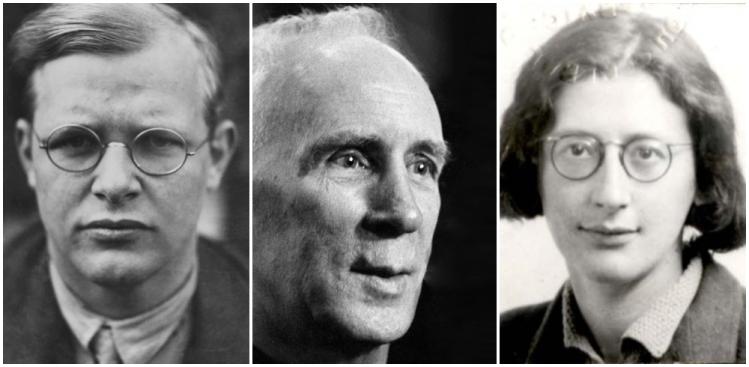
A phenomenology of mourning, however, only carries us so far; the originality of Loftin’s book is in the creation of “a theology of mourning,” in which he utilizes the work of a panoply of Christian thinkers. Bonhoeffer, von Speyr, von Balthasar, and the French Jesuits Henri de Lubac and Michel de Certeau figure largely in his argument, as do the more marginal Simone Weil and Georges Bataille. But there is also a place for more ancient authorities like the medieval mystics Hadewijch and Angela of Foligno. All in their different ways support Karl Rahner’s well-known assertion that “the Christian of the future will be a mystic or he will not exist at all.” But if it is to be a theology of mourning, it had better start with God.
Each of the book’s three parts begins with a historical interlude and then draws on some of the figures mentioned to move the theology forward. “Part One” finds us in Berlin in 1933, where Dietrich Bonhoeffer is calling on German Christians to eschew their self-preservation under Nazism and embrace concern for others. “Part Two” begins in Lyon in 1944, where Henri de Lubac struggles at great danger to himself to publish a book that promotes Eucharistic theology as an act of resistance to Nazism. And “Part Three” steps back a year to London in 1943, when Simone Weil argues that the doctrine of bodily resurrection promotes an anti-Christian idea of greatness that encourages fascism. It is relatively easy for a reader to see the connections between Bonhoeffer’s situation and our own in the present-day United States. De Lubac’s idea seems preposterous until we see his examination of two versions of the mystical body of Christ. And Weil’s rejection of resurrection proves even too much for Loftin, though her thinking nevertheless impels him into the fully formed theology of mourning that is offered by Michel de Certeau.
Loftin begins to construct the theology of mourning in “Part One” with the help of Simone Weil’s creation theology, in which God is estranged from the world, and the even more radical thought of Adrienne von Speyr that “God is estranged from Godself.” If this sounds a little weird, the idea behind it is pretty simple. If you create something, it is separate from you, though in a sense it is still yours. But for the God who is all in all to create something, God must make space for the creation, which means God must be less so that the creation can be at all. What seems perhaps arcane is in fact Loftin’s entrée into the divine sanction for difference, difference that should not seek its own elimination but should celebrate difference. Think for a moment here of how God “empties” the self of God in becoming human in Jesus Christ. Kenosis is a dramatic self-alienation that leads to the death of God at Calvary. Separation creates difference, and the unsatisfied longing for reunion is the place of love.
“Part Two” uses the heroic example of Henri de Lubac and the two medieval mystics to bring into focus the political challenge presented today by mostly Catholic conservative thinkers like Patrick J. Deneen, Adrian Vermeule, J. D. Vance and—though too recent for inclusion in Loftin’s analysis—antisemitic Holocaust denier Nick Fuentes. De Lubac asserted that, in the first millennium of Church history, the idea of the mystical body referred to the consecrated bread, but came to refer to the Church in the early centuries of the second millennium. The Fourth Lateran Council in 1215 was so concerned with being able to identify who were the true members of the mystical body that it stipulated special clothing for Jews and Muslims. The glorification of the Church leads to belief in the visible purity of the state, a political vision easily adopted by the Third Reich. You can draw a straight line from the Star of David in Nazi Germany to the politics of today’s Christian nationalists who want a theocracy in which “undesirables” like trans people, Muslims, and even Jews have no political voice. Sometimes the accusation of fascism is a poorly aimed cheap shot. This time, it seems, Loftin has hit the bullseye.
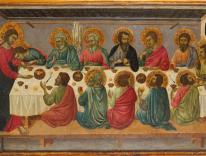
The payoff in “Part Three” begins with Simone Weil rejecting the Resurrection and ends with Michel de Certeau coming to the rescue, or at least providing Loftin with the ammunition to mount a rescue. Weil is well-known for her belief that it is the cross, not the Resurrection, that is critical. Indeed, for her the very idea of resurrection is a reassertion of greatness and consequently both plays into the hands of neo-Constantinian ecclesiology and does a disservice to the crucified Christ. In Loftin’s words, “Christians must learn to truly mourn the death of Jesus,” and an emphasis on his glorification frustrates that necessity. Loftin will not abandon the Resurrection, but for him, it has nothing to do with glorification. It is a matter of encouraging Christians to mourn the one they have lost, and to move on to pattern their lives on the gift of self that Christ exhibited in his passion. God reduced the self of God in the act of creation and in the separation of the Son and the Spirit. So, in the crucifixion and death of Jesus, the Church is born as the community of those who accept their own diminution as they move forward and outward into a new age. Christ is risen, truly, but only in the self-giving love of his followers. Summarizing de Certeau, Loftin comments that “it’s only by consenting to lose Christianity that we keep open the possibility of responding to Jesus’s call to follow him.”
The community of Christians could be mightily roused to heroic action by Loftin’s vision, but there is one nagging question. In the words of many a Southern evangelical minister, “Yes, but does it preach?” Perhaps this is not Loftin’s concern, since his message is not a particularly pastoral one. The Christian churches are dying, and so the future for followers of Jesus must be sought outside the safe structured communities of the past. Christ is risen in our willingness to give ourselves in loving service of others, and only there. Here and elsewhere in the book, one can see the influence of Tomáŝ Halík. The only eschatological vision that Loftin offers is one of struggling for a more just future, and personal immortality is not part of this picture. Faith and love, sure, but where is hope? There might be a little difficulty in getting the community on board with such a bleak vision.
Halík would differ from Loftin in his preference for an inductive approach. Like Certeau, Halík is a believer in attending to the religious experience of ordinary people. In contrast, Loftin seems to settle for the view from thirty-five thousand feet. As Loftin suggests, there truly are two tendencies in the Church today, between the restorationism of conservative Catholicism on the one hand and the openness to the future that the Gospel mandates on the other. However, I also think there are countless Catholics who don’t want to look backward but who nevertheless derive solace from the idea of a heavenly reward, especially those whose lives have been devoid of many earthly comforts. True, Loftin’s subtitle indicates that he is primarily discussing the Christian West, so whether the Latin American, African, or Asian churches are suffering or will suffer from the same malaise is perhaps not relevant. But in Europe and North America, if his call to a theology of mourning and resistance is to be effective, there needs to be a catechesis that will entice the poor and powerless, if not most of us, away from the comforts of eternal rest. The dense thinking and difficult prose of Loftin’s carefully chosen authorities will not serve that purpose.
Moving forward beyond the dying Western Church requires that we mourn all that we are losing. But is there not still something from the past that can be retained? Toward the end of the book, Loftin mentions Vatican II’s “new policy of aggiornamento, according to which the church would adapt to the world rather than demand the world adapt to the church.” Frankly, this misunderstands the council. It was openness to the world, not accommodation to it, that Vatican II brought into being. So perhaps it is ressourcement, return to the sources, that we need to preserve, that affirms the dynamic potential of tradition without living in the past. The resistance that Loftin rightly thinks should accompany a theology of mourning must surely be resistance to integralism and its political projects. But it also needs to be ready to critique what it sees in “the signs of the times” that favor Christian nationalism. Of course, Loftin does not want to define a theology of mourning simply by what it is against, but I would have welcomed a deeper discussion of Emmanuel Levinas’s remark that “faith is not a question of the existence or non-existence of God. It is believing that love without reward is valuable.” Could we be allowed to nuance Levinas a little to say that “love without hope of reward is valuable”? Then, perhaps, in mourning for the lost loved one, we make that loved one present in the love that motivates us to move forward on the Christian journey, wherever it will take us—not knowing where that will be, but believing that it will be a place full of love.
In the Twilight of the Christian West
A Theology of Mourning and Resistance
Mac Loftin
Orbis Books
$26 | 208 pp.
We welcome your comments about this article. Please send your response to [email protected].