Kenneth Woodward’s assessment of recent political history leads him to the conclusion that Democrats have prioritized minorities and pro-choice politics to the party’s detriment. As a result of their “obsessions” with these subjects, they’ve lost touch with the white working class. His proposed solution is for the party to welcome pro-life voters, deprioritize identity politics, and reverse course on LGBTQ issues.
When it comes to abortion, I would argue that the passage of ballot initiatives in both red and blue states to protect abortion access after Dobbs demonstrates that pro-choice policies, while clearly insufficient to carry a presidential election on their own, are more popular than ever. In 2024, support for legal abortion in all or most cases commanded majorities not just among Democrats (85 percent), but even among moderates or independents who lean Republican (67 percent). As religious affiliation in the country shrinks, so, too, does the percentage of voters who support more restrictive abortion laws. Whatever your own view on the issue, the evidence suggests that support for liberal abortion laws is not a minority position or “hobby horse” that has co-opted the party.
As for identity politics, Democrats have for years been trying to learn from their mistakes, but the problem is now more about who controls the narrative than about the policies or rhetoric of Democratic politicians. Woodward points out that “one thing Trump has never done is talk down to working-class Americans.” He is surely right that Clinton’s infamous remark about “deplorables” hurt her. But he is wrong to suggest that Democrats have failed to reckon with this issue, and that their loss in 2024 reflected a “sclerotic” obsession with the concerns of feminists and minorities at the expense of the working class. (I would note, in passing, that many women and minorities belong to the working class.) Throughout his presidency, Joe Biden celebrated working-class Americans and pursued policies that would protect their interests, including in Republican states. Far from excluding labor unions, he joined the picket line. Most of the legislation he signed (much of which has been undercut by Trump’s “Big Beautiful Bill”)—the CHIPS and Science Act, the Bipartisan Infrastructure Law, the American Rescue Plan, and the Inflation Reduction Act—had virtually nothing to do with the culture wars and everything to do with American manufacturing, infrastructure, energy, health care, and technology. And yet, the conception of Democrats as exclusionary elitists persists.
There are many possible reasons for this, but I do not think they are likely found in the Democratic conventions of 1968 and 1972, or in the subsequent presidential campaigns. One factor is that an enormous amount of media in this country is pro-Republican propaganda that reinforces Woodward’s view of Democrats as culture-war-obsessed scolds who condescend to the working class. Fox News is perhaps the most recognizable culprit here, but not the only one. There are also right-wing or right-leaning podcasters like Joe Rogan, Ben Shapiro, and Tucker Carlson, who all supported Trump; One America News; religious media networks like EWTN…the list goes on and on. Such outlets present a misleading picture of twenty-first-century America as a country of silenced majorities against coddled minorities, thereby shifting their audience’s attention away from the deeply unpopular economic agenda of the Republican Party.
Woodward espouses the same zero-sum framing. Supporting women implies rejecting men. Welcoming trans people must mean alienating or even threatening cisgender people. In this bleak vision, electoral victory is won by excluding minorities so as not to exclude majorities. But the real hollowing out of the white working class came not from feminists or civil-rights activists, but from politicians who valued cheap consumer goods over the workers who lost their jobs, demonized the federal government and crippled its ability to effectively provide services, and allowed corporations to spend unlimited amounts of money to elect their preferred candidates. In recent years, Democrats have made real efforts to address some of these issues, though there is still a long way to go. But it is not unpopular policy regarding trans people or abortion standing in their way; it’s moneyed interests and structural electoral challenges.
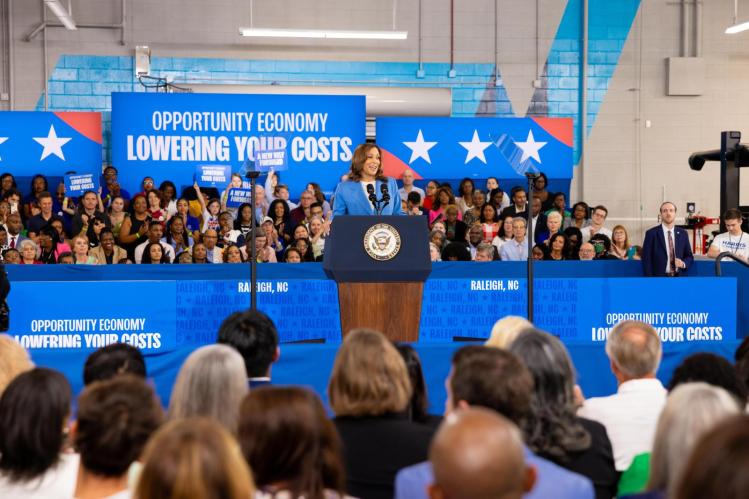
As a party, Democrats aren’t nearly as obsessed with identity politics as Republicans say they are. The Trump campaign spent more than 40 percent of its October 2024 ad budget on anti-trans ads to sell voters on the zero-sum vision: “Kamala Harris is for they/them. Trump is for you.” But Harris herself did not center trans people in her campaign. While her campaign rhetoric failed for other reasons, it was focused on an “opportunity economy,” “joy,” or “democracy,” not on publicly funded gender-reassignment surgeries for prisoners. And she clearly learned from Hillary Clinton’s 2016 campaign not to foreground her own identity. Far from “I’m with her,” Harris downplayed her minority identity. It was Republicans who insisted on making it a talking point, deriding her as a “DEI candidate.”
To the extent that Democrats have said and done things that reinforce their reputation as elitist, inaccessible, and eager to condemn, they do need to change. For example, Democrats shoot themselves in the foot by excluding people who agree with them on most subjects, but who haven’t always used the “right” language or whose positions diverge on nuanced edge cases (trans women in college sports, for example). Delaware representative Sarah McBride, the first trans woman to serve in the House of Representatives, has spoken about these mistakes, cautioning that “when you create a binary all-on or all-off option for people, you’re going to have a lot of imperfect allies who are going to inevitably choose the all-off option.” Democratic candidates should model humility and grace, not arrogance and hostility; they should be pragmatic rather than trying to prove their ideological purity. But that alone will not stop Republicans from spreading their own narratives about what Democrats believe. Today, people increasingly get their news from social media, where caricature and fabrication run rampant. This makes it easy for the right to conflate the whole Democratic Party with the most controversial opinions of anyone left of center.
There is no simple way to counter a massive propaganda network or an outrage-fueled algorithm. But any viable electoral strategy must try to expand the tent, not shrink it. Republicans hope they can make voters feel that Democrats don’t value them if they aren’t minorities. Democrats won’t prove otherwise by devaluing minorities. I agree with Woodward that Democrats need to change, and that the change must include and prioritize the working class. But my diagnosis leads to a different prescription: build both popular media and grassroots support to reshape the national narrative; back candidates who inspire genuine enthusiasm, regardless of how progressive or centrist they are; provide material benefits to people rather than catering to corporate donors; and, whenever possible, engage in good faith with imperfect allies—because you can’t win elections with only the votes of those who agree with you about everything.