As a small boy living on a farm, long ago and in another country, I used to watch, fascinated, as farm workers emptying a barn of its stored grain would gather with shovels around the last remnant of the grain pile. They knew that there would be rats in it, and that as the pile reduced the rats would eventually make a break for it, realizing that their shelter was almost gone. Then, as the rats began to show themselves and scatter, the workers—there were usually two, and although it’s more than sixty years ago I remember their names and what they looked like—would wield their shovels and crush the rats bloodily to death against the barn’s concrete floor. Some would escape—rats are fast—but many wouldn’t, and at the end of a frenetic few seconds there might be six or eight bloody corpses on the floor. The men cheered the kills, and then silence fell.
Decades later, in another country, I saw Jain monks walking a rural road, their mouths and noses masked, sweeping the path in front of their feet with whiskbrooms as they walked. They were trying to reduce the number of small beings they might crush with their feet or kill by inhaling.
These are two scripts about killing. We all have and live by such scripts, for we are all killers, and on a large scale. These stories have something else in common. They attend to the texture of actual experience, to what it’s like to kill. They’re close to the ground. Today in America, my beloved and adopted country, which has also loved and adopted me, I read a script about killing written by John Connelly (“Worse than Chamberlain,” Commonweal, April 2025). It’s an intervention in our current American debates about whether, and in what ways, to continue providing Ukraine military aid in its war against Russia. It is also about killing. That’s because, though reliable figures are hard to arrive at (neither side is accurately reporting them), at least four hundred thousand people, combatants and civilians alike, have been killed in the conflict since February 2022, and possibly as many as a million.
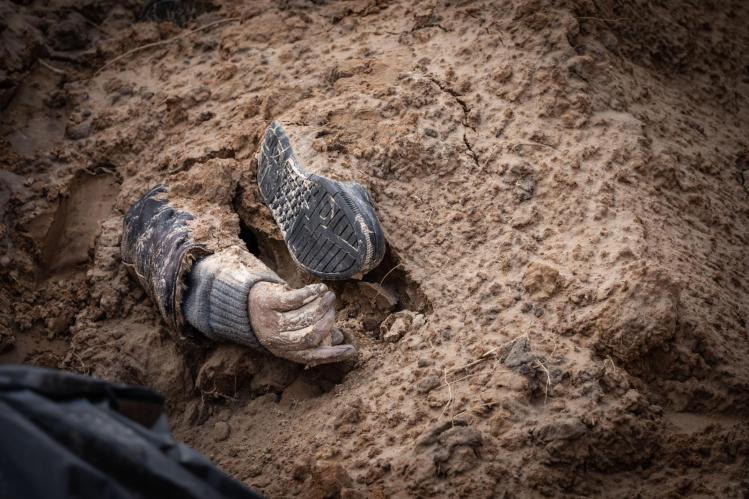
Connelly’s article encourages the U.S. government to continue supplying arms to the field of conflict. Anything else, he writes, amounts to a betrayal of Ukraine, and he shows contempt for that so-called betrayal and for its advocates. His writing is abstract: he doesn’t look at, and doesn’t want his readers to look at, bodies burned alive in tanks, cluster bombs ripping apart human flesh, drones pursuing and dismembering fleeing soldiers, bodies reduced to bloody fragments by automatic weapons, piles of corpses crushed like rats by shovels.
No. None of that. Instead, high abstraction: “An expansionist state backed by an aggressive ideology”; “a rapacious, occasionally genocidal empire”; “civic nationhood”; “nations that define their identities by looking forward and not backward”; “civic nationhood [which] is a world-historical miracle”; and, inevitably, “democracy” and “freedom…worth dying for.” (Connelly doesn’t say “worth killing for” but he certainly means it.) These abstractions are for Connelly so important that they make the killing vanish. If these are the things we look at (they’re so thin, so elevated, so abstracted, that they’re scarcely visible), if these are what count as reasons to kill, then we won’t look at the particulars of killing. We’ll become distracted, inattentive, stupefied by ideology. We’ll cheer the crushing of the rats because the cause is so important, so ideal.
Connelly’s essay, if taken seriously, is a charter for limitless violence. If the ideological stakes are as stark as he paints them, then no quantity of killing could be enough to provoke the thought that it needs to end. Better the death of tens of thousands more in Ukraine and a few hundred thousand more hapless Russian conscripts than the withdrawal of American arms. Better anything, it seems, than capitulation to a rapacious empire.
We Americans can do better. We can look closely at what it is to kill—the charred flesh, the bodies mutilated beyond recognition. We can thereby renounce, or at least dilute, the intoxication of ideological abstractions. We can learn to see that we are the principal suppliers of the instruments of death to the world. And we can ask our representatives to withdraw military aid from Ukraine immediately, while at the same time substituting humanitarian aid in as great a measure as possible. I realize these may be quixotic requests. They should nevertheless be made. They are scripts to live by and for, infinitely preferable to Connelly’s script for endless killing.