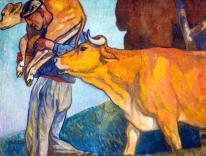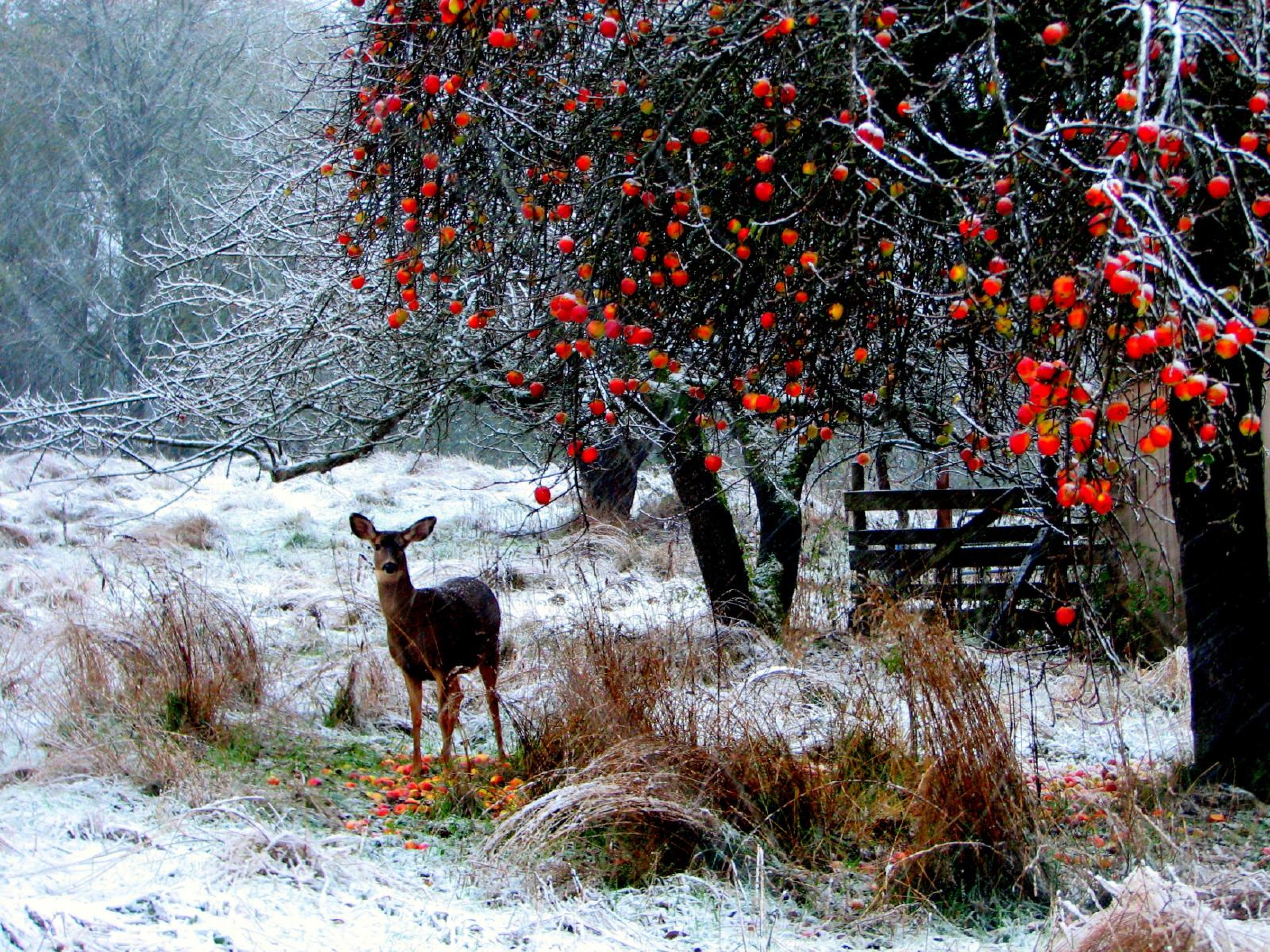
Toward the end of his philosophical essay I and Thou, Martin Buber abruptly shifts registers to relate a “tiny episode” pulled from his quotidian life: the repeated experience of gazing into the eyes of his cat. During these encounters, the cat’s Thou flickers up for the briefest of instants, returning and holding his human gaze before the moment passes and the creature falls back, once again, into the world of mute objects: “How powerful is the unbroken world of It, and how delicate are the appearances of the Thou!”
Written in the aftermath of World War I, Buber’s 1923 essay describes the melancholy of a world fast losing its sense of the sacred. In his assessment, most interactions humans have with their environment transpire in the instrumental mode of I-It, eclipsing the more primal mode of I-Thou: a relationship that acknowledges the original, divine gift of creation as an open dialogue between humans and the earth we inhabit. The sacred will return amongst us, Buber wagers, only to the extent that we can teach ourselves to glimpse the Thou that lies hidden at the center of every It.
That finding our way back to the sacred might happen through the vehicle of nonhuman forms of life, both plant and animal, is an idea that Christian theology has recently explored through the concept of “deep incarnation.” This mode of scriptural reading seeks to recover a more expansive sense of God’s presence as embedded in all living things and, indeed, in the very material unfolding of the cosmos. As Elizabeth Johnson glosses the term in her 2014 book, Ask the Beasts: Darwin and the God of Love, deep incarnation signifies a belief in the “radical reach” of the divine as it moves “through human flesh all the way down into the very tissue of biological existence with its growth and decay, joined with the wider processes of evolving nature that beget and sustain life.”
Two books of nature writing recently released in paperback, Robert Macfarlane’s Is a River Alive? (W. W. Norton & Company, $19.99, 384 pp.) and Helen Whybrow’s The Salt Stones: Seasons of a Shepherd’s Life (Milkweed Editions, $20, 304 pp.), are immersive and beautifully written companions to deep incarnation. A third memoir, published a decade ago, rounds out the trilogy: Charles Foster’s 2016 Being a Beast: Adventures Across the Species Divide (Picador, $19.99, 256 pp.). None of the three works is written through a religious lens. Yet the questions they raise about how our species might listen more closely and respond more faithfully to the earth and its creatures echo Buber’s suggestion that nature’s “stammering” on the “threshold of speech” deserves our attention, now more than ever.
Macfarlane’s book takes the reader on a swashbuckling intercontinental journey to visit three distressed river systems: he ascends the steamy mountain cloud forests of Ecuador to the Los Cedros; bakes on the flat coastal plains of the Adyar in southern India; then pops back to the Americas to whitewater raft down the Muteshekau-shipu of Quebec. All three river ecosystems are at the forefront of vigorous legal efforts to secure them rights as protected “persons” to halt or at least slow their destruction by human industry (mining, chemical dumps, and dam-building, respectively). Ultimately, Macfarlane concludes that the Enlightenment vocabulary of rights-bearing individuals maps poorly onto the complex species interdependence he witnesses in his travels. “In the seethe and ooze of the forest, in the flow of the river,” he writes, “I’ve never more strongly…perceived the error of understanding life as contained within a skin-sealed singleton. Life, here, stands clear as process, not possession.”
In the rainforest, Macfarlane explores the limits of anthropocentric personhood. The overreliance of our species on sight is particularly unhelpful in the heart of the cloud forest, where “you can hear much further than you can see.” He listens to the eddying circle of bird alarm calls in response to human intruders and must adjust his ear to catch the separate notes in the forest’s thickening soundscape as it “steams, multiplies, teems” and “fizzes around us: hoots, buzzes, clicks, rasps, calls.” His mycologist guide, Giuliana Furci, describes her uncanny ability to root out oft-hidden life forms as a species of sixth sense. “I know…that there is something—no, somebody—who wants to see me,” she reports of ghostly fungal communications. “You get a call-out from them,” she explains, a signal that fires somewhere on the border between touch and hearing, like an electric crackle arcing the night sky before a storm. As the rainforest scrambles his senses, Macfarlane’s primary idiom of reportage pools into poetry, words straining to shape the texture of a material world no longer filtered through our blinkered species lens. A hummingbird’s flight—“blur, whirr, dip, sip, slip”—flickers in a bobbing line of text and sound; the forest’s dense air is a “grey-green socket of softness,” tangling touch and sight into a single bodily impression.
The Salt Stones, a solidly pastoral memoir, remains closer to home. Whybrow charts the revolution of the seasons on her sheep farm in Vermont. Yet her story, like Macfarlane’s, is in part an effort to wrest from language a glimpse of what lies beneath or beyond words: the mysterious material interlacing of our species with the natural world. In a chapter from the spring cycle, “The Flock Is in the Land,” she describes how animal and landscape coevolve to form interleaving systems of stunning complexity. Whybrow remarks she might just as easily claim the title of “grass farmer” as sheep farmer, since the meat, milk, sweaters, and rugs her land produces wax and wane in direct proportion to the amount of grass she grows. She must move the flock daily to capture and metabolize the full range of the hillside’s nutrients; the sheep, in turn, “subtly and gently till the ground” with their hooves, dispersing seed and stimulating “dormant clover and vetch to sprout” with each step. They grind out pockets in the earth where rain collects, and deposit “perfectly pelleted compost” to nourish next season’s banquet. In the vocabulary of English shepherds, this is what it means for a flock to be “hefted” to a particular patch of earth: its moods and seasons, its wet and dry and wind, and its tastes and scents penetrate the animal’s very being. To be hefted to a place means “to belong there, to know and be known.”
That living beings are bound to one another by a force that surpasses understanding is a lesson Whybrow learns from hardscrabble living, year in and year out, on the land and with her flock. It is also a lesson she carries with her as she nurses her aging mother through the final stages of dementia. As her mother slips into a place beyond words, Whybrow feels their connection shift to “the physical and spiritual plane,” “a kind of simple being-togetherness with touch and words that console but don’t require response.” Though in her mother’s eyes she has ceased to be “Helen”—or “my Heli,” as her mother had once cooed to her—their hearts still touch in a way that Whybrow is at a loss to explain. “I sense she knows what I am—someone who holds our love—even if the who is lost.”
When it comes to interspecies entanglement, Charles Foster sees Macfarlane and Whybrow’s mystical bet and raises it. Being a Beast recounts the author’s attempts to physically replicate the alien sense-worlds of badger, otter, fox, deer, and swift. Foster burrows in mud banks, navigates icy river bottoms, and sifts through trash in London back alleys; he eats earthworms, sniffs animal scat, and tries to outrun bloodhounds. Foster takes this project of inhabiting an animal’s otherness to lengths few would even consider (or be able to stomach). And yet the book’s conceit is far from a pointless provocation or a bar-room dare. At the heart of Foster’s experiment lies the same philosophical and, indeed, theological question that animates Buber, Macfarlane, and Whybrow: How do I know that I am not alone? To what, or to whom, am I beholden when I am in the presence of another living thing?
Children retain an ancient species memory of wanting to be intimate with animals—indeed, of wanting to be animal—and Foster is no stranger to this wish. He was a boy obsessed with blackbirds: he read about them, scouted them, collected their broken eggs, and taxidermized their land-wrecked corpses. The creatures never yielded their secret, and to this enduring childhood ache of a withheld mystery Foster attributes his adult passion for studying “the exhilarating inaccessibility of all creatures, including, perhaps particularly, humans.”
Foster kicks off his experiment by digging, and then immuring himself in, a rough-hewn badger sett at the edge of a wood, emerging only at night to search for food on all fours. During his early days as a badger, Foster receives a similar lesson to Macfarlane’s in the rainforest. Human eyes are made for scanning sky and horizon; badgers swap the “airy pleasures” of vision for the “darker, stickier, mucusy, damper, rougher pleasures” of nocturnal dirt, grass, scat, and slime. Foster thus must learn to parse a foreign alphabet of smells: “Maritime tang of a slug trail, like a winter rock pool”; “crushed laurel of a frog”; the “dustiness of a toad.” “[I] got these things,” he narrates, “usually as single words, occasionally as short sentences”—an experience that leaves him to marvel at the “intricate [olfactory] stories” unfurling in a hunting badger’s brain.
Once his “swirling atavistic panic” abates, Foster’s season in a badger hole leaves him with an abiding sense of species humility. “It was ok to lie in the dark, surrounded by the scratching and humming and thrashing of animals that would one day eat me,” he realizes. “From there it was a small enough step not to mind being eaten, and not to mind being in, or getting toward, the state in which one is eaten. And once you’re there, you’re at last a proper ecologist, knowing your place.”
Writing about, and on behalf of, nonhuman life forms is rife with risk: of anthropomorphism or sentimentality; of pride, blindness, and false mastery. But to shine a light on the porous boundaries separating species is, ultimately, to shine a light on the mystery and grace of being an incarnate self among others. By the end of his adventure, Foster admits he can no more “know” what a badger’s inner life is like than he can be sure of the existence of other human minds, up to and including the inner worlds of the beings he holds most dear on earth: his children. “This isn’t a problem of physiology; it’s the problem of otherness.” Yet this is, perhaps, the greatest lesson of all: “We can’t know that we’re not alone,” he realizes. “It is an act of pure faith.”
We welcome your comments about this article. Please send your response to [email protected].