On Sunday, August 9, the second reading at Mass featured Romans 9:1–5, where Paul expressed anguish over the failure of fellow Jews to accept Christ. Yet two chapters later—in a passage not included in the August 9 readings—Paul concluded that the Jews’ divine calling remains untouched: Jews are “most dear” to God, because the “gifts and call of God are irrevocable.”
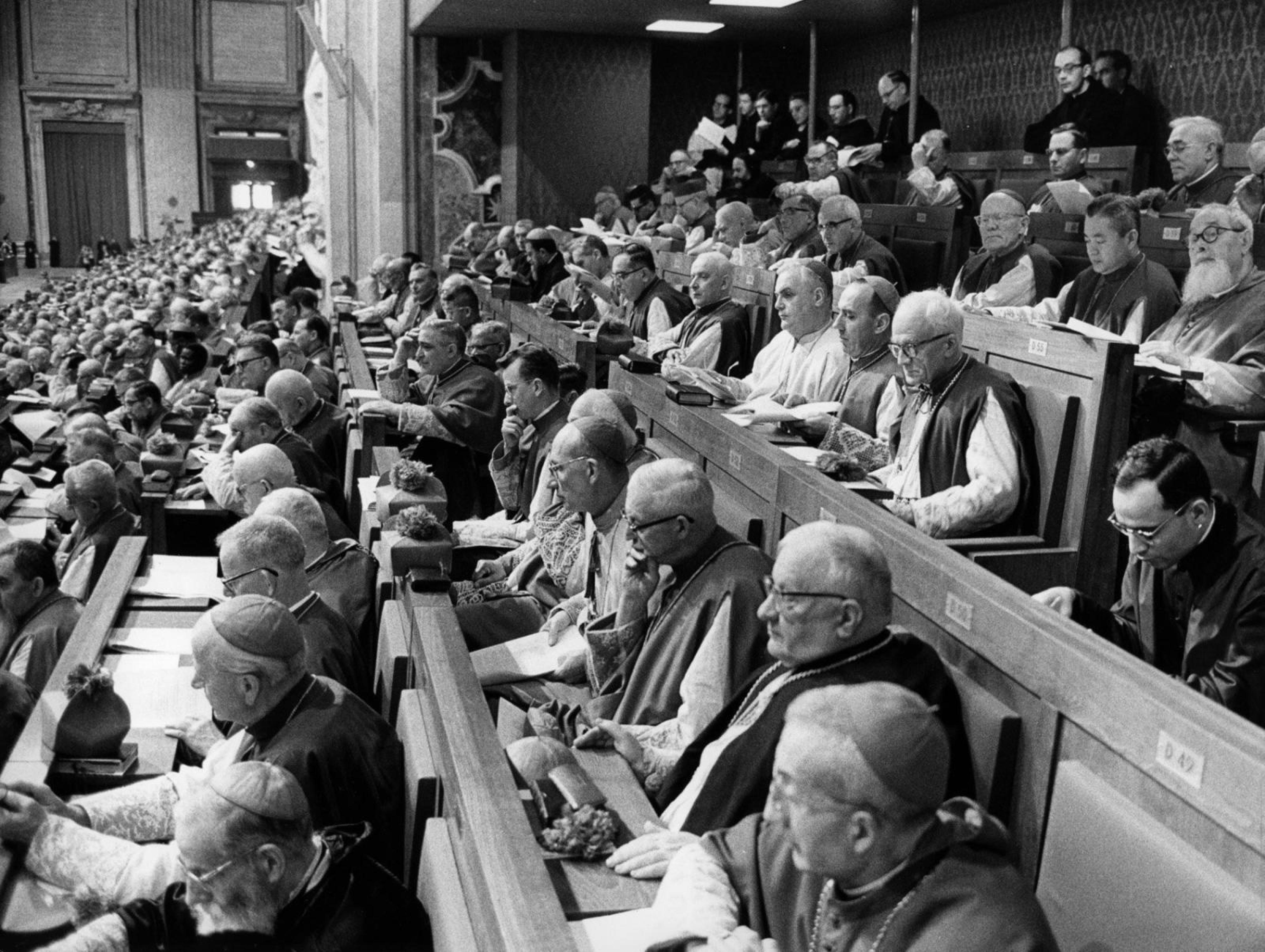
Those words were a key inspiration at the Second Vatican Council, as the bishops and their advisors sought language to speak to the Jews after centuries of forced baptisms and pogroms, and directly in the shadow of the Holocaust. In the declaration Nostra aetate (1965), the bishops reaffirmed that the Church proclaims Christ as “‘the way, the truth, and the life,’” but they pointedly refrained from expressing hope for the conversion of the Jewish people. In fact, they rejected an early draft that read:
It is also worth remembering that the union of the Jewish people with the Church is part of the Christian hope. Therefore, following the teaching of the Apostle the Church waits with unshaken faith and deep longing for the entry of that people into the fullness of the people of God established by Christ.
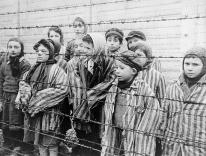
Twenty years after a regime at the heart of Europe had attempted to annihilate the Jewish people, it seemed obscene to pray for that people’s assimilation. And so the bishops replaced that text with the following: “The Church awaits that day, known to God alone, on which all peoples will address the Lord in a single voice and ‘serve Him shoulder to shoulder.’”
Having spent a decade studying the difficult path the Church took to adopting this revolutionary teaching, I was astounded, on that Sunday in August, to hear the lector in our Berkeley church read a prayer asking that the “Jewish people recognize Jesus as their Messiah.” It was as though we were cast backward to the 1930s. Yet no one objected; in fact, no one seemed interested. Why were we singling the Jews out in this prayer for conversion? We don’t pray at Mass that Lutherans finally accept the pope, that Orthodox give up their “heresy,” or that Muslims line up for baptism.
More fundamentally: How did that prayer relate to Nostra aetate? If we look to Rome, we see the popes have built upon that 1965 text and no longer pray for conversion of the Jews. John Paul frequently called Jews our “older brothers,” and speaking to Jewish organizations in 1979, he said: “We recognize with utmost clarity that the path along which we should proceed with the Jewish religious community is one of fraternal dialogue and fruitful collaboration.” Dialogue means listening, and anyone who has spoken with Jews about Christianity knows that their ideas of Christ differ from ours.
Still, the issue remains challenging. Didn’t Christ bring salvation for every human being? “A Journey of Hope,” the September 16 statement from the Vatican Dicastery for Promoting Christian Unity affirms that, for the Church, “Christ is the one and only Redeemer,” and as we know from the fragment from Romans 9, Paul was so troubled by his fellow Jews’ unwillingness to follow Christ that he wished an anathema upon himself. Perhaps the severity of such words helped drive generations of Christians to exclude and humiliate Jews, force them into ghettos, and permit equality only when Jews accepted baptism. It was with all that history that Nostra aetate deliberately broke.
Subtlety and goodwill are needed to strike the right balance, but the challenges to reaching discernment are not insuperable. Pope Benedict, who called Jews our fathers in faith, cited Hildegard Brem: “The Church must not concern herself with the conversion of the Jews, since she must wait for the time fixed for this by God, ‘until the full number of the Gentiles come in’ (Romans 11:25).” Until the end of time, therefore, evangelization should focus on non-Jews. In 2015, the pontifical Commission for Religious Relations to the Jews developed this idea:
That the Jews are participants in God’s salvation is theologically unquestionable, but how that can be possible without confessing Christ explicitly, is and remains an unfathomable divine mystery. It is therefore no accident that Paul’s soteriological reflections in Romans 9-11 on the irrevocable redemption of Israel against the background of the Christ-mystery culminate in a magnificent doxology: “Oh, the depth of the riches and wisdom and knowledge of God! How inscrutable are his judgments and how unsearchable his ways” (Romans 11:33). Bernard of Clairvaux (De cons. III/I,3) says that for the Jews “a determined point in time has been fixed which cannot be anticipated.”
In the meantime: Judaism remains a living, vibrant faith. “A Journey of Hope” cited Pope Francis, who wrote in 2013 that “God continues to work among the people of the Old Covenant.” We can easily confirm that statement’s truth by going to a local synagogue. There you will find not the inert relic of a people left behind by Salvation History, but every sign of spiritual life: joy, community, faithfulness. Yes, we Christians have fantastic music, but they have fantastic music that is different from ours. Should we pray that all of that come to an end? During the Vatican Council, Rabbi Abraham Joshua Heschel met repeatedly with Cardinal Augustin Bea, who oversaw the drafting of the statement that became Nostra aetate. At one event in New York City in 1963, Heschel asked Bea whether in his view God really desired “a world with no one left to sit shiva.” Imagine I had brought a Jewish friend with me to Mass in Berkeley on August 9. I would have had to explain why the congregation seemed to hope that her entire people, as well as her religion, dissolved into the Catholic Church.
Unfortunately, Christians were not expected to have any respect for Judaism for centuries, from the earliest Church (though there are reports of Christians still attending Jewish services into the fourth century) to the 1960s. Close contact with Jewish religious rituals was thought to endanger a Christian’s soul. Why? Supposedly the Jewish people’s failure to accept Christ as their messiah had brought a curse upon them. Therefore, either they had to become just like us, or suffer in this life and the next. That is why Catholics used to pray on Good Friday that God lift the Jews’ “blindness”—even during World War II, as they were being taken to the death camps.
Many Catholics feel remorse about these sad chapters in our Church’s history, but how many have read Nostra aetate, let alone the teachings that built upon it? How could it be that a well-educated priest in Berkeley, California, failed to sense that something was off when the congregation prayed for Jewish conversion? The Holocaust was the most extreme atrocity in a century full of atrocities, and it happened at the heart of Christian Europe, albeit at the hands of a regime that hated Christianity. Nostra aetate was the Church’s first attempt to speak about—and to—the Jews in the shadow of that event. Not surprisingly, support for a statement on the Jews in 1965 was especially urgent among Germany’s bishops.
Yet somehow a gap remains, more than half a century later, between that teaching and what even most educated Catholics know. Our leaders need to do more to get the word out: Jews remain most dear to God (Nostra aetate, 4). The Romans verse that inspired this statement (11:28) was not included on August 9; it was also omitted from the following Sunday’s readings, when we heard Romans 11:13–15, 29–32. Why? The Church’s leaders cannot assume that Catholics are all familiar with Nostra aetate, or that they are all aware of the Church’s long history of anti-Judaism. And they cannot afford the illusion that antisemitism is a thing of the past—inside or outside the Church. Now is not the time to forget the lessons that fathers of Vatican II learned the hard way.
We welcome your comments about this article. Please send your response to [email protected].