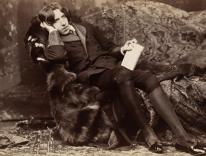
All of the recent posts on the Triduum and Anthony Domestico’s interview with Christian Wiman have brought me back to one of my favorite living poets, Geoffrey Hill. In the interview with Wiman, Domestico classifies two types of Christian poets: those who emphasize the incarnation and those who emphasize the crucifixion. In the second camp, Domestico quite rightly places Hill. And so I thought dotCommonweal readers would be interested in two of Hill’s poems. “Canticle for Good Friday” comes from his first collection For the Unfallen (1960) and “LACHRIMAE ANTIQUAE NOVAE” comes from Tenebrae (1978). Hill’s Broken Hierarchies, Poems 1952-2012 has just been published by Oxford University Press.
Canticle for Good Friday
The cross staggered him. At the cliff-top
Thomas, beneath its burden, stood
While the dulled wood
Spat on the stones each drop
Of deliberate blood.
A clamping, cold-figured day
Thomas (not transfigured) stamped, crouched,
Watched
Smelt vinegar and blood. He,
As yet unsearched, unscratched,
And suffered to remain
At such near distance
(A slight miracle might cleanse
His brain
Of all attachments, claw-roots of sense)
In an unaccountable darkness moved away,
The strange flesh untouched, carrion-sustenance
Of staunchest love, choicest defiance,
Creation’s issue congealing (and one woman’s).
LACHRIMAE ANTIQUAE NOVAE
Crucified Lord, so naked to the world,
You live unseen within that nakedness,
consigned by proxy to the judas-kiss
of our devotion, bowed beneath the gold,
with re-enanctments, penances foretold:
scentings of love across a wilderness
of retrospection, wild and objectless
longings incarnate in the carnal child.
Beautiful for themselves the icons fade;
the lions and the hermits disapper.
Triumphalism feasts on empty dread,
fulfilling triumphs of the festal year.
We find you wounded by the token spear.
Dominion is swallowed with your blood.