Set in a miserable dystopia, Houellebecq’s latest novel is both thought-provoking and wearying, fronted by a hypercynical yet dangerously nostalgic narrator.
I have known Buttigieg since I taught him at Harvard. One question animated him: how could Americans unite politically when their culture was increasingly polarized?
Theodore Roszak’s work was more than an apologia for 60s counterculture. It was one of the era’s most impassioned attempts to revitalize the utopian imagination.
If the hierarchy wants to reclaim some moral authority, shaping a better Catholic narrative in public life is necessary. Pace Charles Chaput, it must be inclusive.
The debate is not whether modern paganism is real, but where it lives, how it appears, and what it does. In contemporary politics, it's cruelty and violence.
William Blake critiqued the Enlightenment, industrialization, and the expansion of the British empire. His work shines at the Tate as the shadows of Brexit loom.
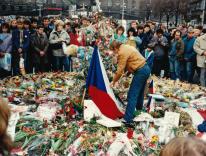
Thirty years ago, the Velvet Revolution marked the demise of Soviet control of Czechoslovakia. My enthusiasm for Vaclav Havel’s lucid writing continues to this day.
What do me mean when we discuss religion? Do we refer to an integrated ethnicity and culture? In these darkening times, the word’s origins matter more than ever.
A new play about a reunion of four friends, all conservative Catholics, is quietly heroic. It reveals the limits of rhetoric as it probes the nature of suffering.
The synod on the Amazon will be remembered as the moment that bishops gathered in Rome asked the pope to ordain married men in order better to serve the poor.
As evidenced by his Notre Dame speech, Barr’s understanding of Christianity is essentially Pelagian: his idea of Catholic ‘micro-morality’ ignores the social gospel.
Did liberalism originate in a kind of theodicy? And is there any reason to suppose that egalitarian liberalism is or has to be theological? Not necessarily.
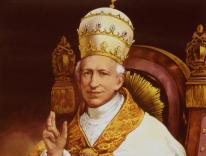
In this moment, where we find ourselves pushed relentlessly toward “either/or” positions, an 1890 encyclical by Leo XIII offers a helpful way of framing nationalism.
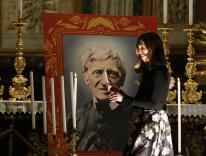
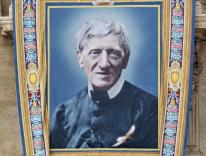
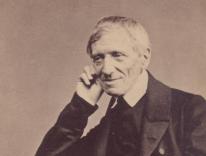
Newman’s problem was that the Catholics who admire his prose and the fineness of mind usually are not the sort of Catholics who pray for miracles in times of need.
Best known for his autobiographical and educational works, John Henry Newman now has the distinction of being the only saint with two published novels to his credit.
How did mainstream American Christianity became intellectually respectable and modern? The critical study of post-biblical Christianity played a key role.
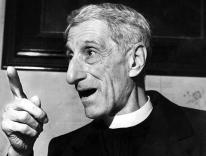
Massimo Faggioli comments on the legacy of Don Lugi Sturzo, the Italian priest who resisted fascism and insisted on the right of lay Catholics to engage actively in politics.
Kathryn Tanner offers a pointed theological critique of finance capitalism, which inverts the Christian understanding of human dignity and the dignity of work.
Is liberal democracy really so exhausted that there is no choice but to abandon it? The hopeful answer, articulated earlier by Italian priest Luigi Sturzo, is no.
The idea of religious liberty was not simply the product of the Enlightenment. It has ancient origins, going back to early Christians suffering persecution in Rome.
The thread running Michael Brendan Dougherty’s book is the author’s spiritual development, which culminates in the discovery of his own vocation as a father.
Maybe Pell’s time is prison has not been a martyrdom, or even a monstrous injustice, but an expiation that is helping to bring about an overdue pastoral conversion.
By the time I arrived at Harvard, the school was secular, yet haunted by faith. I’d been a practicing Christian for years, but had never been baptized.
In our divided era, aggressive secularism and Catholic neo-integralism are not the only two options available. A new Vatican document revisits religious freedom.
French thinker Étienne Balibar argues that the modern nation-state has become a religion that is now collapsing under the weight of its contradictions.
It will take time and care, but I know Notre-Dame will have its Alleluia moment. I pray there will also be one for the church that inspired its creation.
There’s the natural urge to pronounce on the fire’s deeper meaning. But for now, it might be more fitting to look upon Notre-Dame once again in gratitude and awe.
Augusto Del Noce argued that the true fault line of contemporary history ran between those who affirmed man’s religious dimension and those who denied it