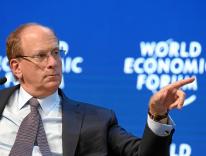
If Alan Greenspan got the economy wrong, what chance was there for the rest of us? His aura as a financial wiz outshone dissenting economists who questioned the novel financing schemes inflating the housing market (those dissenters included colleagues at the Federal Reserve, where he was chairman from 1987 to 2006). Though there were multiple warning signs, Greenspan was surprised when the bubble finally burst and major financial institutions began to collapse—and with them the global economy.
Testifying before a House committee in October 2008 under the stern questioning of Henry Waxman (D-Calif.), Greenspan admitted that he did not “fully understand why it happened,” though he acknowledged “a mistake in presuming that the self-interests of...banks and others were such that they were best capable of protecting their own shareholders and their equity in the firms.” Take the wiz at his word: he could not foresee the Great Recession because his assumptions about markets and their innate capacity for self-correction rendered him incapable of imagining the cumulative consequences of low interest rates, deregulation, novel investment devices, securitization—all in a globalized economy. We could call this invincible ignorance, but, as John Cassidy’s new book shows, in Greenspan’s case it was more like intellectual arrogance.
An elaborate framework bolstered by mathematical formulas showing that an invisible hand regulated financial markets underpinned Greenspan’s beliefs. He and others were so convinced of these truths that they deemed any intervention by regulatory agencies (including the Fed) both unnecessary and disruptive. The upward trajectory of financial markets was allowed to continue. If there were a bubble, which Greenspan denied, markets would correct themselves. Millions took this “ideology” (Waxman’s word) for gospel: legislators, regulators, bankers, traders, brokers, pension-fund managers, homebuyers, and ordinary people investing for retirement. If Alan thought so, it must be so.
How Markets Fail: The Logic of Economic Calamities (and there is a logic) shows how an academic juggernaut of economic theorizing and mathematical models superseded the Keynesianism of regulated markets and government oversight that tamed the Great Depression. Combined with the “evangelical” policy work of Milton and Rose Friedman, this academy-based effort produced a refurbished theory of free markets, which came to dominate banking and financial institutions. The gurus of this new model traced its origin to the eighteenth century, which is where Cassidy begins his analysis by looking at Adam Smith’s definition of markets and the invisible hand that directs them.
Smith’s metaphor of the invisible hand explained how markets for manufactured goods functioned. The self-interest of businessmen brings together a supply of goods—raw materials, factories, and distribution systems. Consumer demand sets the price, signaling whether to expand or contract supply. Thus the invisible hand, whose dictates a smart businessman will follow, directs the balance of supply and demand, allowing a free market to flourish. A version of Smith’s analysis in The Wealth of Nations came to dominate the thinking of Reagan-era policymakers. Not that Smith would have agreed with Reaganomics. Like his latter-day disciples, Smith was a proponent of free trade, low taxes, and limited government, but he never intended his ideas to be applied to banks or financial markets. On the contrary, in an era of financial swindles and failed banks, Smith thought government regulation was necessary to protect the public and the economy. To judge by his The Theory of Moral Sentiments, Smith would have considered the titans of Wall Street seriously lacking in common sense and the requisite virtues of entrepreneurs.
“The notion of financial markets as rational and self-correcting mechanisms is an invention of the last forty years,” not of Adam Smith, Cassidy writes. In the book’s first section, “Utopian Economics,” Cassidy lucidly describes the deceptive way some free-market partisans link Greenspan et al. to Smith and other classical economists. He makes clear everything you never understood in economics class: externalities, Pareto efficiency, the market as a communication system, the Chicago school, general equilibrium theory, convex sets, game theory, monetarism, shock therapy, efficient markets, index funds, risk management, volatility clustering, rational-expectation theory, and much more.
In section two, “Reality-Based Economics,” Cassidy looks at economic issues for which free-market theories cannot account. Public goods—the environment, schools, roads, infrastructure—are necessities that markets don’t provide for, and that corporations and other market players generally oppose paying for (see low taxes). Spillovers from market activities, such as pollution and global warming, are never calculated in the cost of goods. Neither are markets efficient allocators of resources, especially when it comes to stock values. The “collective wisdom” supposedly reflected in pricing turns out to be spurious for many reasons. As Cassidy reminds us, the incentive to withhold information can distort many markets: health insurance (pre-existing conditions), used cars (lemons), and free-agent athletes (injuries). If individuals have reason to hide information, how much more do professional traders, brokers, and banks too big to fail? Many don’t really know the true value of their “goods”; and, as Cassidy shows, a herd mentality is always ready to follow the rational irrationality of betting on a stock because everyone else is. The savvy or lucky guy gets out before it tanks.
Finally, Cassidy analyzes the events that led to the meltdown. In part three, “The Great Crunch,” he demonstrates how a deregulated banking industry got taken up in a frenzy of lending, borrowing, and securitization. Competition from other financial entities lured the generally conservative world of banking into a competitive downward spiral—lowering lending standards, deceiving home buyers, and misleading investors. The larger financial world lapped up junk mortgages and sliced and diced them into derivatives sold across the world. A veil of ignorance covered their real value, and when the veil was lifted in 2007, the herd decided to sell.
Though How Markets Fail tackles highly complex and arcane economic theories and financial practices, it is highly readable, even witty. Cassidy, a writer for the New Yorker, knows his economics; he also knows something about psychology. He is an astute and fair-minded critic of how reasonable financial practices went off the rails, and how good bankers went bad.
Anyone with a 401(k) or a “guaranteed” pension would do well to read the book and figure out how their money disappeared in 2008. The financial executives, traders, bankers, investment advisors, pension-fund managers, and rating agencies that lost that money might find out something as well: their invincible ignorance was compounded by Alan Greenspan’s intellectual arrogance.
Please email comments to [email protected] and join the conversation on our Facebook page.
Previous Story
Blessing the Beast?
Next Story
A Principled Opportunist