When I came into my “Introduction to Shakespeare” classroom on Good Friday, students all over the room were animatedly talking. “Did you see the demonstration in front of Planned Parenthood?” one asked me, as others chimed in about police cars and crowds. I hadn’t been thinking of it, but I did know that a group of Catholics were praying the Stations of the Cross in front of the local Planned Parenthood that morning, as they do every Good Friday. I was surprised, though, that my students would know about it, much less be excited about it.
My surprise was short-lived. “Some people were demonstrating against abortion,” a student filled me in, “and we were there to support Planned Parenthood.” “I think they were having a Mass,” another added. “We stopped shouting, you know, not to be rude, but they kept praying anyway so we shouted some more.” “One priest fainted!” yet another added. She was neither scorning nor sympathizing, merely adding an illustrative detail. The news disconcerted me, as I knew some of the priests who were planning to be there. But I didn’t pursue it. We had Shakespeare and his two great themes to talk about: comedy and tragedy, the affirmation of life and the denial of life.
It took a minute or two to get the class settled down. Though we were scheduled to begin Macbeth, a play featuring a mother who would pluck the sucking baby from her breast and smash its brains out against the wall if her ambition required it, I had decided to spend another day on Measure for Measure, the difficult play Shakespeare wrote at the time he was making his transition from comedy to tragedy. Measure for Measure contains a great deal of sexual, even bawdy, language, and my students found this very interesting. We had seen bawdy language in Romeo and Juliet, where rowdy young men talk about pushing maidens to the wall and breaking their maidenheads, the Nurse jokes about Juliet falling on her back when she comes of age, and so on. I asked my students if they recognized this vulgar culture. They did; it was the culture of their dorms, they said, the culture of the fraternity and sorority houses and bars of their social world, the culture of today’s popular music and television and movies.
How conducive is this culture to love? I asked them. Not very, they acknowledged. In fact, nothing of the culture of Romeo and Juliet is conducive to love—not the coarse sexuality, not the fighting and violence, not the distant parents—and this is the tragedy of Romeo and Juliet. Our discussion suggested that the tenderness and beauty and love that at least some of my students aspire to in their sexual lives cannot be realized in such a disordered culture, and that before their sexual lives can be fully realized, as they are in Shakespeare’s comedies, they will somehow have to remove themselves from the culture around them. The sexual liberty and coarseness of Verona is part of Romeo and Juliet’s tragic setting, part of the environment that destroys the young lovers. So too the American culture my students live in.
Measure for Measure is not so neat a play as Romeo and Juliet. Its setting is equally coarse, full of drunkenness and illicit sex, whorehouses and venereal disease. But there are no beautiful young lovers like “Juliet and her Romeo,” nor any resourceful young women seeking love’s fulfillment. There are only a duke who has let the sexual energy of Vienna get out of control, a life-denying would-be nun, a hapless and cowardly brother sentenced to death for fornication, his speechless partner in sin, and assorted pimps, madams, and dissolute men. Ugliest of all, there is the puritanical Angelo, charged by the duke with restoring order, who instead deploys his power to seek both the sexual conquest of Isabella, the nun, and the death of her brother Claudio. And while the sexual union of the young lovers in Romeo and Juliet produces some of Shakespeare’s most beautiful poetry, the sexual union that paradoxically saves Isabella’s virginity in Measure for Measure inspires no poetry. It is literally a deed of darkness, so lacking in intimacy that Angelo does not even know that he is not with Isabella, but with a former fiancée.
Yet it all works out in the end, at least ostensibly. Like the great comedies that preceded it—A Midsummer Night’s Dream, As You Like It, Twelfth Night, Much Ado About Nothing—Measure for Measure begins in the shadow of death, with Claudio being led away to his execution for having illegitimately impregnated Juliet, and ends with multiple marriages (four, to be exact). But these marriages don’t seem the affirmation of life that marriage represents in the earlier comedies. Consider the forced marriage of the cold, rapacious Angelo to the hopelessly devoted Mariana, or that of the dissolute Lucio to the prostitute who bears his child. Or, most troubling of all, the marriage of the Duke to Isabella, a union simply announced by the Duke without Isabella’s consent. Isabella is about to enter a cloister when called to plead for her Claudio’s life, and throughout the play she places her chastity above every other consideration, even the life of her brother. What right does the Duke have to appropriate her as his bride? My students, despite their incomprehension of most things religious, felt he had no right whatsoever. Though Isabella’s choice to be a nun wasn’t one any of them would make, or even understand, they respected it. They are, after all, prochoice.
But Shakespeare is not prochoice—at least not when choice denies life. He is, rather, completely and consistently prolife, in Measure for Measure and throughout his entire body of work. Unlike my students, Shakespeare does not respect Isabella’s choice to become a nun, because within the symbolic structure of Measure for Measure it is a choice to renounce a full openness to life. Realizing this is the key to understanding Measure for Measure. Elsewhere in his work Shakespeare presents a robust view of women. Rosalind in As You Like It, Viola in Twelfth Night, Portia in The Merchant of Venice, even Hermia in A Midsummer Night’s Dream—these are heroines who overcome the enemies of life, to paraphrase Sir Toby in Twelfth Night. But not Isabella. Though we cringe when Claudio begs her, “Sweet sister, let me live,” knowing that the corrupt Angelo has demanded her virginity in exchange for Claudio’s life, we feel only pain when Isabella refuses with blank vehemence. “Die, perish!” she tells her wretched brother. “I’ll pray a thousand prayers for your death, not one word to save thee.” Isabella, we’re asked to see, is herself as much an enemy of life as the rapacious Angelo; her choice of the nunnery constitutes a denial of life’s generative power. If a life-affirming resolution is to come in this play, it cannot come from Isabella. In Measure for Measure there is no more energy for life in the nunnery than in the prison.
I discuss this with my students with some unease. Though many, even most, of them have been raised in Catholic households—the college where I teach is located in one of the most solidly Catholic dioceses of the Northeast—my students scarcely need encouragement in their rejection of Catholicism, or of organized religion in general, which for them is symbolized by nunneries and the renunciation of sexuality. I’d had to deal with this earlier in the semester, discussing A Midsummer Night’s Dream, when Hermia, refusing to accept her father’s choice of a husband, is given two options: death or the nunnery. For Shakespeare as poet and dramatist, the two choices clearly amount to much the same thing—the denial of life.
Does this rejection of Catholic asceticism make Shakespeare anti-Catholic? Or should it make us think more deeply about the Catholic Church’s mixed message to the young, a message that could fairly be described as prolife but anti-sex? Life and sex are, after all, inextricably intertwined. If the energy for life in Measure for Measure is not to be found in either the prison or the nunnery, where in the play is it to be found?
Perhaps distressingly to morally minded readers, it is first of all to be found in the sexual energy of Claudio and Juliet, who have failed to wait for marriage and gotten themselves with child. In Measure for Measure this act is not to be condemned, as Angelo hypocritically would have it, but ordered and celebrated, as it is by the Duke when he pardons Claudio and brings him and Juliet together in marriage. And Shakespeare goes further, celebrating the sexual energy of the irresponsible Lucio. Lucio is my students’ favorite character, and his is the energy on which the whorehouses thrive, the energy the comic bawd Pompey declares cannot be denied no matter how severe the punishment. This purely sexual energy is not condemned by the Duke, but brought into order when he uses Lucio’s own exuberant vices to bring about his marriage to the mother of his bastard child. The energy of life is to be found even in the dark energy of Angelo’s perverted lust, healthily turned by the Duke’s pardon toward its earlier wholesome attraction to Mariana, who loves Angelo still and would take him as her husband.
This energy abounds in my students—the carnal energy that animates them, the energy of life that they feel the Catholic Church is dedicated to suppressing. The energy that leads some of them to Planned Parenthood. Thus the sad impasse in front of Planned Parenthood that Good Friday, the one I see reflected in the capacious paradoxes of Shakespeare. My Catholic community is there defending the sanctity of life, as Shakespeare does throughout his plays. My students are there defending their own exuberance for life, as Shakespeare also repeatedly does. Each group sees the other as deniers of life.
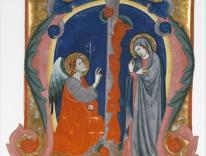
Can these groups ever be reconciled? If so, Measure for Measure suggests, the Catholic Church will have to provide some model for young women other than the denial represented by Isabella. Catholicism and religion in general cannot simply stand for the denial of women’s sexual selves (or men’s either, for that matter), which is what praying the Stations of the Cross in front of Planned Parenthood represents to my students. Instead, young persons’ sexuality, their energy for life, must first be affirmed. For the Catholic Church in particular, devoted as it is to Mary—an impossible model for young women, a woman who becomes a mother while remaining a virgin—this affirmation will require a genuine shift in teaching.
But transforming the Catholic Church was not my charge that day. Rather, my charge was that of all educators: to bring these students to a self-examination that might in the long run transform their lives. And so I needed one more day on Measure for Measure, for a discussion of Angelo’s imposition of law in response to the license the Duke has allowed before the start of the play. Too much license, we had seen in Romeo and Juliet, does not create an environment supportive of love. But the imposition of strict law, Measure for Measure suggests, represents a denial of life. So what is the answer? In my students’ actual lives, no benevolent duke will step in at the last moment to bring order to their chaos by unsatisfactory fiat—and some students, recognizing this, opt for law, pushing back not only against Measure for Measure but against their own peers, embracing a punitive strictness which, like Angelo, they will likely not respect in their own lives. But others take more seriously the dilemma Shakespeare presents in this difficult play, and begin looking within themselves for the answer. What choices can they make in their lives to preserve life’s energy while honoring love and maintaining a full openness to life? Insight takes time, of course, but I leave the classroom feeling confident that most will eventually move toward more ordered lives. Some may even come one day to a fuller understanding of that day’s demonstration and counter-demonstration in front of Planned Parenthood.
At Easter Mass I learned, much to my relief, that the elderly priest who collapsed while praying the Stations of the Cross outside the clinic was fine. Kept in the hospital overnight for observation, he was no worse for his experience in the morning. The next day I would turn to Shakespearean tragedy, to the image of Lady Macbeth and the infant she would tear from her breast and kill for her own self-fulfillment. In truth, I already looked forward to the final two weeks of the semester, when we’d be done with tragedy and move past it to Shakespeare’s final plays of love, forgiveness, and reconciliation.
Please email comments to [email protected] and join the conversation on our Facebook page.
Previous Story
Until Daybreak
Next Story
‘A Colossal Genius’